


Hello,
Earlier this week, I used $10 from my MetaMask wallet to buy AI credits on an inference market. It gave me $25 back in Claude, GPT, and Gemini usage that I could spend across 400 models until I used it all up. I didn’t have to commit to a monthly or annual subscription.
But where did the extra $15 worth of compute come from? Someone who already held $25 worth of compute, but didn’t want to use it, sold it to me at a 60% discount. They pocketed all my $10 for idle credit, and I walked away with more than double the compute power for my money’s worth.
The inference market is filled with demand for cheap compute. While the compute suppliers sell it like a subscription, most people don’t use it all the time. Most people have experienced this with gym memberships. We pay for the entire year and barely turn up. But what if you were offered to buy cheap single day passes to access the gym? The compute market is living through a similar moment.
On to the story…

TOKEN2049: The Largest Crypto State
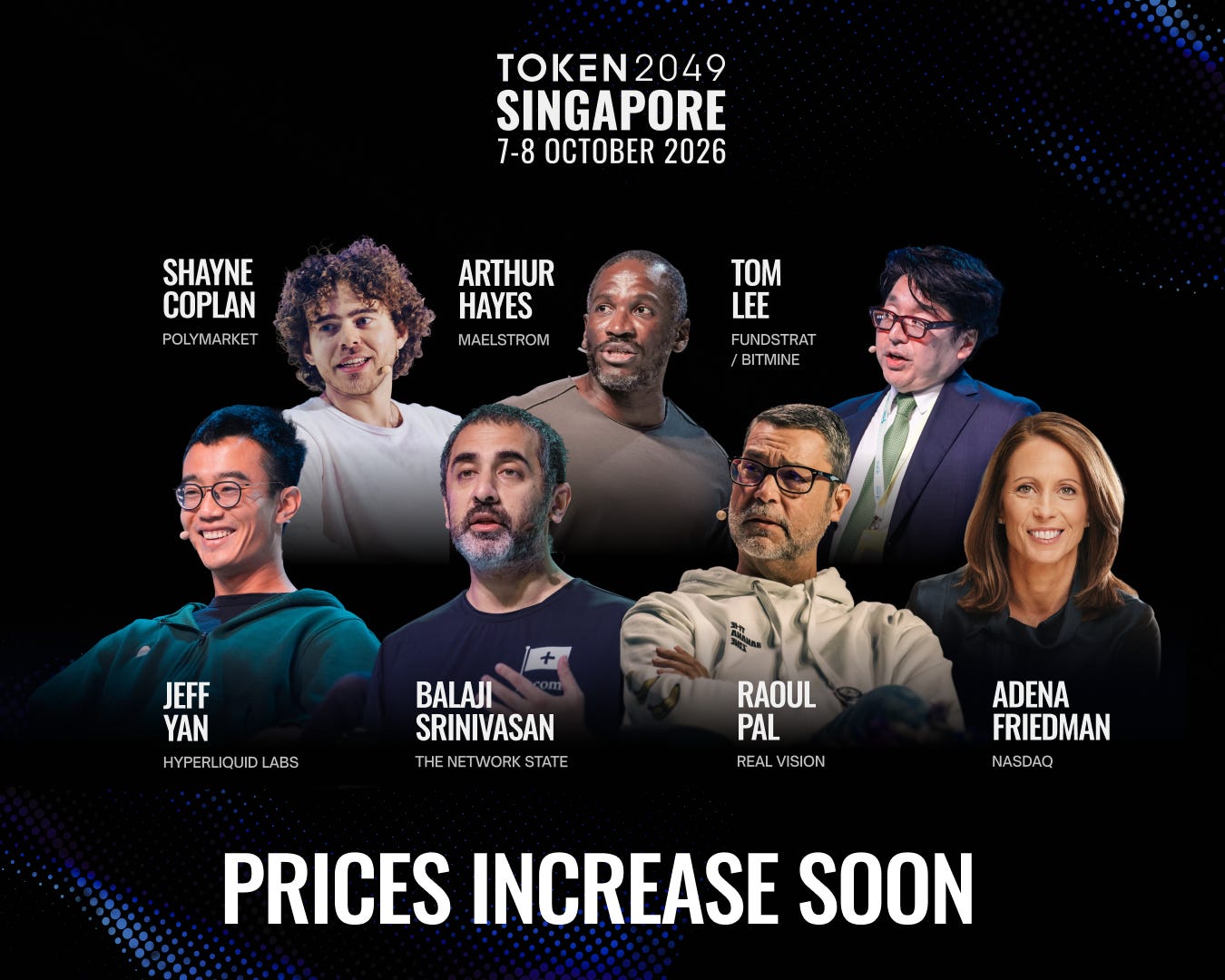
Over 25,000 attendees, 300 speakers, 500 exhibitors and 1,000 side events will come together at TOKEN2049 to rewrite the future of finance. And you are invited!
TOKEN2049 Singapore is just over three weeks away. The global crypto industry meets at Marina Bay Sands, 7-8 October, for the world’s largest crypto event.
Book by Wednesday, September 23, to lock in the current rate of $539 ($599) and get the exclusive 10% discount before the price goes up next week.
The Most Natural Trade
If an airline takes off with an empty seat, it is leaving money on the table. It’s a bad trade. So an airline will sell that seat at almost any price up to departure. It explains that one time you got a sudden upgrade to a business-class seat while the airline gave away your economy seat to someone from the overbooked reserve of economy passengers.
The seat is perishable, and not selling it is inefficient. Disciplined pricing of perishable inventory can yield big rewards. In 1992, American Airlines estimated the quantifiable benefit at $1.4 billion over the last three years and expected an annual revenue contribution of over $500 million to continue into the future. Hotels do the same with empty rooms for the day. Power grids do something similar with electricity. Since they cannot store it, they trade electricity away on spot markets.
When inventory expires with time, it commands an alternative market. And if the product has a mass market, someone will always hold more than they consume, and someone else will want it cheap. This drives the price to find a middle ground.
AI inference falls in the same category of products. LLM subscriptions reset every month, and unused allowance expires. Prepaid API credits expire annually, and you don’t even get a refund. Even a rented GPU will have to be paid for whether you use it or not.
Not everyone wants all-round access to compute power throughout the month or a year. Sometimes people don’t even know in advance how often and when they’d need compute power.
For all such users, a parallel market where AI inference capacity is sold in much smaller and cheaper credits is forming.
The Need for a Spot Market
Let’s dive into my experiment with a secondary market for compute.
Orbio.so is a marketplace for AI inference. It runs on two tokens. $ORBIO is the volatile one you stake, while $CREDIT is the product. Each token of $CREDIT equals one dollar of AI inference usage across 400-odd models. When you stake ORBIO, you earn fresh CREDIT tokens every hour. Orbio funds this with half of the trading fees it generates on its platform. You can then swap your AI inference credits on an order book, transfer them like a token, or activate and use them.
My $10 bought me AI inference worth $25 on Orbio. Why would someone sell their inference for less than they paid for it?
Because they paid nothing for this compute. The seller did not buy $25 of compute and let it rot. They earned the credits by staking ORBIO and were funded by Orbio’s trading-fee income. To them, a dollar of credit sold for 40 cents gives them a pure gain of 40 cents.
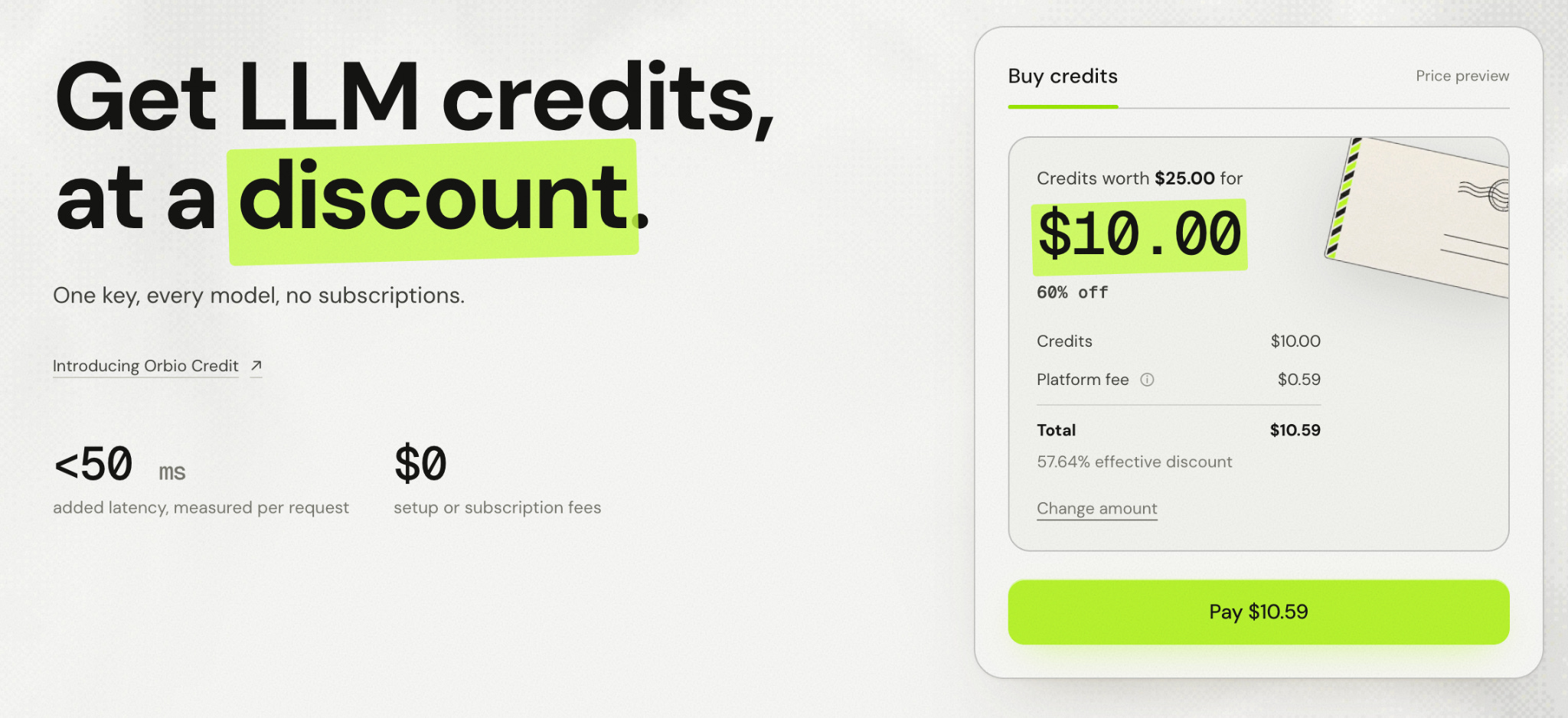
This contrasts with the subscription model that expects you to pay for the whole month or year, whether or not you use it. That model suits a heavy, steady user whose usage is recurring daily and justifies a flat fee. But for a freelancer who needs a burst of inference for one project and then nothing until the next project starts, a subscription model could cost a lot. Even a developer testing an idea on weekends wouldn’t need an exclusive subscription beyond what their enterprise provided.
Orbio’s demand-based inference credit model is the only native way for the agents of the emerging agentic economy to pay and buy credits based on the compute their tasks require.
A coding agent that works overtime on a couple of days of the week and then goes cold has no use for a monthly seat. Orbio’s agent design lets an agent buy and activate credits in a single call, sign once for its API key, and top itself up against its budget with no human in the loop.
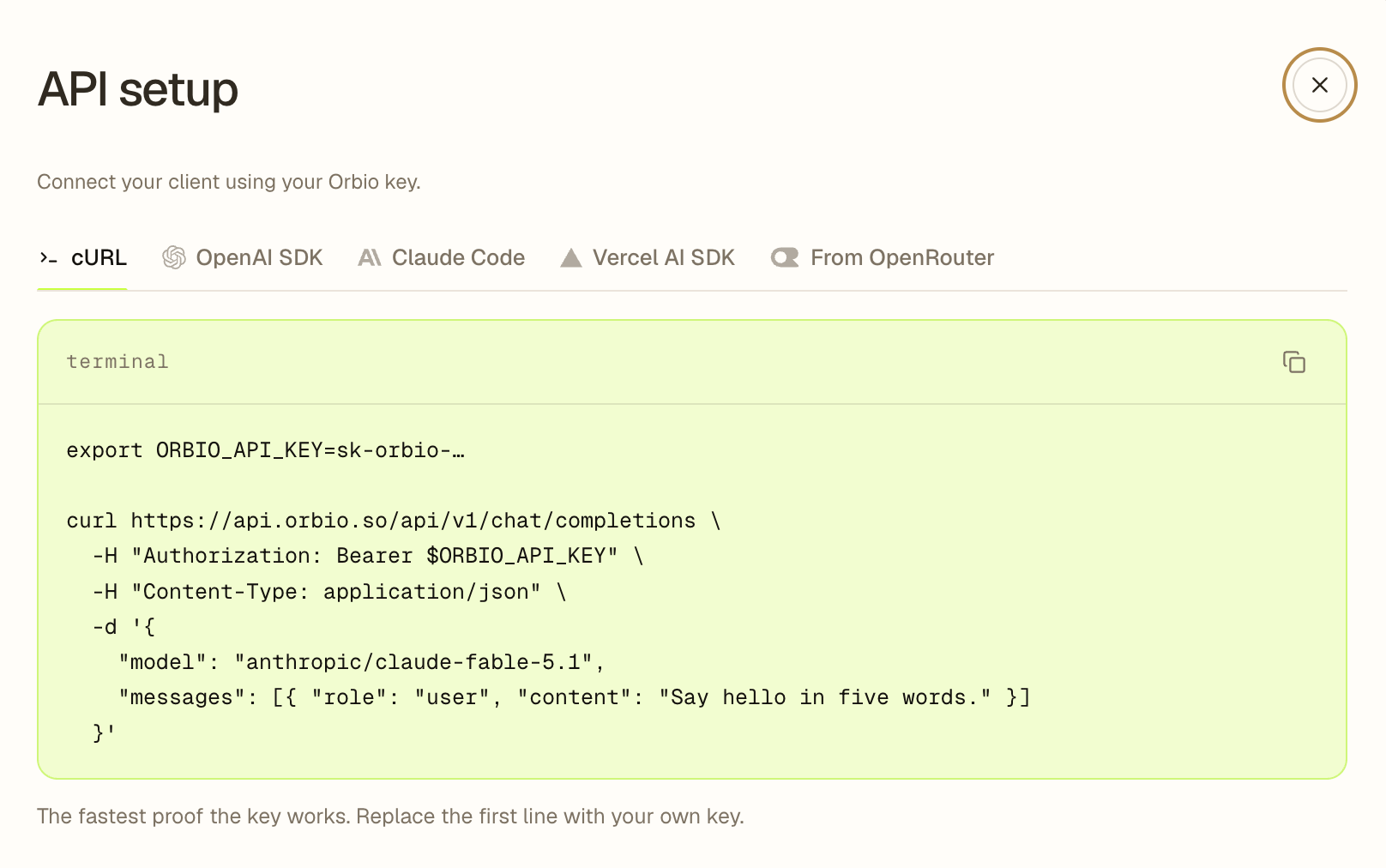
Let’s strip away the tokens and look at what a buyer gets. One key gives access to 400+ models without any subscription. You can start at $5 and go up to $2000 worth of credits with no monthly minimum or renewal needed.
All you need to do is migrate the key with two lines of code. Just change the base URL, change the API key, and streaming, tool calls, and vision keep working exactly as with any other LLM. Your request goes to the model you named and comes back with the provider’s own model ID on it.
The Liquidity Challenge
But Orbio will be tested by how deep its liquidity is.
When I looked, the order book held about $11,852 of credit for sale. That is not much. A single agent running on frontier models with continuous workload could burn through tens of dollars an hour. A serious developer could drain a meaningful slice in one session alone. To manage this, Orbio has set a tiered discount across that pool.
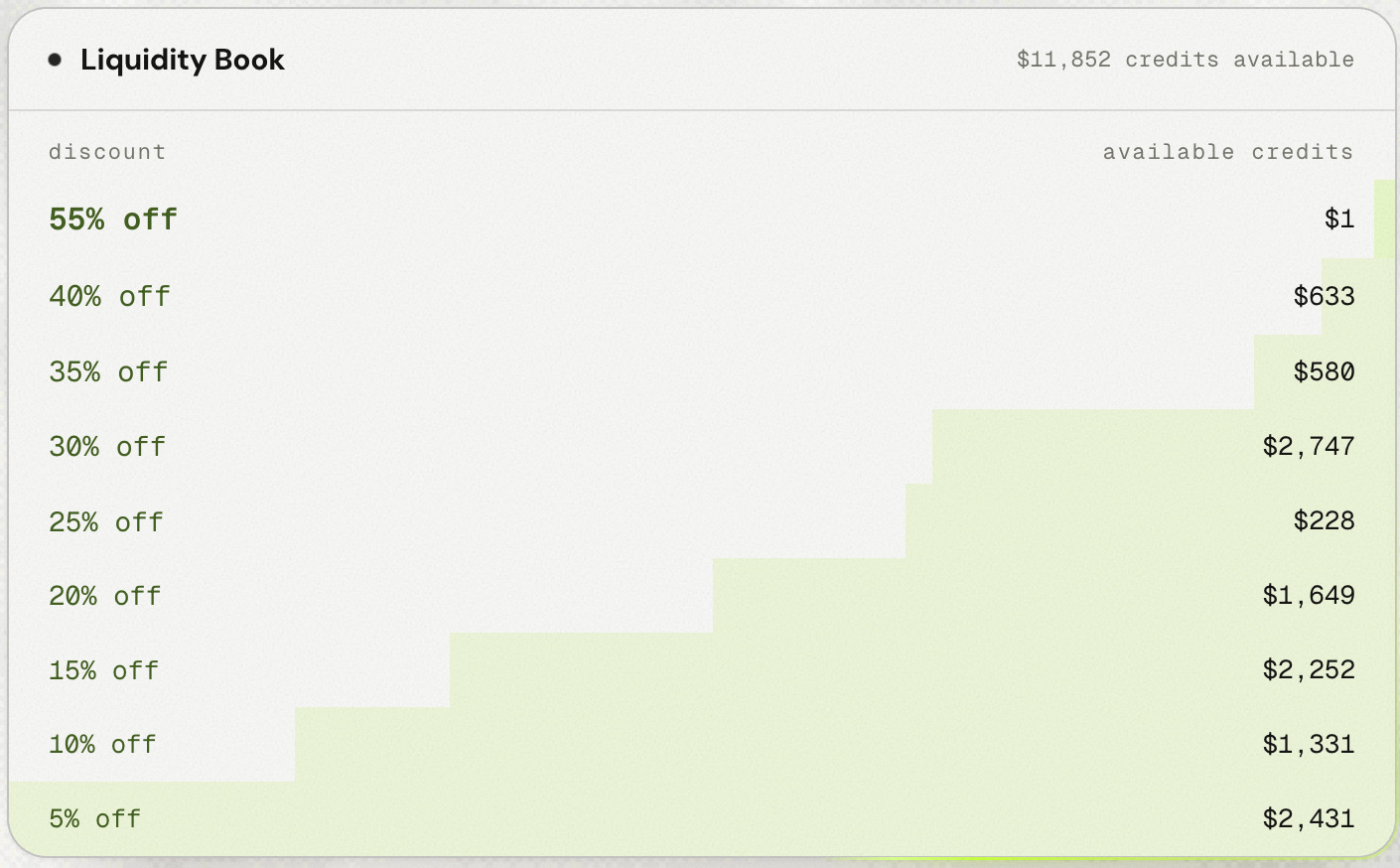
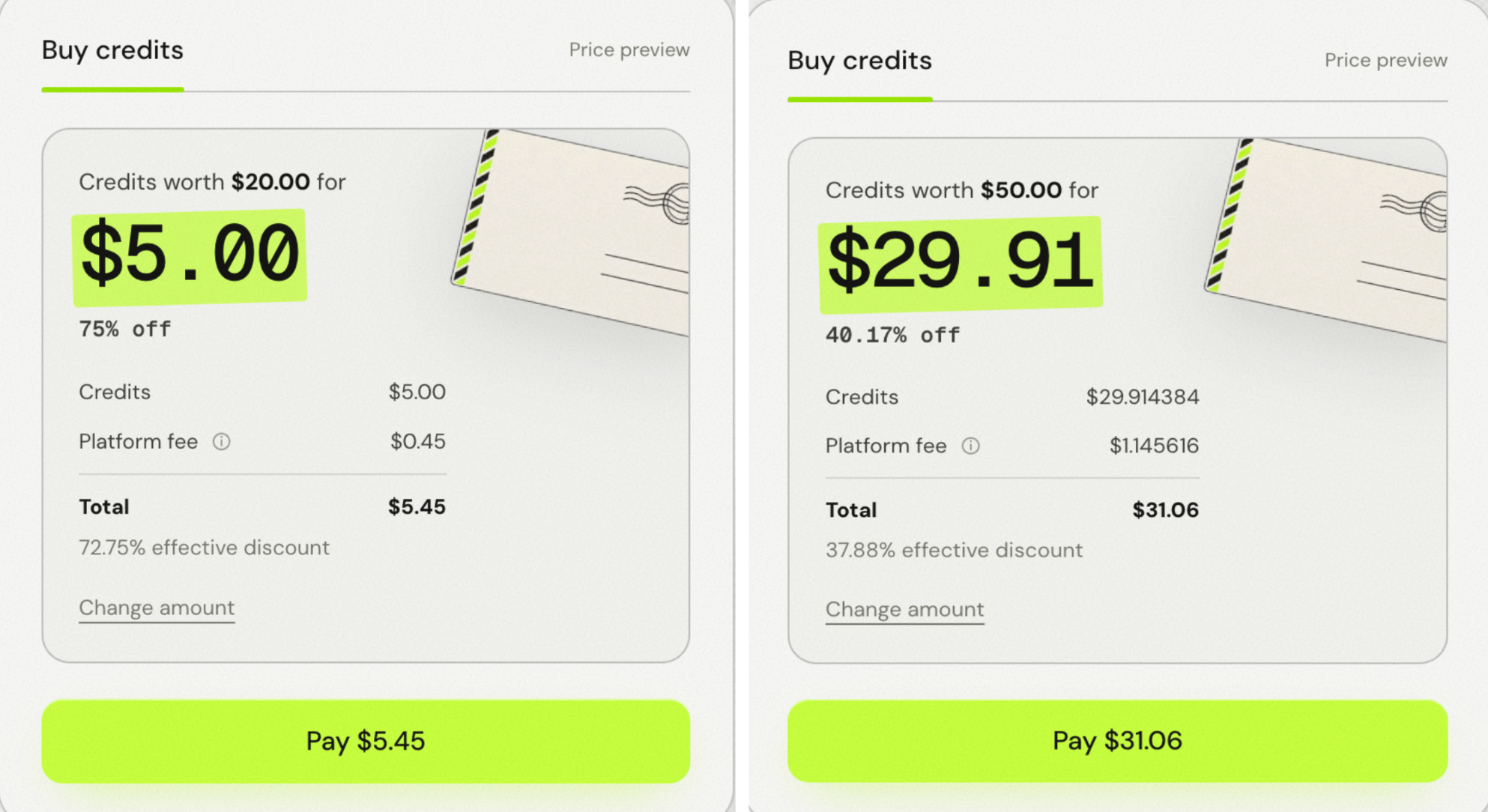
Smaller amounts of compute purchases get larger discounts. When I last checked, Orbio was offering $20 worth of AI inference for just $5 (75% off) but $50 worth of inference at ~$30 (40% off).
The tiered discount is designed to incentivise smaller lots of purchases. It also meets the kind of audience it wishes to cater to - agents that need to make micro-sized payments for their recurring compute tasks or developers or users who don’t want a consistent, recurring access to monthly or annual subscripti
The recent-buys feed tells us the demand-side story. 15 of the last 20 trades were less than $50. It serves a freelancer or agent, but isn’t enough to fulfil a user who needs consistent compute power above those levels.
Can It Meet the Compute Needs?
Every discount on Orbio is funded from half of its trading fees. Every hour it converts half of its fees into credits and hands them back to stakers. So the entire engine works as a function of trading volume on a volatile token which Orbio cannot control.
So the depth of the discount a buyer enjoys is a result of the speculative churn in Orbio’s token that has nothing to do with compute. As long as ORBIO trades heavily, the discounts keep flowing. When trading cools, less credits are minted per hour, the book thins and sellers hold out their compute for better prices.
This is the challenge the protocol needs to survive. A subscription business is sustained by its customers paying for the service. Orbio’s discount is sustained by traders speculating on a token beside the service.
A footnote on Orbio’s homepage also says as much: credit is “a promotional grant of product access, not an investment return.” A hobbyist spending $10 has nothing to worry about.
The only way Orbio can outlive the subsidy is by making the other half of the product indispensable, where it offers the buyer of the credits a single key to tap into 400+ models.
The Future of Compute
When you zoom out from Orbio and look at the secondary market for AI inference, you see a pattern that’s repeated across history. For over two decades, we did something similar with software. We bought access to a software for every month. We picked a plan that met our requirements and paid for it whether or not we used it. Think of subscriptions to antivirus, pagemaking and designing tools by Adobe or Microsoft’s Office suite. They all worked the same way. The seller banked on the buyer’s under-use. The model fit a world of humans with routines who logged into the same system every morning and used the same set of tools steadily.
But that world is ending. The buyer of inference can be a person with routine or someone who just needed some compute power for a rare, non-recurring task. The latter kind of buyers don’t need a subscription plan. They want to just buy what is needed for their task, pay for it and stop.
Orbio is an early, imperfect answer to that. The discount may not survive if the trading volume moves towards zero. Orbio has a difficult path to fix this. Orbio already collects fees beyond ORBIO swaps. It collects creator fees on tokenised Nvidia stock and routes them into the same payout engine. If more of the subsidy comes from real, recurring activity rather than speculative churn, the less the discount is at the mercy of trading volume of a speculative token. However that part is negligible today.
Nevertheless, the convenience Orbio’s model offers answers a lot of demand needs. Buying inference by the dollar from any model without provisioning a thing is the perfect shape for demand that no longer consistent across usage hours.
That’s it for today. I will be back with the next one.
Until next time, stay curious,
Prathik
Token Dispatch is a daily crypto newsletter handpicked and crafted with love by human bots. If you want to reach out to 165,000+ subscriber community of the Token Dispatch, you can explore the partnership opportunities with us 🙌
📩 Fill out this form to submit your details and book a meeting with us directly.
Disclaimer: This newsletter contains analysis and opinions of the author. Content is for informational purposes only, not financial advice. Trading crypto involves substantial risk - your capital is at risk. Do your own research.