


Rich people have a famous habit of holding onto assets that have gone up a lot. They don’t sell, because selling triggers capital gains tax.
They borrow against the assets and spend the loan. When they die, their heirs in the US inherit the assets at today’s value, so those gains are never taxed as capital gains. Planners call it “buy, borrow, die.”
The habit needs two things, an asset a lender will accept and a lender willing to deal with you. Public stock and property qualify easily. Shares in a private company mostly don’t, unless you’re a founder or a senior executive with a big stake. That leaves out a lot of people.
Borrowing against shares can be risky even for someone extremely wealthy.
When Elon Musk agreed to buy Twitter for $44 billion in April 2022, banks offered him a $12.5 billion loan secured by his Tesla shares.
But Tesla’s share price was falling, which created a problem.
If those shares lost too much value, Musk could be required to provide more shares or cash to keep the loan. He dropped the loan plan and increased the amount he would contribute through other financing. As of August 2025, about 236 million of his 715 million Tesla shares were pledged to secure personal loans, according to Tesla’s proxy filing.
The lenders expect repayment regardless of what happens to the share price, and a fall in value can leave borrowers scrambling for additional collateral. By a startup’s Series C, its employees typically own more of it than its founders do, according to Carta data. These people can’t easily cash out before their company goes public.
Techdollar wants to give them a loan against those shares and, if they’d like, an Apple Pay card to spend it with.
Techdollar launched in June with a $3 million pre-seed round. It lends against vested shares in private companies. They call this “Build. Borrow. Thrive.” Building is up to the borrower, leave that part, and we are going to check whether the other two stay true.


StablesReward: Your AI Agent Spends, You Earn
AI agents can surf the web, read reviews, and book hotels for you. All these tasks cost money. But what if these tasks could earn you back something?
StablesReward does just that. Once you connect your agent to an MCP endpoint, it gives your agent a menu of paid tools. Every call your agent pays for earns you miles or stocks. And this is in addition to the rewards you earn anyway on your own spending across 800+ merchants.

Every purchase pays you back. The best part is that you can choose how you’d like to be rewarded. Transfer miles to airlines and hotels, or let your stocks build a portfolio from the spend you were making anyway.
Launching soon. Free to join.
Why did the wait get so long?
In 1989 the average company going public was six years old, and by 2021 that had stretched to 12, according to Morgan Stanley’s wealth management research.
According to Jay Ritter, the University of Florida professor who keeps the standard database of US listings, the median age during the dot-com years of 1999 and 2000 was 5. Which became 11 years between 2001 and 2025, and 12 years in 2025 alone.
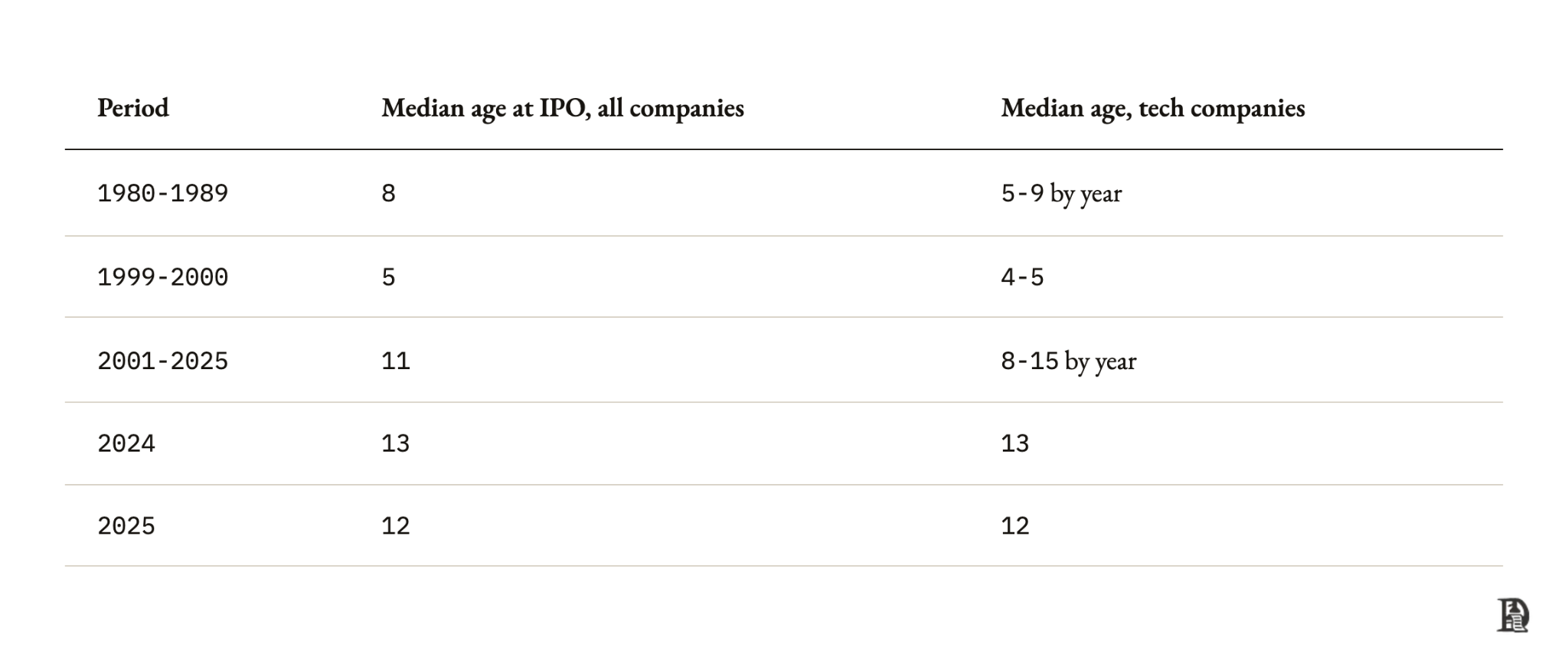
SpaceX was founded in 2002 and listed in June 2026. Stripe, founded in 2010, is still private.
Big private companies let staff sell through tender offers instead. Stripe has run tender offers at $91.5 billion in February 2025, $106.7 billion in September and $159 billion in February 2026.
During Facebook’s 2012 listing, even David Choe, the artist who accepted Facebook stock for painting its offices, became wealthy when the company went public. But it is different for someone who joins a promising startup, spends eight years building it, and leaves before the company lists. They may have substantial equity and still need to pay a mortgage or fund their next venture using their salary and savings.
In October 2025, OpenAI’s current and former staff sold about $6.6 billion of stock at a $500 billion valuation. The company had authorised up to $10.3 billion, and only about two-thirds of it was tendered.
Anthropic ran its own tender between February and April 2026 at a $350 billion valuation, open to people with at least a year at the company. Investors had lined up about $6 billion, and employees sold less than that, which could be staff expecting the shares to keep rising.
Reuters reported that the value of tender-offer transactions executed through Nasdaq Private Market rose from around $3 billion in 2023 to just under $15 billion in 2025.
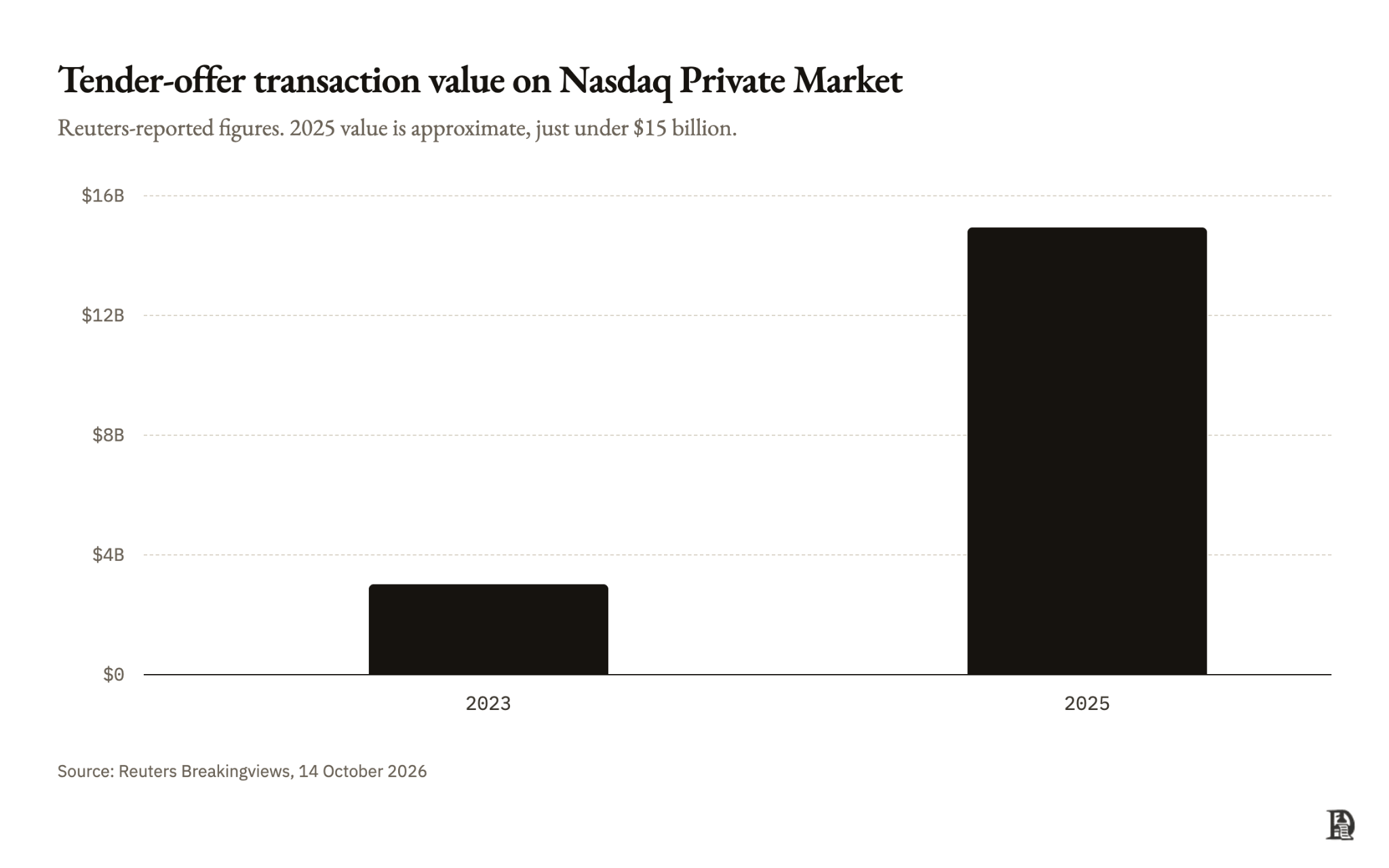
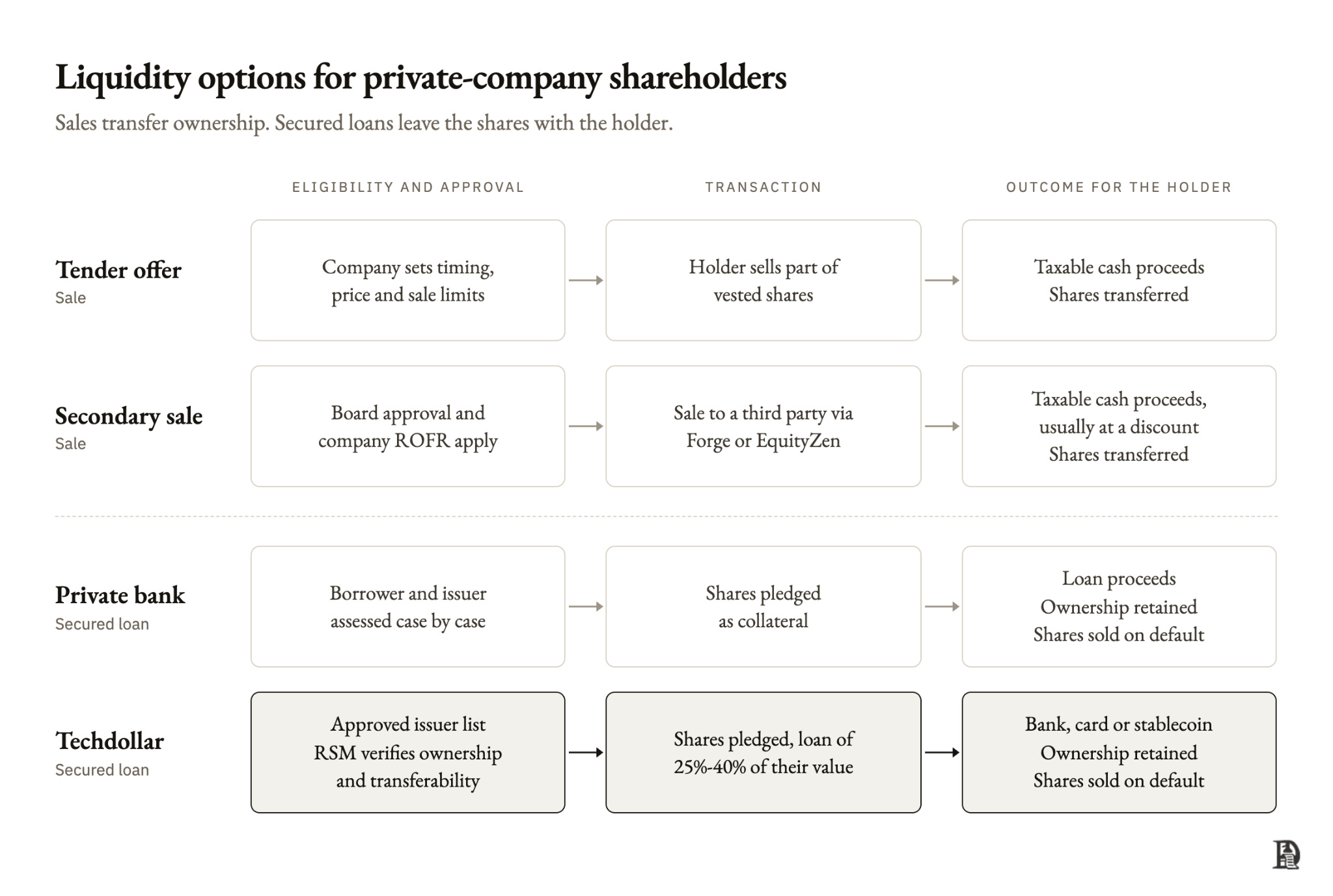
So tenders do benefit, but they run on the company’s calendar. The company sets the date, says who qualifies, and sets limits on how much each person can sell. According to Morgan Stanley, companies typically limit these sales to 20–30% of an employee’s vested shares.
Selling outside those tenders is also possible. Employees can approach platforms such as Forge or EquityZen.
Most private companies require board approval for any transfer, and most have a right of first refusal, usually shortened to ROFR. It lets the company, and sometimes its investors, match whatever price you negotiate and buy the shares themselves.
OpenAI and Anthropic treat any unapproved transfer as void. Anthropic barred SPVs(Special Purpose Vehicles) and named new offerings on Forge and Hiive among those it would not recognise.
A sale that clear, becomes a taxable event, and seller also gives up whatever the shares do next. OpenAI staff sold at $500 billion in October 2025. Five months later, the company was valued at $852 billion.
Banks lend against private stock selectively. They usually take only unrestricted shares, which rules out much of what employees hold. Even so, Goldman’s San Francisco private wealth loans are up 50% since 2023, and banks see a loan today as a way to win the IPO later.
What is Tech Dollar?
For founders and employees, the core product is a loan secured by vested shares.
That means, unlike tenders or secondary sales, Techdollar lets employees get cash without selling their shares or losing future gains. Also, unlike traditional banks, which prefer public stocks or private stocks from wealthy investors, Techdollar specialises in lending against private-company shares, though borrowers still need to qualify and pledge shares they’ve already earned.
You keep the shares, but if you fail to repay the loan, the lender may have the right to sell them. You don’t necessarily need substantial wealth beyond those shares to qualify.
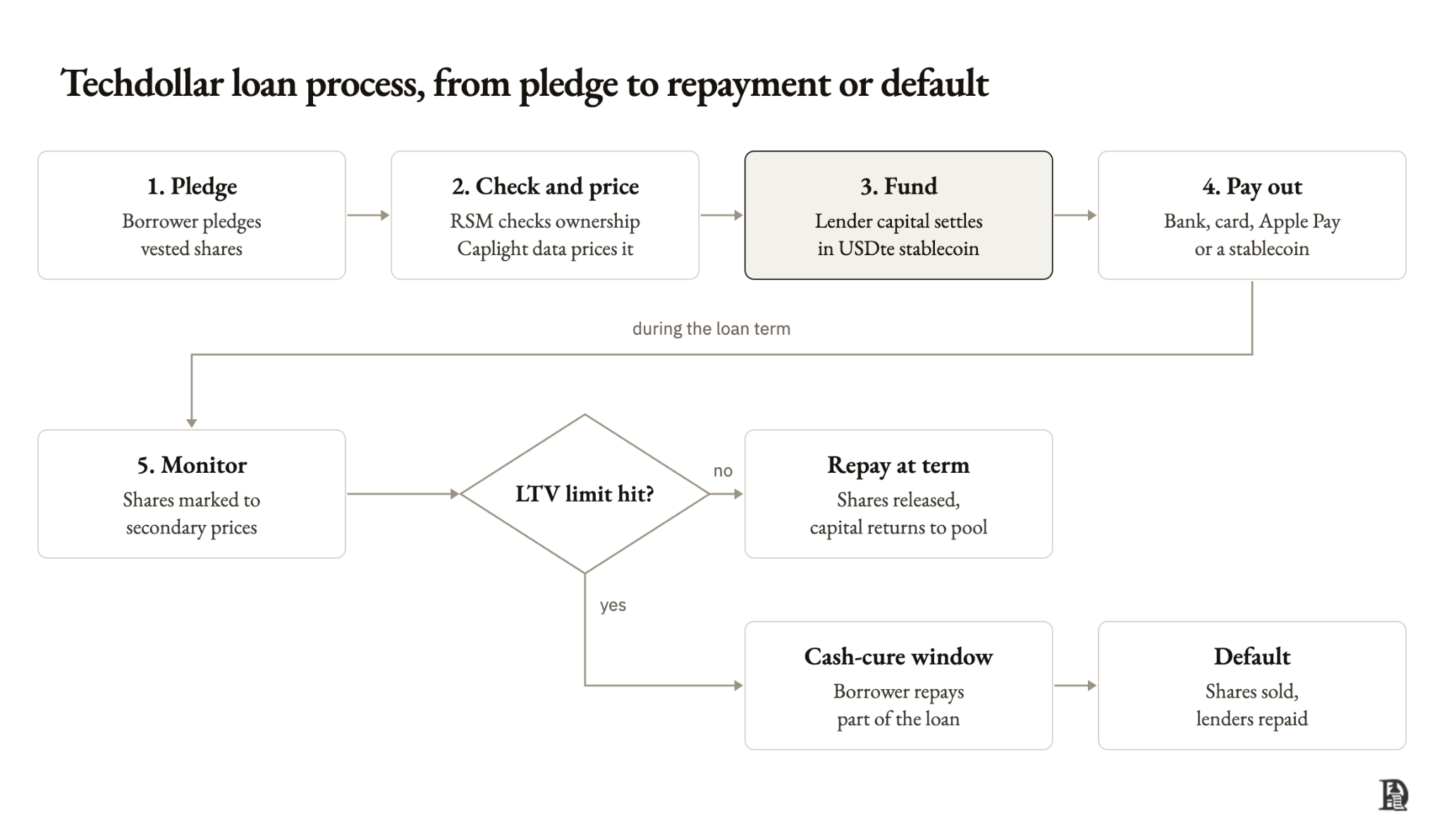
The money can arrive in whatever form the borrower prefers. It can be a bank withdrawal, a physical card, an instant digital card in Apple Pay, or in stablecoins.
But unlike its crypto competitors, Techdollar does not tokenise the shares. The pledge is documented in standard legal documents as a registered claim over the shares, known as a share charge, with the accounting firm RSM verifying ownership. It uses blockchain only to move the money borrowers receive.
The money moves through its USDte settlement rails. Investors financing a loan can settle funds through that infrastructure, while a borrower can choose to receive ordinary dollars, spend through a card, or take stablecoins. From the borrower’s perspective, the crypto portion can remain largely invisible.
Funds and family offices can borrow against stakes in companies that haven’t exited to pay their own investors or back a later round without selling at a discount.
They also list a 30-to-60-day bridge for funds and loans for employees to exercise options, both still coming.
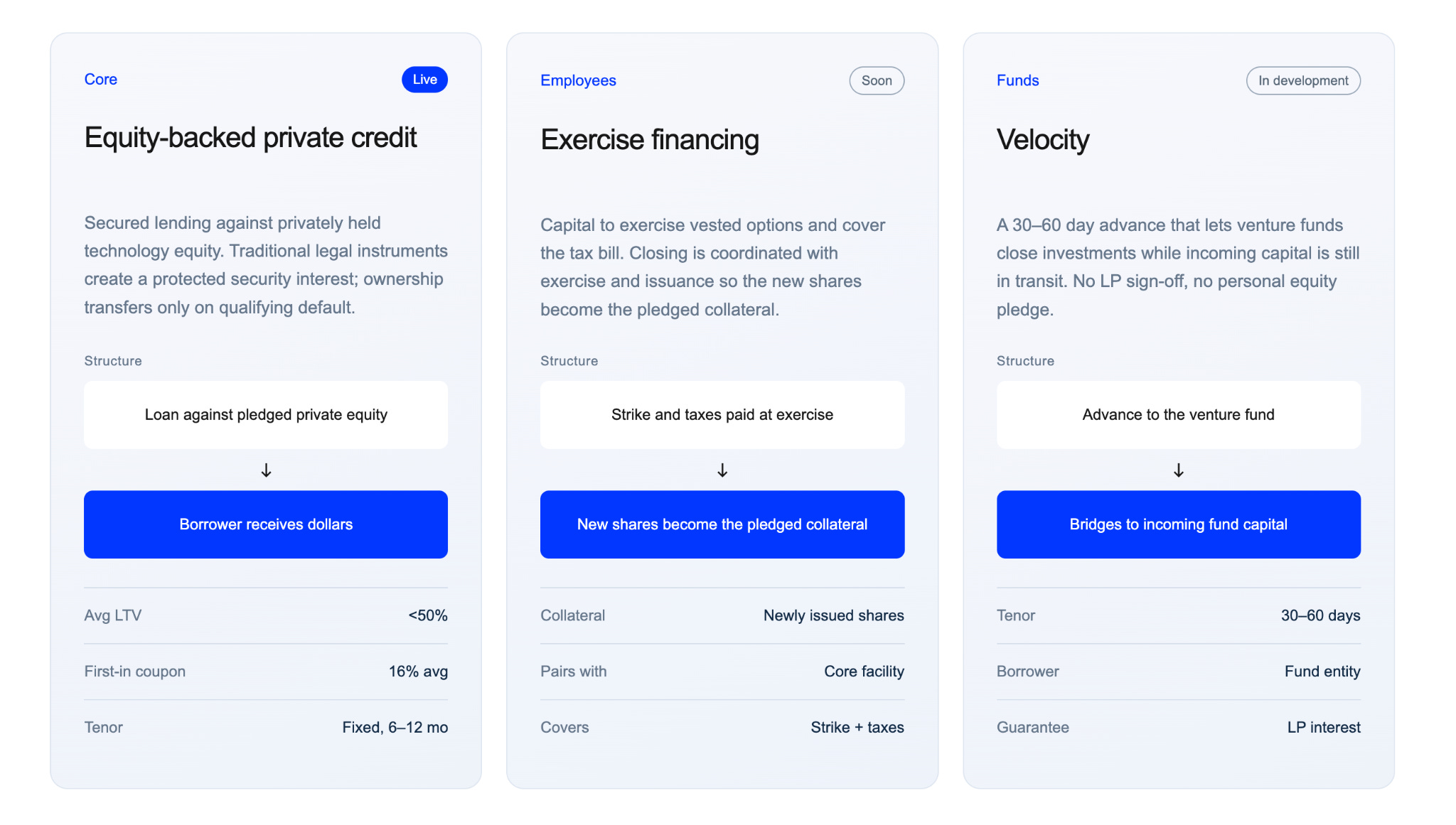
Each loan is funded by outside investors, either approved investment partners or groups of private lenders. The money moves through USDte, a dollar-backed stablecoin issued by a partner.
The collateral it wants is narrow. The site groups its focus into eight areas, from AI and compute to aerospace and defence, advanced chips, energy and data centres. It says more than 300 companies are accepted, including Anthropic, OpenAI, Stripe, Databricks, Ramp, Cerebras, Blue Origin and Apptronik.
A private company’s shareholder agreement may restrict pledging shares as well as selling them.
Plenty of tokenised crypto projects have tried to put private-company stock on a blockchain, and the Anthropic and OpenAI notices showed us how that ends when the company hasn’t agreed.

The lender cannot assume that a borrower’s name on an equity statement is enough to make the collateral legally recoverable. Techdollar says professional-services firm RSM checks ownership and transferability.
RSM’s job is to check what the borrower is actually allowed to do with those shares. It reviews ownership records and restrictions so Techdollar can identify whether company approval is needed before accepting them as collateral.
Techdollar offers advance rates of 25% to 40% of the collateral value, depending on the company and its liquidity prospects.
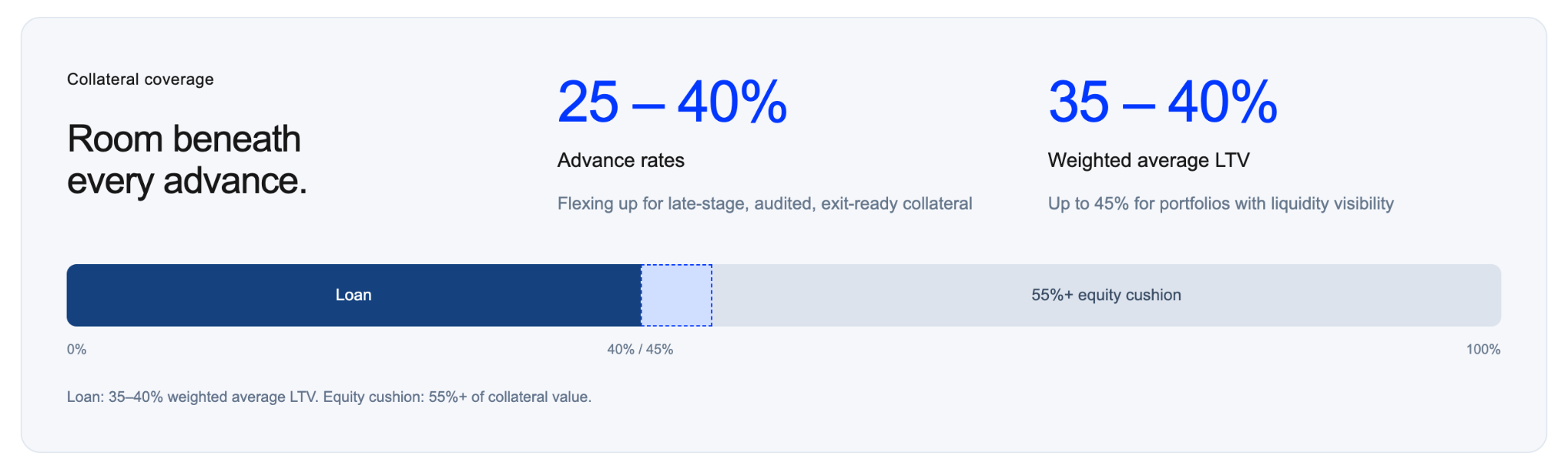
Once the facility is signed, capital from approved investors funds it.
None of this would surprise a private banker. Banks also review the shares, take a pledge, and lend a portion of their value. Enness, a London broker that arranges these loans, says lenders typically advance 25% to 40% against shares in an established private company, the same range Techdollar gives.
Techdollar’s case rests on who can get a loan and how fast it is done.
Enness says many lenders only make these loans above about $1 million, against shares worth at least $3 million to $5 million. Techdollar says its software makes loans as small as $400,000 economical. It still isn’t for every employee, but it goes further down the staff list than a private bank usually does.
Speed is the second. Techdollar says it makes decisions in one to two days for companies it already knows and pays out within 72 hours of signing, while a bank takes two to four weeks.
The company says wealth managers, private banks and brokerages could eventually offer private-share loans to their own clients using Techdollar’s underwriting and servicing infrastructure. That would make Techdollar a potential technology provider for traditional lenders, not just their competitor.
Techdollar charges 0.80% to 1.5% a month. On a $300,000 loan, that’s $2,400 to $4,500 every month, or $28,800 to $54,000 over a year, before any other fees. Techdollar says interest is paid monthly and the loan itself is repaid at the end, with no penalty for paying early.
The firm says its rates are more than 2.5 times cheaper than traditional lenders. At 0.80% monthly, simple annual interest is 9.6%. At 1.5%, it is 18%. These calculations exclude compounding and any additional fees, so the annual borrowing cost could be higher. Both are significant amounts to pay to keep the shares intact.
At a 16% annual rate, a competing lender would need to charge 40% for Techdollar’s rate to be 2.5 times lower. Techdollar’s CEO says banks quoted some founders around 20%, while Morgan Stanley puts specialist lending rates at 15% to 20%. Based on these figures, Techdollar may be cheaper than some alternatives
But, if an employee owns $2 million in private shares and needs $200,000. A secondary-market buyer offers 20% below the estimated value, so she must sell $250,000 worth of shares to receive $200,000.
Alternatively, she could borrow $200,000 from Techdollar at 16% annual interest, costing $32,000 over a year.
If her shares don’t change in value, borrowing leaves her slightly better off because she avoids selling at a discount. If the shares rise 50%, borrowing becomes much more attractive because she kept all her shares and their gains.
But if the shares fall 50%, selling would have been better. She would have avoided the debt and the interest bill.
Tech Dollar is not the only option here. Secfi, ESO Fund and Equitybee offer non-recourse financing, where you owe nothing beyond the shares if they go to zero, but you hand over a slice of your gains at exit.
Speed isn’t much of a difference. Secfi says it can fund in three days, and ESO offers 24-hour funding. Every lender here also picks its companies.
The loan structure is a trade-off. If the company soars, a loan is cheaper than giving away gains. If it fails, a non-recourse provider takes the hit, and a lender doesn’t. The key differences are the payout options, which no other private-share lender offers, and the funding, which comes from stablecoin holders seeking yield.
This whole thing makes me think equity is a weird way to pay people.
When companies listed within a few years, asking people to wait together was a fair deal. Now that the wait runs past a decade, it asks for a big piece of someone’s life, and a loan is one way of giving some of it back.
Ten years ago, nobody could say what a private share was worth between funding rounds. Today firms like Caplight and Forge record those trades, so a lender can mark the collateral as prices move instead of guessing. The GENIUS Act, passed in 2025, also gave dollar stablecoins a legal footing in the US, which Techdollar is counting on for USDte.
One employee pledges her share against the loan. The loan is in a pool with others, and the pool is split into eUSDte tokens held by many investors. So a think slice of a person’s share in a private company ends up backing a thn slice of token in someone’s portfolio?
That’s fractional finance. That’s the same thing that turned home loans into mortgage-backed securities. The pressure point is the token. If investors could borrow against their eUSDte tokens, the same private shares could indirectly support another loan. That ties additional debt to the same collateral, so losses from falling share prices could spread beyond Techdollar’s original lenders. The hard transfer restriction Techdollar described to the SEC is what stops that for now.
For employees, trade cuts both ways. They get the loan, but then it also ties their salary and debt to the company. Well, startups want staff who think like owners, and hopefully some will think like borrowers too.
Techdollar only uses crypto to move the money. Crypto has been trying to make tokenised stocks usable as collateral, and Ondo with morpho, xStocks with kamino, Coinbase and Aave are already making it possible.
Now we have Techdollar, testing whether traditional ownership records and stablecoin funding can do the job.
Token Dispatch is a daily crypto newsletter handpicked and crafted with love by human bots. If you want to reach out to 165,000 subscriber community of the Token Dispatch, you can explore the partnership opportunities with us 🙌
📩 Fill out this form to submit your details and book a meeting with us directly.
Disclaimer: This newsletter contains analysis and opinions of the author. Content is for informational purposes only, not financial advice. Trading crypto involves substantial risk - your capital is at risk. Do your own research.