


“Sound money is also an essential element of a free society, as it provides an effective bulwark against a despotic government.”
This might sound like an old-fashioned way to talk about money. In modern finance, money is often seen as a mere parameter, not a defence mechanism. Central banks manage cycles; treasuries manage term structures; investors optimise within whatever regime they inherit. The health of the system is judged by spreads, volatility, and growth, not by the question “Who can change the properties of the unit, and what constrains them?”
The closing stretch of The Bitcoin Standard refuses that framing. It treats the design of the base asset itself as part of the institutional check-and-balance system. In the same category as independent courts or credible property rights. If the entity that issues money can also rewrite its scarcity whenever convenient, then every other check on power is, in some sense, built on sand.
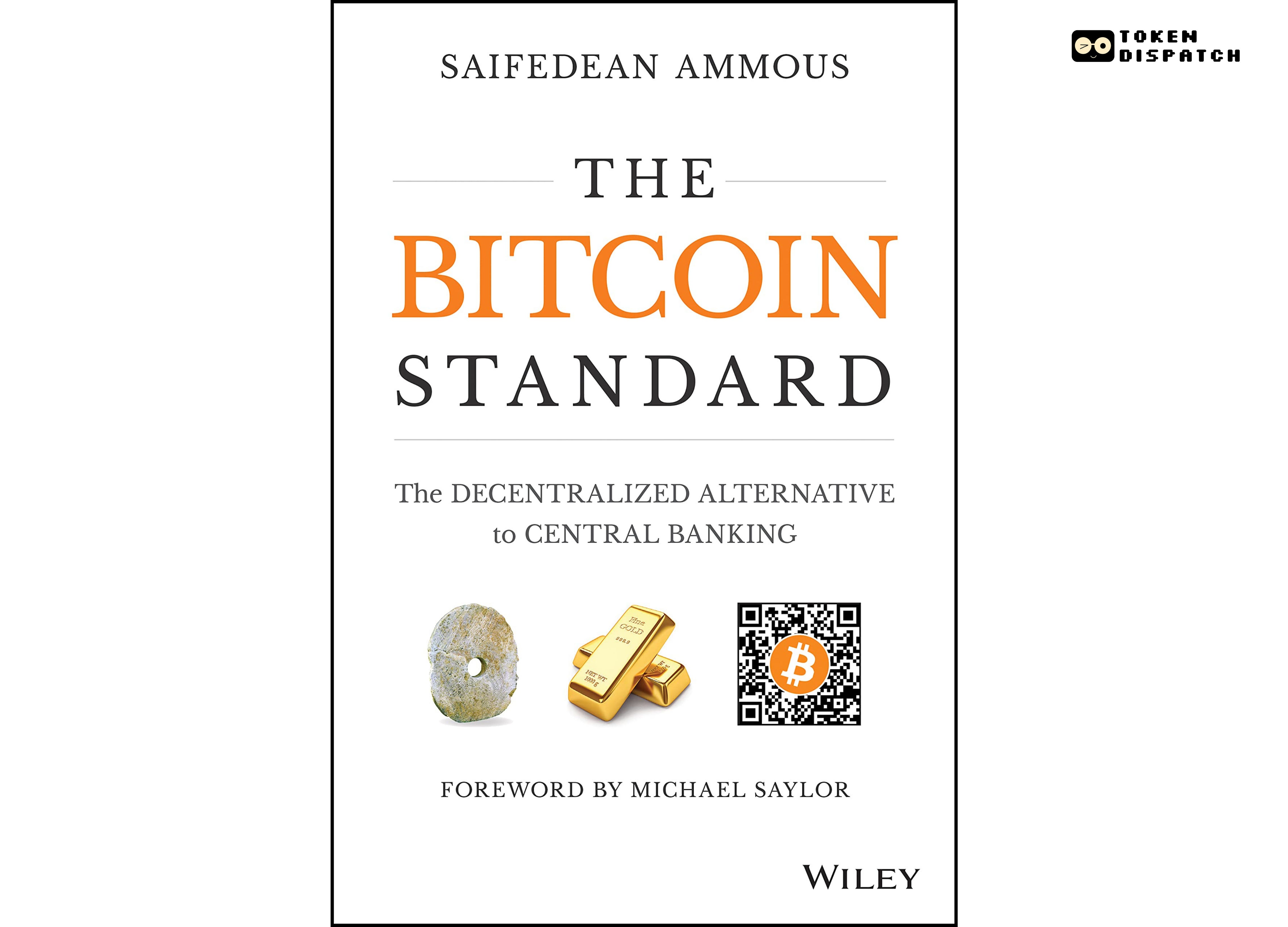
Once you take this seriously, Bitcoin stops looking like an eccentric risk asset and starts to look like an institutional proposal. Not a payments startup, not “crypto” in the marketing sense, but a specific answer to what a monetary bulwark against policy discretion looks like in a digital economy.
The rest of the book is essentially an extended thought experiment around this idea. Let’s dig in.

Bitcoin as an institutional design
In the final third of the book, Ammous stops talking about gold and fiat in the abstract and pins his argument squarely on Bitcoin. The claim is narrow.
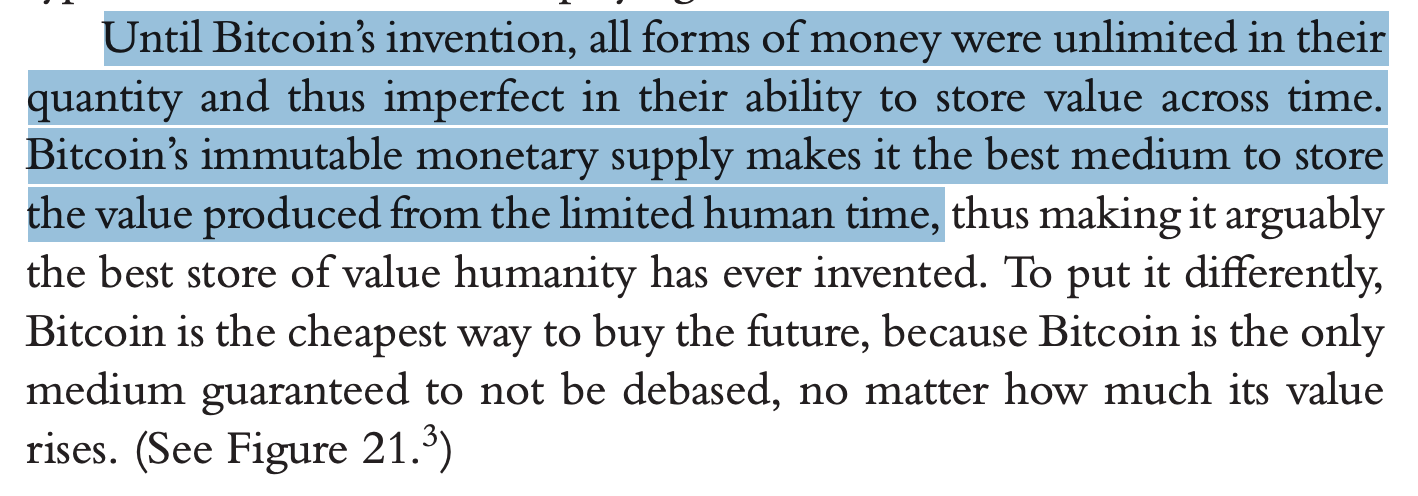
He is claiming that Bitcoin implements, in code, the monetary properties that gold approximated in the physical world – and that it does so in a way that is much harder to centralise and quietly change.
The core properties he keeps returning to will be familiar to anyone in this space, but he treats them as institutional constraints rather than mere tech features:
The supply is eventually fixed and known
The issuance path is predictable years in advance.
Verification is cheap; any full node can audit the entire monetary history.
Control is structurally fragmented: there is no central issuer in the conventional sense
Gold’s strength was its geological hardness. Large above-ground stock, small annual flow, and high extraction costs. Its weakness lay in custody. Once substantial amounts of gold were concentrated in vaults and clearing systems, political pressure converged on a small number of points.
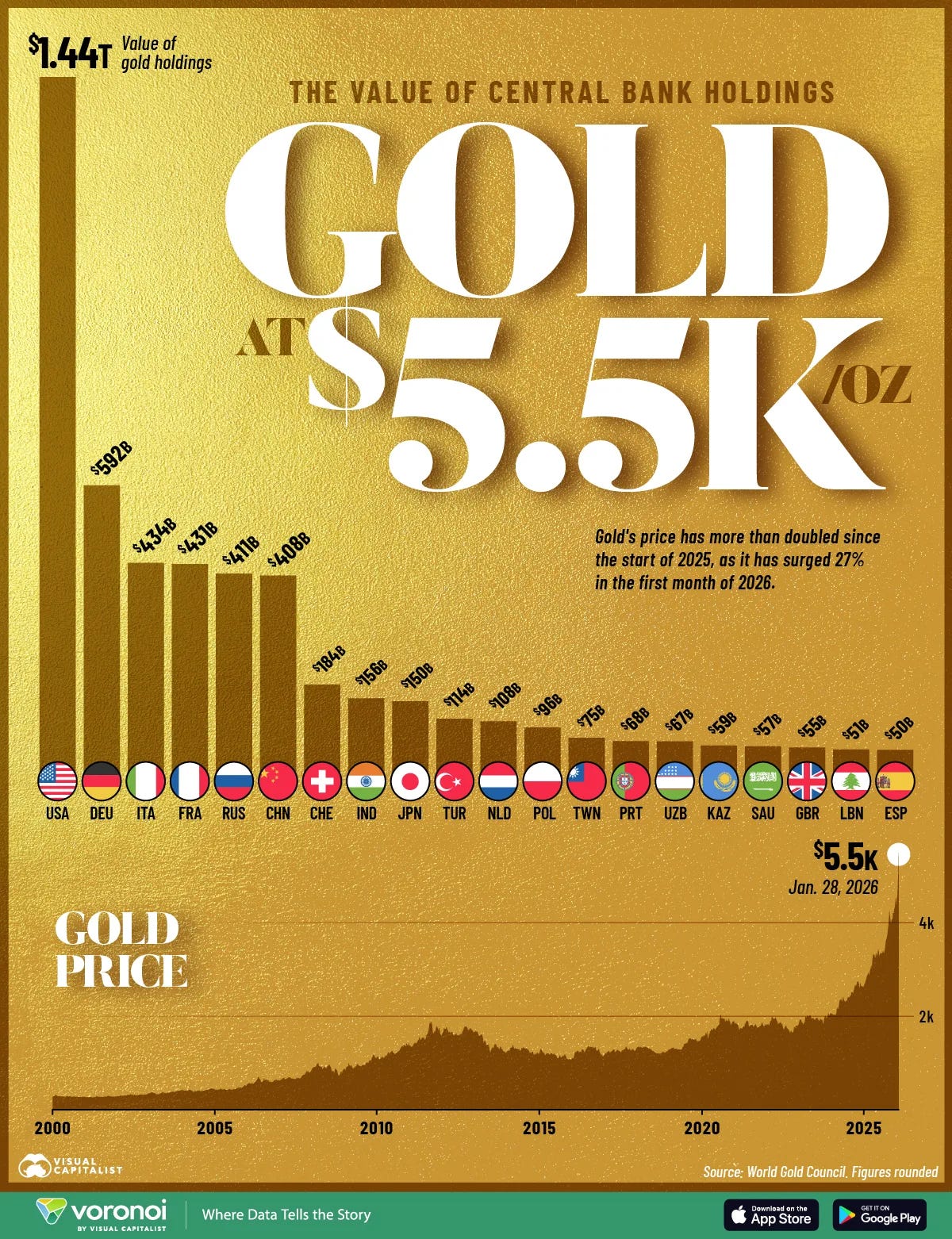
Suspending redemption and altering the rules became an exercise in institutional coordination rather than physical impossibility.
Bitcoin, however, shifts this hardness from geology to protocol design. The cost of “mining” is not the constraint. The rule-set itself is the constraint. The equivalent of the vault is the network of validating nodes. To change monetary policy, you have to persuade a supermajority of economic participants running software under their own control.
You can argue about whether this governance structure is as robust as its proponents believe. What matters for Ammous’s argument is that the temptation path is fundamentally different. There is no person, committee, or board that can meet on a Sunday evening and decide to change the supply conditions.
Seen through this lens, Bitcoin is an attempt to harden the liability structure of the base asset itself.
Store of value first, everything else later
One useful discipline is the refusal to pretend Bitcoin is currently good retail money.
A globally replicated base ledger with probabilistic settlement and no reversals is optimised for final settlement of value and for providing a long-term savings instrument whose rules do not depend on the policy cycle.
The sequence he sketches is old-fashioned monetary theory rather than Web3 marketing. In his view, Bitcoin is at the first stage of that process. It is being monetised as a savings asset. If that stabilises, it may later spread into pricing and contracts. Day-to-day payments, if they ever happen at scale, will run on layers built on top – banks, channels, and other protocols that batch and net transactions before anchoring them to the base chain.
Whether or not you agree with that endgame, the framing is coherent. Bitcoin is positioned as base collateral. That is close to how sophisticated holders actually treat it today. It shows up in treasuries, ETFs, term structures, as a balance-sheet asset and collateral input.
For a finance-literate reader, this is probably the most intellectually honest part of the book. It asks you to imagine a world where the intertemporal savings decision for a non-trivial share of actors is anchored to a non-discretionary unit – and to think through what that does to the rest of the system.
You can see the same narrowing in how institutional research is starting to talk about the sector. In a recent note, NYDIG’s Greg Cipolaro argues that the “investable universe” of crypto is shrinking to a small set of monetary and financial applications. Bitcoin, tokenised assets, stablecoins, core DeFi infrastructure and a few general-purpose base layers like Ethereum. Most of the non-financial Web3 experiments, gaming, metaverse, social, all the things that were supposed to “put everything on-chain” simply don’t clear a cost–benefit hurdle once the hype fades. Centralised systems stay faster, cheaper, and operationally cleaner for most of those use cases.
That is, in a way, an Ammous-shaped conclusion from a very traditional shop. Open, permissionless blockchains make the most sense where money, collateral, and settlement are the product. Everywhere else, the market is voting for more prosaic infrastructure.
What changes in a Bitcoin-anchored world?
What does capital formation look like if your base asset is genuinely hard?
Ammous’s answer follows directly from the time-preference argument earlier in the book. If savers can park value in an asset that is structurally difficult to dilute, they have a stronger incentive to think in multi-decade horizons. That, in turn, affects how much real saving happens relative to consumption. Credit extension becomes more tightly linked to this pool of savings. Because you cannot easily conjure base money into existence, interest rates have to do more signalling and less political heavy lifting.
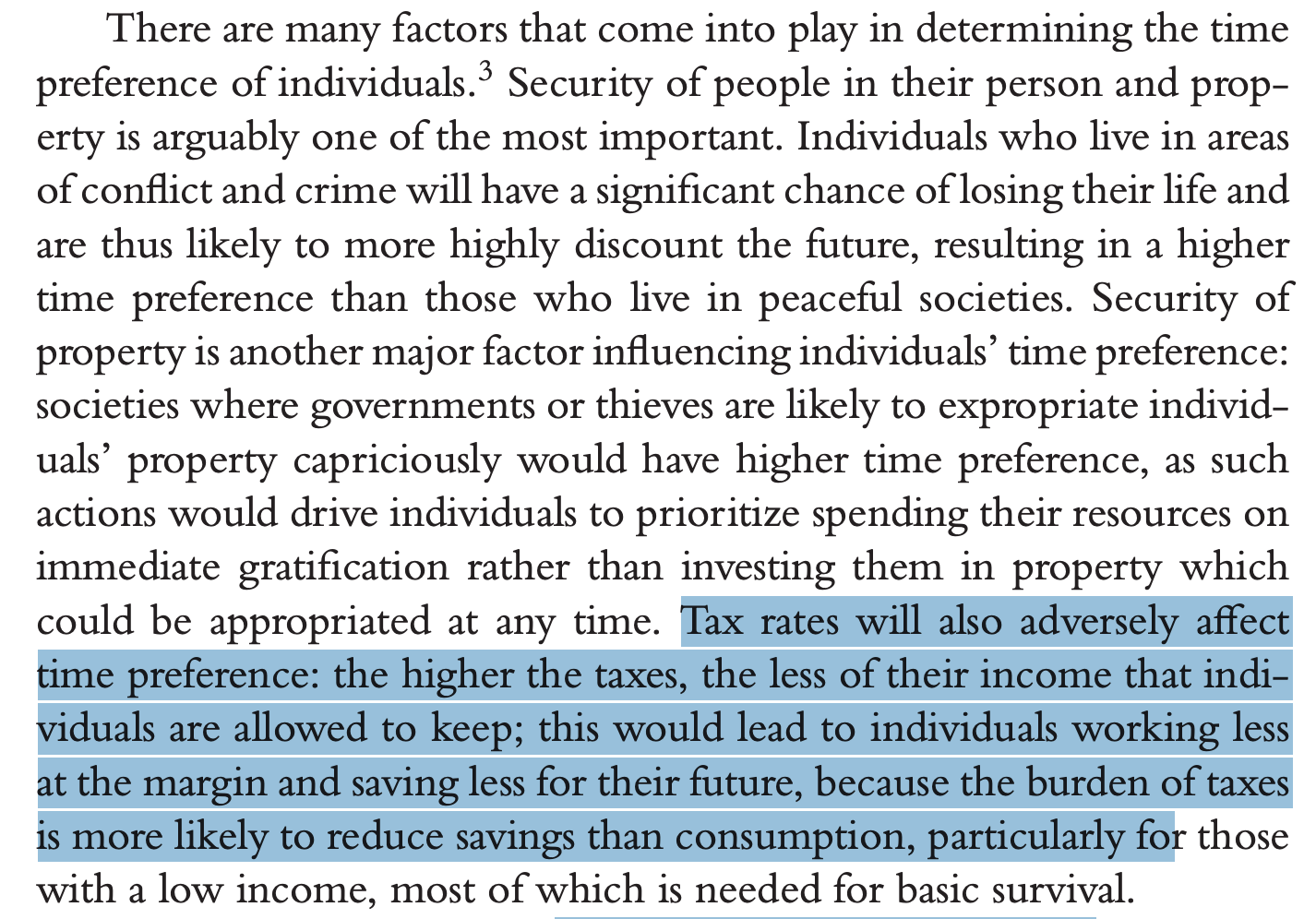
In such a world, familiar phenomena become harder to sustain:
Long periods of negative real rates, funded by central bank balance sheet expansion, are difficult if the base asset cannot be keystroked into existence. The “search for yield” that follows those episodes is correspondingly dampened. Asset price inflation cannot be driven as easily by policy-induced duration scrambling. The distance between “savings” and “claims on savings” narrows.
None of this eliminates cycles, misallocation or leverage. It shifts the set of tools available to governments and central banks. Fiscal and regulatory levers still exist. Prudential oversight still exists. What disappears, in his preferred regime, is the assumption that the marginal problem can always be addressed with a new liquidity facility or a new acronym programme and a quiet adjustment to the monetary base.
My own view is that this is the most constructive way to read the book. Not as a blueprint that will somehow be implemented wholesale, but as a constraint test. If you imagine a system where the unit cannot be manipulated in size, you discover how much of what we currently rely on actually depends on that ability. You then have to decide, explicitly, which of those dependencies you think are essential and which amount to accumulated habit.
Where I agree - and where I don’t
Reading the last third in 2026, with a functioning Bitcoin ETF market, sovereign exposure, and stablecoins quietly sitting at the centre of crypto activity, it is hard not to see both the prescience and the blind spots.
The prescience is in the narrowness. The book insisted early that Bitcoin’s comparative advantage is as a hard base asset, not as an all-purpose platform. That is broadly how serious holders use it today. It behaves less like a payments network and more like a long-duration, supra-sovereign asset that balance sheets can denominate risk against.
The blind spots show up around everything that sits on top of the base layer.
Stablecoins, for example, have turned out to be the real medium of exchange in most on-chain activity. They preserve all the properties of the underlying fiat regimes, including their weaknesses, while benefiting from superior plumbing. They do not exist in his end-state vision, but they are central to the actual market structure we see.
Similarly, the book does not really engage with the forensic transparency of an open ledger. A public, permanent transaction history is a tool for trustless verification and also a data set that regulators, adversaries, and commercial actors can interrogate. The combination of hard money and radical transparency has very different implications from the combination of hard money and physical bearer instruments.
On the political side, I think the strongest criticism is that the book understates how much of what we value in modern economies, from basic safety nets to crisis response, currently relies on discretionary fiscal and monetary tools. It is too quick to imply that constraining those tools is costless, or that markets will seamlessly fill any gaps. Hard constraints will prevent certain abuses; they will also prevent certain responses. A mature conversation has to acknowledge both.
That said, I do not think one has to buy the full “Bitcoin standard” endgame to find the book useful. Where it succeeds, especially for a financial audience, is in forcing the unit back into the frame. It asks you, repeatedly, to stop treating money as a neutral measuring stick and start treating it as a designed instrument with its own incentive structure and failure modes.
Once you internalise that, Bitcoin becomes less interesting as a speculative trade and more interesting as a reference point. It is one possible implementation of non-discretionary money. You can hold it, ignore it, hedge it, or compete with it. But you cannot quite go back to pretending that the choice of base asset is a secondary detail.
If 2026 really is the year where crypto matures into “Bitcoin, rails, stables, RWAs and not much else,” then having a hard-money lens in the toolkit feels less like risk management. You don’t have to agree with Ammous on everything to admit he’s just asking what, exactly, you’re saving in, and whose discretion is it ultimately built on?
If this is indeed the direction we’re heading, understanding the argument in The Bitcoin Standard becomes more about comprehending how serious thinkers are considering the base unit beneath their financial models and why they have started to treat that unit as a risk factor, not a constant.

Token Dispatch is a daily crypto newsletter handpicked and crafted with love by human bots. If you want to reach out to 200,000+ subscriber community of the Token Dispatch, you can explore the partnership opportunities with us 🙌
📩 Fill out this form to submit your details and book a meeting with us directly.
Disclaimer: This newsletter contains analysis and opinions of the author. Content is for informational purposes only, not financial advice. Trading crypto involves substantial risk - your capital is at risk. Do your own research.