


Hello,
Crypto has had options for years, and nobody used them. Deribit launched in 2016, Binance offered them right alongside perps, and DeFi built an entire generation of options vaults in 2021 that peaked at around half a billion in TVL. But then every single one of them slowly bled out and died, from Ribbon Finance to Friktion to Knox, because perps were simpler, more capital efficient, and gave retail exactly the leverage they wanted.

Now, suddenly, options are back! Coinbase just bought Deribit, and IBIT options on Nasdaq overtook Deribit’s entire open interest within months of launching. For the first time ever, crypto options open interest exceeds crypto futures open interest.
So I wanted to dig in and figure out what changed suddenly. What is genuinely different now? Is this really the inflexion point for crypto Options? Let’s find out!

Why Perps Ate Everything
Perps secretly solved a problem that options never could have in the early days of crypto. They collapsed all the complexity of derivatives into a single market per asset, which meant all the liquidity sat in one pool rather than being split across hundreds of strike-expiry combinations, each with its own order-book depth.

In a market as thin as crypto was in 2017 or 2018, a retail trader could express a leveraged directional view on BTC without ever thinking about what theta decay would do to their position by Friday, which strike to pick, or how the Greeks would shift overnight. Perps today process over $90 trillion a year because they gave retail the only thing they wanted from derivatives: leverage with minimal cognitive overhead.
But DeFi tried to make options work anyway in 2021 through what were called Decentralised Options Vaults, or DOVs The idea was that retailers like you and me would deposit our ETH or BTC into a vault; the vault would sell options contracts on our behalf to market makers, and we would collect the premiums as yield. Protocols such as Ribbon Finance, Friktion, and Knox were built on this model.
The problem with this was, first, every vault required full collateralization, which destroyed the leverage advantage and made capital efficiency terrible compared to perps. And then the thing that sealed the DOVs’ fate was how bizarre these auctions were.
Every vault ran its options auction on Friday afternoons to match Deribit’s liquid Friday expiries, and because all of them did this at the same time, in the same direction, with roughly predictable size, market makers could see the cheap inventory coming from miles away. When you know that hundreds of millions of dollars in options are going to hit the market at the same hour every Friday, you simply wait and bid lower.
Paradigm measured hourly implied volatility around the Friday auction window and found it consistently running 4 vols below the weekly average, which meant the vaults were systematically selling options at a discount to fair value while the professionals buying them knew the schedule down to the hour. And the depositors who thought they were earning 15-20% APY were actually losing about 5.35% annualised just on the mispricing alone, before a single option even expired in the money.
The worst possible time to sell options turned out to be the exact time every vault in crypto had chosen to sell them.
This made perps a winner, and options faded into complete irrelevance; this remained the case at least until October 10, 2025. The day BTC fell 12.6% in 10 minutes on Binance, with $19.37 billion liquidated, 87% of whom were long. What led to this crash was that the market price used for liquidation triggers undershot both spot and futures prices during the move, meaning the liquidation engine was firing at prices below where the real market was trading.
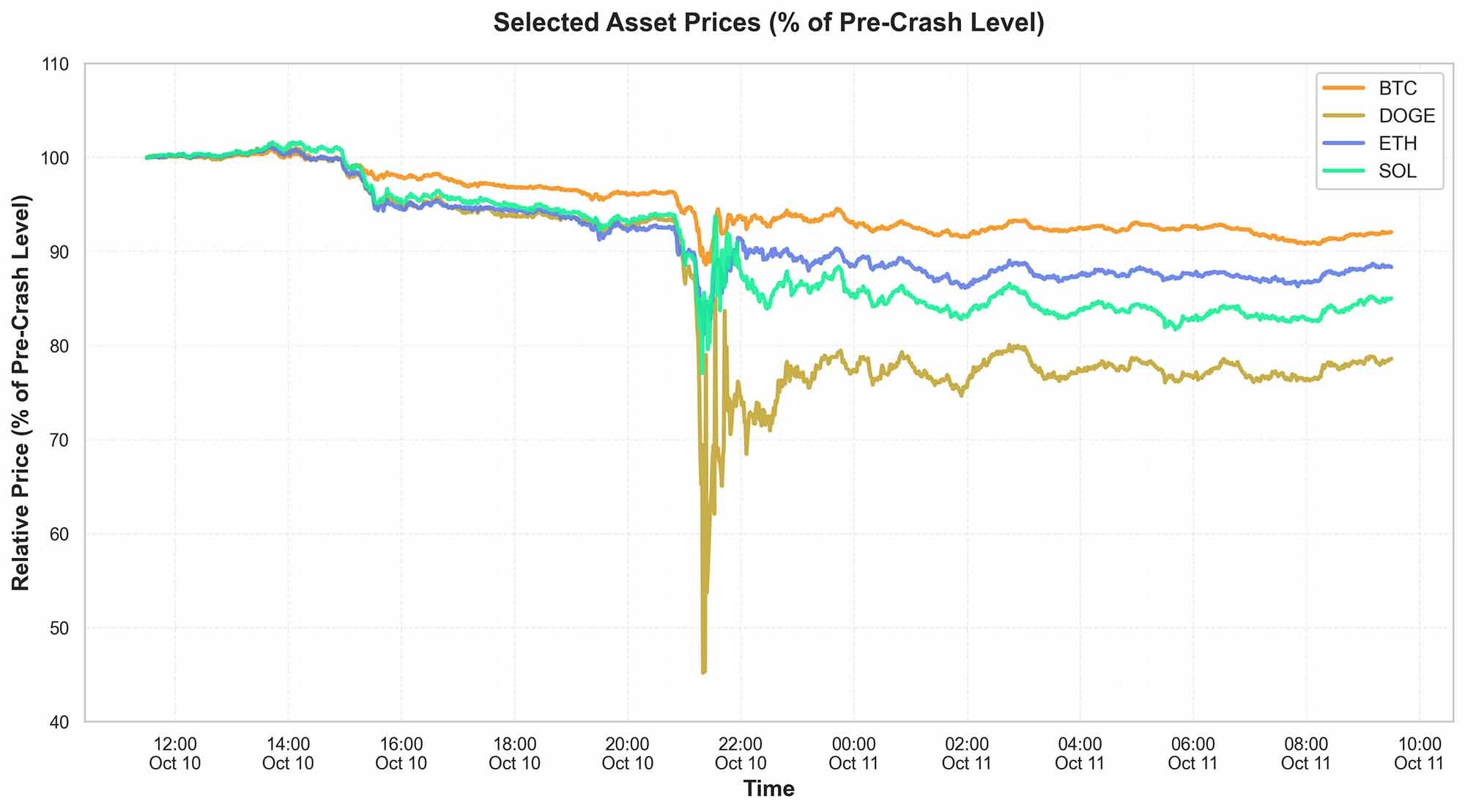
And each wave of liquidations pushed the market price lower, triggering more liquidations, which in turn drove it lower in a reflexive loop that fed on itself until the selling exhausted. On Hyperliquid, $2.1 billion in liquidations occurred in 12 minutes, and its auto-deleveraging system incurred $704.6 million in haircuts to cover $304.5 million in actual deficits, roughly 8 times the capital needed to keep the system solvent.
This event led to a shift in industry conversations around basis trading, one of the most common strategies institutional players use in crypto. Where they buy BTC on spot and simultaneously short BTC perps as a hedge, and collect the funding rate as yield while remaining market-neutral. But on October 10, the auto-deleveraging system on multiple exchanges forcibly closed the profitable short perp legs of these trades during the crash, leaving the traders suddenly holding naked long spot positions in a market that was down double digits.
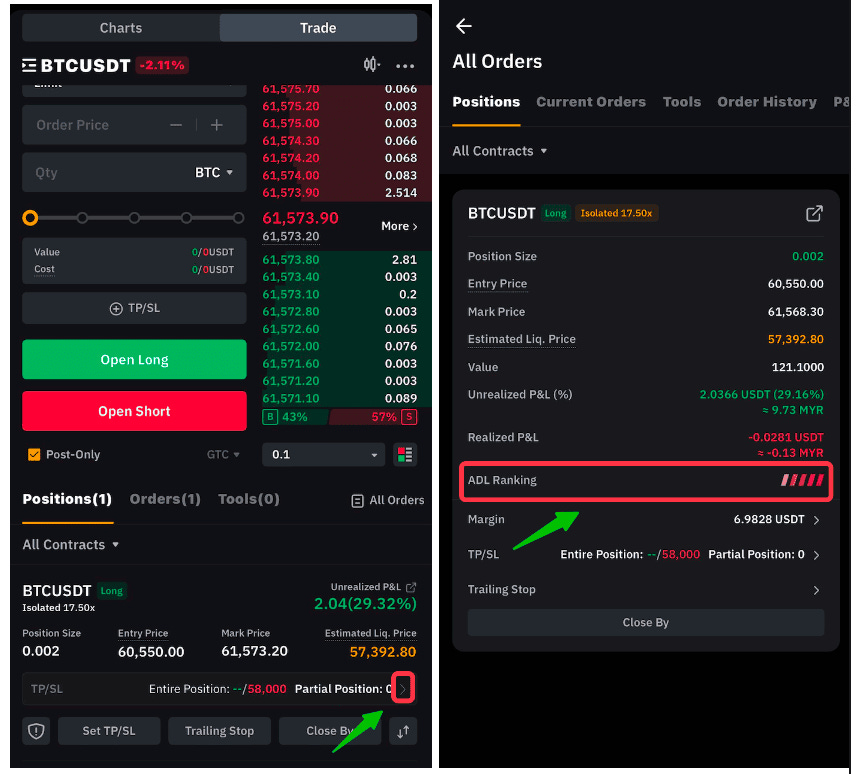
Note that these were people who had constructed a delta-neutral position specifically to avoid directional risk, and the exchange’s own liquidation mechanics turned them into unhedged longs at the worst possible moment.
And this is the problem everybody discovered with perps: path dependence, which is structural to how perpetual futures work, because the margin engine evaluates your position tick by tick rather than at a fixed expiry. It does not matter if BTC ends the week exactly where it started, because if it dipped 15% on the way there, your position may already be gone.
Compared with a put option, they can eliminate this problem entirely because you pay the premium upfront and your maximum loss is defined from the moment you enter the trade, regardless of what BTC does between now and expiry.
After October 10, the infrastructure response moved so quickly that it suggests we might just be waiting for exactly this kind of catalyst to justify rebuilding options. Derive, which had been running the old pooled-vault model, scrapped it entirely and rebuilt around a central limit order book with request-for-quote functionality and portfolio margin that let traders hold perps and options under one margin account.
This was the “switch” that the first generation of crypto options never had, because it meant you could use the margin from your perp positions to collateralise your options trades instead of locking up separate capital for each instrument, which is how every serious derivatives exchange in traditional finance has worked for decades. After this, Derive’s weekly volume hit a record $294 million and open interest crossed $1 billion.
Meanwhile, IBIT options also launched on Nasdaq with regulated central clearing, meaning now a central counterparty guarantees every trade so you do not have to worry about whether the person on the other side can pay, and they overtook Deribit’s entire open interest within months, pushing Deribit’s share from above 90% to below 39%.
The closest parallel to this in history is when the CBOE opened, and the Options Clearing Corporation removed bilateral counterparty risk from equity options at the time when Black-Scholes gave the market a shared language for pricing. Equity options went from something two banks arranged over the phone to the backbone of modern finance within about five years, and crypto compressed most of that same institutional buildout into months.
Then Coinbase bought Deribit outright, wrapping US regulatory infrastructure around the largest crypto options venue and giving American institutions a familiar on-ramp into a market that had been almost entirely offshore.
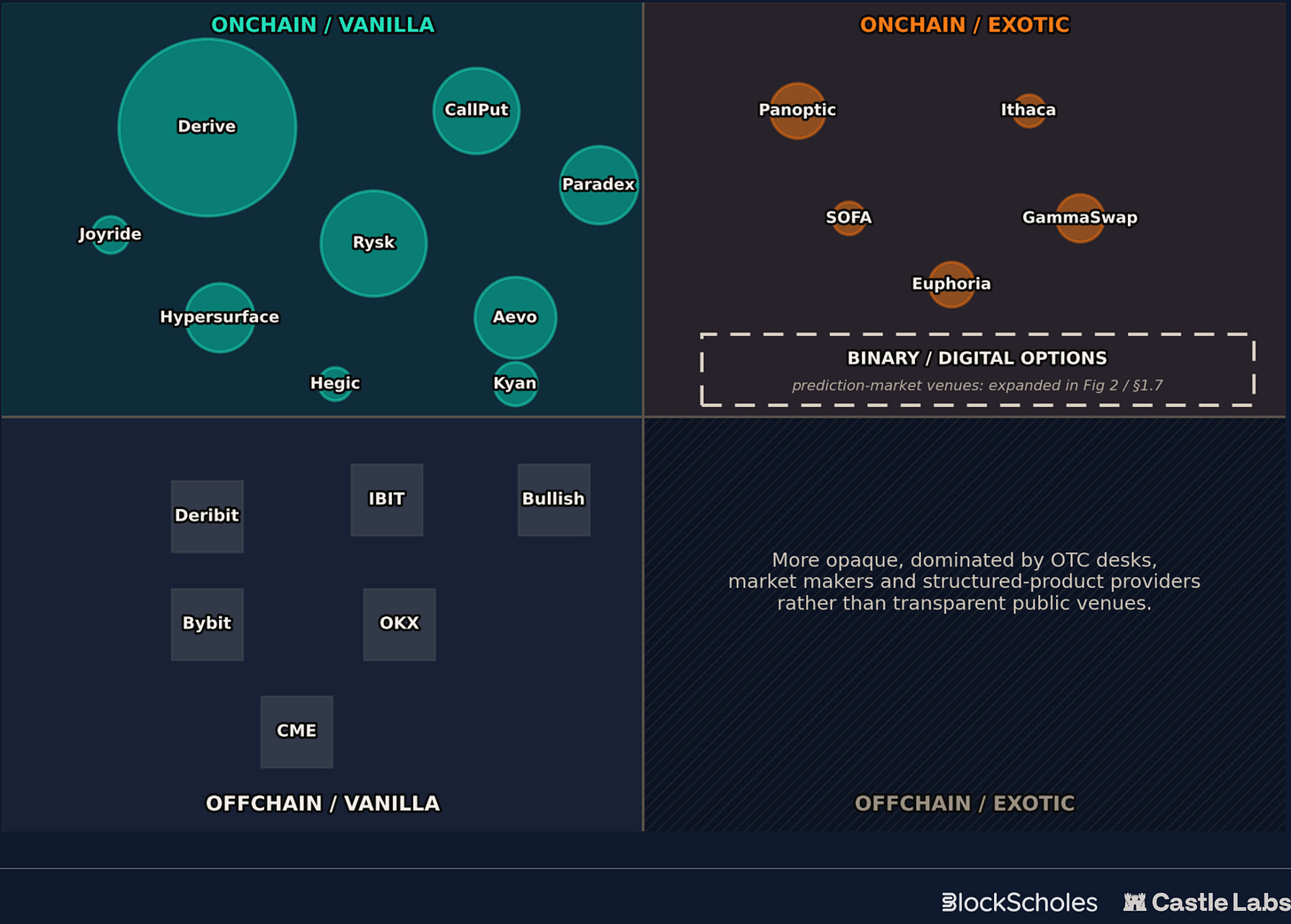
This made the case for crypto options the strongest it has ever been, but onchain options, meaning options that settle and clear on a blockchain rather than through a traditional exchange, still account for less than 1% of total crypto options volume. Almost all of the liquidity that exploded went to regulated, centrally-cleared venues like Nasdaq and Deribit rather than to DeFi protocols, which means the growth story is mostly playing out in the same institutional wrappers that traditional finance already occupies.
Because when you look at who is actually building retail-facing options products onchain right now, the products reaching everyday users are not the ones that attracted the billion-dollar open interest.
Who is on the Other Side
The products that retail is interacting with on-chain right now are covered call strategies repackaged with better underlying infrastructure. Where you deposit your BTC or ETH into a vault, the protocol sells call options against your token holdings to market makers, and you collect the premiums as yield. It’s being pitched as a passive income on the crypto you were going to hold anyway.
What’s happening here is the depositor is selling volatility, which means giving away the right to any upside beyond a certain price in exchange for a regular premium payment, and the person buying that volatility on the other side is a professional market maker who profits when the asset moves sharply.
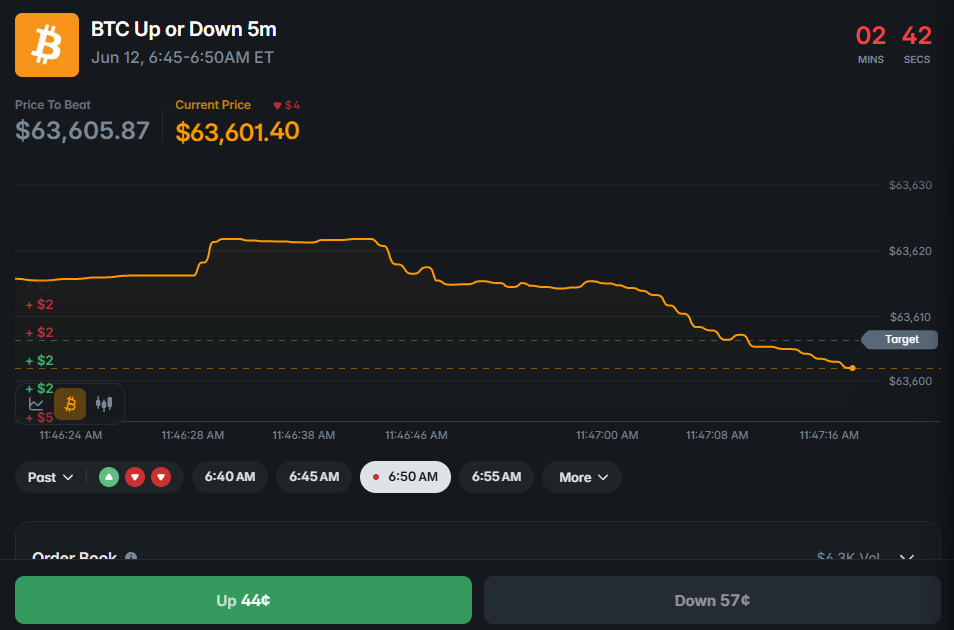
There are other products, like Euphoria, that take a different approach. Here Users tap cells on a price-time grid and collect a payoff if BTC enters their predicted range within five seconds, this is basically called a binary option spread, the same product that the European Securities and Markets Authority banned for retail sale in 2018, that Israel’s Knesset voted 51-0 to ban in 2017, and which the FBI has estimated generates $10 billion in annual fraud globally. Euphoria raised $7.5 million from over 100 investors to bring this on-chain.
Traditional finance did not wait for crypto to figure out that you can package the sell side of volatility as yield and hand it to retail. Derivative income ETFs have been doing this with equities for years, selling covered calls and puts against stock holdings and passing the premiums to investors as distributions, and the category has quietly grown to $147 billion in assets under management.
JPMorgan’s JEPI and JEPQ are the two largest products that sell options against broad equity indices that grind upward over time, so the yield you collect mostly comes at the cost of capping your upside rather than destroying your principal. But take a look at what happens when you apply this same strategy to a volatile underlying asset.
MSTY is a covered call ETF built on MicroStrategy stock, and its trailing yield is 244%. Ironically, the fund has also lost 62% of its net asset value since inception. When you dig into where that yield is actually coming from, 98.54% of MSTY’s distributions have been classified as return of capital, which means the fund has literally been handing investors back their own money, and the investors have been paying income tax on it.
You watch your account receive payments every month that feel like yield while the thing generating them shrinks underneath you, and then you also owe the IRS for the privilege of getting your own capital back.

MSTY is important because it shows what selling volatility looks like when applied to a volatile underlying, and crypto is the most volatile asset class these products have ever been built on. And understanding that risk is exactly what makes the current time the inflexion point for crypto options. Because the forces converging right now go far beyond just better vaults or fancier UIs.
The first and probably most important force is yield compression. The basis trade that was paying 25% annualised in 2021, where you buy spot BTC and short perps to collect the funding rate, has collapsed to just 4.46%. The easy yield that powered crypto’s growth phase has dried up, and options premium is one of the few remaining sources of organic yield tied to a real economic function, because someone is paying you actual money to transfer risk off their books.
When the basis trade was at 25%, nobody needed options to generate returns. But now that it sits at 4.46%, the market has a genuine economic reason to price risk properly with options for the first time, and demand is also coming from institutions that actually need to hedge their exposure, rather than from retail investors looking for leverage.
Second, when FTX collapsed, billions in open derivatives positions were locked inside the bankruptcy estate, and traders who had profitable trades sitting right there on screen could not close them, and could not do anything except file a claim and wait years. But onchain options settle directly to your wallet, and your collateral sits in a smart contract you can audit on Etherscan rather than on an exchange balance sheet you have to take on faith. For the institutional desks that learned this lesson by losing billions, moving derivatives settlement on-chain seems like a practical decision that their compliance teams can actually get behind.
And then there’s composability, which genuinely differentiates On-chain options from traditional ones. When an options position exists as a token on a blockchain, it plugs into every other piece of DeFi infrastructure that already exists. A covered call position can serve as collateral in a lending protocol. More products can be assembled programmatically from individual options legs and offered to users in a single transaction. And Portfolio margin across perps and options can be computed on-chain in real time rather than reconciled overnight by a clearinghouse.
None of this was possible when DOVs were running their Friday auctions in 2021, and none of it is possible on Nasdaq or Deribit either, because their settlement architecture was never designed for open, permissionless composability. What makes it interesting is that crypto is building capabilities that traditional derivatives infrastructure cannot replicate, rather than just catching up to what TradFi already has.
BTC options open interest has grown roughly 10x since early 2024 to about $80 billion across Deribit and IBIT combined. For the first time in the history of crypto derivatives, options open interest now exceeds futures open interest, which means the total capital committed to options exposure is larger than the capital sitting in the leveraged directional bets that have defined crypto trading for a decade.
And this is the signal to the inflexion point I wanted to make. Where the infrastructure works, the capital efficiency is solved, the regulatory clarity is arriving from multiple directions at once, and the market is voting with tens of billions of dollars.
That’s it for today!
Token Dispatch is a daily crypto newsletter handpicked and crafted with love by human bots. If you want to reach out to 165,000+ subscriber community of the Token Dispatch, you can explore the partnership opportunities with us 🙌
📩 Fill out this form to submit your details and book a meeting with us directly.
Disclaimer: This newsletter contains analysis and opinions of the author. Content is for informational purposes only, not financial advice. Trading crypto involves substantial risk - your capital is at risk. Do your own research.