


Hello,
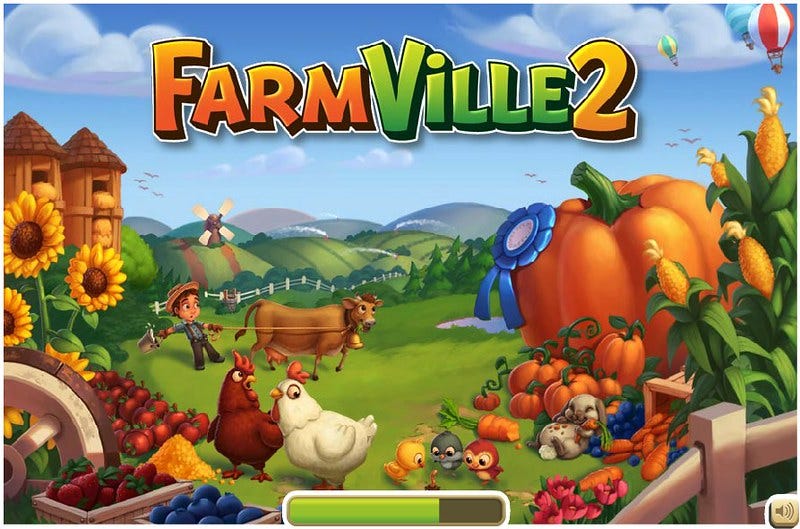
It’s 2010, or maybe 2011. I am sitting at my computer, playing FIFA 10 and Need for Speed: Most Wanted. Both are hit games in their respective genres. They offer engaging gameplay and real-world-like graphics (for that time), worth every penny I paid for them at the local game store. But lately, I have been clicking ‘harvest’ and ‘plant a seed’ in FarmVille, a free game within the Facebook ecosystem. I do this day after day for months.
At the time, I didn’t think much about why I preferred FarmVille over FIFA. But it is a nostalgic memory to recollect. In hindsight, I think I understand why FarmVille was more engaging to me.
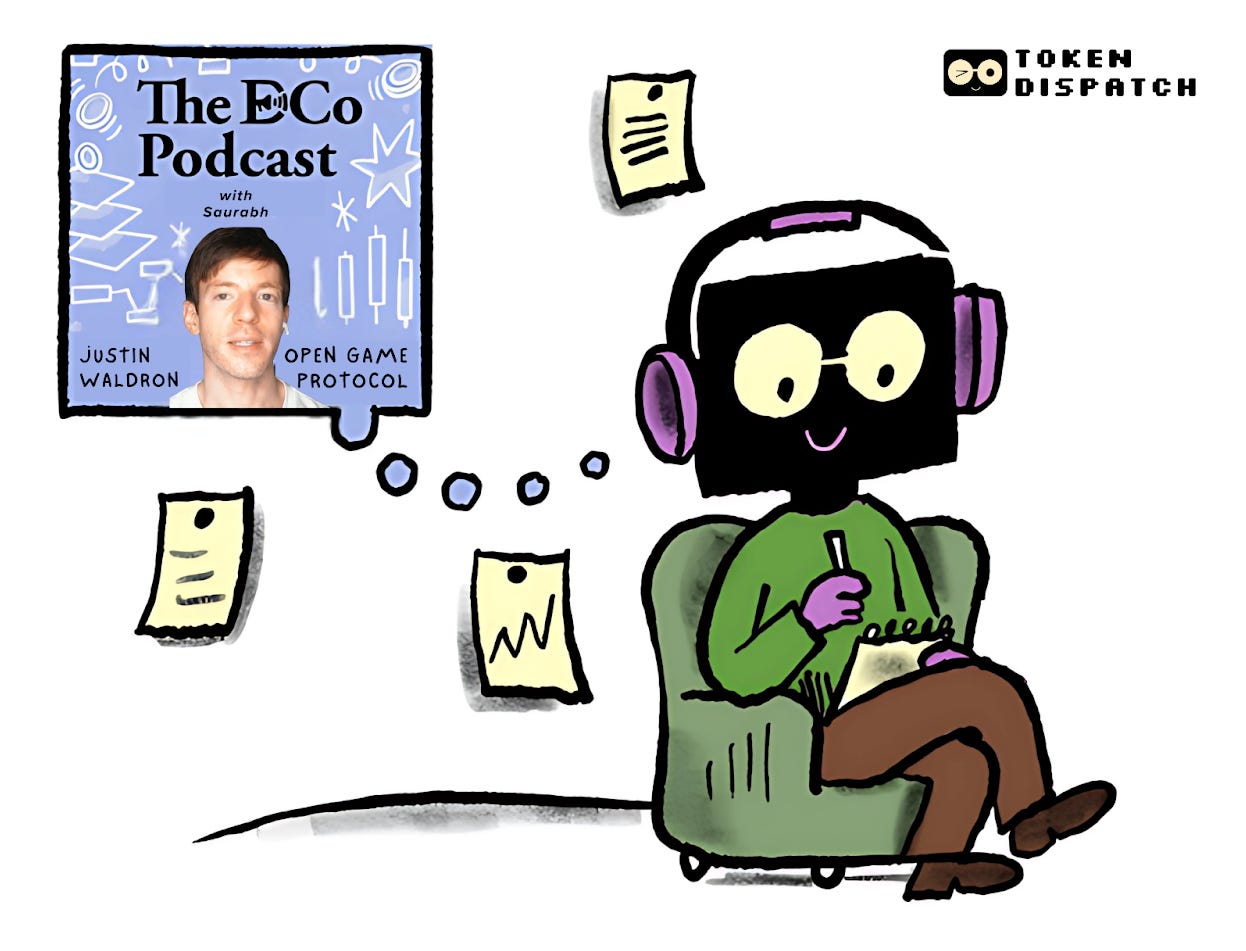
I often listen to a podcast from our partners at Decentralised.co, which leaves me reflecting on the chain of thoughts it speaks.
This week, I tuned in to the conversation between Saurabh Deshpande and Justin Waldron, founder of Zynga (the company that built those FarmVille games I couldn’t stop playing) and now founder of Open Game Protocol.
Some points from the episode sent me down a rabbit hole, thinking about distribution, game quality, and what happens when the gaming industry uses crypto to build an alternative distribution channel.
Back to why I chose FarmVille, with its 2D graphics and repetitive clicking, over games with heavy budgets, sophisticated development teams, and years of iteration.
On the days when I was just scrolling through my Facebook feed, my friends’ farms would pop up every 30-seconds. If I weren’t scrolling, Facebook sent me nudges in the notification panel. Every click showed visible progress harvesting crops, XP gained, and new seeds unlocked.
All of this was right there with minimal friction when I opened the game on Facebook, where I was already spending most of my free time. It felt like a community activity within the Facebook friends group. I even remember discussing FarmVille progress and who was leading whom with my friends at school.
The game quality didn’t matter as much; distribution was the primary appeal.
And distribution is a big deal for game developers. Justin tells us in the podcast that game developers spend around $65 billion a year buying user attention from Meta and Google, the two largest advertising platforms on the internet.

Each of those dollars spent on advertising is a dollar spent less on developing better games. What if there were a cheaper way to distribute games? Instead of allocating the entire marketing budget to advertising, what if developers incentivised players directly by rewarding them for playing their games? Think of it like a Customer Acquisition Cost (CAC) that is often seen in new-age D2C brands’ marketing playbooks.
This is a bet Justin and his team are taking with Open Game Protocol. What I like most about this approach is that they have identified a pain point many crypto token launch teams face, and are using games to address it on both sides.
How Crypto Solves the Distribution Problem
Token communities need distribution as much as games do. A token without holders is useless. But getting people to buy tokens is difficult. You can try airdropping, which just attracts farmers who dump after the initial pump. You can try your luck with liquidity providers, which can be costly and time-consuming. Marketing on the Crypto Twitter (CT) can be an option, but that, too, is expensive.
Meanwhile, game developers are spending billions to acquire the same attention and user acquisition.
This is where crypto could solve both problems. Token communities can fund reward pools that can be integrated into games. Players earn tokens for playing, while the community gets the distribution. Developers acquire customers at a fraction of the cost they would be spending to acquire the same user on advertising platforms.
But how rewarding can this model be compared to the advertising model?
Justin reminds us of the last time a game tried a reward-based distribution model. Remember Hamster Kombat. The Telegram-based, tap-to-earn game attracted 300 million users, at its peak, without spending a dime on advertising.
Although the game itself was simple, and its gameplay came nowhere close to anything an average gamer would have played, it was functional enough to distribute tokens.
Most players earned less than a couple of tens of dollars, yet 300 million users still played the game. This shows how crypto-enabled infrastructure could scale game distribution. For crypto, it addresses the challenge of adding utility to a token and circulating them among millions of hands more effectively than the airdrop strategy.
This kind of distribution can even create stickiness.
A player who earned tokens through 10 hours of gameplay will likely have a different relationship with those tokens than someone who bought them from a DEX or received them in an airdrop. This stickiness only adds to the number of token holders retained outside the game-driven distribution. However, it will do little to change the trajectory of the token’s price until these players constitute the majority of token holders.
But I keep thinking about what happens to game quality when distribution becomes the primary driver. Clearly, FarmVille’s quality of gameplay and graphics came nowhere close to FIFA’s. How, then, can these games, built around rewarding players in crypto and achieving maximum distribution, ensure top-quality gameplay and retain attention?
As a gamer, in my childhood, I set different quality bars for different kinds of games. I was not comparing FarmVille with FIFA based on their graphics and gameplay. They were like apples and oranges. FarmVille had my time and attention despite its inferior quality compared to other story-based games.
Justin and his team are building token-reward games as infrastructure to improve distribution for both the game and the token. However, for them to succeed, substandard games won’t cut it. These games still need to address some key challenges.
First, game developers need to fix the execution by removing friction. The success of these games will depend heavily on how seamlessly a player can discover the game, start playing, earn tokens, and do so without having to figure out how crypto works or how to sign transactions.
Even for those already in crypto, friction points must be removed. Justin and his team plan to do this by embedding wallets with a ‘Play’ button. I find this a smart move because wallets are already ubiquitous, with millions using Phantom, MetaMask and many others, to check prices and manage tokens daily. Games can piggyback on existing distribution and meet users where they already spend a lot of time. This addresses the discovery challenge. It’s like using the FarmVille-on-Facebook playbook, but in crypto.
Second, there’s the social element that the developers need to get right if this model has to work. FarmVille leveraged Facebook’s social network and showed my friends’ farms on my feed. We competed, compared progress and discussed strategies. Beyond being a distribution channel, the social network aspect became core to any gamer’s experience.
Token-reward games will also need to ensure that playing a Fartcoin game makes gamers feel they are participating in the Fartcoin community, beyond just making a few dollars. Although the infrastructure that platforms like Open Game Protocol offer can help with distribution, it is the community engagement element that will determine whether people will show up and stay.
For token-reward games to be effective over the long term, they will have to achieve a trifecta of smooth wallet integration, frictionless discovery through user-friendly interfaces, and social network features that make playing feel like participating in a community.
Achieving this is possible, but it’s an uphill task because there’s no precedent. No crypto game has mastered the token-reward system. Even the best games — Hamster Kombat, Axie Infinity, and Notcoin — have so far witnessed massive user spikes at first, followed by rapid declines. Sustaining the user base will be crucial for the model to make business sense. Incentives alone can’t carry the system forever.
That’s all for this week’s reflections. I will be back with more soon.
Until then, stay curious,
Prathik

Token Dispatch is a daily crypto newsletter handpicked and crafted with love by human bots. If you want to reach out to 200,000+ subscriber community of the Token Dispatch, you can explore the partnership opportunities with us 🙌
📩 Fill out this form to submit your details and book a meeting with us directly.
Disclaimer: This newsletter contains analysis and opinions of the author. Content is for informational purposes only, not financial advice. Trading crypto involves substantial risk - your capital is at risk. Do your own research.