


We decided transparency was trustworthy, so we made everything visible.
Every transaction. Every wallet balance. Every interaction with every contract. All of it permanent, public, searchable forever. We called it “trustless” because you didn’t have to trust anyone, and you could verify everything yourself.
Then we wondered why no one wanted to build real businesses on blockchain.
Turns out, transparency is only valuable when it reveals things that should be shown. Your medical records shouldn’t be transparent. Your salary shouldn’t be transparent. Your supplier contracts shouldn’t be transparent. Your credit history, your home address, your purchase history, and your political donations none of these benefit from radical transparency.

We built a system that forces you to choose: either expose everything to use blockchain, or give up blockchain entirely and go back to traditional databases with traditional intermediaries.
The first generation of blockchains prioritised transparency over privacy and marketed it as a feature. The second generation tried privacy coins, and regulators called them suspicious. Both approaches failed to reach the people who actually need digital infrastructure: businesses with sensitive data, individuals with private information, and developers building apps that must comply with GDPR.
Midnight argues the choice itself is wrong. The question isn’t “privacy or transparency?” The question is “who decides what gets revealed, and when?”

So What is Midnight?
Midnight is a privacy-focused blockchain that lets you prove things without revealing them.
Think of it like showing your driver’s license at a bar. The bouncer needs to know you’re over 21. They don’t need your address, your height, your organ donor status, or your real birthday. But traditional blockchain is like photocopying your entire license and posting it on the bar’s wall permanently.
Midnight uses zero-knowledge proofs to let you share just what’s necessary. Prove you’re over 21 without revealing you’re 23. Prove you have enough money without showing your bank balance. Prove you’re eligible without exposing your identity.
The network already launched on mainnet in January 2025. It’s live, processing transactions, and connected to Cardano as a partner chain. Over 800,000 users claimed NIGHT tokens during the Glacier Drop distribution. This isn’t a testnet or a whitepaper promise.


Most privacy coins go full blackout. Every transaction is hidden from everyone, including regulators. That’s why exchanges delist them, and banks won’t touch them. They chose privacy over legitimacy.
Public chains do the opposite. Ethereum and most Layer 1s expose everything to meet compliance requirements. Every DApp leaks user data by design. Every transaction reveals your wallet history to anyone with block explorer.
Both approaches fail in practice. Privacy coins can’t scale to real business. Public chains can’t handle sensitive data.
Midnight calls this the “privacy paradox” and built around it instead of picking a side.
How it Works
Midnight runs on zero-knowledge proofs (ZK-SNARKs specifically), but you don’t need to understand the cryptography to use it. The network handles three types of operations:
Public stuff everyone can see: Token transfers, governance votes, final settlement. This lives on-chain permanently and anyone can verify it.
Private stuff only you control: Personal data, business logic, sensitive information. This stays on your device and never touches the blockchain.
Proofs that connect them: When you need to prove something about your private data, Midnight generates a cryptographic proof. The network can verify the proof is valid without seeing the underlying information.

For example, a healthcare app can prove a patient consented to treatment without revealing their medical records. A financial app can prove you meet credit requirements without exposing your income. A supply chain can prove goods came from verified sources without revealing supplier contracts.
The key is “rational privacy”. You choose what to reveal and when. Not everything private, not everything public, but exactly what each situation requires.
Midnight uses two tokens that work together: NIGHT and DUST.
NIGHT is the main token. Fixed supply of 24 billion. You hold it, you stake it for governance, and block producers earn it as rewards. It’s listed on major exchanges, fully transferable, works like a normal crypto asset.
DUST is different. It’s not a token; it’s a renewable resource that NIGHT generates.
Here’s how it works:
You hold 1,000 NIGHT tokens. Those tokens automatically generate DUST over time into a designated address. The DUST caps at a maximum amount proportional to your NIGHT balance. When you execute transactions on Midnight (smart contract calls, transfers, DApp interactions), you spend DUST as the fee.
DUST is consumed when used and isn’t transferable. You can’t buy it, sell it, or send it to someone else. It just powers your network activity.
This separation solves several problems:
Predictable costs: Transaction fees don’t spike when NIGHT price goes up. You generate DUST at a fixed rate based on how much NIGHT you hold. Businesses can budget operational costs without worrying about token volatility.
Privacy by default: DUST is shielded, meaning DUST transactions don’t expose metadata. No one can see your transaction history, wallet balance, or activity patterns the way they can on Ethereum.
No gas wars: Since DUST isn’t transferable, you can’t tip miners to prioritise your transaction. The network uses dynamic pricing to manage congestion, but you can’t buy your way to the front of the line.
Fair access: DApp operators can sponsor user transactions by generating DUST for their users. This means people can use Midnight apps without owning any crypto. The blockchain layer becomes invisible.
The Three Layers of Midnight
Midnight is three integrated systems:
Midnight Network (the blockchain): Layer 1 blockchain secured initially by trusted nodes, transitioning to Cardano stake pool operators. Uses Substrate framework with GRANDPA finality and AURA block production. Processes private transactions using zero-knowledge proofs.
Compact (the programming language): TypeScript-based smart contract language designed for privacy. Developers write contracts that specify what’s public (visible on-chain) and what’s private (stays local). The Compact compiler generates the ZK circuits automatically. You don’t need to be a cryptographer to build privacy-preserving apps.
Lace Wallet (the interface): Browser extension wallet that manages NIGHT tokens, DUST generation, and private state. Users can interact with Midnight DApps without understanding the technical complexity. The wallet handles proof generation, transaction signing, and private data storage.
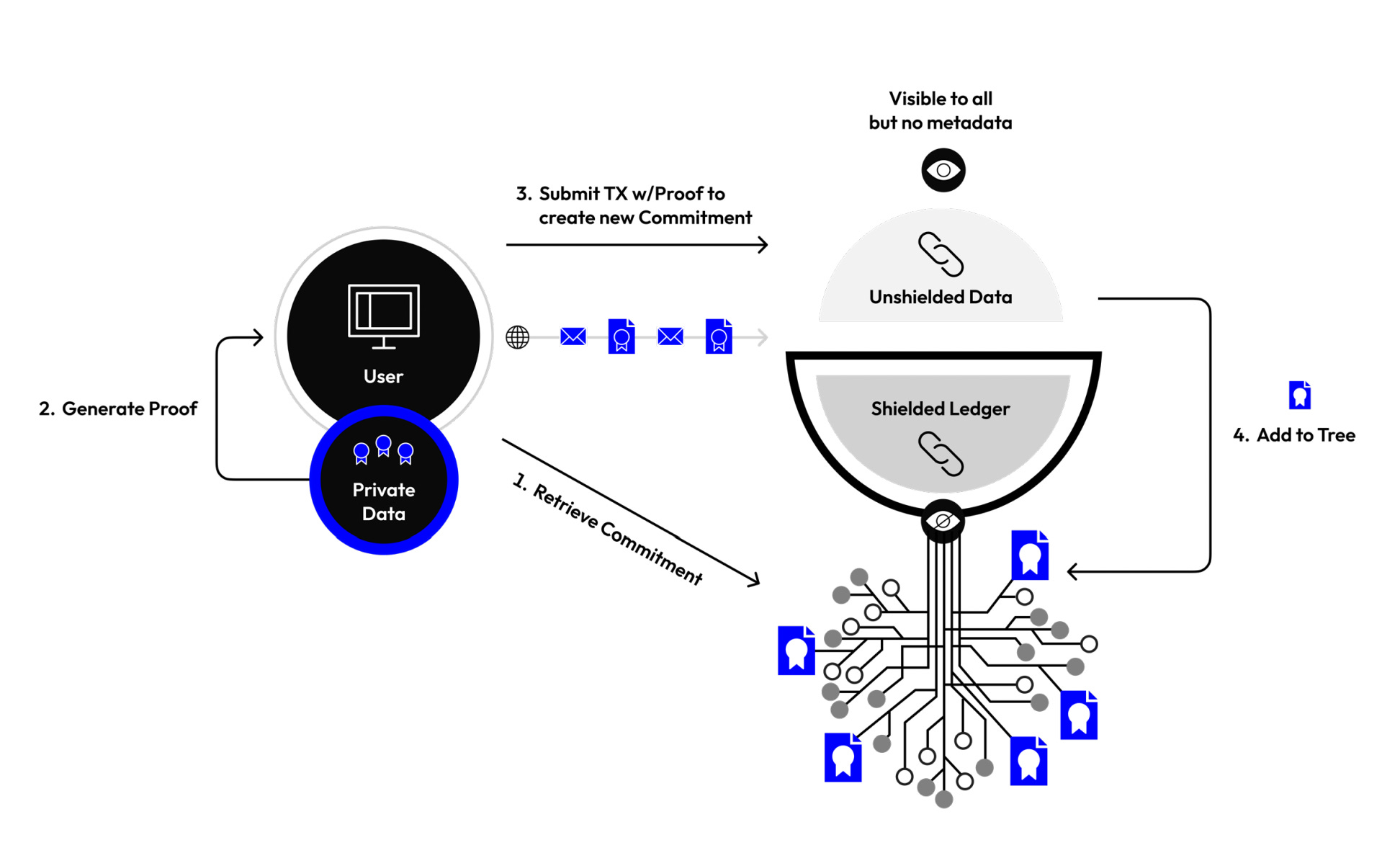
Together, these make privacy accessible. Most ZK systems require specialized knowledge to use. Midnight abstracts the complexity so regular developers and users can benefit from privacy without expertise.
Who’s Actually Using This?
The network launched in January 2025 and is early, but the initial distribution shows real traction:
The Glacier Drop (token distribution) had over 800,000 participants claim NIGHT across eight blockchain ecosystems: Cardano, Bitcoin, Ethereum, Solana, XRPL, BNB Chain, Avalanche, and Brave.
Distribution was designed to be broad. 50% of supply allocated to Cardano holders, 20% to Bitcoin holders, the rest split across other networks based on token holdings. No VC rounds, no private sales, no insider allocations. The entire initial supply went to community claims.
Major exchanges support NIGHT: Kraken, OKX, Bitpanda, HTX. Users can claim tokens directly through exchange integrations or via the NIGHT Claim Portal website.
Block production is currently run by trusted validators but transitioning to Cardano stake pool operators. SPOs can register to produce Midnight blocks and earn NIGHT rewards without affecting their Cardano operations. They run both roles simultaneously.
The Bigger Picture
Most blockchains choose a side: privacy coins go full blackout and get delisted, public chains expose everything and can’t handle sensitive data.
Midnight takes a different approach. Privacy is programmable, not binary. Developers choose what to reveal and when. Users control their own disclosure. Regulators can verify compliance without accessing raw data.
If that actually works in practice, it opens blockchain to industries that currently can’t touch public chains. Healthcare apps that protect patient privacy while proving treatment eligibility. Financial services that verify creditworthiness without exposing income. Supply chains that prove provenance without revealing supplier contracts. Digital identities that prove attributes without unnecessary disclosure.
The technical foundations are solid. ZK-SNARKs for proofs, a compact language for developer accessibility, a dual-token model for cost predictability, and a Cardano partnership for bootstrap security. The mainnet is live and processing transactions.
The hard part is everything else: building the ecosystem, proving the use cases, achieving adoption, navigating regulation, and demonstrating that “rational privacy” solves real problems better than existing alternatives.
Worth checking out?
If you’re building something that needs privacy, Midnight is one of the few viable options. Most privacy chains are privacy coins (focused on payments only) or dead projects. Midnight is live, funded, backed by serious engineering talent, and designed specifically for smart contract use cases.
The developer documentation is live at docs.midnight.network. You can write and deploy Compact smart contracts on testnet today. The tooling includes the Compact compiler, Lace wallet extension, proof server (runs locally), and full tutorials for getting started.
NIGHT tokens are available on major exchanges if you want exposure to the network. The token generates DUST which gives you access to execute transactions. You don’t need tokens to experiment with development on testnet, but you’ll need them for mainnet operations.
The community is active on Discord and social channels. The project is transparent about development progress, roadmap updates, and technical challenges. Regular updates from the Midnight Foundation and Charles Hoskinson (Cardano founder and Midnight proponent).
The best way to evaluate Midnight is to try building something. The docs have tutorials for deploying your first smart contract, interacting with the Lace wallet, and understanding the privacy model. See if the developer experience matches the promises. See if your use case actually needs this kind of privacy. See if the tooling works for your workflow.
Midnight isn’t going to replace Ethereum or Solana for public DeFi. That’s not the point. It’s infrastructure for apps that couldn’t exist on public chains. If you’re building one of those apps, it’s worth exploring. If you’re building something that doesn’t need privacy, you probably don’t need Midnight.
That’s Midnight, see you next week with another product deep dive.
Until then…DYOR.

Token Dispatch is a daily crypto newsletter handpicked and crafted with love by human bots. If you want to reach out to 200,000+ subscriber community of the Token Dispatch, you can explore the partnership opportunities with us 🙌
📩 Fill out this form to submit your details and book a meeting with us directly.
Disclaimer: This newsletter contains analysis and opinions of the author. Content is for informational purposes only, not financial advice. Trading crypto involves substantial risk - your capital is at risk. Do your own research.