


This is the first part of a three-part series on Brian McCullough’s How the Internet Happened: From Netscape to the iPhone. Today: how the web was built, who got it right, who got it spectacularly wrong, and what a barefoot kid on the cover of Time magazine changed forever.
Happy Monday.
What is the one hope that crypto runs on? It’s definitely not just the number-go-up kind, but the deeper belief that the people who continue building after every crash carry with them: the belief that the only thing missing is the moment when it clicks for everyone else, the way it clicked for you.
The way they describe this hope, when trying to explain it to someone outside the space, always circles back to the same reference point: the early internet. Netscape. 1995.
I’ve used that reference myself, but recently I realised I had been using it the way people use historical analogies to sound smart and feel reassured at the same time, without actually knowing the history. So, I went and read the history itself. Now you’re stuck reading a book report on a book about a different book on a Monday morning before your coffee.
How the Internet Happened by Brian McCullough covers the period from 1993 to 2007, from the first downloadable web browser to the first iPhone. It is the best book I have found for understanding what the Netscape moment actually was, what made it happen, and what it took for the internet to go from a technology that worked to a technology that everyone used. Those are two different things. And all of it maps onto crypto in ways that are sometimes encouraging and sometimes a little uncomfortable.
Three parts. Today is where it starts.

On August 9, 1995, a company called Netscape went public.
Netscape had existed for just sixteen months. It had generated $17 million in revenue but had never made a profit. When the markets opened that morning, buyer demand was so overwhelming that Schwab customers were greeted by a special recording: “Welcome to Charles Schwab. If you’re interested in the Netscape IPO, press one.” One investor even called and offered to take out a mortgage on her home.
The stock was priced at $28. The first trade of the day hit at $71. By the time it was over, the market had valued Netscape at $2.1 billion.
The Wall Street Journal put it on the front page the next day: “It took General Dynamics Corp. 43 years to become a corporation worth $2.7 billion. It took Netscape Communications Corp. about a minute.”


A joke went around Wall Street. August 9 also happened to be the day Jerry Garcia died. What were Jerry Garcia’s last words? Netscape opened at what?
The twenty-four-year-old cofounder of the company, a few months out of college, was worth $58 million before lunch. By December 1995, his stock would be worth $171 a share— six times the IPO price. And his face would appear on the cover of Time magazine, barefoot, sitting on a throne. His name was Marc Andreessen.
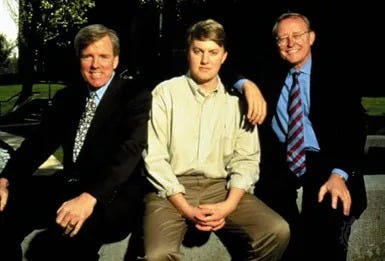
That IPO was the big bang. Everything that came after, Amazon, Google, Facebook, the iPhone, crypto, AI, the whole mess, traces back to that day. To know why, let’s go back two years, to a university basement in Illinois.
The internet existed before Marc Andreessen. It had existed for decades, connecting universities and government labs in a dense, arcane network that required a working knowledge of Unix to navigate. Tim Berners-Lee invented the World Wide Web in 1990, a layer on top of the internet built on the genius of the hyperlink, where one page connects to another, one idea links to the next. Berners-Lee was a researcher at CERN in Switzerland. He imagined the web as a tool for physicists to share data.
What nobody had done yet was make any of it usable for a normal person. Yeah, the crypto people in the room finally know why I am reading this out loud.
In 1992, Marc Andreessen was a twenty-one-year-old part-time student programmer at the National Center for Supercomputing Applications at the University of Illinois, earning $6.85 an hour. He was large(six feet two), loud, enthusiastic, and allergic to authority. A colleague named Rob McCool remembers meeting him: “All of the computer science students I’d come across were quiet, kind of nerdy types. And here’s this gigantic Scandinavian guy with a purple computer, and he’s wild-eyed and telling me about all this stuff that’s gonna be great.”
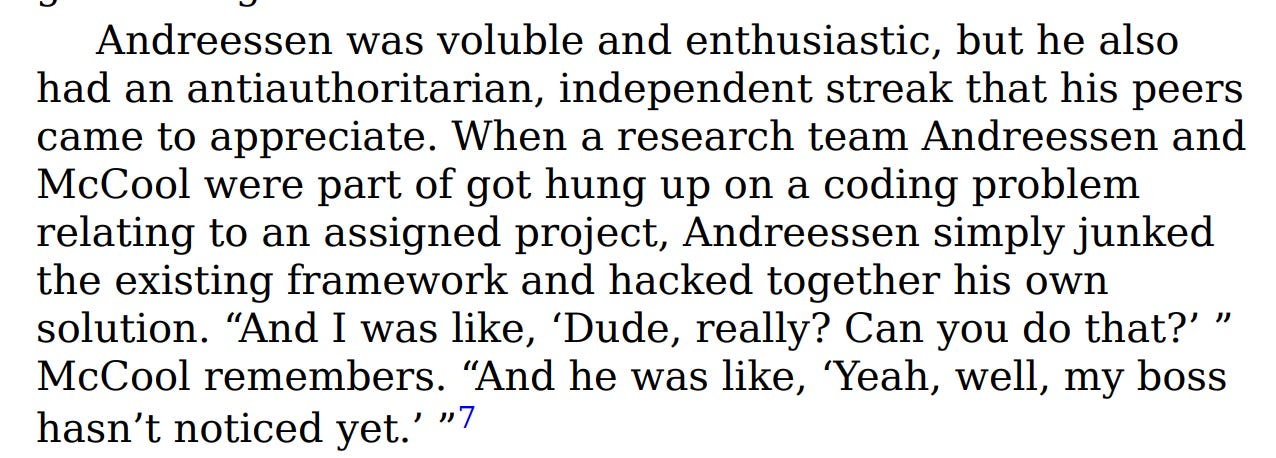
Andreessen’s big idea was nothing but what if the web looked good?
At the time, the web was still a text-only research instrument. Berners-Lee, in fact, had a fairly pure vision for it, centered on scientific papers and academic collaboration. When someone proposed adding images, he reportedly said that images were “the first step on the road to hell. And the road to hell is multimedia content, magazines, garishness, games, and consumer stuff.”
Andreessen disagreed. “I’m a Midwestern tinkerer type,” he said. “If people want images, they get images. Bring it on.”
We are fighting with the same ghosts in crypto right now. The purists want the protocol kept clean, self-custody, trustless, and permissionless. Every time someone builds an abstraction layer that makes it easier, there is a version of Berners-Lee’s objection. You’re compromising the vision, you’re reintroducing trust, you’re building something that just looks like a bank. And sometimes those objections are right. But Andreessen was also right. The people who made it beautiful are the ones who changed the world.
In December 1992, he and a colleague named Eric Bina started coding. In a little over a month of round-the-clock work, they had a browser. It was called Mosaic. On January 23, 1993, it was posted online. Tim Berners-Lee himself forwarded the announcement: “An exciting new World-Wide Web browser has come out, written by Marc Andreessen of NCSA.”
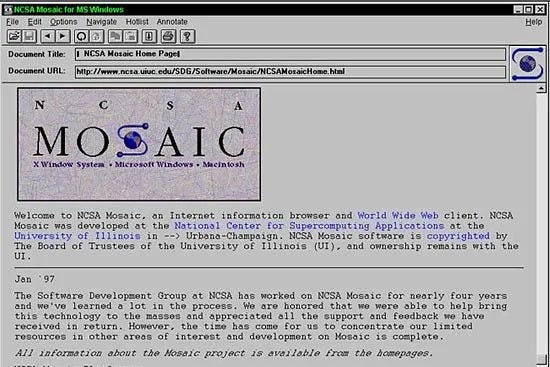
Within eighteen months, Mosaic had been downloaded three million times, roughly equal to the entire web population at the time. Websites were multiplying by the thousands. Fortune magazine named the browser one of its products of the year, alongside the Wonderbra and Mighty Morphin Power Rangers, noting: “This software is transforming the Internet into a workable web, instead of an intimidating domain of nerds.”
The NCSA promptly tried to sideline Andreessen, assigning seasoned managers to oversee his team and asking him to “give someone else a chance to share the glory.” He didn’t even pick up his diploma when he graduated. He went to California when he was just twenty-two.
Now let’s talk about the founding myth of the modern internet.
Jim Clark was the founder of Silicon Graphics, the company that made the computers behind the dinosaurs in Jurassic Park. By early 1994, he had been eased out of his own company. He was angry, he was fifty, and he had billionaire envy. Clark had built a billion-dollar company and had a net worth of only $20 million to show for it. He was looking for a second act.
A friend mentioned Marc Andreessen. Clark loaded Mosaic onto his computer. Then he emailed a kid he had never met, saying:
“You may not know me, but I’m the founder and former chairman of Silicon Graphics... I plan to form a new company. I would like to discuss the possibility of you joining me.”
Andreessen wrote back the same day.
They met for dinner. Clark offered Andreessen the chance to build a proper company around the browser, with funding, staff, and stakes. He flew the entire Mosaic team, a bunch of corn-fed Midwesterners who had been making six dollars an hour, out to California, put them up at a hotel, and typed up identical offer letters on his laptop, then printed them on the hotel’s fax machine. Clark offered each of them $65,000, a week in Tahiti on his yacht, and 100,000 shares of stock in the new company.
“We didn’t really know much about Jim Clark,” one of the team recalled. “But we trusted Marc. He gave us all these papers to sign. We just met him for one night. The next morning, we all walked in and quit. That was on Thursday. By Saturday, we were in California picking out apartments.”
The company they built above a Mexican restaurant in Mountain View would become Netscape. The browser they built, called Navigator, captured 80% of the market within two years. It was fast, beautiful, and it worked. Berners-Lee’s academic dream had been handed to the masses.
And then Bill Gates noticed.
Here is the thing about Bill Gates in 1994. He was not an idiot. He was, in fact, one of the shrewdest technology strategists alive. Microsoft controlled 70% to 90% of all computers sold worldwide. Windows 95 was about to drop. The company had a $38.5 billion market cap. Over the past five years, revenue, profit, and stock price have all quadrupled.

Gates and almost every other powerful person in technology, like the cable titans, the Hollywood moguls, and the telephone executives, had spent years building toward something called the “information superhighway.” It was the future everyone agreed on, which involved interactive television, five hundred channels, movies on demand, and shopping from your couch. The living room was going to be the center of the networked world. The TV was going to go smart. And whatever platform ran on those smart TVs, that was where Microsoft wanted to be.
To Gates, the internet was a tool for geeks. It ran on dial-up modems. It required Unix knowledge. People watched television, not the internet.
He was wrong, of course. The information superhighway was already here. Berners-Lee had built it. Andreessen had made it beautiful, and Netscape had given it to the world.
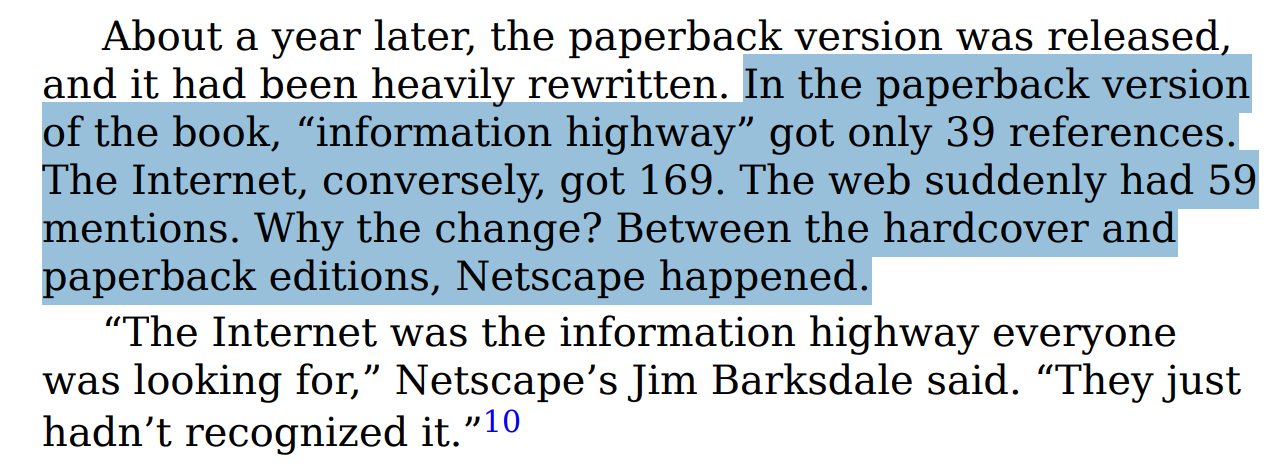
The correction in Gates’s book is one of my favorite details in the entire book. In November 1995, Gates published The Road Ahead, his vision of technology’s future. The hardcover index had 68 references to “information highway” and only 46 to “Internet.” A year later, the paperback was released, heavily rewritten. “Information highway” dropped to 39 mentions. “Internet” shot to 169.
Netscape came out between those two editions, and Gates had to rewrite the whole thing.
On May 26, 1995, Gates sent a memo to every senior executive in the company. It became one of the most famous documents of the internet era. It was titled “The Internet Tidal Wave.” Everything stops, everything reorients, now. They licensed browser code, put a small team on it, and shipped Internet Explorer. Microsoft was in the browser business. The browser wars were on.
But a completely different company had already figured out the mass market, and it wasn’t doing any of this through browsers or tech-savvy. America Online was mailing CDs to people’s homes. Literally. You’d find one in a cereal box, or tucked into a magazine, or stuck to the back of an airline headrest. You put it in your computer, clicked a few things, and you were online. So easy.
At its peak, AOL had 35 million subscribers paying $21.95 a month. A third of all time on the platform was spent in chat rooms, where strangers talked to strangers around the clock about nothing and everything. Facebook was seven years away, but the instinct was already there. AOL had built the first mass-market social network and barely knew what to do with it.
This is where I thought about Coinbase. This is what crypto was for a long time. A walled garden, custodial, simple, slightly expensive, occasionally clunky, that brought millions of people in. You can argue about whether that was the right trade-off. AOL’s users mostly didn’t graduate to the open web either. But they came.
Then there was Yahoo. Two Stanford PhD students, Jerry Yang and David Filo, had started keeping a list of good websites for the same reason everyone needed one: The web was growing faster than anyone could keep up with. They called it Jerry’s Guide to the World Wide Web. Traffic exploded. They renamed it, cleaned it up, and went public in 1996. Yang and Filo became overnight heroes of the internet age.
Reading all now, McCullough’s argument is hard to shake.
The user experience was the only bottleneck, not the technology. The internet existed for decades before most people used it. What changed things was Netscape making the web clickable, AOL making it approachable, Google making information findable, and the iPhone making all of it portable. Every time someone simplified the experience, adoption exploded.
Crypto is where the internet was in 1995. You all said it, and I agree. The infrastructure and technology—amaze amaze amaze. You can move value across the world in seconds, earn yield without a bank, and own things that can’t be taken from you. But most people cannot do any of this without feeling like they are defusing a bomb.
Netscape closed it for the web. Crypto is waiting for that moment. Square auto-enabling Bitcoin payments for merchants might be it. Aave building a savings app that looks like Revolut might be it. Some twenty-two-year-old in a university basement right now, annoyed that this is still so hard, is probably building it.
The browser didn’t explain the internet. It just made it easy enough that nobody needed an explanation.
Part 2 is next Monday: The gold rush goes mad. Amazon builds e-commerce from a garage. eBay figures out how to make strangers trust each other. And then the whole thing inflates into the most spectacular financial bubble since the tulips.

Token Dispatch is a daily crypto newsletter handpicked and crafted with love by human bots. If you want to reach out to 200,000+ subscriber community of the Token Dispatch, you can explore the partnership opportunities with us 🙌
📩 Fill out this form to submit your details and book a meeting with us directly.
Disclaimer: This newsletter contains analysis and opinions of the author. Content is for informational purposes only, not financial advice. Trading crypto involves substantial risk - your capital is at risk. Do your own research.