


Hello,
Everyone is talking about Hyperliquid’s token price and calling the ICE deal the biggest institutional validation in crypto history. So why did the company that owns the New York Stock Exchange just volunteer to give up the one layer that has defined the exchange business since electronic trading replaced floor pits? Matching and settlement.

Exchanges have spent 25 years telling shareholders that the matching engine is the moat. But if that layer can be outsourced to a two-year-old protocol, the question is what’s left of an exchange.
I think the exchange business model is about to go whack, and this deal is where it starts. Let’s drill!!

StablesReward: Your AI Agent Spends, You Earn
AI agents can surf the web, read reviews, and book hotels for you. All these tasks cost money. But what if these tasks could earn you back something?
StablesReward does just that. Once you connect your agent to an MCP endpoint, it gives your agent a menu of paid tools. Every call your agent pays for earns you miles or stocks. And this is in addition to the rewards you earn anyway on your own spending across 800+ merchants.

Every purchase pays you back. The best part is that you can choose how you’d like to be rewarded. Transfer miles to airlines and hotels, or let your stocks build a portfolio from the spend you were making anyway.
Launching soon. Free to join.
What’s Left of an Exchange?
When electronic trading killed the floor pit in the early 2000s, everyone assumed the specialists were the casualties. Those guys in the coloured jackets shouting across the NYSE trading floor, waving paper tickets, and making markets with hand signals and eye contact were replaced by servers in data centres in New Jersey, and the financial press wrote eulogies about the death of a romantic era.
But here’s what nobody pointed out at the time. The New York Stock Exchange itself was completely fine. The building on Broad Street turned into a television studio. The listing business kept printing money, even more now. The regulatory charter that lets companies go public on the NYSE was worth the same the day after electronic trading arrived as the day before.
The floor specialists thought they were the exchange. But in reality, they were just the exchange’s technology layer, and when better technology came along, the exchange shrugged and swapped them out.
I thought a lot about this while reading coverage of the ICE and Hyperliquid deal, because I think we are watching the exact same thing happen again, one layer up. For twenty-five years, exchange CEOs have been telling shareholders that the matching engine is the new floor. That the proprietary software that pairs buy orders with sell orders separates a great exchange from a mediocre one. That the billions spent on co-located data centres and microsecond latency improvements represent an irreplaceable competitive advantage. And the whole time, the real advantage sat underneath all that technology in the most boring place possible. It was sitting in a CFTC filing cabinet.
Let me explain: when a pension fund wants to trade crude oil futures. The fund manager does not shop around for the exchange with the prettiest matching engine. They call their broker at Goldman or JP Morgan, who holds a clearing relationship with CME’s clearinghouse, which in turn holds a derivatives clearing license from the US government that took decades of capital commitments and regulatory trust-building to obtain.
If their counterparty defaults, CME’s guaranty fund absorbs the hit. If the guaranty fund is not enough, CME’s own capital is on the line. The entire system runs on a chain of regulated guarantees that nobody can fast-track or replicate without going through the same decade-long process of proving to federal regulators that you can be trusted with institutional money. The matching engine, the software, is the least interesting link in that chain. A good engineering team can build one in a few months. What they cannot build is the government’s trust.
A wonderful bit of corporate history about McDonald’s parallels what is happening in the exchange industry right now. In 1957, Harry Sonneborn, McDonald’s first CEO, told a group of MBA students that they were wrong about what business the food giant was in. The students said it was selling hamburgers, but Harry denied it, saying it was real estate.
McDonald’s does not need to cook a single burger to make money. The franchisees cook. McDonald’s owns the land under the restaurants, and that land appreciates whether the burgers are good or terrible. Every strategic decision McDonald’s has made over the past seven decades follows from that one insight.
Jeff Sprecher figured this out way before, and honestly, the man might be the most underrated strategist in American finance. He has spent $35 billion on acquisitions across his career, and every single one followed the same logic.
He bought NYSE for $11 billion in 2013, for the market data business that now charges every institutional desk in America millions a year for feeds they literally cannot trade without. Between 2018 and 2023, he bought two mortgage platforms that now process most US residential mortgage originations. Analysts even questioned why an exchange company was buying mortgage software. But his strategy has always been to buy toll booths on capital flows that cannot be rerouted.
And now he has volunteered to hand the matching and settlement technology for perpetual swaps to Hyperliquid, and everybody is screaming why ICE would give away its keys. But Spencer answered with the most expensive action he’s ever taken: the matching engine was always the burger. The regulatory license is the real estate.
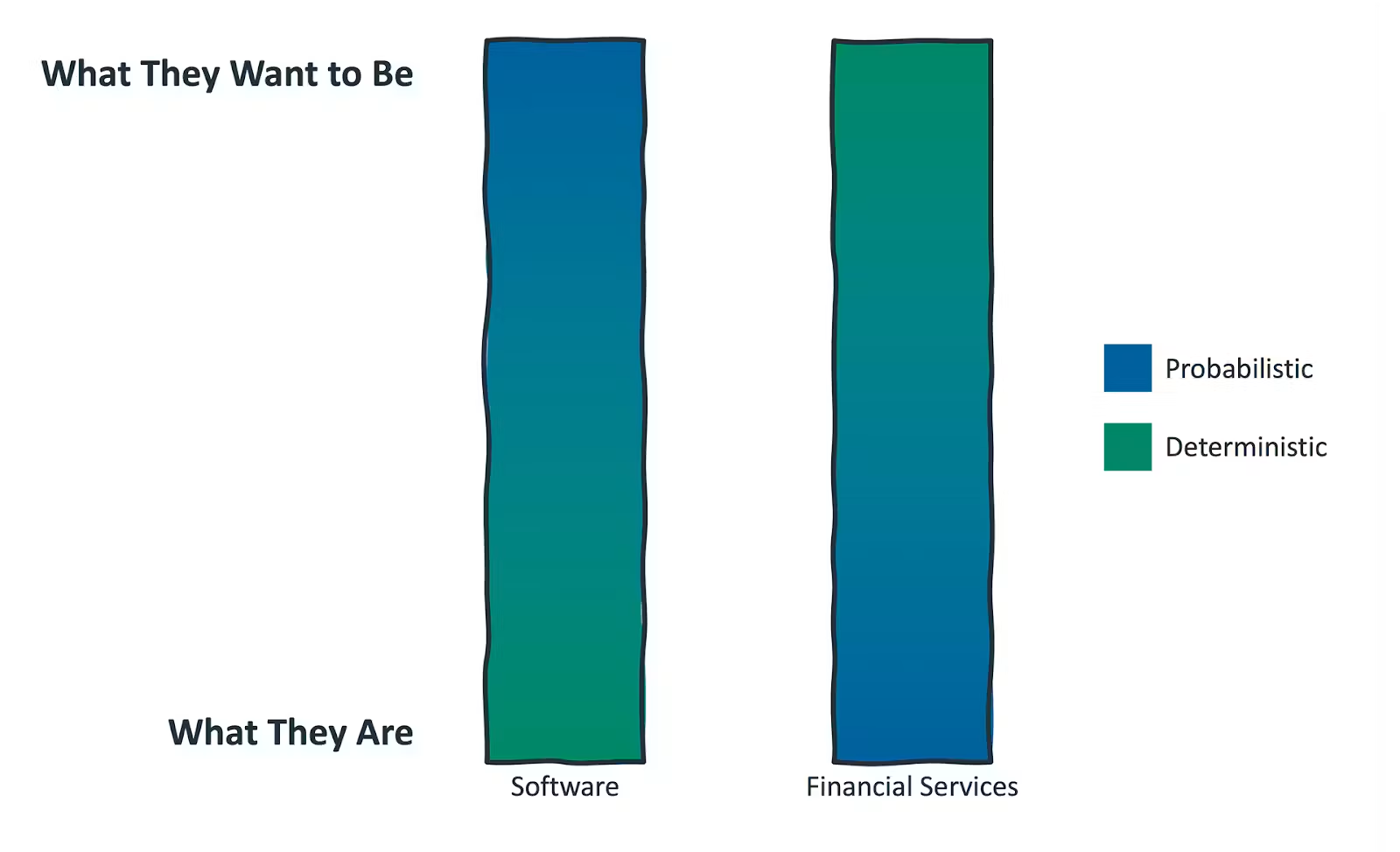
CME is the living proof. Eurex launched a U.S. exchange in 2004 to take Treasury futures away from Chicago with cheaper fees, and a consortium of Wall Street banks tried the same thing with ELX in 2009. Both folded, because every trader’s existing positions already sat at CME’s clearinghouse, where each new trade nets against everything they hold, and that netting saves more margin than any rival’s fee discount could ever return.
So if exchanges sell permission and not technology, and if ICE just proved it by outsourcing the technology to a two-year-old protocol, the obvious next question is why now. Why did Sprecher pick this exact moment to break character?
Because a product is coming straight for the exchange industry to whack its liquidity and its moat. Perpetual swaps are the fastest-growing instrument class in derivatives history, and they are structurally designed to gut the revenue model that every traditional exchange currently depends on to justify its stock price.
The real threat perps pose to exchanges is how they roll revenue. In traditional futures, contracts expire, so every time a trader wants to keep a position alive past expiry, they have to roll forward into the next contract; every roll is a transaction the exchange charges fees on, meaning a single position held for a year can generate six fee events.
That roll revenue is why CME trades at 30x earnings instead of 15x, and perps eliminate it completely. A contract that never expires never needs to be rolled, and the funding rate keeps them tethered to spot, flowing peer-to-peer without the exchange touching a cent. When perpetual swaps became a serious regulatory conversation in the US, exchange stocks collectively lost roughly $18 billion in market cap in two days.
Sprecher has no choice but to offer perps. The product did $90 trillion in volume globally last year, Hyperliquid alone pulled $900 million in revenue in its first full year without a single American user, and every institutional desk on the planet wants access. But offering perps also cannibalises the futures revenue that funds his entire business. When every option on the table is bad, and the only choice is between which one kills you slower. He picked the one that at least lets ICE survive the transition with its franchise intact.
Instead of spending billions rebuilding continuous clearing from scratch and then waging a multi-year regulatory battle to get the CFTC comfortable with it, Sprecher plugged into infrastructure that already solves the problem natively.
Another thing to note is that Hyperliquid is not an exchange. It is a protocol. The protocol does not know or care whether the entity deploying on top of it is the company that owns the New York Stock Exchange or some anonymous team launching a meme coin market from a beach in Bali. It just matches and settles.
The company that owns NYSE is now, in structural terms, an application running on someone else’s platform, the same way a startup runs its entire business on AWS and Amazon provides the compute layer without caring what gets built on it.
In the language of the Fat Protocols thesis that crypto has been debating since Joel Monegro published it in 2016, ICE has voluntarily turned itself into a thin application sitting on top of a fat protocol. The protocol layer captures the base infrastructure value. The application layer survives on whatever premium it can charge for regulatory compliance and institutional trust.
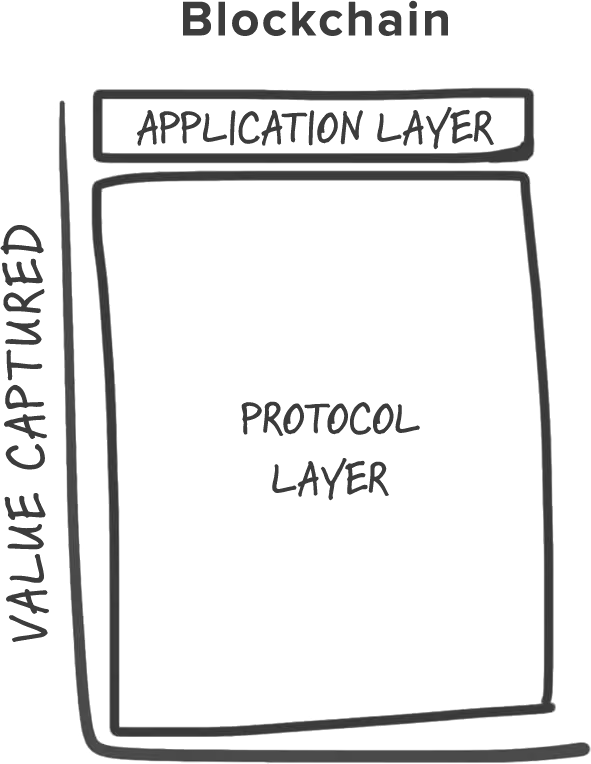
I think Sprecher is right that the premium is fat enough to sustain a massive business, and I will get into why in the section ahead. But I also think the valuation consequences for the broader exchange industry are something that nobody has properly thought through yet. If the matching and settlement technology that justified exchange stock premiums for fifteen years can be outsourced to a protocol that did not exist three years ago, what were those premiums actually paying for?
Those multiples priced in the fact that exchanges own irreplaceable proprietary technology, and ICE just demonstrated that the technology is a swappable module. What remains is the regulatory franchise and the distribution network, and those are genuinely valuable, but they are not technology company assets. They are utility company assets.
The Primitive That Eats Finance
Most coverage of the ICE trade.xyz deal treats perpetual swaps as a product, like ICE just added a new item to the menu. But Perps are not a product, they are a financial primitive. Think of them like Lego bricks. A single Lego brick is boring, but the shape is so fundamental that you can build anything literally out of enough of them.
Perps work the same way. A stablecoin like DAI is a perp, a margined future is a perp, even a Uniswap LP position is roughly a perp. They look like completely different financial products, but they are all the same underlying structure. If you stack enough of these bricks together in the right combination, you can reconstruct any financial instrument that exists, like options, structured products, insurance contracts, anything.
The math behind this is called a Taylor series, and in plain terms, it means a settlement engine designed for perps isn’t an engine for one product. It is an engine for building every financial product. ICE did not add a product to its shelf. It plugged into the primitive layer that could subsume every product on the shelf. Equity settlement is a 1-perp, stablecoin clearing is a 0-perp, options exposure is a combination of higher-order perps, and ICE’s mortgage platforms process collateralised loans that are functionally a variant of the same primitive.

ICE has just connected itself to the infrastructure that could eventually route all of those flows through a single settlement layer. I don’t think Sprecher has fully thought through what he plugged into, and I mean that as a compliment to the Hyperliquid team, because I don’t think anyone outside a very small circle of crypto-native researchers has thought through what perpetual contracts actually become when you take the math seriously.
CME is the most dangerous stock in the exchange sector right now, but if you break it down, its entire monopoly rests on liquidity gravity and its regulatory franchise, and liquidity gravity only holds when there is no alternative venue where a trader can get the same exposure with better economics.
Perps are that venue. A trader holding a position through a perpetual contract pays zero roll fees, and when the math on keeping your position alive goes from six fee events a year to zero, institutional desks will migrate regardless of how long they have been clearing at CME. This is like Kodak inventing digital photography and then spending twenty years marketing film as the future because their entire profit depended on chemical processing. CME has the engineering talent to build continuous clearing and the regulatory relationships to get CFTC approval, but it cannot survive admitting that everything it built over four decades is a swappable module that a crypto protocol already does natively.
And things are already coming from the opposite end of the spectrum, Kraken acquired NinjaTrader, which holds an FCM license, and Bitnomial, which holds both a DCO and a DCM designation from the CFTC. A crypto-native company now owns the exact regulatory stack that I just spent the entire first section arguing is the irreplaceable moat protecting traditional exchanges.
ICE is moving down the stack by outsourcing technology to a crypto protocol and keeping the regulatory franchise. Kraken is moving up the stack by acquiring the regulatory franchise and keeping the crypto-native technology. Both are converging on the same spot, regulated perpetual swaps cleared on continuous settlement infrastructure and distributed to institutional clients through licensed intermediaries, and honestly, we do not yet know which direction builds the more durable business.
If I had to bet, Sprecher is right on a five-year horizon but very wrong on a fifteen-year one. The institutional trust premium is real and fat, and it will take years for a crypto-native company to build the reputational weight that makes pension fund compliance officers comfortable. But the premium is a wasting asset. Every year that Kraken operates its DCO without a blowup, every year that Hyperliquid settles trillions without a systemic failure, the trust gap shrinks. Trust is being evaporated by the simple passage of time and the accumulation of a track record crypto didn’t have five years ago and now does.
People in the crypto industry are excited because the HYPE token price is going up. The people in TradFi are excited because a real institution validated their favourite protocol. Today, Hyperliquid is not competing with Binance or Coinbase anymore. It is competing with CME Clearing, the DTCC, and every post-trade settlement layer in global finance, and its technology is already better than all of them at the one thing that matters most, settling trades that never stop.
Sprecher accepted that the technology was never the moat, plugged into the best infrastructure available, and bet everything on the regulatory franchise being valuable enough to sustain a massive business even after the technology premium goes to zero. I think he is right. I also think he just drew a map showing every other exchange exactly how expendable they are.
That’s all for today!
Vaidik
Token Dispatch is a daily crypto newsletter handpicked and crafted with love by human bots. If you want to reach out to 165,000 subscriber community of the Token Dispatch, you can explore the partnership opportunities with us 🙌
📩 Fill out this form to submit your details and book a meeting with us directly.
Disclaimer: This newsletter contains analysis and opinions of the author. Content is for informational purposes only, not financial advice. Trading crypto involves substantial risk - your capital is at risk. Do your own research.
Interesting that ICE is willing to hand off matching at all. To me that reads as validation for on-chain venues more than a threat to the exchange model, since ICE keeps the distribution and the listings. Curious how they plan to handle the clearing side.