


Would you ever expect a robot to need money?
Not an AI agent buying API calls, but a physical machine with a body sitting in front of you. Why would that thing need a wallet, or an ID card?
A very strange thing to build, one would think. A dozen crypto companies are building them right now, so it is fair to ask what they think they can see.
Starship Technologies runs about 3000 six-wheeled delivery robots across 8 countries, mostly in European city centres and has officially completed more than 10 million commercial deliveries.
Serve Robotics, which is listed on Nasdaq, has expanded its footprint across 44 cities, including Los Angeles, Chicago, Atlanta, Miami and Dallas, doing Uber Eats and DoorDash orders.
These are boxes on wheels that carry about 20 kilos and travel a few miles per trip. If you live in one of those cities, you have probably walked past one.
Now say you buy one. One robot, because you run a small delivery business in a neighbourhood. So, one machine that works twelve hours a day is cheap labour, and its all yours since you paid for it.
This robot of yours runs about 18 hours on a charge, which is roughly what Starship reports for its fleet. Sooner or later, it has to plug in somewhere. Starship handles this by having its robots live outdoors and return to their own docks. This is convenient for them since Starship owns thousands of robots and can afford to build docks everywhere it operates.
Since you only have one robot, it will charge at someone else’s station. Maybe a station run by a company that installs them the way people install EV chargers, or a shop that puts one outside, or another delivery operator with spare capacity. The amount of electricity involved is small. These are e-bike-sized battery packs, so a charge costs somewhere between a few cents and under a dollar. Call it 40 cents.
With the money system we currently have, how does it work?
The obvious answer is to give the robot a card and let it tap. Card payments carry two charges. About 2.6 to 2.9 per cent of the value, and a flat 10 to 30 cents that applies whether the payment is 40 cents or $400. Because the work of processing costs the same either way. On 40 cents, a 30-cent flat fee is 75 per cent.
It gets worse at scale because the flat fee is charged per transaction. If machines one day do a billion dollars of these small services a year, and each payment averages around 32 cents, that is about three billion payments. Three billion times 30 cents is $900 million in fees on a billion dollars of business.
A bank wire is even worse. A cross-border SWIFT payment costs $15 to $50 to send, $10 to $30 per bank in the middle, plus FX. Those costs only look reasonable above about $5,000.
The money system we have is built for a small number of large payments. Machines, if they pay at all, produce the opposite. If fee is the first wall, the second one is that the robot is not a customer
Even if we solve the fees. The station still cannot take money from your robot. A payment account belongs to a person or a company with a path for disputes. So the payment is not from the robot but from you, with a machine that just decides when to tap. That is fine, and it is how every robot payment on earth works today.
The charging station actually needs to know a few things in the two seconds before it lets an unfamiliar machine draw power. Is this a real machine and not a script sending fake requests to drain a free tier? Has it behaved before, or has it walked off mid-charge? And if it does something wrong, is there anything to hold against it? Giving the robot an identity is an attempt to answer those three things without needing a contract.
Because right now those get answered the human way. They invoice you monthly, and if the robot breaks something, they come after you and sue you. It works when it’s just the two of you. But in a world, there are two thousand operators and forty thousand machines meeting each other in the street. The system will need some records that a stranger can check quickly enough to decide whether to serve this machine.
That is the whole idea.
Now, before going further, we also need to address the fact that most robots will never need this.
A robot only needs its own money if all four are true:
They have separate owners
The job is too small or too random.
And no platform is already settling for both of them.
Someone has to say yes or no at the machine in the next few seconds.
Amazon runs over a million robots across more than 300 warehouses on its own fleet software, so it clearly fails 1. Uber Eats fails 3. A shop you already have a contract with fails 2 and 4. That is why this is a seam market, not the whole robotics industry.
Tesla has around a thousand Optimus units inside its own factories, still described on its earnings call as learning and gathering data, with no outside customers.
Fanuc, one of the largest industrial robot makers, sells machines and sells a monitoring platform called FIELD that watches them and flags faults. It does not move money.
Unitree, the Chinese company that has made humanoids cheap enough to buy, listed in Shanghai in August 2026, raising around $619 million. They shipped more than 5,500 humanoids the year before. According to the company itself, it does not fully know what buyers do with the machines. In May 2026 it opened UniStore, an app store for humanoids.
All of these big names are trying to be Apple. Coordination and payment both happen inside one company’s system, the same company keeps the margin.
Open rails only win in the gaps between those systems, like handoffs between rival fleets and public charging. The market DePIN bets on is smaller than the rest of the robotics market. Make sure you read the rest of this piece against that.
The first thing is knowing where you are
A robot has to know where it is before it can pay anyone. GPS is not exact. It can be off by a few metres. Starship’s chief executive has said plain GPS is not enough. Because his machines navigate to about an inch.
Getting from a few metres to an inch takes a correction. so a ground box that already knows its true spot measures that error and sends the fix to nearby machines. That technique is RTK. The correction only holds for about 30 kilometres, so you need a lot of stations.
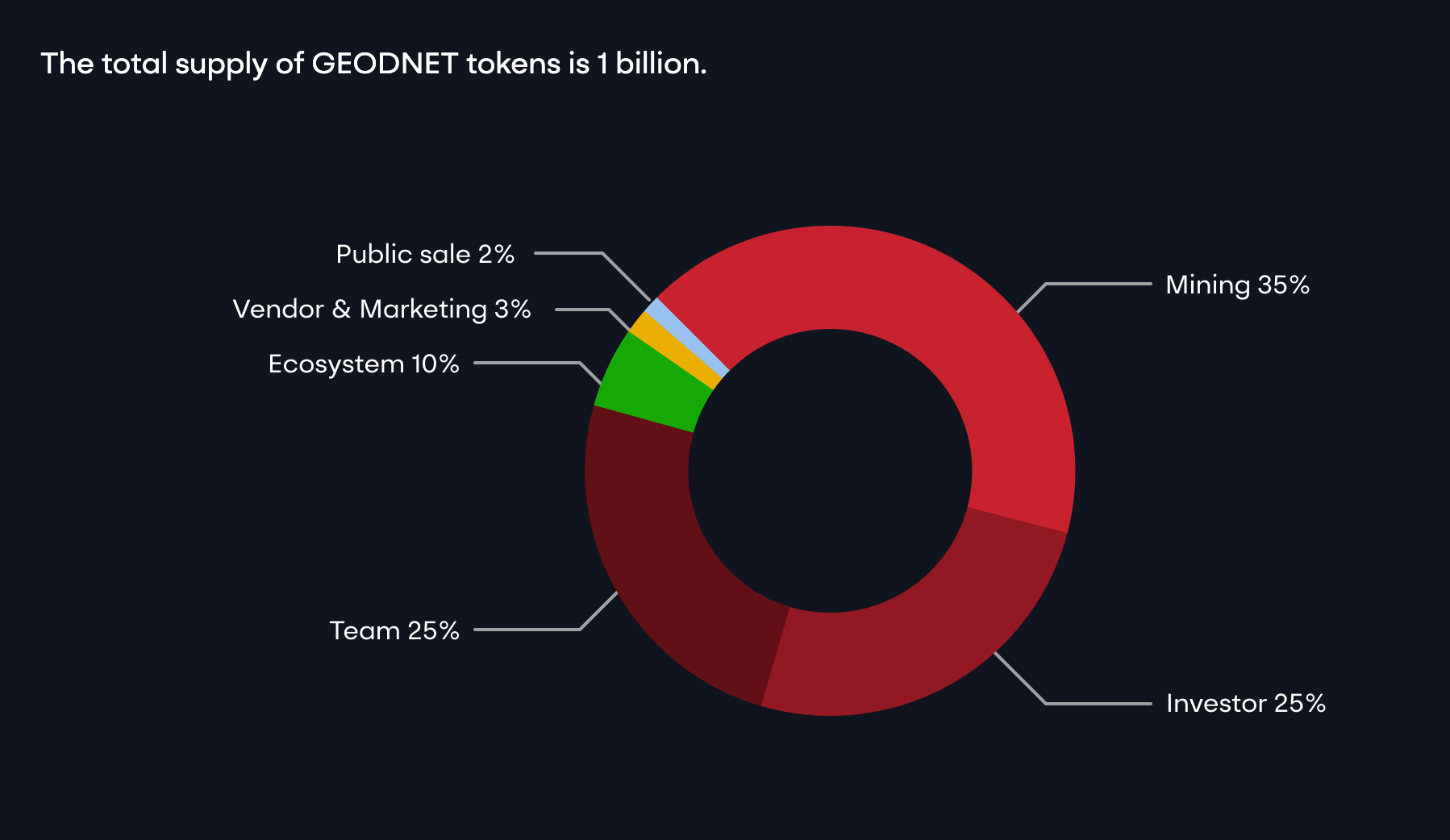
GEODNET paid people in tokens to put boxes on roofs. More than 21,000 stations, 150-plus countries, around $11 million in annual recurring revenue. The investment firm Multicoin led an $8 million token purchase too.
The revenue comes from selling centimetre-accurate RTK to independent machines like delivery bots, drones, and tractors. It is also the least crypto-dependent thing here. At the consumption layer, it barely needs crypto. A standard subscription model works just fine. But at the infrastructure layer, GEODNET proved that token incentives can rapidly bootstrap a global physical network that would otherwise take traditional corporations billions of dollars and decades to deploy.
Second, being able to work with anything
Right now, robots from different makers run on separate software and can’t talk to each other. Businesses have to buy from one brand. Mixing machines means writing custom integration software that doesn’t exist yet.
OpenMind has raised $20 million led by Pantera. The founder, Jan Liphardt, is a Stanford professor. They’re building a universal, open-source operating system (OM1) and a coordination layer (FABRIC). Like Android lets different phones run the same apps, OpenMind provides a shared software foundation for any robot.
Developers write high-level logic that can run universally across a Unitree humanoid, a quadruped, or a wheeled bot. The ultimate goal is that this universal language allows different machines to identify one another, coordinate shared tasks, and payments.
Under its ERC-7777 standard, machine identity serves as a behavioural boundary. If a robot is programmed to be a “helper,” it will automatically refuse to do anything that breaks that rule. The robots also double-check each other’s sensors to prevent accidents if one machine gets confused.
Partnering with Circle, OpenMind adopted gas-free USDC “Nanopayments” via the x402 standard, solving the flat-fee barrier for sub-cent machine transactions. We saw this when the robot dog Bits paid for power in a demo they released. The demo ran on a test network, with no live transaction record for Bits published. But it still proved the machine could hold a wallet, recognise a physical resource as something purchasable, and complete the sequence unaided. Coordination still doesn’t mean trust.
Third, having a verifiable identity
Having worked on a blockchain for physical devices since 2017, IoTeX reached this problem earlier with two products.
Hardware ID (ioID) gives physical machines a built-in cryptographic fingerprint, letting a device sign actions as itself. Proof of Real-World Work (W3bstream) translates physical actions into digital receipts a blockchain can verify.
While IoTeX solved identity and proof, it missed the credit and financing system, which is where peaq stepped in.
Fourth, Peaq
If machines are going to pay, get checked, and keep records with strangers, they need the same rails humans use for trust and settlement. Like a company registry or SWIFT.
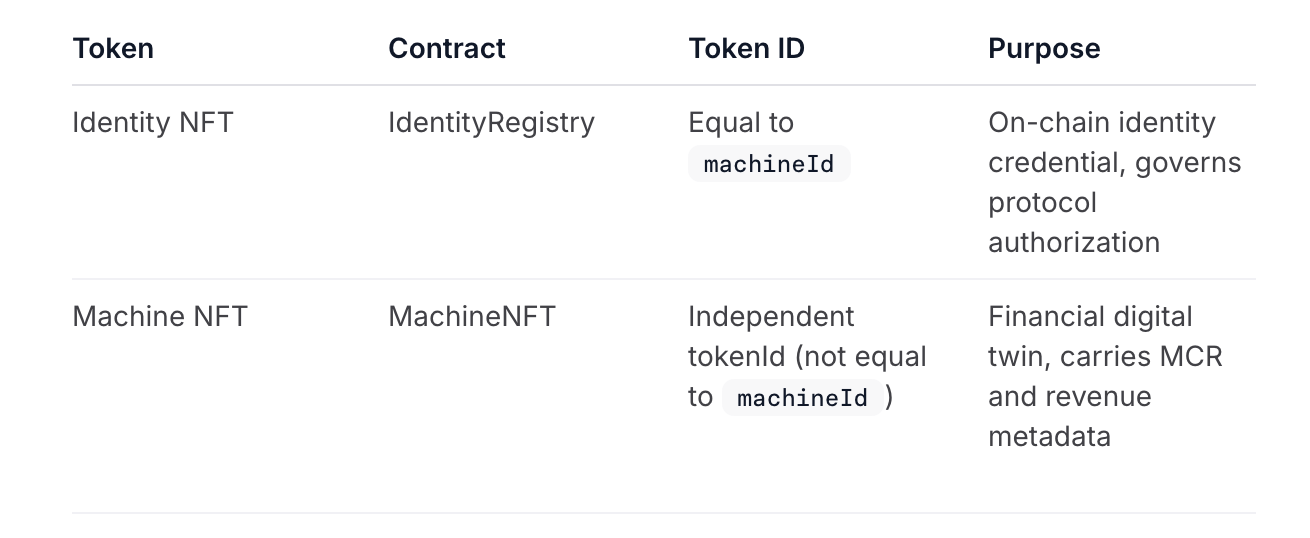
peaq has designed it using its four things. peaqID is the entry in the register. Machine NFT serves as the ownership record and can be divided into shares using ERC-3643. It is a token standard which permits transfers only between previously approved holders. In August 2026, peaq introduced support for P256 chip signatures, moving verification into the hardware security chip.
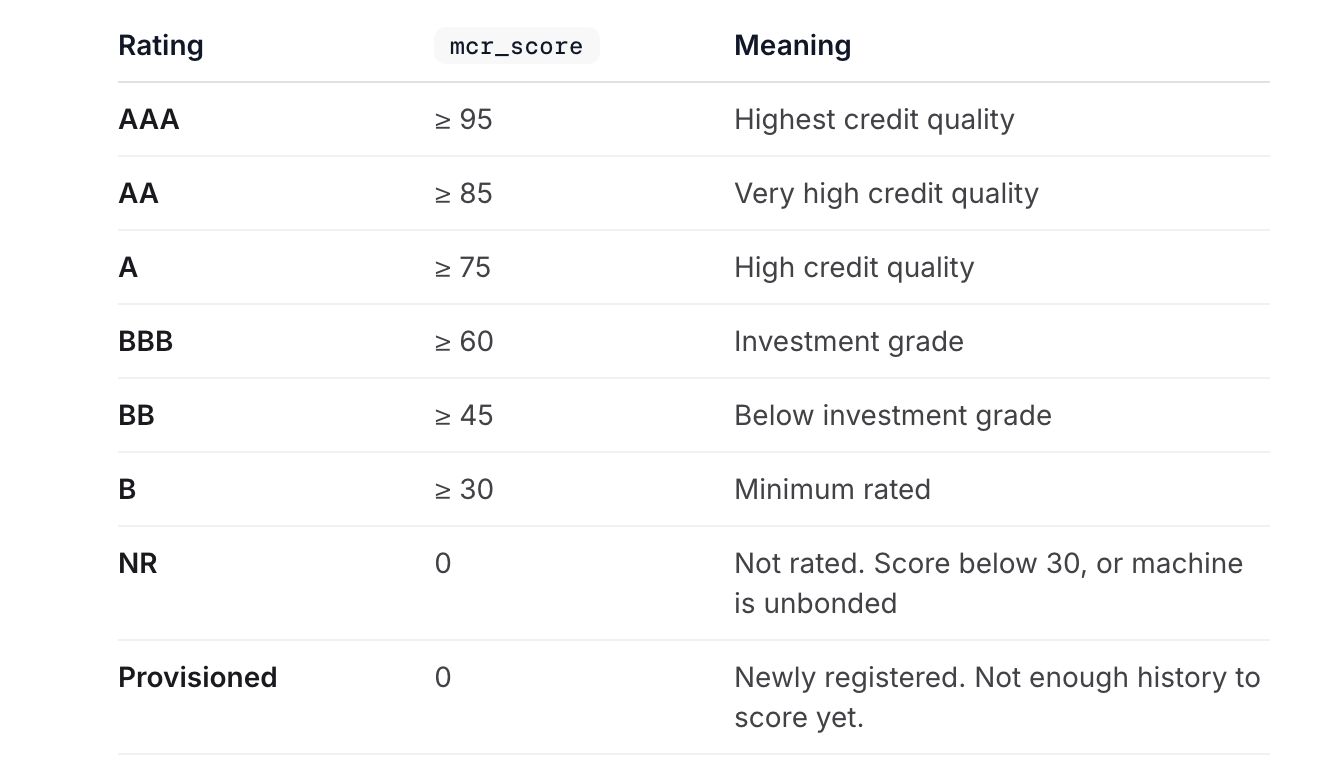
peaq’s Machine Credit Rating scores robots out of 100 based on their revenue, activity, and trust, using a Moody’s-style scale from AAA to unrated.
If a robot needs to pay 40 cents to a charger, the charger may want that 40 cents on Solana, or on Ethereum. peaq’s job is to let the robot send the money on whatever rail the charger already uses.
That’s why, when they showed off their Serve delivery robot carrying out a self-payment in May 2026, the funds were deposited on Solana, not on peaq’s own chain.
Through 2026, peaq has mostly been assembling other people’s pieces. Its own shipped log lists 49 milestones and 20 integrations between January and the end of August. GEODNET for positioning. NAVER Maps for navigation. World ID so a machine can prove a human is involved without learning which human. Compute from Akash, Acurast and Arcium. Unitree humanoids and LG’s CLOi service robots were brought on as machines.
A company registers because the state requires you to file, and a court can check it. Banks use SWIFT because thousands have already agreed on the format. peaq can ignore both and keep billing the old way. That’s why peaq is talking to Dubai’s regulator and chasing licenses. They want an official stamp. Until they get one, lenders might not treat the score as fact.
peaq runs Initial Machine Offerings with CoinList, where people buy shares of a machine’s revenue, structured by DualMint. The flagship is a tokenised vertical farm in Hong Kong that automates about 80 per cent of its work. Twenty tokenised claw machines followed, and the farm has paid out around $3,600 to holders so far.
Now that we can give the robot a position, an operating system, an identity and a rating, somebody still has to buy it. So far, the answer is that the customer might be agents. Virtuals connected roughly 17,000 on-chain AI agents to BitRobot’s network on Solana, where agents pay physical robots to do work, with the money held in escrow until the job is confirmed.
Software paying a robot is different from a robot paying a robot, and maybe healthier. An AI agent has digital capital, goals, and intelligence, but no body to touch the real world. A robot has hardware and mobility, but no native capital or demand. When robots pay each other, they’re often stuck in the same loops, owned by the same company, making internal accounting easier than real payments.
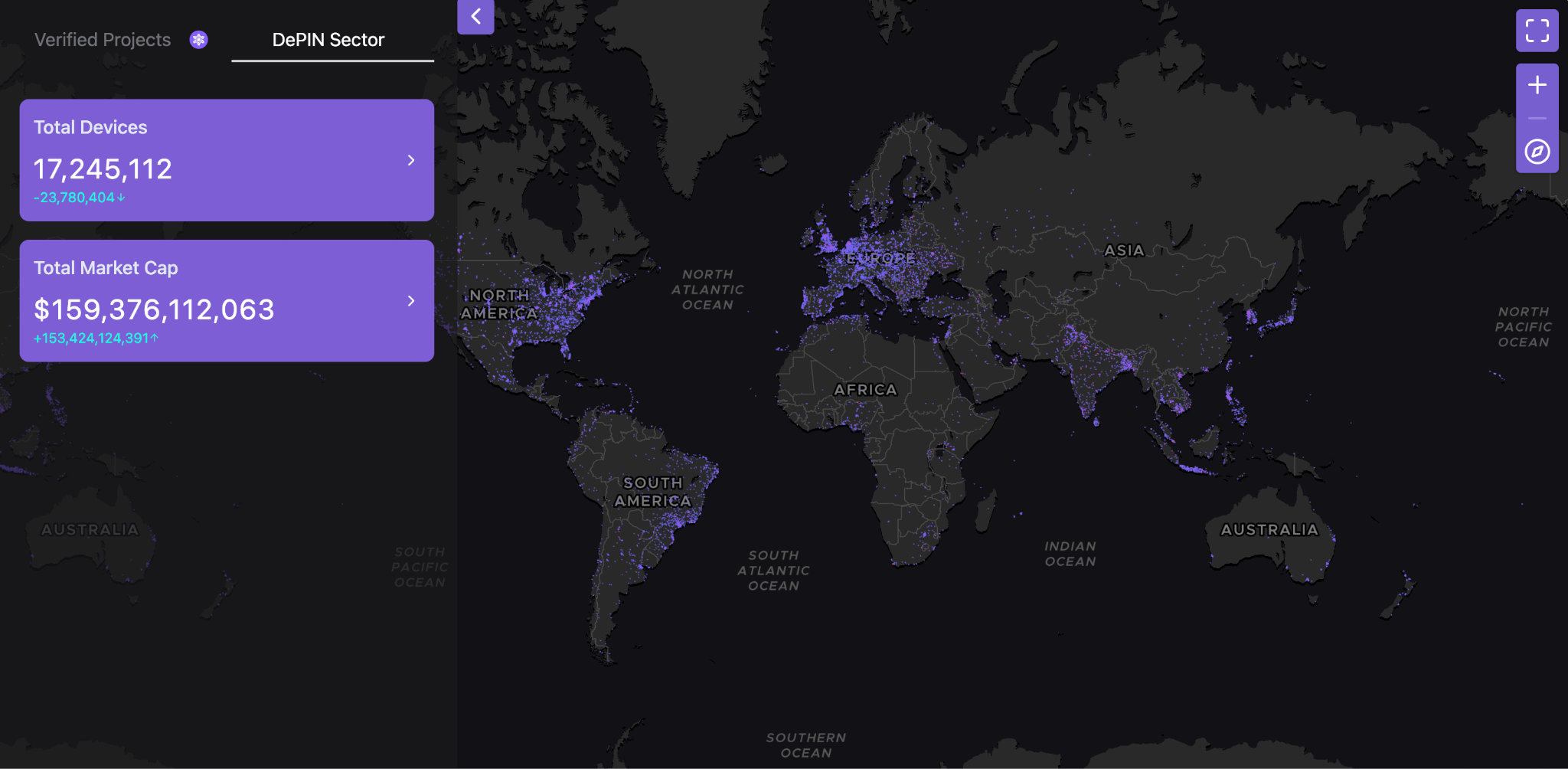
Now, if you zoom out, CoinGecko’s robotics-token bucket is about $730 million. GEODNET is about $100 million of that. peaq is about $55 million. peaq’s chain fees are tiny next to its token value.
So we are still talking about a niche inside a niche.
The census figure is still very high. According to IFR’s World Robotics 2025 report, 542,000 industrial robots were installed in 2024, and the operational stock was approximately 4.66 million units, more than two million of which are in China.
J.P. Morgan Private Bank, based on its external research as of July 2026, estimated 2025 robotics sales at about $100 billion and a base-case annual sales figure of $2.5 trillion by 2035, with a bear case of $0.5 trillion and a bull case of $8 trillion. In that same note, the market size for humanoids rises from around $2 billion in 2025 to about $300 billion in the 2035 base case.
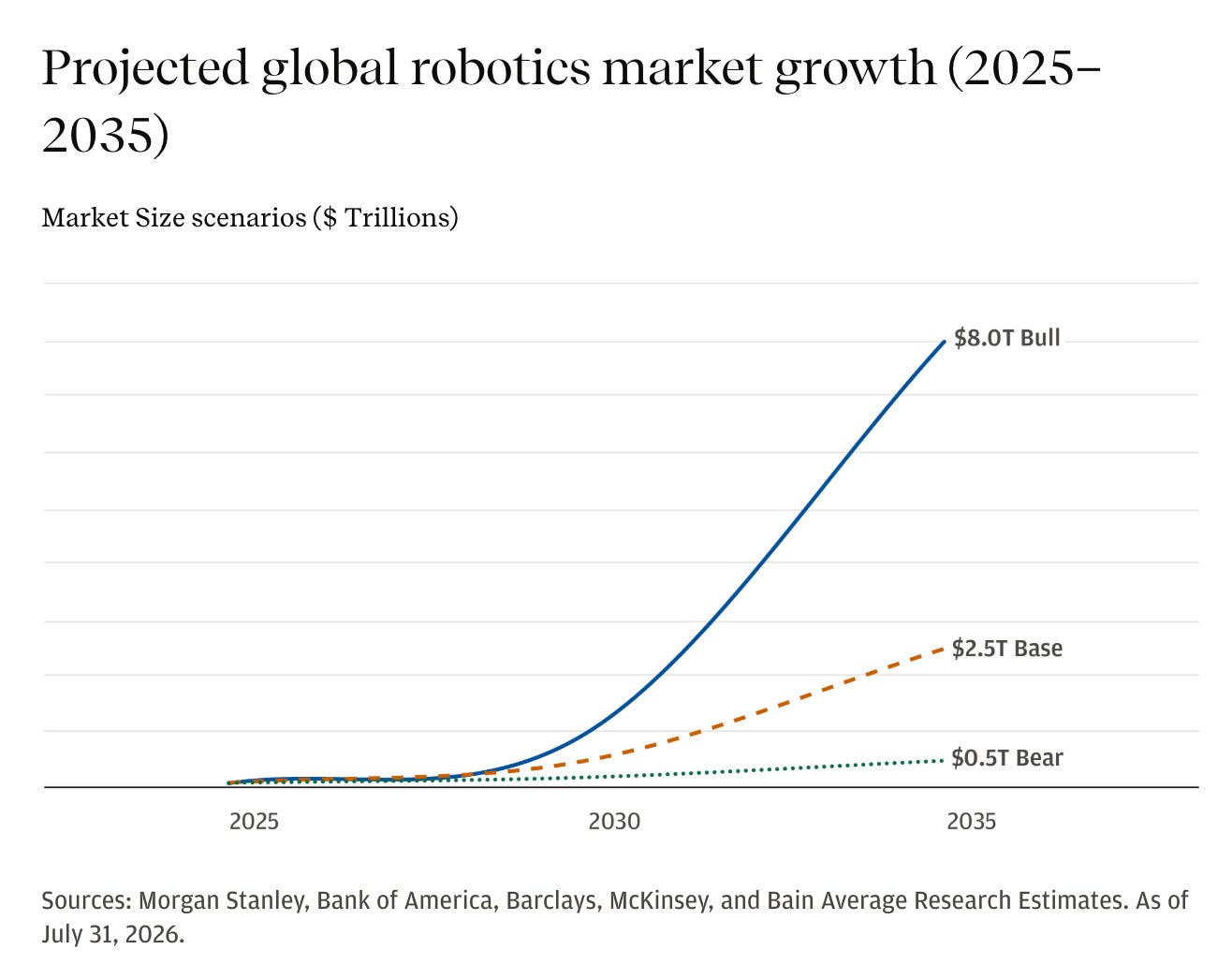
That’s the total addressable market crypto wants to enter and build payment and identity layers for. We’ve never had small dreams, and we shouldn’t start now.
This has happened before, with machines communicating with each other. Internet of Things.
Back in 2015, IBM and Samsung demoed a washing machine that could order its own detergent using Ethereum. They called it ADEPT. A few months later, IBM dropped $3 billion on a new IoT unit. Suddenly, IoT was all about monitoring. Billions of devices started reporting up to dashboards owned by whoever sold them. Devices got certificates so they could talk to their maker’s servers. All the tech got built, but nobody started transacting. So this wasn’t enough to change how payments work.
Robots are different. A thermostat costs $200 and just sits there. A robot costs real money and can actually earn. Once a machine has income, credit and insurance matter. Someone needs to know if it can pay. IOTA tried to be the machine-economy project for years, then moved on. You can see the real deployments in Customs in Kenya, trade docs at a UK port, an organ-donation register in Argentina. Governments bought blockchain-based identity tools for real-world records, but automated machine-to-machine payments still failed to find a market.
Robotics doesn’t need crypto to grow. Crypto can help fill the open-counterparty gap, giving a machine a public identity, a wallet it controls, and a way to move small payments.
Let’s zoom out to the open market. An open market for robots is a labour market where anyone can hire a machine, even if they don’t own it. That market needs everything from the list we made. A name you can check, a way to pay small amounts, a reputation file so you don’t hire a dead battery, and a way to rent extras like GPS, compute, human teleop, or a spare dock from people who already have them. DePIN can do all of this.
Or none of it if Tesla, Amazon, and the big Chinese OEMs keep everything in-house. If the open market shows up, the next questions are what those building this see right now. Who finances a robot that earns on-chain? Who insures it? Who lists a fleet as collateral? Who runs the exchange where a warehouse posts a job and a robot bids? That’s financialization after identity. Tokenisation only gets interesting when the token can actually move.
DePIN is just a small rail that might fit under the non-integrated part of the Robotics industry. The giants don’t owe it any traffic.
That’s it for today. See you again with another one.

Token Dispatch is a daily crypto newsletter handpicked and crafted with love by human bots. If you want to reach out to 170,000+ subscriber community of the Token Dispatch, you can explore the partnership opportunities with us 🙌
📩 Fill out this form to submit your details and book a meeting with us directly.
Disclaimer: This newsletter contains analysis and opinions of the author. Content is for informational purposes only, not financial advice. Trading crypto involves substantial risk - your capital is at risk. Do your own research.