


Hello,
I am not a connoisseur of art, music, or food. But there’s one trend I have noticed about businesses that I feel gets often overlooked. The most extraordinary businesses were successful because they did not ignore some non-business things that others paid little attention to.
Apple’s competitive edge was not hidden in the chip they used but in how Steve Jobs cared about the weight of a thing in your hand. Sony’s golden run began because its founder loved music enough to consider what a portable music player should feel like.
The common pattern I found in such businesses is that they gave equal, if not greater, importance to their non-business instincts than to their business ones. These non-business instincts are still rooted in human behaviour, like hospitality, craft, cultural sensibility, and a sense of atmosphere. Often, these are the instincts that hold the entire workplace together by acting as a centre of gravity. They have the power to connect people from different geographies, cultural backgrounds, socio-economic backgrounds, and many other differences.
I think about this when I look at how we discuss technological shifts. The conversations in boardrooms are almost always about competition, infrastructure, bureaucracy, and regulation. Don’t get me wrong. These are useful and unignorable, but not holistic. It misses a crucial layer where things often get built between people. What connects someone’s ambition with someone else’s risk appetite and a founder’s context with a policymaker’s expectation is one of the oldest interfaces. Like a table, a room, or a shared meal on a nice wooden table in a room curated with the right people and the right food for the occasion.
In today’s piece, SuperAI and TOKEN2049 co-founder Peter Noszek argues that the age of AI needs its human layer built with the same intentionality as its supply chain – through bridges, dinners, houses, and rooms where trust can form.
Onto Peter’s story,
Prathik

America’s version of Pax Silica is the US Department of State’s flagship effort in AI and supply chain security.
ASEAN’s framing is more concrete: a US-led initiative to build a secure, prosperous, and innovation-driven silicon corridor, from critical minerals and energy inputs to semiconductors, AI infrastructure, logistics, software, and models.
The subtext is obvious: Trump’s America is looking for trusted partners with whom it could build around China. It is adversarial by design.
But Pax Silica should mean more than securing the stack. It should describe the human layer and human implications of the AI age: the trusted relationships, rooms, and institutions that help people navigate the biggest technological shift of our generation.
The Official Frame
Securing the AI supply chain with trusted partners runs through Southeast Asia.
Compute needs power. Chips need minerals, fabs, packaging, logistics, and trusted routes. AI companies need neutral places to deploy across Asia. Singapore, as a Pax Silica signatory and regional coordination point, sits in the middle of that problem.
I’ve just landed from an immersion into the Chinese AI ecosystem via Shanghai, at a moment when Washington and Beijing were circling each other on chips and AI — the public gestures running well ahead of anything actually moving.
A few weeks ago in San Francisco, Cindy and I hosted the first Pax Silica dinner. Alvin Wang Graylin was there and shared a frame that has stayed with me since. As he later put it in the South China Morning Post: “The responsible move is to find common ground, not raise the fence.” He called this moment the “doorstep of peace” and warned that fanning rivalry between two great powers was both irresponsible and immoral.
That was not the China I met in Shanghai.
The people I met were open, curious, and collaborative. The energy was pointed outward: founders, operators, platforms, and city-level ecosystems trying to understand where their companies, products, capital, and talent should go next.
Some of that energy pools in Shanghai and Beijing. Some of it hums in Shenzhen and Hangzhou. Some of it stirs in tier-2 cities like Changsha: 10-, 20-, 30-million-person cities with serious young AI founders who are hungry to internationalise, but need trusted bridges into the right markets.
Southeast Asia’s role becomes clearer from that angle, with Singapore at the centre: a trusted landing point for AI companies moving between China, APAC, and the global market.
The Name

The name matters because it puts peace and the technology race into the same sentence.
Pax
Peace. Stability. Long-term prosperity.
Silica
The compound is refined into silicon, which is one of the base materials of the AI age.
Put together, the phrase asks a question that feels much bigger than export controls or data centres:
What does peace look like when silicon becomes the operating layer of civilisation?
Most institutional answers begin with security. Secure the supply chain. Protect sensitive infrastructure. Reduce coercive dependency.
All of that’s sensible, and I take it seriously. But peace also asks for translation between people who normally operate in different systems.
It asks for rooms where a founder can speak honestly in front of capital, where a policymaker can understand what builders actually need, where an enterprise buyer can explain the risk behind a slow decision, and where someone is paying attention enough to translate between all three.
The age of AI will need secure supply chains and people who can keep building when geopolitics, capital, and deployment timelines get messy.
Relationship Infrastructure
The AI supply chain spans chips, minerals, energy, data centres, models, and networks. Every layer eventually runs through people.
A Chinese founder entering Southeast Asia needs more than market research. A frontier lab deploying in Asia needs more than policy slides. A sovereign fund looking at AI infrastructure needs more than deal flow. An enterprise buyer evaluating AI needs more than demos.
They need trusted translation.
Who understands the founder’s ambition? Who knows which institution can move? And who keeps the thread warm after the event ends?
Pax Silica is the public thesis. The operating stack underneath it has three parts: bridges move value, dinners build trust, and houses create continuity. Together, they point toward a larger gathering where the system can find itself. The mechanism is practical: trust reduces coordination cost, rooms increase bandwidth, and repeated contact improves the accuracy of the models people hold of one another.
Bridges
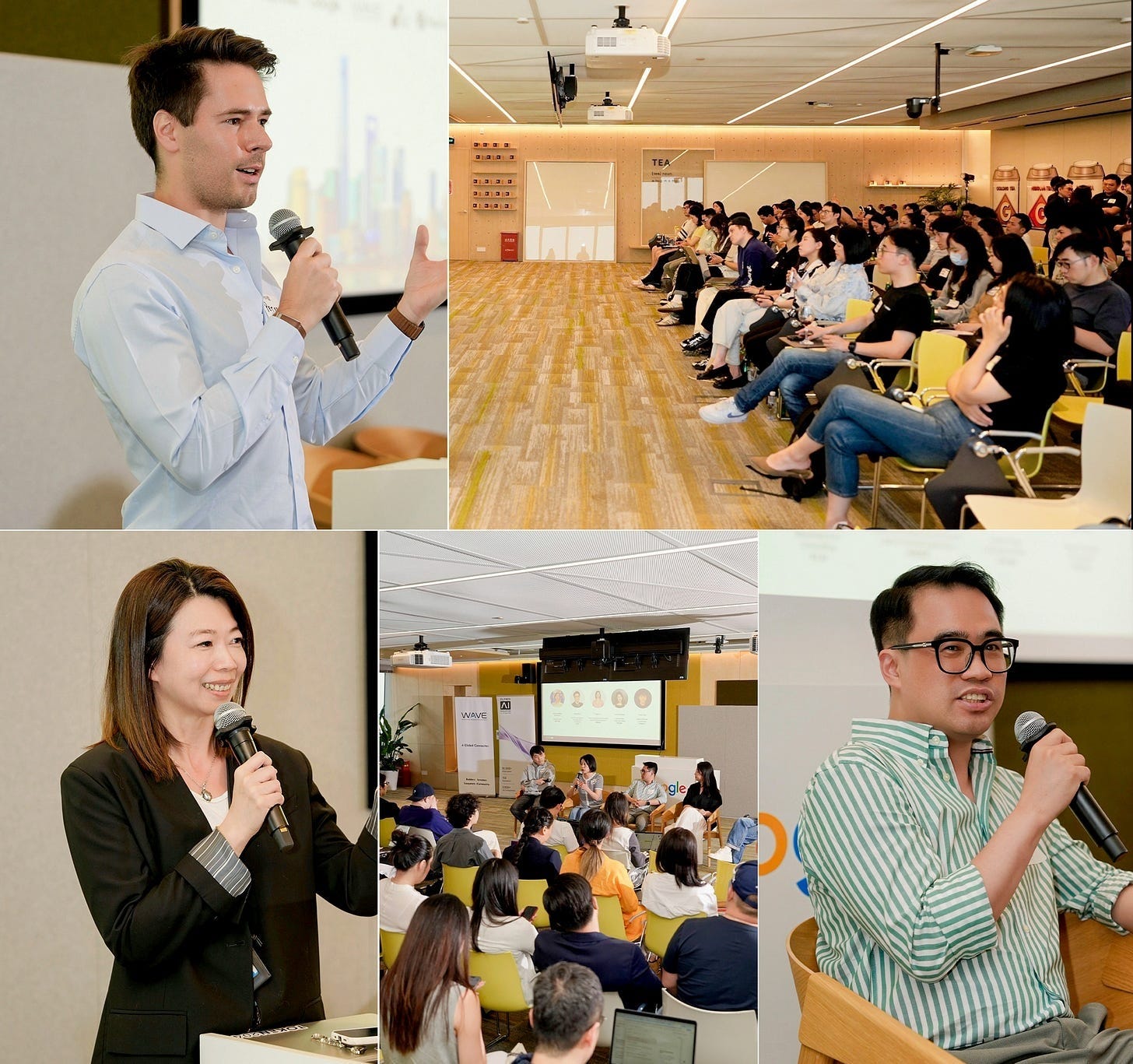
To bridge is to speed up the diffusion of technology, information, and value across systems that would otherwise move too slowly.
Some bridges are powered by capital. Funds can move an entire market by deciding which infrastructure deserves conviction.
Some are powered by advisory. The right operator can help a frontier company enter a new region, find the buyer who matters, and anticipate institutional friction.
Some are powered by community. In San Francisco, I saw this through the builder-house and residency graph around HF0, The Embassy, The Residency, Frontier Tower, AGI House, and Cerebral Valley. These bridges connect people who might live a few miles apart and still never properly meet.
Ray Del Vecchio, co-founder of Cerebral Valley, used an interesting phrase: “MBSF”, months behind San Francisco. It describes the lag between discovery in the Bay Area and adoption elsewhere. The same could be true in the other direction: “MBSZ”, months behind Shenzhen. A bridge shortens both lags.
China has its own bridges. Google China is one of the clearest examples I saw in Shanghai: helping Chinese companies internationalise across APAC, with Singapore increasingly important as an operating centre.
Singapore operates its own bridges as well. I’ve been fortunate to meet and work alongside people across EDB, Singapore Global Network, and Enterprise Singapore who understand that Singapore’s role is to be the trusted crossing point.
Pax Silica starts with bridges that move people across systems, and rooms that let trust compound over time.
Dinners
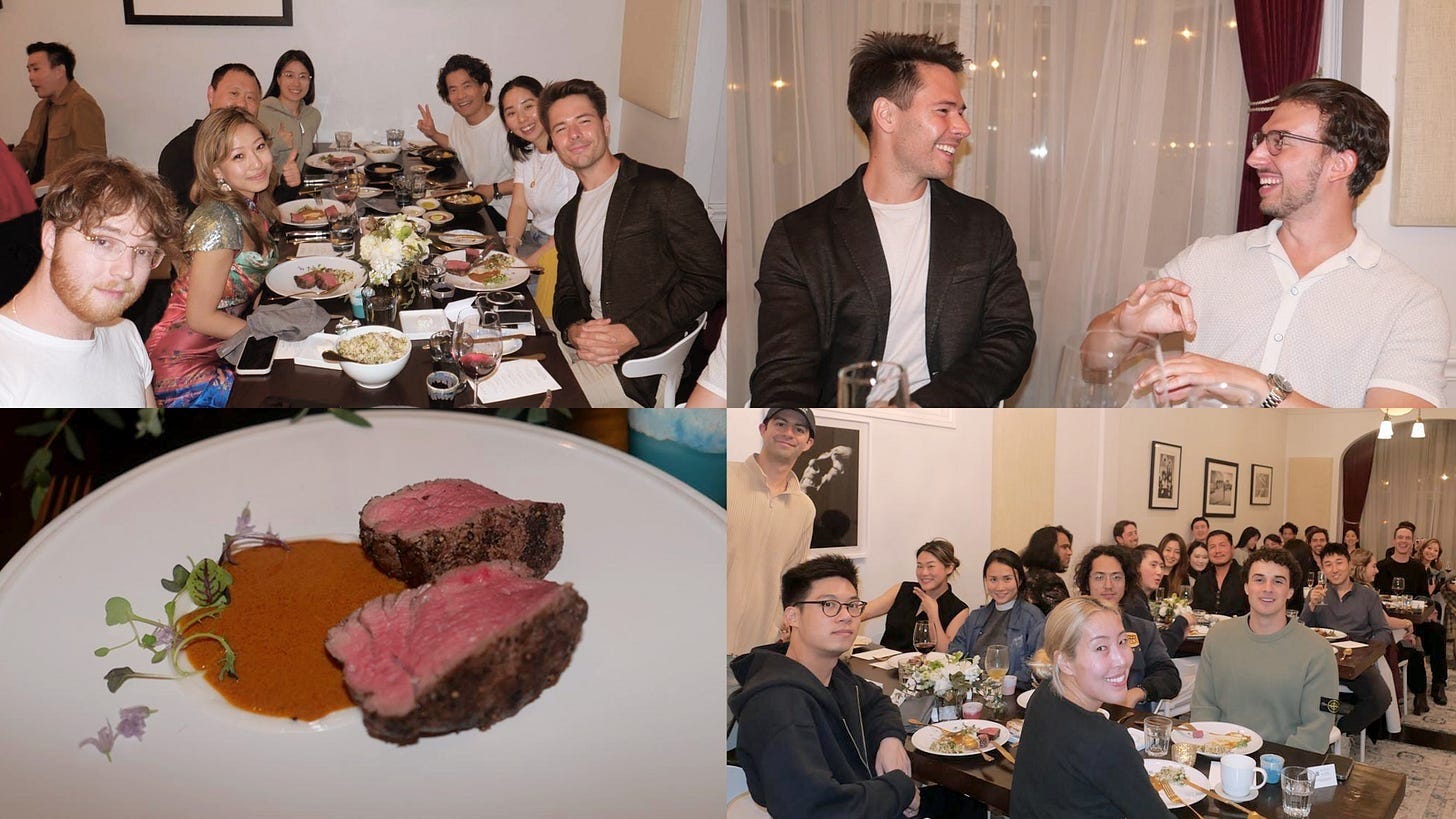
The smallest complete unit of Pax Silica is a dinner.
A dinner is intimate enough for trust to form and serious enough for people to show up with intention. It lets the host compose the room across layers that usually sit apart: frontier capability, infrastructure, capital, policy, enterprise deployment, culture, taste, and human-centred design.
Curation is the seating, the rotation, the music, the food, the pace of the evening, the first introduction, and the comfort people feel to speak plainly. I like to think about events as an interface. A dinner is the layer underneath: the seeded conversation, the useful encounter, and the natural follow-up the next morning.
A room works when the worlds inside it are close enough to notice each other properly.
At the Pax Silica dinner in San Francisco, several people were adjacent without having properly crossed. Some lived within a few miles of each other. Others were already moving between Asia and the US, but needed the right shared container.
In June, during Singapore AI Week, Cindy and I will host the next Pax Silica dinner in Singapore.
Houses
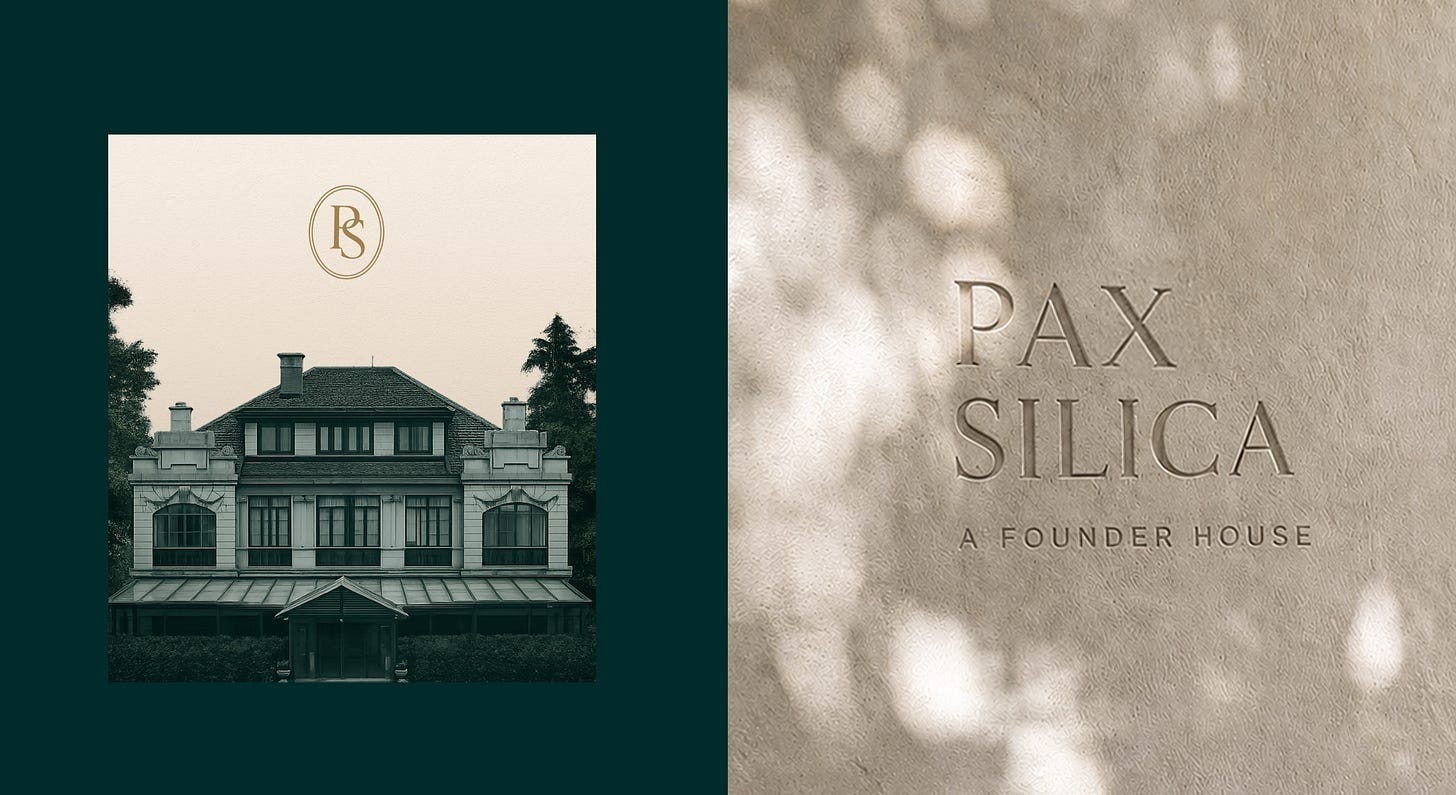
The house is where the corridor stops being a calendar item.
The space Cindy and I are building is a tech and cultural house at the edge of the Pacific. Teak floors. Jade tile. A long table for twenty-four. Peranakan light through tall windows. A garden courtyard where someone is writing code and someone else is cooking.
Part salon, part dining room, part gallery, part working room, part recovery space. A San Francisco node for Southeast Asia’s frontier-tech corridor, with the intimacy of a home and the seriousness of an institution.
A founder visiting from Asia should be able to land in San Francisco and find the right first table. A Singapore delegation should be able to understand the Bay Area without turning it into a study trip. A frontier builder should encounter Southeast Asia through people, food, art, and music.
This is where compassion becomes operational. Everyone who enters the room is carrying something: ambition, mandate, exhaustion, risk, family, national interest, the desire to be understood. A good room lets people put some of that down.
For Pax Silica to mean peace in the age of silicon, it has to be practised through hospitality. As Donatus Schaumburg-Lippe reminded me, embassies were built for ongoing dialogue: permanent rooms where trust could be maintained before, during, and after negotiation. Pax Silica House carries that instinct into the age of AI. The chair, the menu, the music, the guest room, the first ten minutes, the follow-up the next morning: these are how an abstract corridor becomes a place people trust.
Schelling Points
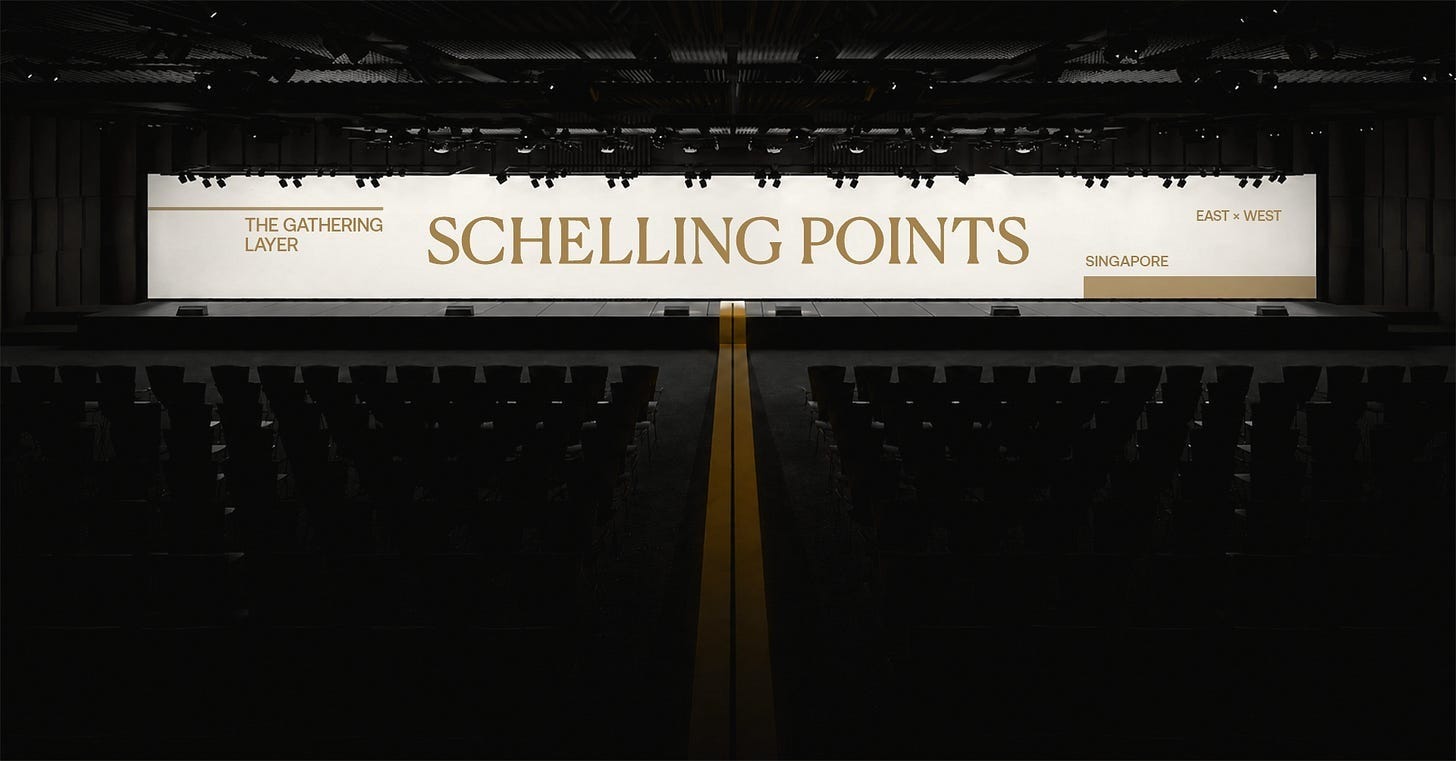
A Schelling point is where people converge without coordinating every step in advance. Everyone comes because everyone believes the others will come.
AI needs this badly. The work I care about – connecting the distinct nodes of Silicon Valley and Asia, between founders and sovereign capital, between the people building AI and the people deciding how it lands – only compounds when those people are repeatedly, reliably in the same place.
Dinners and houses do the intimate work. But intimacy has a ceiling. A dinner seats twenty. A house holds a season. Past a certain point, the bridge needs a wider span: a gathering large enough that an entire scattered ecosystem – labs, funds, ministries, platforms, data centres, universities, founder houses – can assume the others will be there, and plan their year around it.
That gathering sits a layer up, and Pax Silica feeds it. The dinners seed the conversations, and the house keeps them warm; the gathering is where they become unavoidable – where a partnership that was a maybe in April becomes obvious by June, because the right people were finally, unmistakably, in the same room.
Pax Silica’s job is to make that larger room work better: to fill it with people who already trust each other, conversations already seeded, and relationships that are already warm. The dinner is the smallest complete unit. The gathering is the largest. Singapore is where the largest one can hold – close to China, fluent in the West, trusted across Southeast Asia and Europe, serious enough that institutions show up without being asked twice.
As silicon becomes the operating layer of civilisation, peace has to be hosted – as a room, at every scale: the table, the house, and the gathering they point toward.
Pax Silica is the thesis on the human layer of the AI age. Field Notes is the running notebook behind it: dispatches from the rooms, cities, and conversations where this corridor is being built.
Disclaimer: This piece was originally published here.
We will be featuring good writing and writers we love from time to time. If you have recommendations, send them our way.
Token Dispatch is a daily crypto newsletter handpicked and crafted with love by human bots. If you want to reach out to 170,000 subscriber community of the Token Dispatch, you can explore the partnership opportunities with us 🙌
📩 Fill out this form to submit your details and book a meeting with us directly.
Disclaimer: This newsletter contains analysis and opinions of the author. Content is for informational purposes only, not financial advice. Trading crypto involves substantial risk - your capital is at risk. Do your own research.
