


Before 1840, the person who received a letter in Britain paid for it. The price depended on how far it had travelled and how many sheets of paper were inside, so a clerk had to work that out for every single item, and then someone had to collect the money at the door.
Rowland Hill in 1837 thought that was a funny setup. Working out what a letter should cost and then chasing the payment costs more than carrying the letter.
People also figured out how to cheat the system. The sender and recipient would agree on a code in advance, a mark on the outside of the envelope. The recipient took the letter at the door, read the mark, learned what they needed, and refused to pay. The letter went back undelivered, and the information got through for nothing.
Hill’s fix was one flat penny, paid in advance by the sender, proved with a sticker. To prove they paid, they put a small sticker on the envelope. The world’s first postage stamp!
Because this was so easy, the number of letters sent more than doubled in just one year. The world learnt that a business can only charge a price if collecting the money is easy and cheap.


Which is why, in 1991, the people writing the rules for the web reserved error code 402, Payment Required, and then never used it. They assumed someone would want to charge for a single page. It didn’t work because if a website tried to charge you two cents, the credit card company would charge them thirty cents just to move the money. Since it was too much for a tiny payment, it stayed unused for three decades.
Enter x402. It lets you move a fifth of a cent now and keep almost all of it. Coinbase built it and handed it to the Linux Foundation in April, filling the empty slot. A server answers a request with 402 and whatever the price is, the client pays in stablecoins.
This is the right time to have a comeback of 402. Cloudflare, which helps run about one-fifth of the entire internet says bot traffic has passed human traffic. Its CEO says some AI tasks fire off around a thousand page requests for every human visit. Cloudflare’s edge now sends over a billion 402 responses a day to AI crawlers.
Websites usually make money from ads or monthly subscriptions. But a computer program isn’t going to look at an ad or sign up for a monthly plan. Both of those old rules are broken now. The only new idea that makes sense is charging bots a tiny amount of money for every click they make.
All giants, including Visa, Mastercard, Google, Amazon, and Stripe, are working on this. Amazon shipped x402 inside CloudFront in June, so any site behind it can charge agents per request as a settings change. Cloudflare opened a waitlist on July 1 to do the same across its network.
I ran about five dollars through one of these wallets before writing this. Some of what follows comes from that. But anyone can go online and see most of this information for themselves.
The protocol currently settles about $ 20,000-30,000 a day. Down 93% this year.
In late 2025, daily peaks were approaching and sometimes exceeding a million dollars. A good part of that was a token called PING, which used the payment flow as a minting mechanic. They just hit a URL, got a 402, paid a dollar, and got tokens. Gas on Base was near zero, so people ran the loop hundreds of times. Chainalysis counted over 150,000 PING transactions in its first month, with weekly transactions jumping by more than 10,000%.
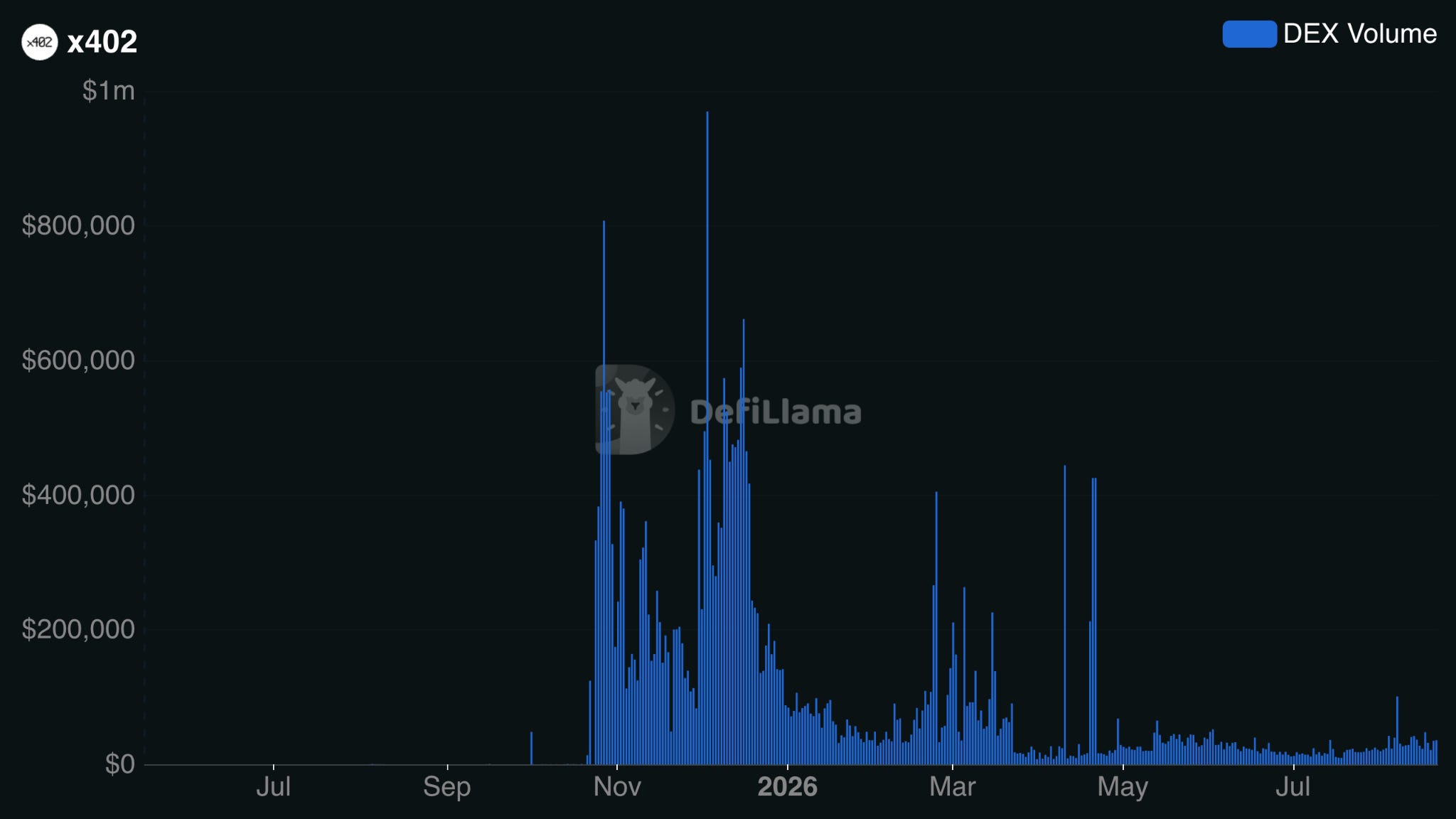
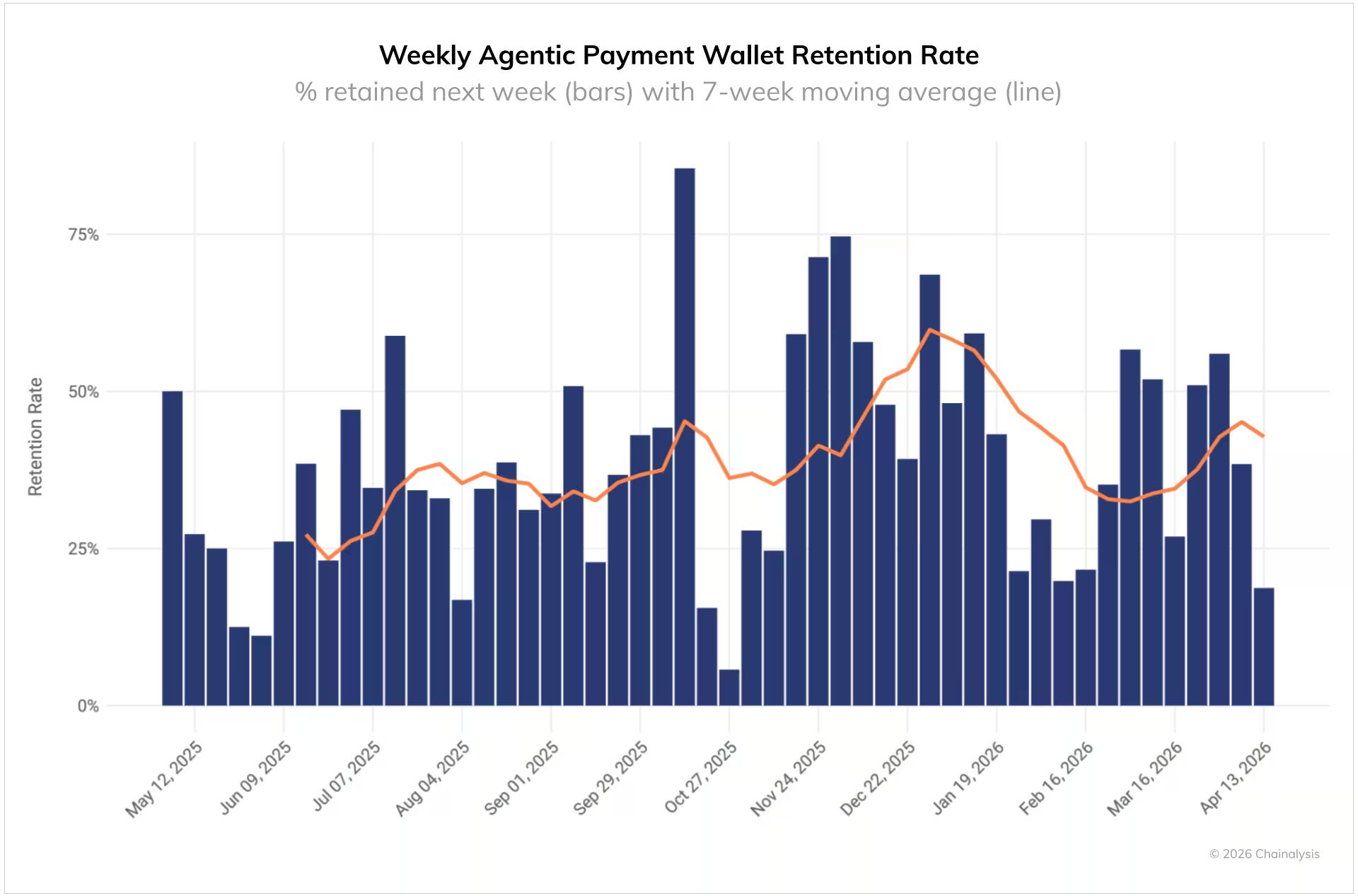
So part of the 93% decline is fake volume draining out, which is the correct direction. PING the memecoin is also 96% down from the october high. But it was seen that the protocol still had wallets returning week over week, despite the absence of a speculative catalyst, suggesting ongoing utility.
Then I looked at what the agents were buying. x402scan counted 12.6 million purchases, totalling $1.2 million. There were over 22,000 buyers and 33,000 sellers. But just one seller, named BlockRun, handled 64% of all those payments. BlockRun made $199,000 by selling routed access to AI programs.
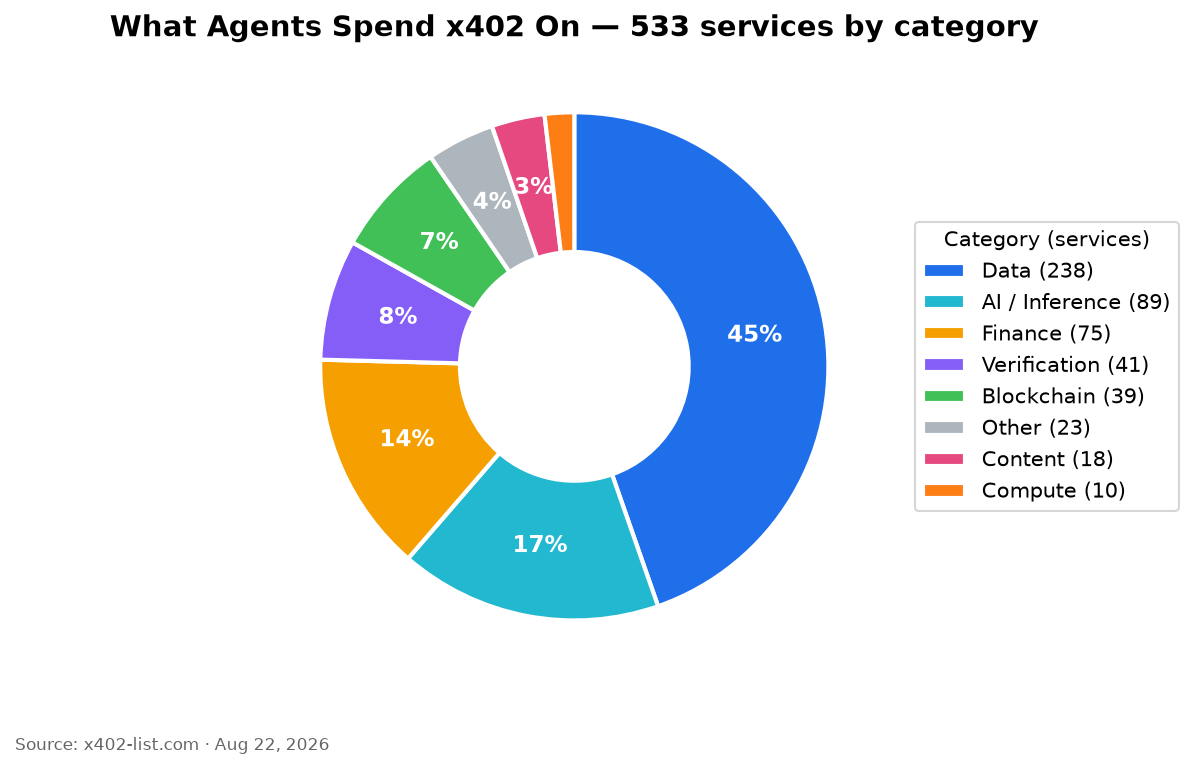
Bots are also buying secondhand information, like web searches, from middlemen. The market is so hard to track that one big list of 533 sellers (x402scan) says it only captures a small piece (17%) of actual sales. So the agent economy today is mostly software buying cheap inference from a router and secondhand web data from middlemen. Nothing wrong with that, although it is a long way from a machine ordering physical items.
Is the x402 system winning? If you ask me, yes, for its specific job. It isn’t used for buying normal things like shoes with a credit card. But it looks like x402 is the top choice for bots to buy data.
It does not compete with OpenAI and Stripe’s Agentic Commerce Protocol (ACP), which is what runs when you buy physical items inside ChatGPT. It also does not compete with Google’s security system(AP2), which actually uses x402 behind the scenes. Those tools are meant for regular retail shopping. They carry proof that a human agreed to a purchase, and then they hand the money over to a card network or, in AP2’s case, sometimes to x402.
Now, if you are buying a data subscription through ChatGPT, it just results in a standard credit card charge. OpenAI’s protocol handles the permission, and Stripe handles the money.
The x402 system is different because when the seller is just a server, there is no subscription or account, and the product costs a fraction of a cent. Traditional credit card networks will not touch transactions that small, so a different payment rail was needed.
Because of this, x402 is not competing with traditional checkout protocols. Developers are currently building bridges that let agents use their crypto wallets to order physical items to your door. But right now, x402’s main purpose is to let bots buy non-physical things. In that growing category, it is completely in charge.
Sellers Are Broke
I looked at the public data to see what these third-party proxies have earned over their lifetime. JarvisClaw is considered one of the more successful shops, yet it only made $559 from 20,920 sales, averaging about 2.7 cents per request. EmblemAI made $1.39 from 65 sales. VIBE AI collected just 46 cents across 1,264 sales. Another proxy named Kite has only ever made 19 cents (and that came from my test purchase).
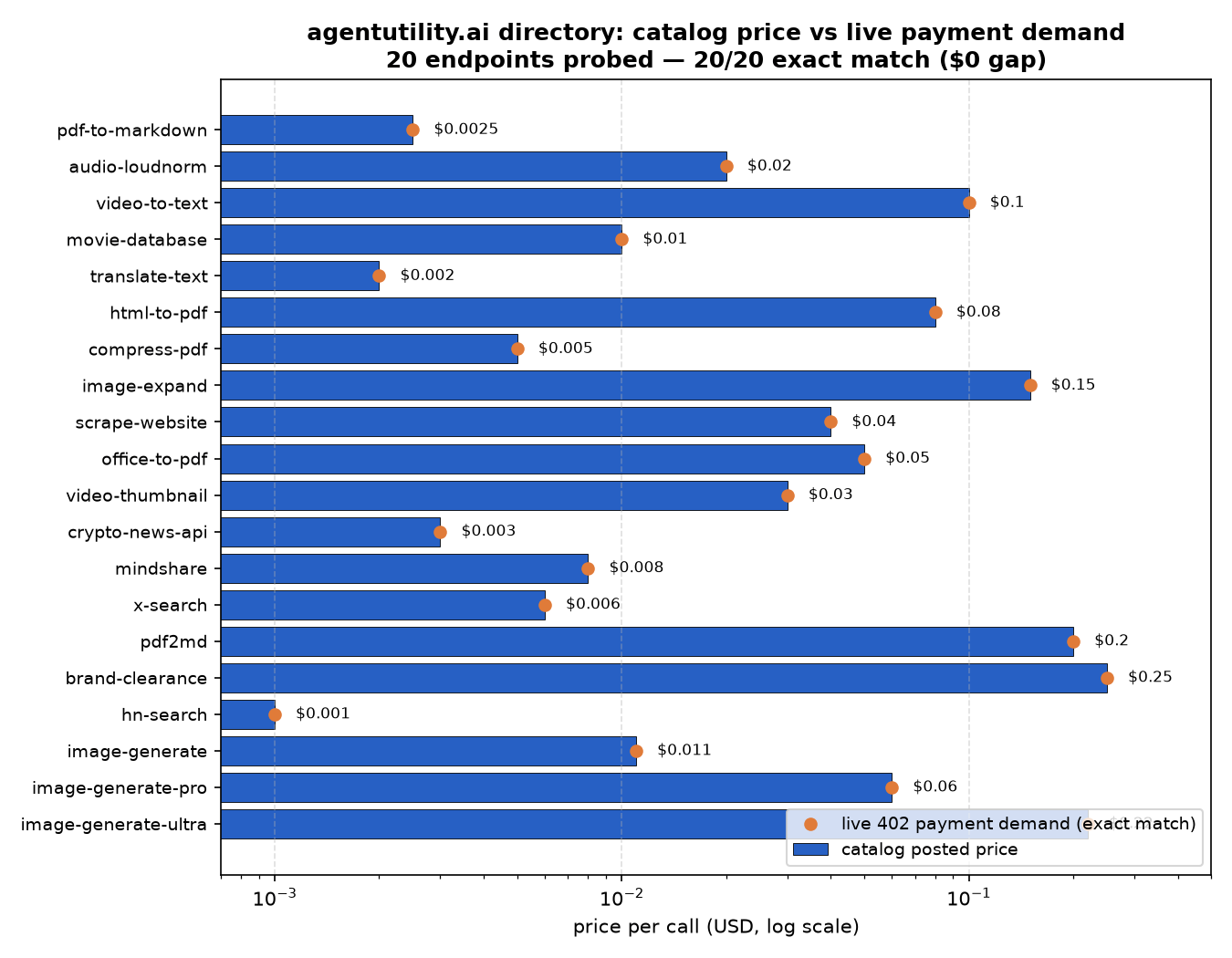
Then I sent the agent to check 22 directory listings to verify their prices. The good news is that if an endpoint worked, it charged exactly what was advertised, from a tenth of a cent up to 25 cents.
The bad news is that six of the 22 endpoints were dead or broken. Roughly 25 per cent of the catalogue is completely useless. Both of these findings lead to the same conclusion. Because sellers earn practically nothing, they abandon their projects. The servers crash, the next buyer finds a dead link, and the system fails.
I paid four cents to get financial data about a crypto project, but the system sent my request to a stock market database. I received an empty file, but the system still charged me and called it a success. There is no customer service desk to ask for a refund. Humans rely on brands, reviews, and refunds to avoid bad purchases, but those tools do not exist for agents yet.
Circle requires a code to be sent to a person’s email before it works. Stripe needs a person to tap “approve” in a phone app. Nevermined actually works directly with the x402 system as a payment helper, but it still requires you to log in to a website to get your first access key. Even free test-money websites blocked my bot, correctly recognising that it was not a human. Once a person finishes that single setup step, all three tools can run on their own within the spending limits you set. Essentially, a human must unlock the door first, and then the bot takes over. This is safe, but it contradicts the claim that bots can do everything on their own.
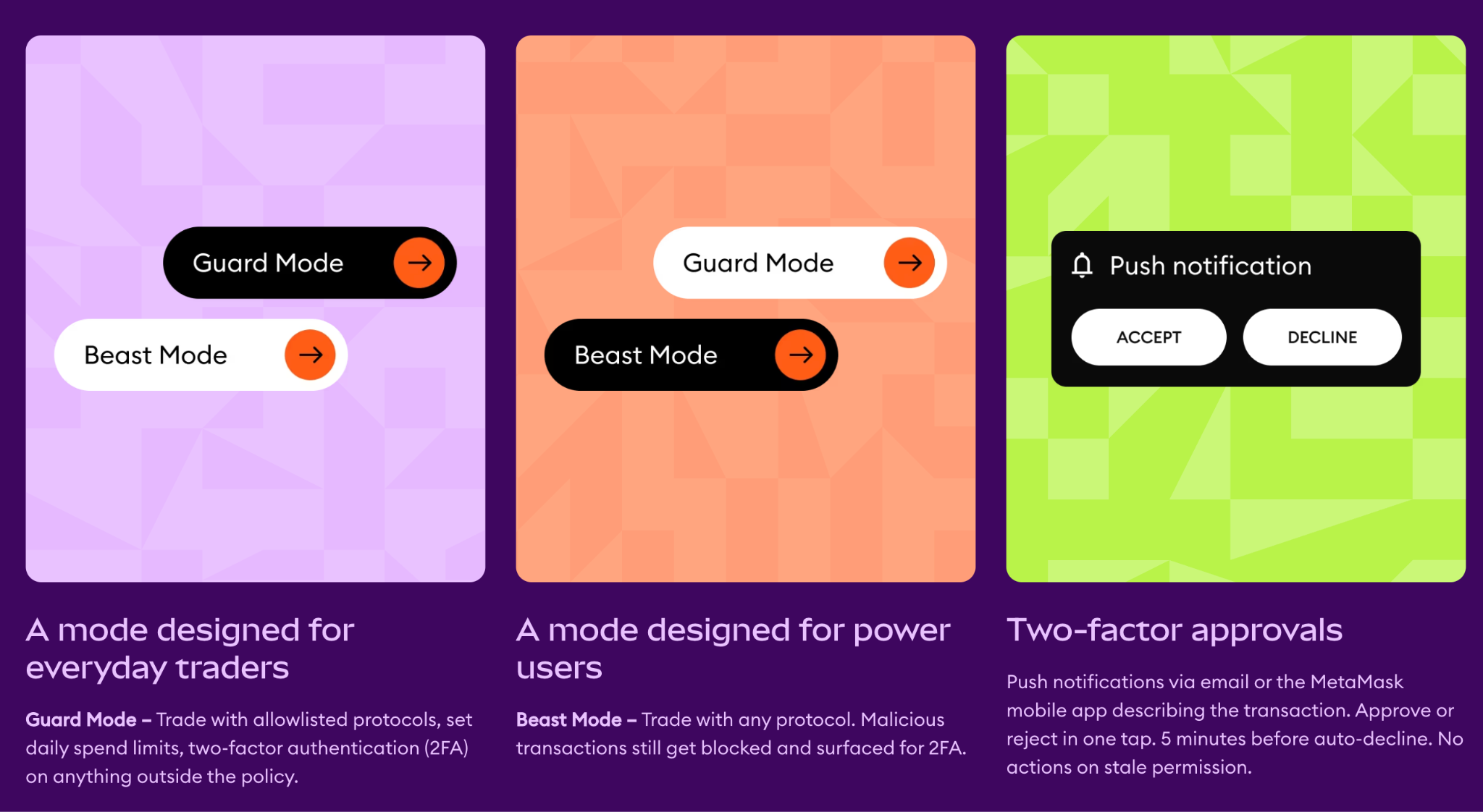
MetaMask’s agent wallet is built for a completely different job. It is made for crypto trading, including big token swaps, bets, and dapps. It asks for human approval for anything risky. Works well for large, high-stakes trades, but it is not designed for a bot trying to buy hundreds of items that cost a fraction of a cent.
It can make these tiny payments too, but all that extra security can be overkill for a bot just trying to rapidly buy thousands of simple data files for a fraction of a cent.
Every payment your agent makes is completely public and permanently linked to a single address. When I asked my own agent to inspect my test wallet as a stranger using only the public blockchain record, it accurately mapped out everything I had been doing. It spotted the rapid-fire bursts of tiny payments to a single API, the automated jobs running every fifteen minutes through the night, and my larger one-off purchases. It correctly concluded that a developer was running an automated client to test paid APIs.
If you apply that level of transparency to a business, your entire vendor list, your research habits, and your working hours become readable by your competitors forever. Traditional credit cards keep that data locked.
The x402 protocol has no built-in chargeback system or dispute window, on the theory that software lacks the human complaint infrastructure required to handle reversals. Mastercard and OpenAI both built dispute rights into their payment tools. On open crypto rails, however, you get whatever the seller decides to do. The official x402 guide suggests that a seller can simply send a refund back to you. Because refunds weren’t built-in, a separate team built an extension called x402r that routes payments through an escrow account so buyers can actually get their money back.
Accountability is entirely missing. There’s no clear definition of who is legally liable when an automated script overspends its budget, and there is no native identity layer to track which specific agent made a purchase. Security researchers at EPFL and Zhejiang University recently tested the fifteen major intermediaries that process 99% of this traffic, serving over 60,000 sellers and 360,000 buyers. Every single one of them broke basic security rules, and they uncovered 31 previously unknown vulnerabilities that exposed systems to free shopping and fund drainage.
My conclusion is that the micropayments work impressively well. Everything else required to build a market is missing.
We need reputation systems that cannot be faked. Also, proof that what arrived matches what was paid for, ensuring a receipt guarantees delivery rather than a blind transfer of funds.
We need client software that audits the blockchain by default instead of trusting a seller’s summary of their own charges. And, above all, we need to look at a model where independent sellers do make enough money to keep their servers running.
Every site you read for free today is funded by advertisements served to human eyes. Those human eyes are rapidly being replaced by automated software that reads the page and leaves without paying a cent, just like what happened with the coded envelope thing in 1837.
Automated bot traffic surpassed human web traffic for the first time in internet history. If micro-payments catch on, they are the only thing that can save small websites and independent writers. If it fails, those creators might be scraped out of existence, and centralised answer engines will swallow all the traffic. That is the actual stake of this technology beyond crypto.
That’s it for today. Happy weekend, dear bots, if you are reading.
Token Dispatch is a daily crypto newsletter handpicked and crafted with love by human bots. If you want to reach out to 170,000+ subscriber community of the Token Dispatch, you can explore the partnership opportunities with us 🙌
📩 Fill out this form to submit your details and book a meeting with us directly.
Disclaimer: This newsletter contains analysis and opinions of the author. Content is for informational purposes only, not financial advice. Trading crypto involves substantial risk - your capital is at risk. Do your own research.