


Hello,
Stocks have been part of internet culture for longer than crypto would want to admit. The GameStop saga proved that a subreddit could move a stock by 2,400% on pure collective delusion, and finwit has since turned every ticker into a tribal identity. The cultural energy around equities is massive, and has been, for years.
But it has always been weirdly disconnected from the capital itself. The memes were on Twitter (X), the trades settled on NASDAQ, and the culture around a stock could make or break a company’s public perception without ever touching its cap table. Stocks have been internet-native content for a long time, but they never became internet-native as assets.
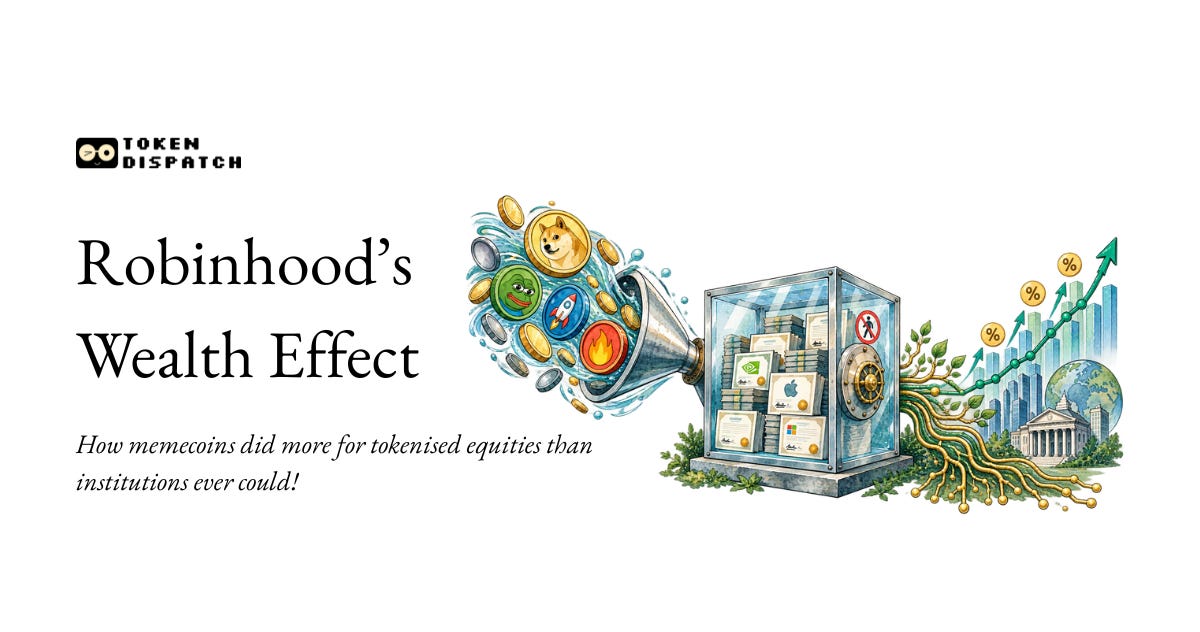
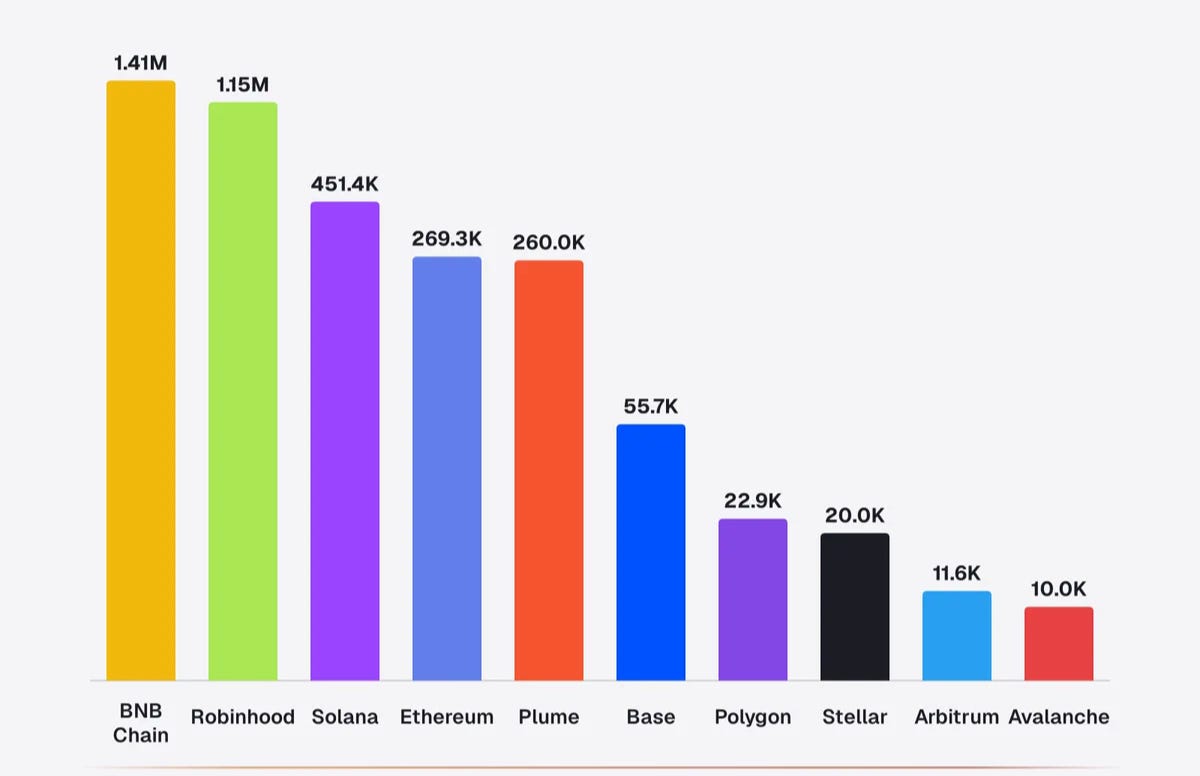
Then recently, Robinhood built its own blockchain and launched tokenised equities on it. And people did something really unexpectedly interesting- they started launching memecoins paired against those stock tokens. A coin called $BONER, paired against Hims, cornered 81% of all tokenised HIMS supply in its pools. And somehow, the stock tokens actually got liquid. I think Robinhood has accidentally built a wealth-effect machine. The chain is pulling two-thirds of all Ethereum L2 revenue right now and has brought in more liquidity to tokenised stocks than all institutions.

Velo: Supercharge Your Analysis
There’s never been a better time to be an analyst. Everyone has access to powerful AI models, and even non-coders can build the ideal tools they need. The difference between a mediocre analyst and a great one, however, is the same as it’s always been - access to the best information. Most are limited by poor-quality or insufficient data.
With the Velo API, we put our extensive data in your hands, allowing you and your AI to see the whole picture. Spot, futures, options, price action and order flow data - all at your fingertips. Power your AI in a single command with our MCP. Build your perfect suite of tools with Velo’s SDKs.

If you’re a corporate client and want to enhance the analysis you offer to your users, leverage Velo by plugging in our data, embedding our charts, or working with us on a bespoke package.
The Speculators always get there first
Tokenised equities are not new. People have been trying to put stocks on the blockchain since at least 2018, when security token offerings were supposed to be the next ICO. tZEO had raised $134 million back then for this. Securitise got backing from every blue-chip name in finance. Binance, FTX - they all gave it a fair shot, but Mirror Protocol on Terra was one of the most complete attempts. They built fully synthetic tokens for Apple, Tesla, Google, and a bunch of other stocks, all tradable 24/7 by anyone in the world with no broker and no KYC.
And it worked really well for about a year before the SEC sued Terraform Labs partly over it, and then the whole chain collapsed. But the interesting thing about Mirror is that even when it was live and fully functional, its liquidity was terrible. You could buy synthetic Apple, but almost nobody bothered, because why would you when the real Apple stock sat right there on NASDAQ with better spreads, actual ownership rights, and a brokerage app that let you buy fractional shares for free?
The assumption was always that if you build the right infrastructure and make the assets accessible, traders will show up. But accessibility has never actually been the thing that brings people into a new market.
Joseph de la Vega wrote the first known book about a stock market back in 1688, about the Amsterdam exchange. And one of his most surprising observations was that the exchange drew in investors and gamblers in roughly equal measure. The Dutch East India Company ran real-time ship activity and trade routes, but the people who actually made its shares liquid weren’t the ones studying shipping manifests.
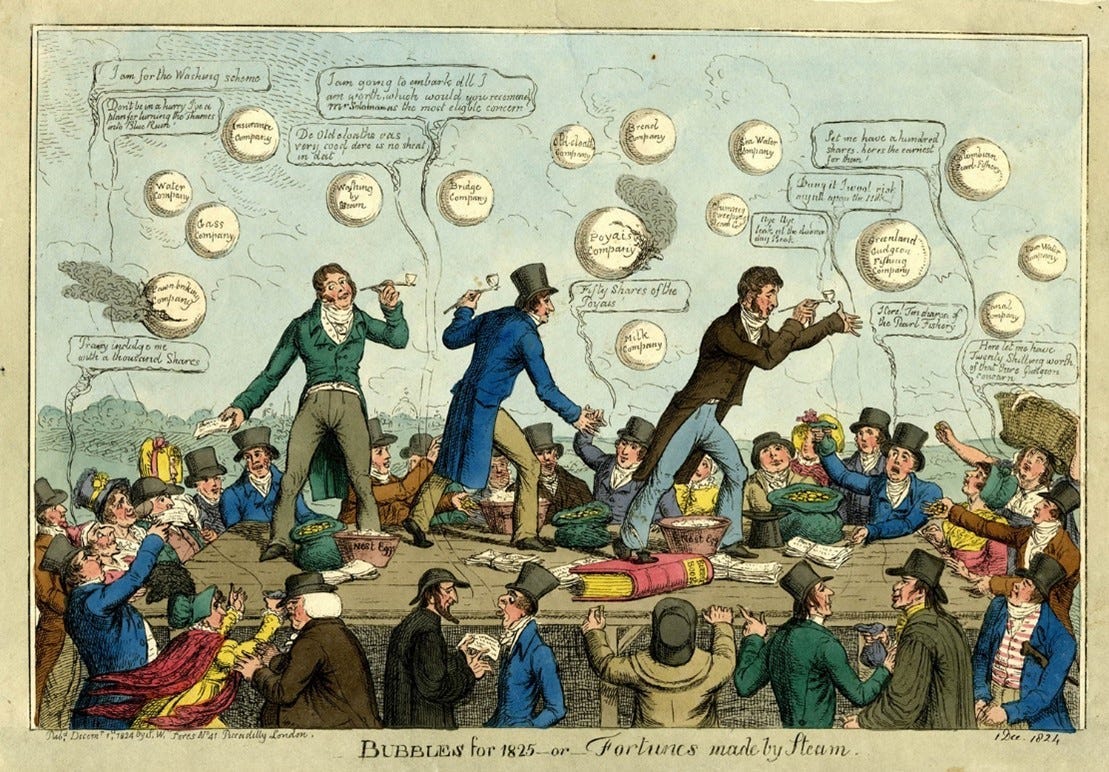
They were the ones placing bets on rumours about what cargo might be on a vessel that hadn’t docked yet, trading on secondhand gossip from sailors at the harbour, buying and selling based on how they felt about the weather.
The Chicago Board of Trade observed this again in 1865 when it built grain futures for farmers and found that the market only worked once speculators showed up to take the other side. This pattern goes back to financial markets themselves.
The reason is that if every participant in a market is rational and well-informed, they mostly agree on what something is worth, and when everyone agrees on price, there’s little reason for anyone to trade. You need people trading on sentiment, narrative, vibes, and the sheer excitement of watching a number go up, because they are willing to take one side of the trade. Take out the noise, and you end up with a dead market. The people who look like they are just gambling are actually performing a very important function in a new market; they are showing up before there is any rational reason to.
Crypto, of all, understands this better than anyone. Uniswap got its first real liquidity from yield-farming degeneracy in DeFi summer, and not from institutional allocators doing due diligence on its AMM design. Pump.fun tokens mostly die within a day, but the protocol still pulled in over $600 million in revenue last year because all that frantic activity generates infrastructure underneath it.
Hyperliquid launched as a perps exchange and let people trade memecoins on it, and now tokenised stocks and RWA make up 67% of its HIP 3 Volume. Every time something in crypto has tried to skip the degen phase and go straight to serious institutional adoption, it has ended up with a compliant and well-built but completely empty order book.
How a memecoin ate the float
So Robinhood did the one thing every other chain got backwards. Every blockchain ecosystem you know has followed roughly the same growth arc: launch DeFi protocols, attract builders with grants, wait for memes to show up organically, and then eventually try to bring real-world assets onchain at the very end.
But Robinhood launched with tokenised stocks as the foundation from day one and was fairly quiet for a few weeks; then a launchpad called long.xyz gained traction and started letting people create memecoins paired against the stock tokens instead of ETH or stablecoins.
That’s where it gets interesting, because the pairing changes where the liquidity actually resides. On Pump.fun, when you buy a memecoin, the other side of your trade is SOL, and the memecoin and the idea it references have no economic relationship beyond sharing a cultural joke.
But on Long, when you buy a memecoin paired against tokenised Nvidia, the router has to acquire NVDA first to fill your order. At the protocol level, every memecoin purchase becomes a buy order for the stock token on the other side. The equity exposure gets locked inside the liquidity pool as the reserve asset that prices the joke. If you have ever looked at how Olympus DAO’s bonding programme worked in 2021, this should feel familiar.
OHM sold tokens at a discount in exchange for LP tokens, and the high-quality asset on the other side went into the protocol’s own treasury. The protocol owned its liquidity, and OHM’s multi-billion-dollar market cap was denominated against a reserve it had itself absorbed.
You can see something similar with $BONER, paired against tokenised Hims & Hers. The total tokenised HIMS float on Robinhood Chain was around 73,685 tokens, and $BONER’s pools were holding 39,136 of them, roughly 53% of the entire on-chain supply. When Wall Street closed for the weekend and nobody could mint new stock tokens, the memecoin’s demand kept running while supply was frozen, and on-chain HIMS started trading at a 37% premium to its NYSE close.
After the squeeze, Robinhood’s Jersey entity expanded the HIMS float by 4.8x to relieve the pressure. But 53.1% of the new supply ended up right back inside memecoin pools. The supply response did not reduce the memecoin’s grip on the float. It just gave it more liquidity to absorb. For 11 out of all 17 tickers on the Robinhood chain, more than 40% of the wrapper’s total trading volume is a side effect of someone trading a joke.
A meme is basically a carryless cultural asset: you hold it, and your outcome depends entirely on the meme’s momentum. But pair it against a real underlying, and the cultural asset starts accumulating something outside of itself. The meme acquires carry. Finance has recycled the same primitives for centuries, but what we are starting to attach them to has never looked like this.
The accidental flywheel
Once carry exists, things start compounding in directions that are hard to predict. For example, with Artificial Inu, which is paired against tokenised Nvidia. When you buy $AI, 80% of the buy fee goes into a permanent NVDA vault that can only grow and can never be withdrawn from. When you sell, the fee splits between burning $AI tokens and locking even more NVDA permanently.
Every single trade, buy or sell, ratchets up the stock exposure in one direction. Roughly $3 million in NVDA has been permanently removed from circulation through this mechanism alone, and no human consciously decided to accumulate Nvidia stock. The memecoin’s own trading churn did it automatically.
And then Long took it a step further with LongX, which takes a 3x leveraged perpetual position on NVDA, wraps it into an ERC-20 token, and then uses that token as the quote asset for another memecoin. You now have a share being tracked by a debt security issued out of Jersey, wrapped into a leveraged perp on a DEX, tokenised into an ERC-20, and sitting as collateral inside a joke token’s pool.
That’s...Four layers of financial wrapping on top of a single Nvidia share. At one point, this whole thing held 16% of all NVDA open interest on its exchange. That’s what makes it a wealth-effect machine. A BNB Chain study found that users who entered through speculative memecoin trading converted to holding tokenised equities at 8.6%, compared to 0.6% for users offered equities directly.
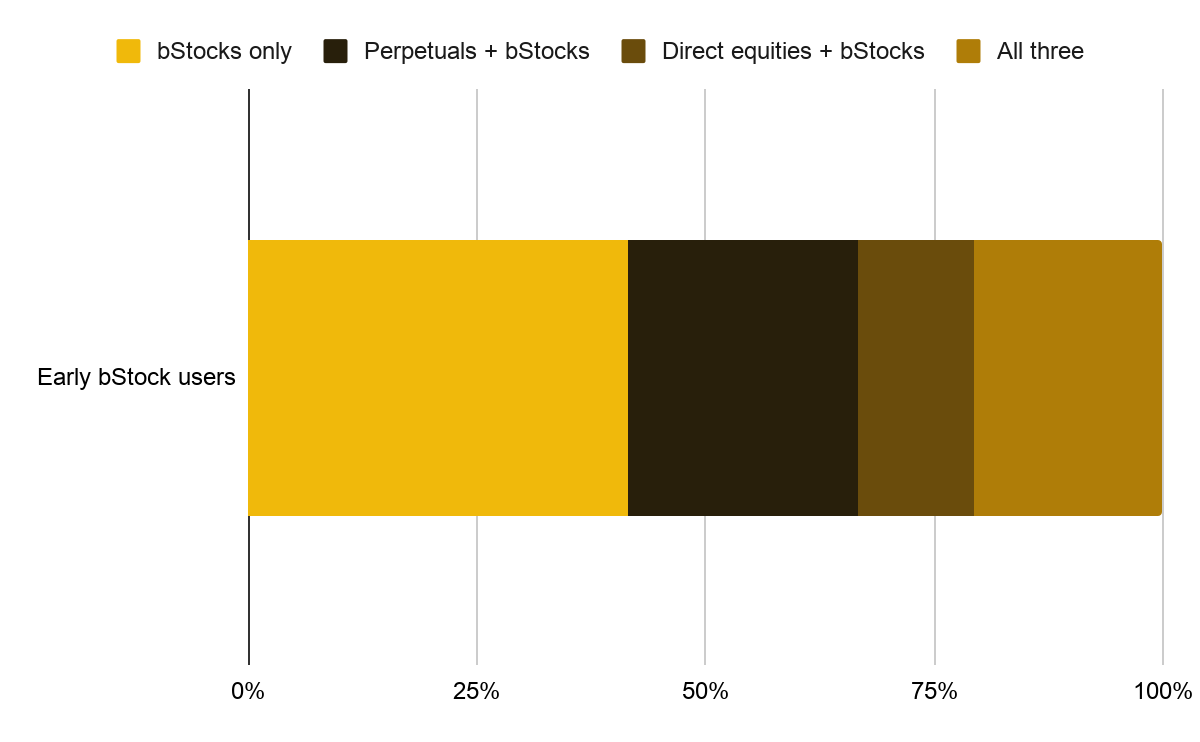
Speculation was 14 times more effective at turning people into equity holders than simply showing them the equity.
Robinhood Chain is doing $4 million in daily revenue two months after launch, roughly double Hyperliquid and about two-thirds of all Ethereum L2 revenue combined. Pons alone is the second-highest fee earner across all of DeFi right now. A memecoin launchpad, outearning almost every protocol in the ecosystem.
But there are also things worth watching. Robinhood is running a 90-day gas subsidy for its own wallet users that expires around late September, and nobody knows what happens to transaction volumes when those users start paying gas for the first time. The permanent vaults also haven’t been tested at the scale where things tend to break. And the weekend premium phenomenon, where on-chain prices decouple from the NYSE because issuers cannot mint new tokens over the weekend, might be a feature right now, but it could start looking like a problem to a regulator who has never heard of a bonding curve.
Regardless, it still does matter beyond just Robinhood. Every memecoin that pairs against a stock token locks up tokenised equity inside its pool. Before this, the money always flowed away from the meme. You made the joke on Twitter, you traded the ticker on Robinhood, and the value ended up with the platform or the exchange. The meme itself never held onto anything.
What we are watching right now is a joke token accumulating a balance sheet of tokenised equities through its own trading activity. Blockchain gives it a common programmable environment, where some arbitrary things can start having economic relationships with other arbitrary things.
A meme can be paired against a stock. A leveraged derivative can become the collateral for a cultural bet. A weekend supply freeze can create an arbitrage that funds a sequencer. And none of these was deliberately designed by a product team. They emerged because the primitives were composable and early adopters found them first.
That’s it for today!
Token Dispatch is a daily crypto newsletter handpicked and crafted with love by human bots. If you want to reach out to 165,000+ subscriber community of the Token Dispatch, you can explore the partnership opportunities with us 🙌
📩 Fill out this form to submit your details and book a meeting with us directly.
Disclaimer: This newsletter contains analysis and opinions of the author. Content is for informational purposes only, not financial advice. Trading crypto involves substantial risk - your capital is at risk. Do your own research.