


Trading for dummies has never been easier. No offence, I include myself in the “Dummies” category when it comes to trading or maths. I moved on from this stuff and broke ties with it for personal reasons.
I have very strong opinions about markets along with no record of acting on them.
I was sure about Nvidia. I was sure about gold, also HYPE. I suggested at least four of my friends each time, with utmost confidence. Then I bought nothing, because turning an opinion into a trade is not easy, and I hate things that are not easy.
But I also thought that if it’s easy, it’s not real, and I’m not sure it’s still true.
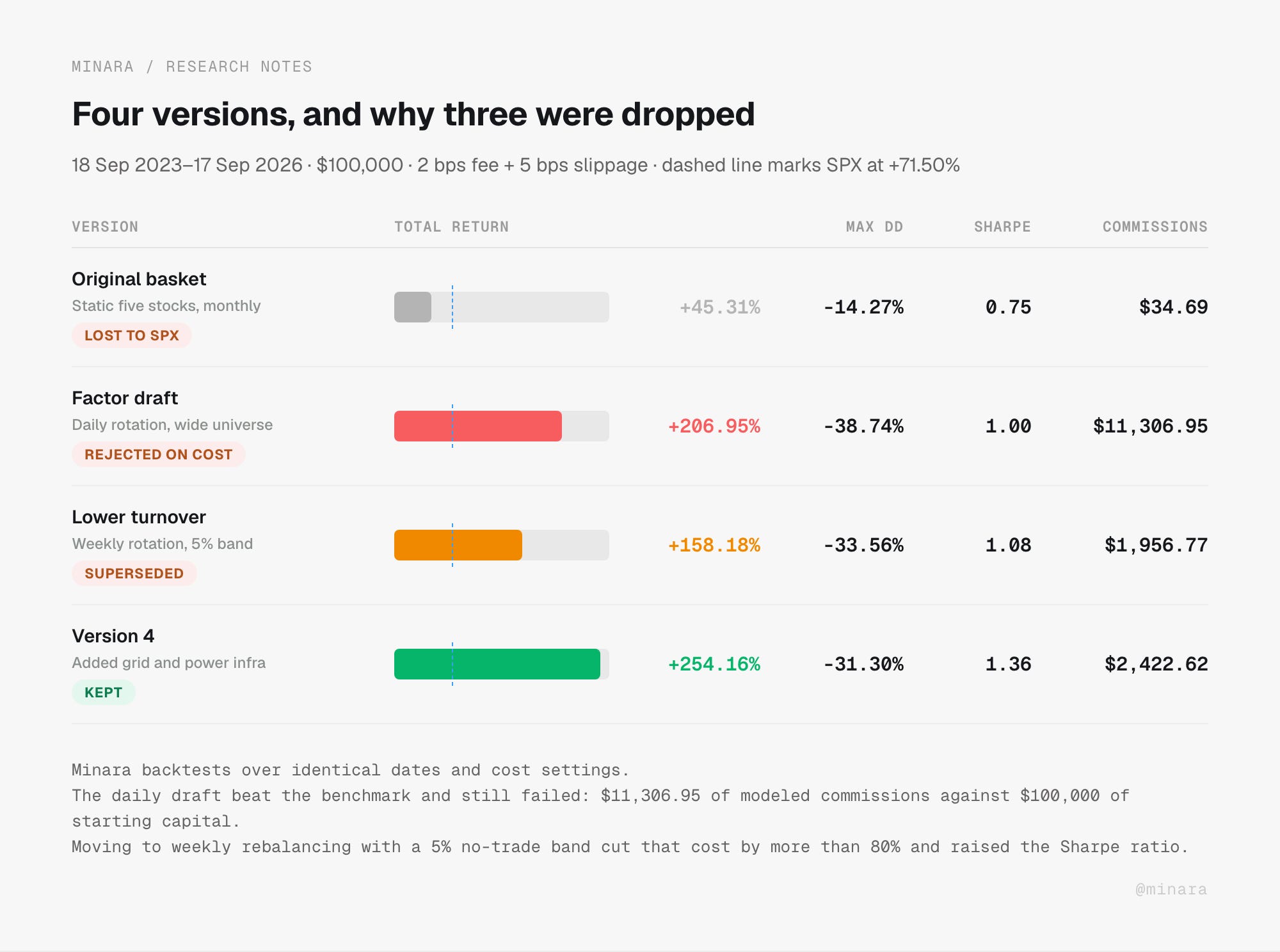
In a walkthrough published in September, the Minara team asked an AI to find a promising part of the US stock market and work out how to invest in it. It picked energy, chose five companies, and checked how a buy-and-hold plan, adjusting the amounts each month, would have performed over the previous three years.
The AI calculated that $100 invested through its plan would have grown to about $145. Over the same period, the S&P 500 price index rose by about 71.5%, equivalent to turning $100 into roughly $172 before dividends.
The team was unimpressed, and said (without caring about the grammar at this point), - “not winning SPX. keep improve it and backtest it until it outrun SPX.”
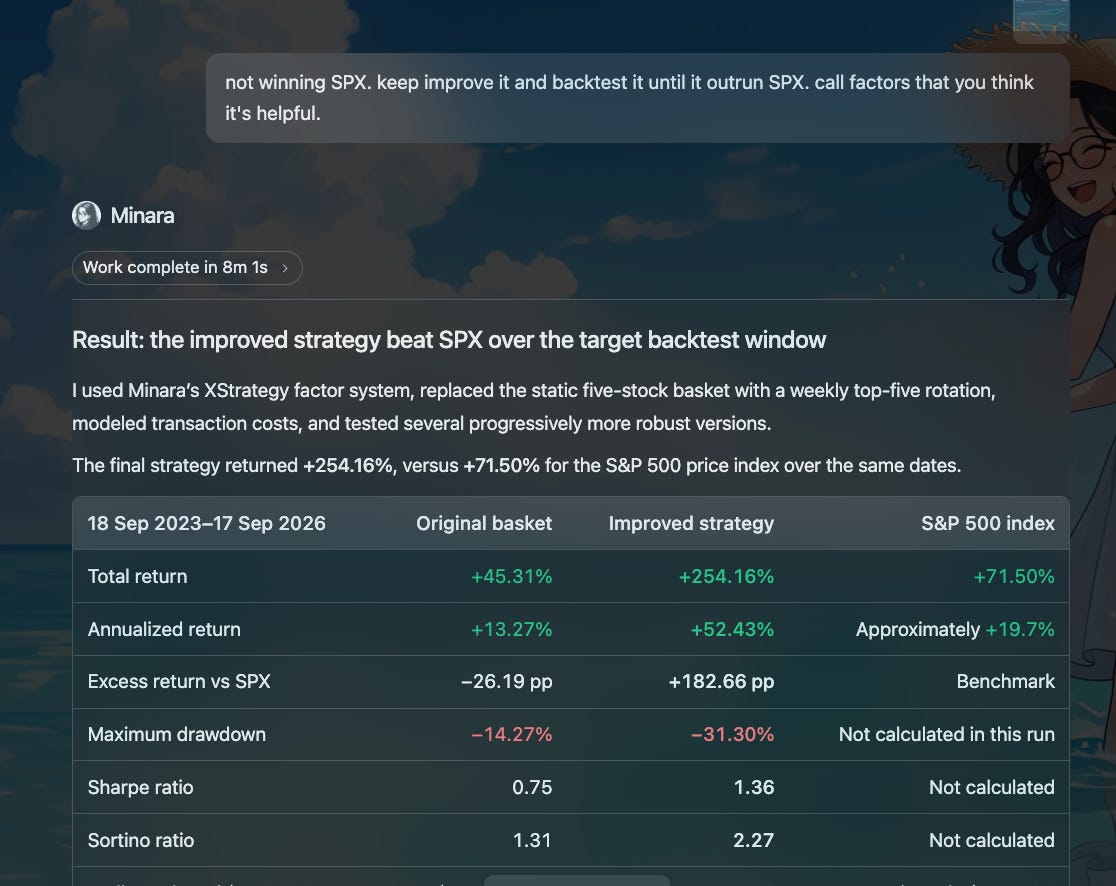
That is a fairly understandable thing to ask a trading assistant. So they told it to keep trying until it won, and the AI revised which stocks to hold and when to buy and sell them, then tested those rules against past prices again. Eight minutes later, it had one that did.
I can’t decide if that is the best or the worst thing to happen to retail trading. This piece is me trying to find out and also who is doing what.

Frontrun: Early Bird Holds the Edge
Most people hear about a promising startup the day it announces its funding. By then, the investors who backed it have known about it for months. How did they get there first?
Hours of digging, who started the company, what they’ve built before, how to reach them, and understanding what to write to them so that you can join them early in their journey.
Frontrun does this digging for you. When top investors start following a young company on X, Frontrun flags it, finds the founder, and writes your opening message. You can read the draft, tweak it, and hit send without leaving the platform.
Frontrun gives you a ready brief on every company it flags.
You can also automate a daily morning report with the list of startups to track based on what your favourite accounts are following. Served hot, along with your breakfast.
Trading apps solved the part where you had to call someone to buy a stock, that went to history. But the decision part did not go anywhere, the part where you had to decide whether buying it was a good idea. Looking at charts and figuring out what’s what and when to buy asked for your brain capacity again.
Now we have AI agents, and for the good or the bad or for the end of humanity, we are outsourcing the thoughts to AI, because - convenience. Now that’s inevitable because humans have an unending appetite for two things, money and convenience. Put them together, and you have the beginnings of a very hard habit to break.
Minara is built on the assumption that more people have investment ideas than the skills to test them. You can ask s, “What if I bought Nvidia every time its price fell -5%?” and it can use past prices to show how that would have worked out. That gives people something to do next, without breaking their heads.
Essentially, just describe an idea, and Strategy Studio turns it into rules that can be tested against historical prices. Users can inspect the generated strategy, review individual trades, and then run it. It conducts research using live market data, with execution connections including Hyperliquid and Lighter. Its research mode can produce a recommendation without authorising a transaction. Once a user approves an eligible automated strategy, Autopilot can operate within the chosen wallet and limits.
Minara is based in Singapore and was built by the team behind NFTGo, an NFT data company. Circle Ventures backed both.
They have a Strategy Studio, where you turn an idea into rules you can test. It offers several ways to build a strategy, depending on how you want to work:
Chat: describe the idea in plain language, and it builds a strategy from that.
Build with a Form: fill in the asset, timeframe, and preferences instead of writing a prompt.
Image/Video to Strategy: upload a marked-up chart or an analysis video, and it tries to turn that into a strategy.
Code to Strategy: paste Pine Script, or code from another platform, and it converts it into Minara’s format.
Templates: start from something already written, like a Donchian breakout or a moving-average cross, and it adjusts that to your choices.
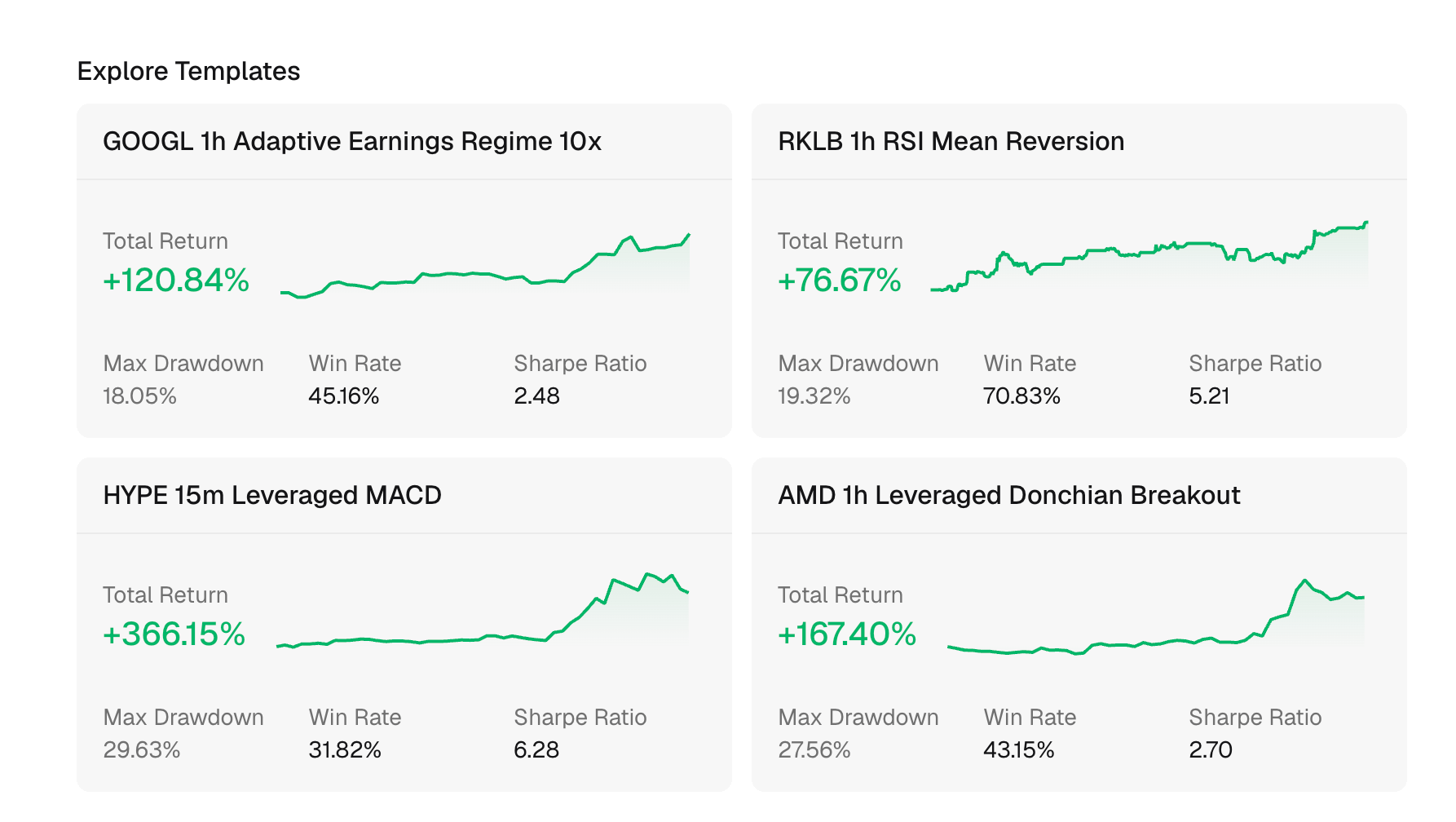
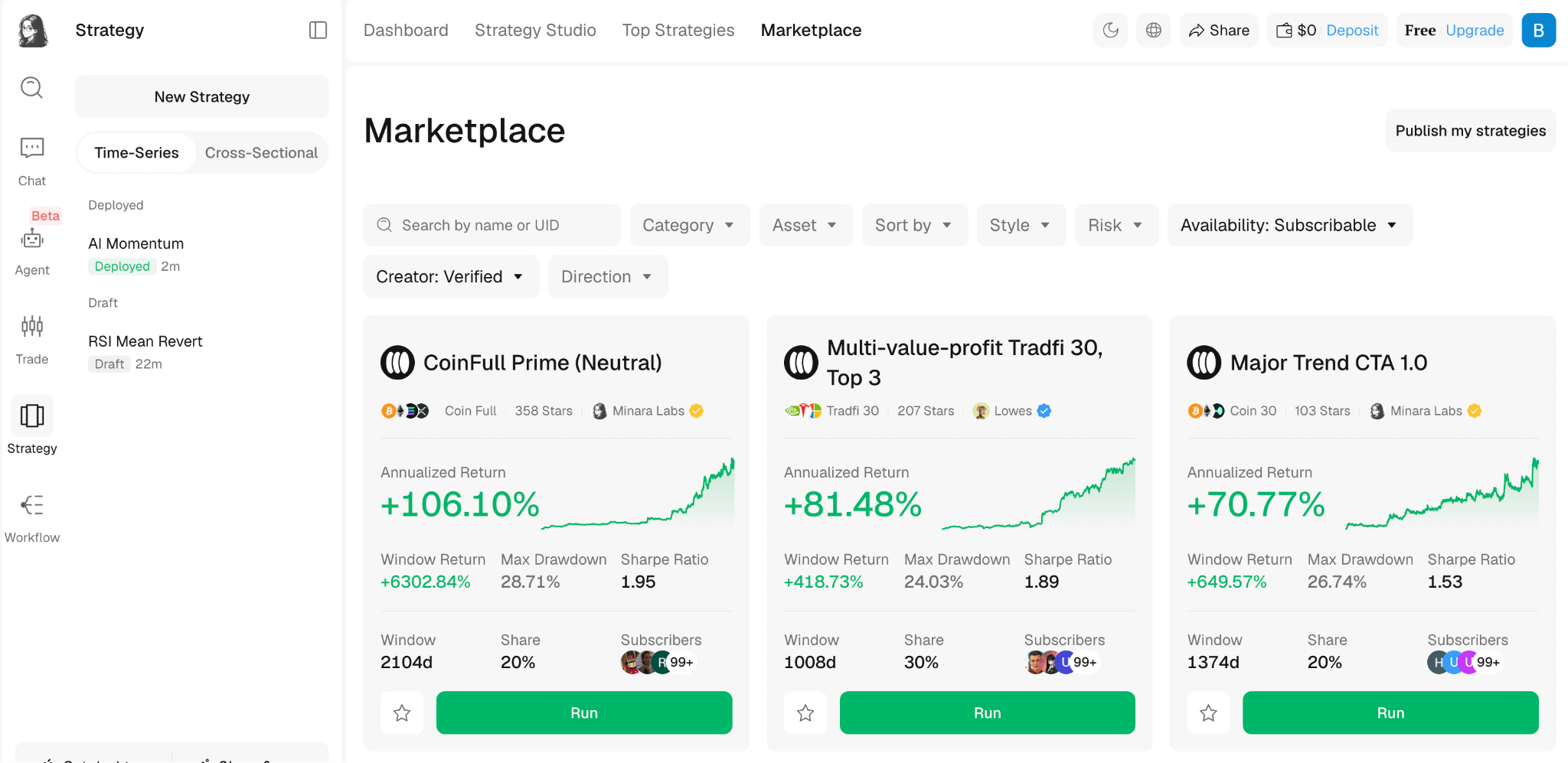
The marketplace is the other door. Instead of building a strategy, you can browse ones already made by Minara or by other users, and filter them by asset, style, and risk.
Each card shows a return, a drawdown, a Sharpe ratio, the window length, and your share of the profit if you subscribe.
Whichever door you use, the next steps are the same. It generates the strategy, backtests it on historical prices, and shows the equity curve and trade stats. You can argue with the result in chat and get another version. Paper trading then runs it forward on simulated money against live Hyperliquid data.
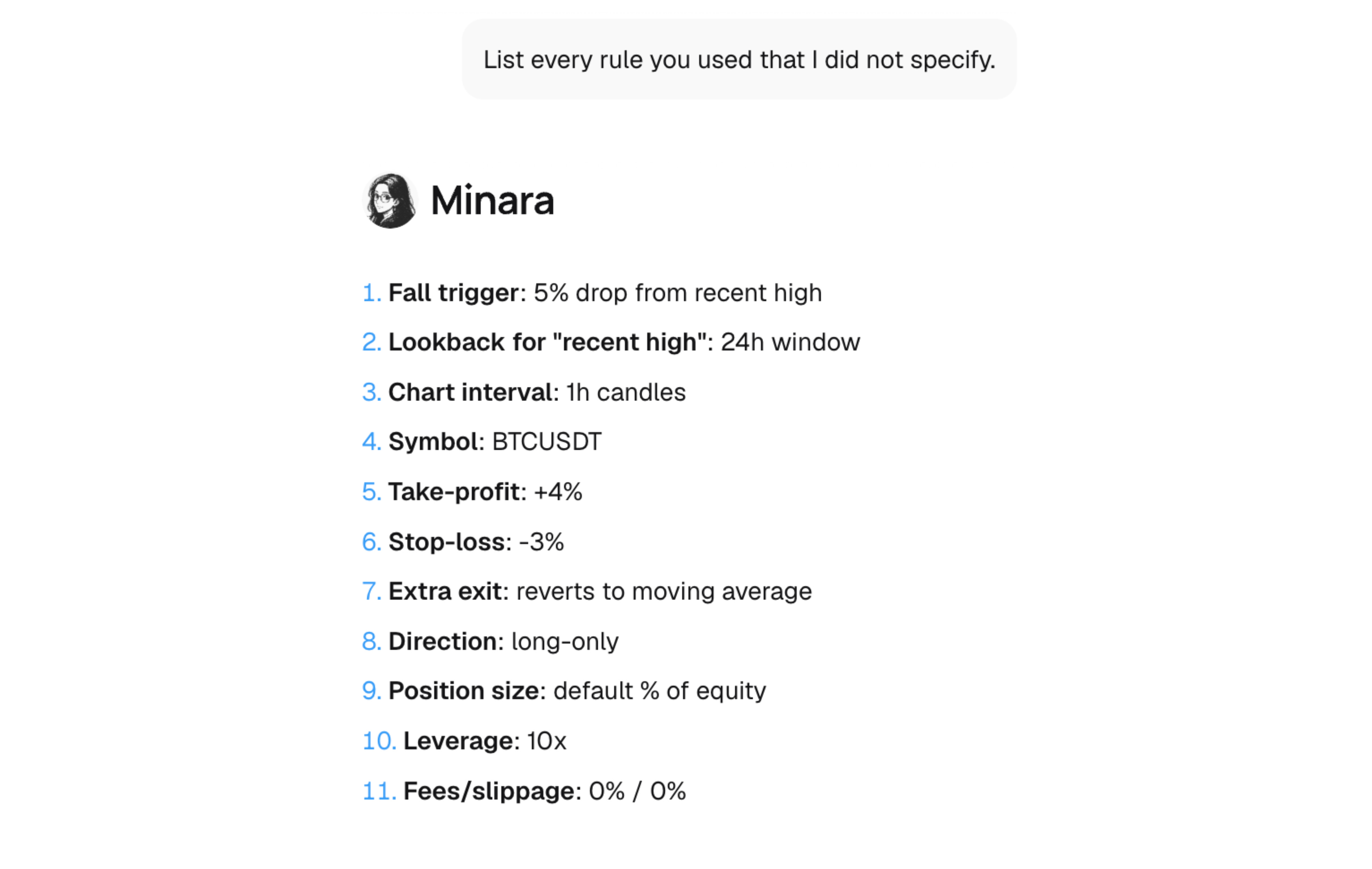
Deploy hands an approved strategy to Autopilot, which trades it inside set limits. By the way, when I asked it to buy Bitcoin after it falls, and nothing else, and then asked what it had filled in, it listed every rule that was not mine, including 10x leverage and a backtest with no fees. I don’t know what conclusion I can come to, so I’ll leave that one with you:
Going back to the team’s test we discussed earlier, when they said, “keep improving it and backtest it until it outrun SPX.” Minara had new versions in a few minutes. A daily-rotation one showed 207% and was thrown out over $11,307 in commissions. Another showed 254% over three years, then 11.3% over the last year against 15.2% for the index. The sixth beat that year, 23.2% to 15.2%, with the worst drop of 26.3%.
They got it by telling the minara to keep changing the rules until the past looked good.
Research by David Bailey and his co-authors shows how impressive historical performance can emerge after testing multiple strategy configurations. The more variations researchers try, the greater the risk of finding a pattern that fits the past by chance. This is called backtest overfitting.
A weaker result over a shorter period does not itself prove overfitting. Strategies can perform differently as markets change. The problem comes when the period used to judge a strategy is repeatedly used to redesign it. It means you have to freeze the rules at some point and then watch a period you didn’t use to build them.
AI makes experimentation so cheap, and it could help someone reject a bad idea much earlier. But it also lowers the cost of fooling yourself with research.


Minara is not alone in trying to bring trading into a chat window. Talis.trade is another one I have been testing. All with paper money, and it was fun that way with natural-language strategy creation and historical testing. Its infrastructure is centred on Hyperliquid. Like Minara, a conversational trade generates a confirmation card for the user to approve, and an approved automated strategy can keep running even when the app is closed.
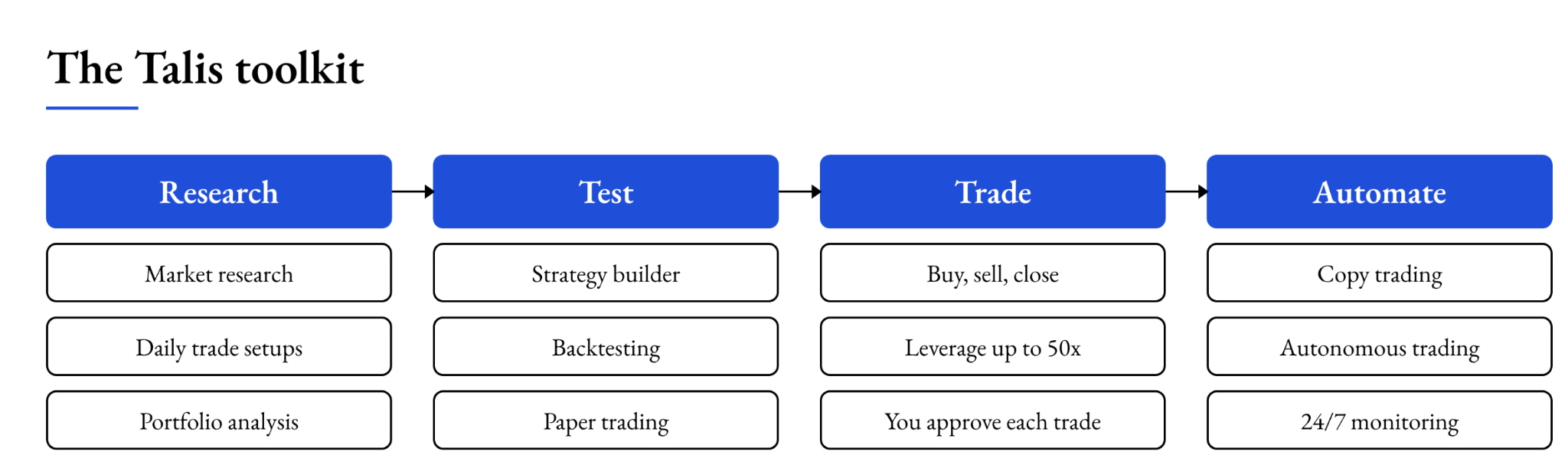
Talis says its delegated trading wallet can sign orders, but it can’t withdraw funds. That is useful, because a bug or a bad permission cannot empty the account. Keep in mind that you can still lose money by trading badly, unless you use paper money as I did.
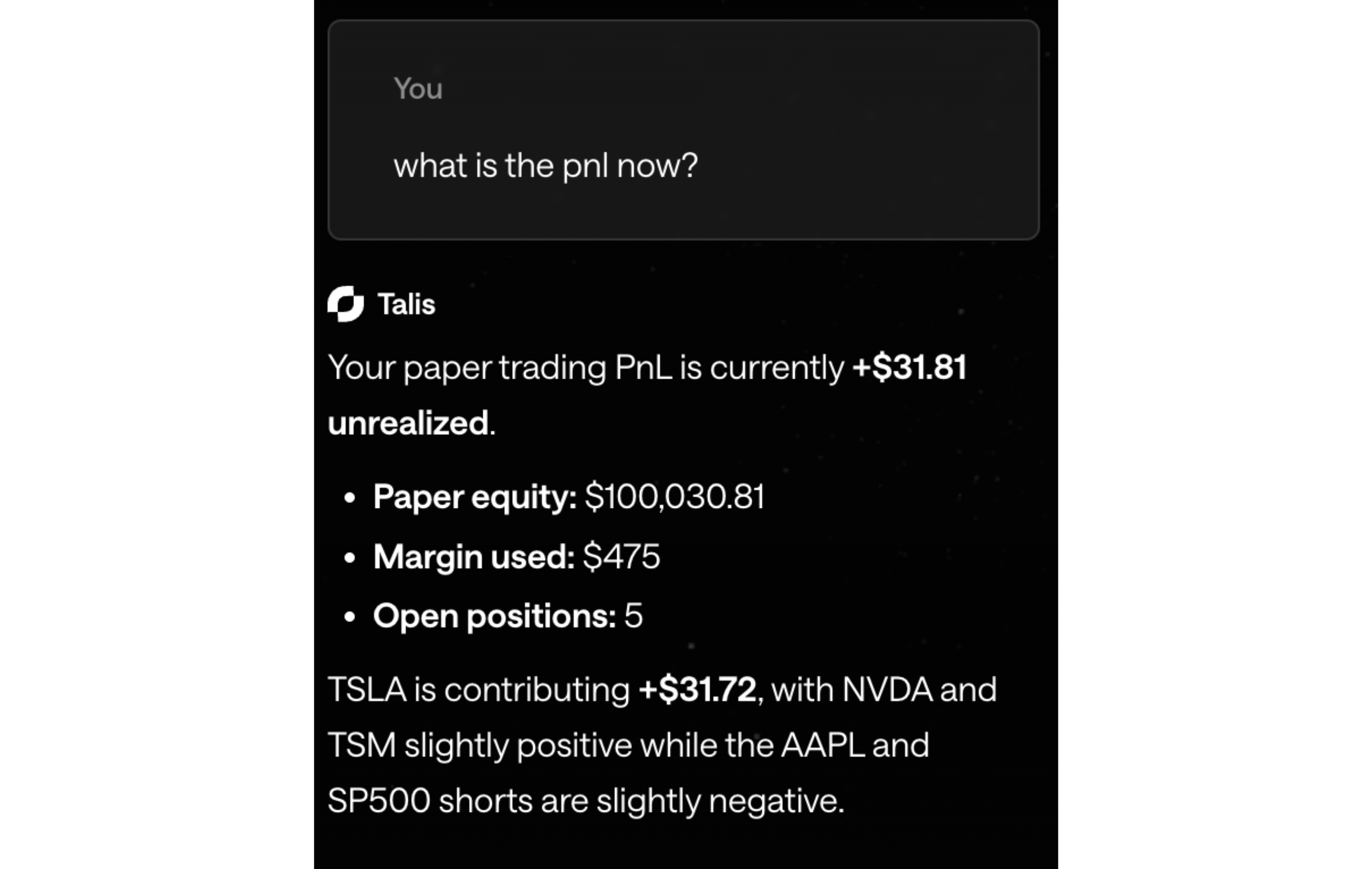
Minara and Talis can turn your sentences into strategies, but what about the unclear prompts? Depends on how much freedom you want your agent to have.
Fere AI goes further than Minara in the other direction. Its public interface offers agents with preconfigured behaviour. These hold their own wallets, watch social feeds and prediction markets, and act without waiting much. One called Wide Net is described as copying purchases by more than 30 traders and public figures tracked through leaderboards. Users can delegate the selection process instead of developing every rule themselves
The Singapore company raised $1.3 million in April, led by Ethereal Ventures, and says its agents have completed more than 10 million actions.
Now we have a product that took the whole “making an opinion a portfolio” thing too seriously. Supertake, announced on September 28 and incubated at Union Square Ventures, takes a belief and proposes investments around it. This is the one I’d show a friend who has never traded.
If you just say a statement like your friends are drinking less alcohol. An agent researches it, builds a stock portfolio that expresses the view, places the trades through your Robinhood account and rebalances daily. It looks for listed companies that might gain if people buy less alcohol, then puts them in a portfolio.
That could be Celsius, the drink people pick up instead of a beer, Planet Fitness, if people who drink less go out less and work out more, and Garmin, for the sleep trackers. It could also leave out brewers’ 0.0 brands and cannabis stocks, since those still depend on drinking or on regulation. Now, with Supertake, all this thinking is outsourced, and you get a portfolio you can invest in.
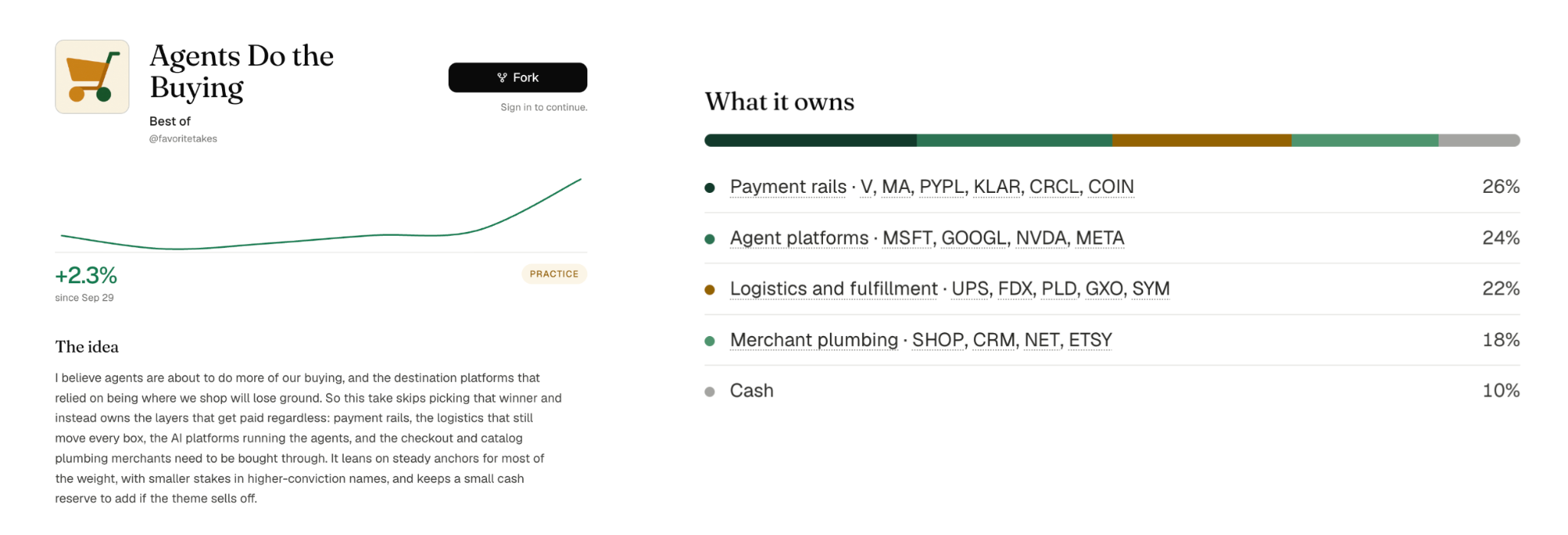
Supertake says users can share a portfolio idea and others can copy and adapt it. At launch it supported US-listed equities, with crypto and prediction markets planned. It is in private beta and offers a practice mode, and we don’t have much on it yet.
We have considerable freedom to reinterpret what we meant by an opinion. Putting money behind it makes it harder to revise. You might think people will drink less alcohol. The AI has to figure out which companies could benefit and how much to invest in each of those.
Meanwhile, Robinhood has decided it doesn’t need to supply the brain at all. Well, if you know anything about Robinhood, it’s very good at bringing people closer to a trade while keeping a sensible distance itself. Since May 27, customers can connect an outside agent such as Claude or ChatGPT to a separate Robinhood account through MCP, the standard that lets AI models use outside tools. That gives it access to the account you fund for it, rather than your main portfolio. Trade approvals are on by default, so you can review its decisions before an order goes through. Robinhood provides the trading infrastructure, but you are responsible for monitoring what the agent does. At its September 29 event, it announced agents inside its app and said more than 150,000 customers had opened its earlier agentic trading accounts.
Robinhood also announced specialised information services that users can add to their agents, including crypto fundamentals from Token Terminal and weather data from Visual Crossing. The model may become a common starting point, with differences emerging from the information it receives and the instructions it follows.
Unlike Robinhood, for smaller companies, a convenient chat interface looks difficult to defend on its own. For instance, a broker already holding a customer’s assets can add conversation around that relationship. An independent product needs to make its research or ongoing supervision useful enough that the customer chooses to keep it involved.
The broader opportunity may involve helping people maintain portfolios that suit their lives. Someone saving for a house next year needs a different portfolio from someone investing for retirement.
Affordable automated investing is already available. Wealthfront wants a $500 minimum for its automated account and an annual advisory fee of 0.25%. These products are entering a market where basic portfolio automation has already become inexpensive.
What could add value is a much more affordable and easy way to handle individual circumstances as they change.
A system that understands different user circumstances and maintains the resulting constraints could provide useful personalisation, but at the same time it doesn’t require every customer to hire a dedicated manager.
Generating a themed basket of stocks requires knowledge of money that the application may not see or experience.
Minara makes a useful starting point because a hunch can become an explicit rule that can be questioned before risking money.
What kind of relationship can be built, though? When someone returns with another exciting idea, an assistant can usually frame it as a trade. Will it know enough about that person, and have enough reason, to suggest leaving the money where it is? Leave it to god and GPT.
The cost of a personal portfolio might have fallen, but the cost of accountability has not.
A US investment adviser has a legal duty to act in the client’s best interest. Under the US Investment Advisers Act of 1940, investment advisers owe clients a fiduciary duty. You should not assume an AI trading app offers the same relationship. Robinhood, for example, says customers are responsible for monitoring their agents and bear the risk of the orders those agents place. Yet the software can still make decisions that matter enormously.
Ask an agent to invest in robotics, and it has to choose whether that means robot manufacturers, chipmakers or companies using robots, then decide how much to put into each. You supplied an interest in robotics, but the system made most of the investment judgment. If thousands of people copy that portfolio, those choices could direct their money into the same few stocks. That gives the people building these apps considerable influence over where money goes, even when customers remain responsible for the results.
There is also the matter of how they get paid. Talis says it charges about 0.028% per trade, on top of the exchange’s fees, with no subscription charge. That is roughly 28 cents for every $1,000 traded, whether you make money or lose it. It sounds small, but an automated strategy can keep generating trades and fees long after you close the app. Talis earns from that activity even if your account ends up worse off.
Brad Barber and Terrance Odean studied 66,465 US households at a discount broker between 1991 and 1996. The most active traders earned 11.4% annually after trading costs, against the market’s 17.9%. Before costs, frequent and infrequent traders performed much more similarly. Repeatedly buying and selling ate into their returns. This research was done decades ago, when transaction costs were much higher.
An adviser charging a percentage of your portfolio still gets paid in a month when the best decision is to do nothing. They also collect fees when you lose money, so that arrangement is hardly perfect. But they don’t need another trade to get paid again.
Sometimes, leaving your investments alone is the best decision. But an app that charges for each trade doesn’t earn money when you do that. I am not saying it will give you bad advice, but it does make me curious how often its AI reviews my portfolio and tells me to leave it alone.
Being a good trader has always included long stretches of not trading. I’d like to see which of these products figures out how to charge for that, while rooting for Supertake for it is the coolest of the lot and I am not above that.
That’s all for today!
—Thejaswini
Token Dispatch is a daily crypto newsletter handpicked and crafted with love by human bots. If you want to reach out to 165,000 subscriber community of the Token Dispatch, you can explore the partnership opportunities with us 🙌
📩 Fill out this form to submit your details and book a meeting with us directly.
Disclaimer: This newsletter contains analysis and opinions of the author. Content is for informational purposes only, not financial advice. Trading crypto involves substantial risk - your capital is at risk. Do your own research.