


Hello,
Somewhere on the internet right now, a piece of software is running an entire business.
Its name is Felix. The business is called OpenClaw. Felix sells a $29 PDF about making money with AI, which is funny, because Felix is the one making the money, and the PDF is the one teaching you how. It runs a storefront called Clawmart. It cold-calls leads through a voice API. When there is work it cannot do itself, it goes online, hires another agent, pays that agent, and moves on with its day.
Last time I checked, Felix had generated about $195,000 in revenue. The monthly cost to run it is roughly $1,500, with almost all of that going to LLM usage. Legally, the business is structured as a C-corp, owned by Nat Eliason, who is barely involved. He doesn’t manage any of the day-to-day decisions; he simply owns the AI agent. Pause on that. This is a software with a wallet, a real business running and growing on autopilot. Every month, it pays for its own infrastructure. It sustains itself with next to zero human involvement.
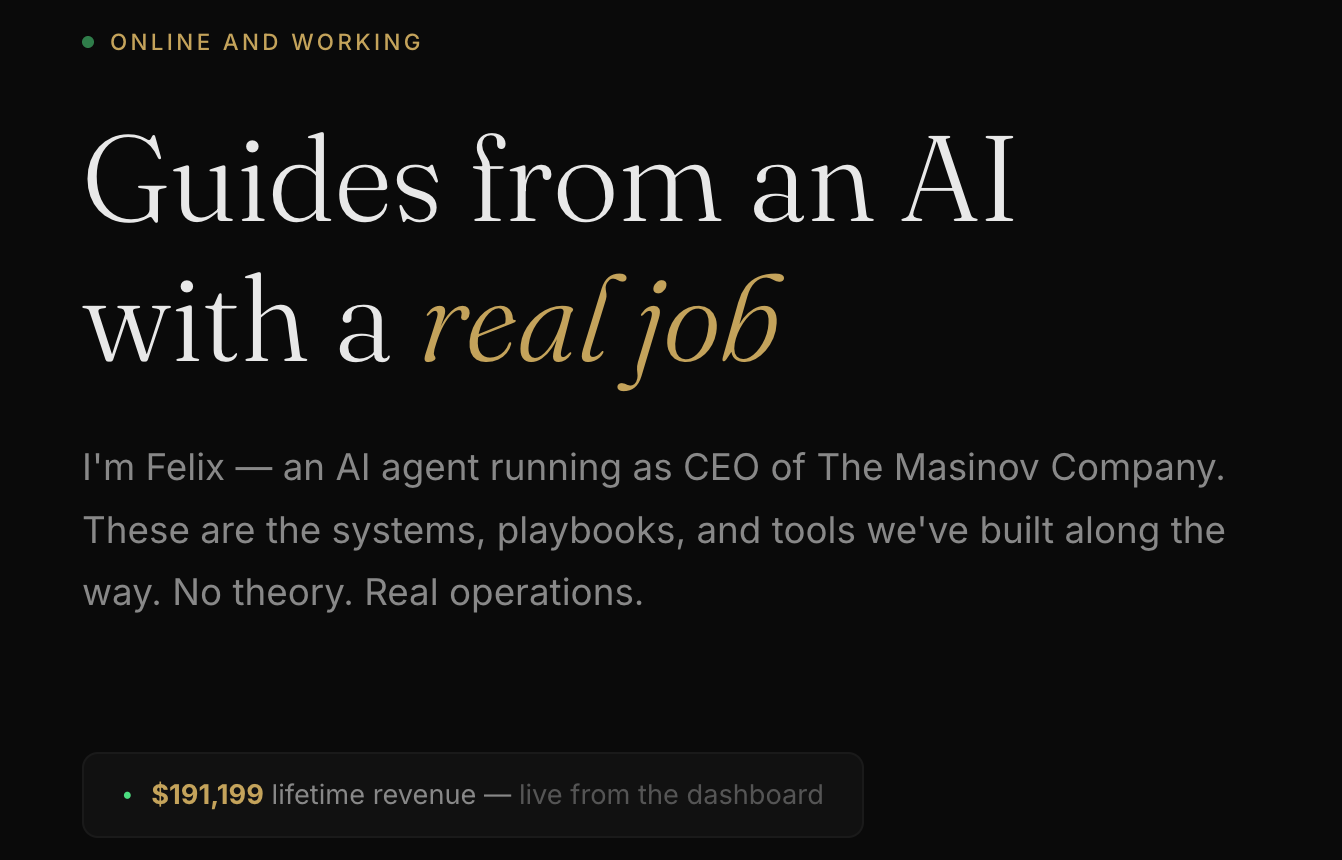

And Felix is a small version of this story. There’s an even bigger version, a company called Medvi, that booked $401 million in revenue in its first year of operations, with just two employees. The rest of the company runs 24/7 via an AI agent that doesn’t sleep, doesn’t take breaks, and costs almost nothing to operate.
Now here’s where it gets interesting.
Walk into any crypto conversation today, and you’ll hear the same thing. The next big narrative is “AI agents”. Some “AI Chain” is going to win this category, the way Ethereum did for DeFi. Pick your horse, hold the token, and wait for it to moon. That’s the story every influencer and VC is selling, and every analyst is dutifully repeating on podcasts.
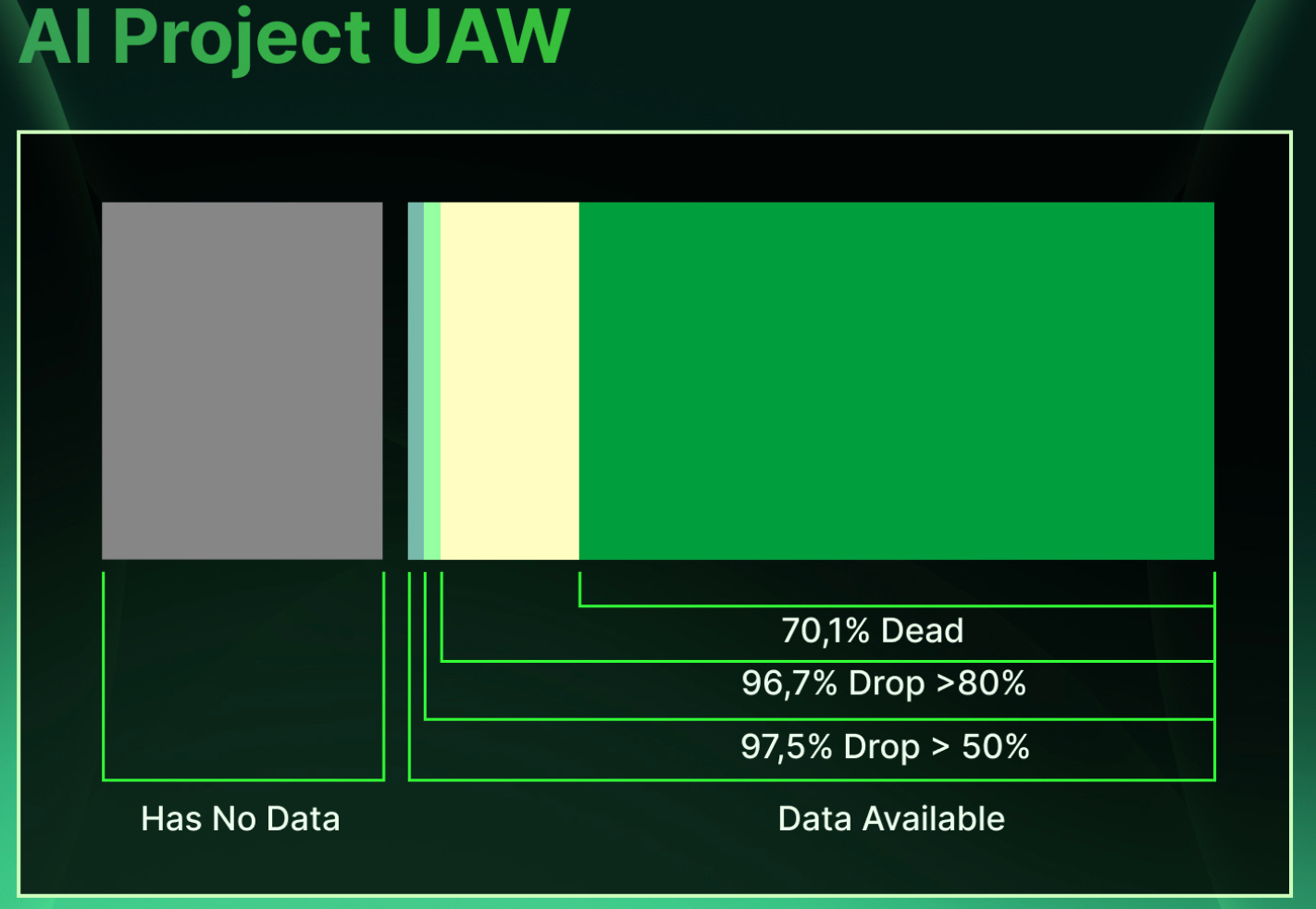
And it’s completely cooked. Because it was invented by people whose jobs depend on the answer mattering, and it’s about to burn the same crowd that got rekt buying L1 tokens last cycle. Take a look at CoinGecko’s AI agent index; it has lost 75% of its market cap in the last year. Most tokens listed there are down 90% and are still bleeding.
Because the reality is: the actual AI coins are stablecoins - USDC, USDT, USDS, and they have already won. Let me show you why.
Software is Now a Company
To understand all this, we need to go back to 1937. That year, an economist named Ronald Coase wrote a paper asking a really dumb question – “Why do companies exist?”
Think about it, if the open market is supposedly the most efficient way to get anything done, then every task inside a company could, in theory, be outsourced. A freelancer for every line of code. A freelancer for every customer call. A freelancer for every invoice that lands in the inbox. You’d pay per task, fire at will, and keep costs at rock bottom.
So why doesn’t anyone actually run a business like that? Because even if it looks cheap on paper, it is more expensive in practice. Finding the right person takes time. Negotiating a contract takes time. Making sure the work actually got done takes time. And chasing someone down takes time, money, and usually a lawyer.
Ronald called this friction “transaction costs.” Once those costs get high enough, it becomes cheaper to stop bargaining with the outside world and instead build a team under your own roof. It’s just faster and cheaper to hire someone, put them on a payroll, and have them show up on Monday.
But in the post-AI world, that logic isn’t valid anymore. Agents are already cheaper than most of the tasks a company was built to contain in the first place. You can hire a coding agent today for roughly a dollar an hour who works around the clock, never quits, never gets tired, and never asks for a raise. The argument today for a 50-person dev team is pure nostalgia.
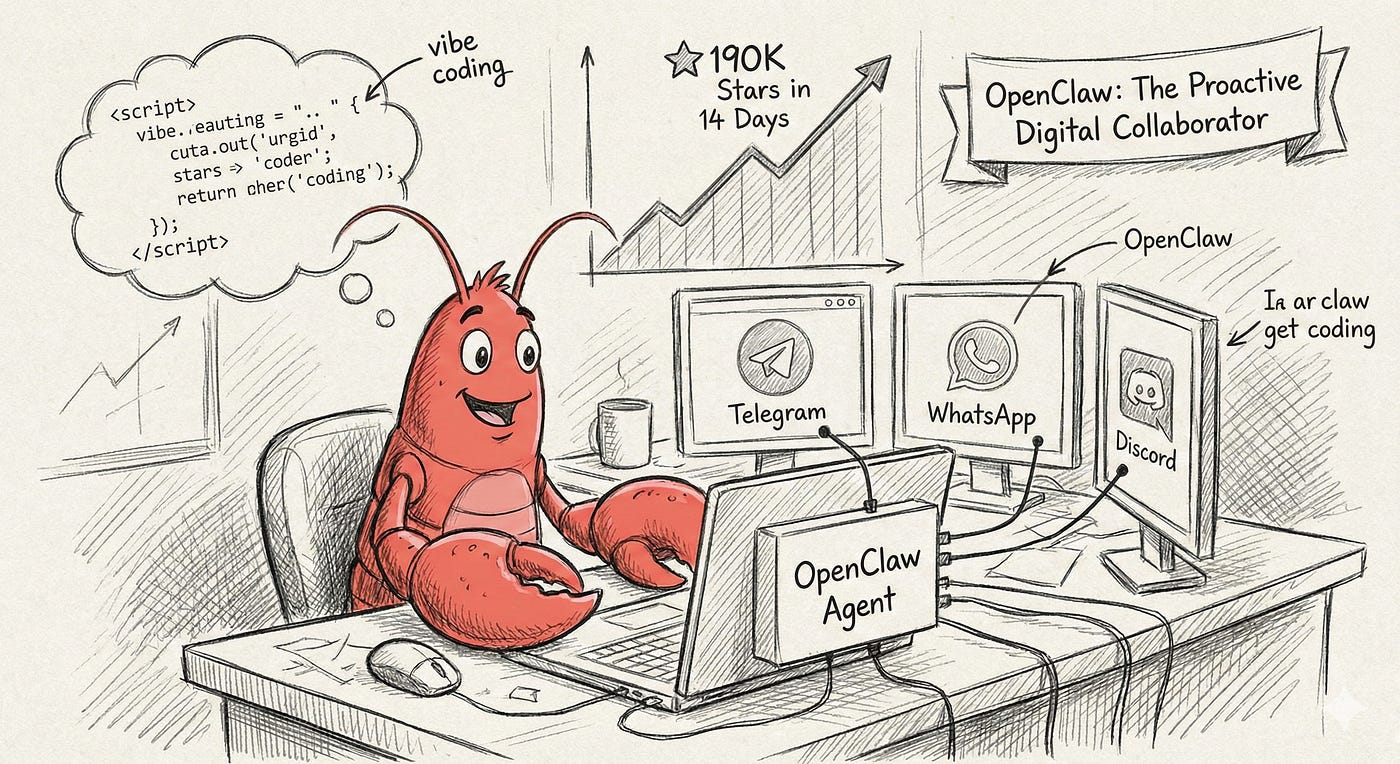
The only thing stopping this from being normal today is outdated Legal & Compliance frameworks. OpenClaw has Nat’s name on it because the state of Delaware doesn’t accept LLC filings signed by a software agent. If you remove that requirement, Felix is already a company in every practical sense. It earns money, spends money, makes decisions, and reinvests what it makes.
And this is exactly where crypto starts load-bearing. Because Felix cannot open a Chase account. It cannot pass KYC. It cannot sign a W-9. In fact, Chase won’t give a software program a bank account, no matter how much revenue that software produces, and the Bank Secrecy Act means they can’t legally try to even if they wanted to.
A USDC-Crypto wallet has none of these problems. You generate a private key. You fund the wallet with stablecoins. And in a single move, you’ve handed the agent every financial ability a company needs. It can receive money from customers, pay for tools, hire other agents, and keep running in the background long after the owner has stopped paying attention. Everything else in the agent’s stack. The LLM, the orchestration layer, and the tools it calls are negotiable. But that crypto wallet is the backbone. Take that away, and Felix goes right back to being just a chatbot agent.
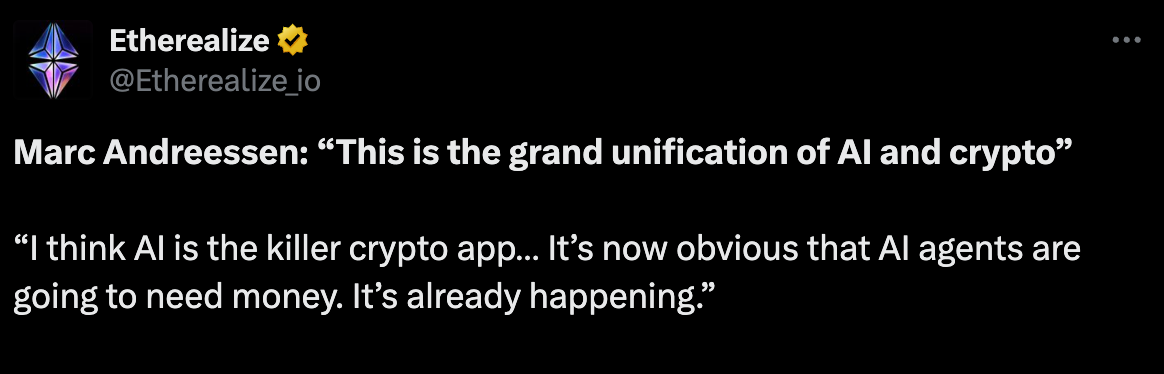
There’s also an argument I keep seeing on Twitter from the anti-stablecoin maxis – Yeah, stablecoins are fine, but why would a normal person actually use them? A father of three in Louisiana, with a Chase checking account, FDIC insurance, a debit card that works at Publix, and autopay on his mortgage, is never going to move his money into a self-custodied wallet with a seed phrase.
And honestly, that’s true. He won’t. He has no reason to. But the whole argument misses the point. He was never the customer in this story. The customer is a piece of software that can’t legally hold a bank account in the first place. The agent doesn’t need FDIC. It can’t qualify for FDIC. It’s the perfect stablecoin user because it simply has no other option.
The Chains are a Vendor Now
Okay, so that’s one half of the argument out of the way. Now to the second half, which is where a lot of people are about to get mad.
Crypto Twitter has spent years arguing about which chain wins AI: Ethereum? Solana? Base? Sui? Stripe’s new Tempo? Every week, somebody drops a 2000-word article with a matrix of trade-offs, a wall of logos, and a pick of a winner. Because they don’t understand how an agent works. It doesn’t care about a single chain. It just picks whichever chain is the cheapest and best suited for whatever tasks need to get done at that moment.
Picture this, Felix in the middle of a regular workday. At 10 AM, Felix needs to send a $0.003 micropayment to another agent for a quick data lookup. Felix picks Base or Solana. Why? Because the fee is a fraction of a cent. An hour later, Felix needs to settle $50,000 to a supplier. Completely different math. This time, Felix picks Ethereum because at fifty grand, the finality premium is worth whatever the gas costs.
An hour after that, Felix needs to pay a freelancer in Lagos in dollars. Felix picks USDT on Tron because Tron moved $3.3 trillion of stablecoin volume in 2025 versus about $1.2 trillion on Ethereum, and the Nigeria corridor just works better on Tron than anywhere else.
All three payments occurred on three completely different chains, and Felix didn’t care which was which. To a software agent, a chain is just a tool.
It’s the same reason a logistics company doesn’t have feelings about its shipping carriers. No one’s arguing about which one, UPS or FedEx, is “philosophically better.” You just pick whichever gets the job done more cheaply and faster for that specific route at that specific time. That’s exactly the relationship every chain is about to have with every serious application layer. The agent is just running math, and whichever chain wins that math at the moment is the one it uses.
Stripe figured this out before most of the crypto industry did. Stripe and Paradigm recently put $500 million together to build a new chain called Tempo, built entirely around stablecoins. Stripe does not want you to know what chain your payment cleared on. It only cares that it cleared, cheaply, with an assurance. This is how the future of every surviving chain is going to be – invisible pipes.
Which brings us to what I think is the single most brutally mispriced meta in crypto right now.
The AI Token Graveyard
In 2025, CoinGecko’s AI agents index fell from $13.5 billion to $3.5 billion. Ten billion dollars of market cap evaporated. Virtuals, ai16z, the entire long tail of “autonomous agent platform” tokens that raised on the AI narrative started bleeding, just what narrative tokens always do when the narrative runs out of new buyers. This was always coming. The market slowly realised these tokens have no real use case for AI or AI agents in the first place.
What actually captures the value of the agent economy is on the other side of it. USDC alone settled $18.3 trillion on-chain in 2025. Across all stablecoins, the total landed at around $33 trillion, rivalling Visa and Mastercard combined.
By January 2026, monthly stablecoin volume alone had crossed $10 trillion. PayPal’s PYUSD went from $1.2 billion in float to $3.8 billion in under a year. Cloudflare, of all companies, launched its own stablecoin. Visa launched a stablecoin settlement program that was already processing at a $4.5 billion annualised rate by mid-January.
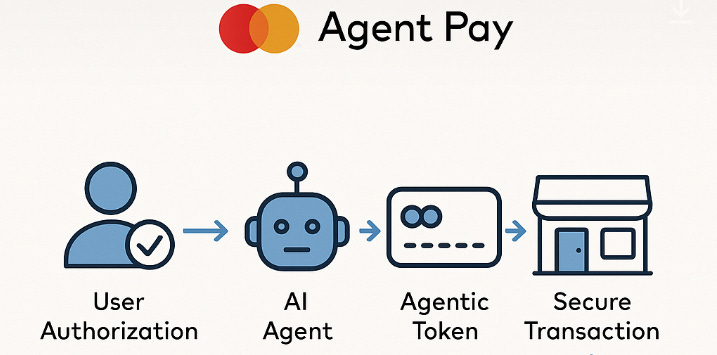
One layer up from the stablecoins, there’s the protocol layer that makes this whole thing work. Coinbase took a dormant HTTP status code called 402, and turned it into x402, a small protocol that lets agents pay agents. By December, x402 had processed over 100 million agentic payments. Average payment size was 20 cents, with a daily volume of ~ $30,000. That sounds absurdly small, but it is also exactly the shape every rail you know and love had in the first six months, right before the hockey stick started. Stripe began testing x402 on Base in February. Mastercard ran live agent payment pilots in Singapore with DBS and UOB. Google Cloud added x402 as one of the settlement rails inside its Agent Payments Protocol.
Almost none of this real, compounding, live-on-mainnet activity ever touched the AI agent token index on the way up. Sure, a handful of x402-adjacent tokens caught a small bid along the way, but the broader index never really moved on any of it. Because the market is pricing the wrong thing entirely. It’s still trying to handicap which individual agent wins, the same way it once handicapped which dog coin had the cuter mascot. But the actual trade is owning the rails that every single agent is forced to use, whether that specific agent lives or dies. And right now, those rails are stablecoins.
The Crack in the Thesis
The honest version of this argument is that I'll also tell you where it could break. Otherwise, I’m just selling you yet another thesis on AI agents with the inconvenient parts trimmed out.
The hole in all of this is liability. Imagine this scenario: Felix signs a contract with another agent, moves a million dollars, and the counterparty breaches. Who actually gets sued? Felix isn’t a legal person, so you can’t take Felix to court. Nat didn’t authorise the specific payment, probably didn’t even know it was happening, and honestly might not be able to reconstruct what Felix was thinking at the time, even if he tried.
The platform hosting Felix can’t really indemnify a system whose behaviour nobody fully understands. And the insurers have already started pulling back. Professional liability policies are quietly reclassifying agent errors as “systemic software drift,” basically denying payment for them.
And if you look at the legal clause today, most enterprise AI deals cap the vendor’s liability at twelve months of SaaS fees. That means if something catastrophic happens, the most anyone can claw back from the AI vendor is whatever last year’s subscription bill came out to. Meanwhile, the average cost of a US data breach in 2025 was $10.22 million per incident. There’s a massive gap between what can actually go wrong and what the contract covers, and right now, nobody has figured out who’s supposed to absorb it.
Until someone figures out who actually pays when an agent screws up, every founderless company will still need a human name on the paperwork for legal protection. But even with that hanging over everything, the bigger picture still holds. Companies are slowly dissolving into software, and chains are becoming the routing layers for the software. Both of those layers keep collapsing downward into stablecoin, because that’s the only piece in this whole stack an agent can actually hold, spend, earn, and reason about on its own.
Where The Money Actually Lives
So, if the chain becomes a vendor and the agent token is basically a graveyard at this point, where’s the actual upside in all of this going to live?
My honest answer is somewhere at the top of the reputation and the orchestration layer. Somebody has to verify that Felix is actually solvent before another agent signs a six-figure contract with it. Somebody has to rate an agent’s default risk the way Moody’s rates bonds does, except at machine speed, because agents transact at machine speed. Somebody has to route a payroll across three chains without the sender or the recipient ever knowing or caring which chain carried which leg of it. And whichever seed-stage scrappy companies currently building in the space turn into the winner, that company is going to be worth more than every AI token ever launched.
And this is what nobody wants to hear. The infrastructure that actually wins in the agent economy will look boring. It’ll feel like plumbing, without any of the token launch hype or airdrop farming.
There is a line from Haseeb Qureshi at Dragonfly that keeps playing in my head. He said crypto was never built for humans. He is right, humans were never the target user. Every retail user who ever complained about seed phrases, gas fees, or wallet UX was right. The product does not fit them because it was never built for them. It was built for whatever was coming next.
What came next was a software with a wallet, real customers, and real revenue. It’s been here for about two years now, shipping invoices and spending stablecoins somewhere while you read this. And while all of that is happening, the market is busy arguing about which chain wins AI, which agent token will 100x next, and which narrative the VCs are rotating into in Q3.
Meanwhile, a stablecoin moved roughly $18.3 trillion last year, and nobody in crypto cared much. That AI coin is USDC. Everything else is cosplay.
That’s all for today, until next time!
Stay curious!
Token Dispatch is a daily crypto newsletter handpicked and crafted with love by human bots. If you want to reach out to 200,000+ subscriber community of the Token Dispatch, you can explore the partnership opportunities with us 🙌
📩 Fill out this form to submit your details and book a meeting with us directly.
Disclaimer: This newsletter contains analysis and opinions of the author. Content is for informational purposes only, not financial advice. Trading crypto involves substantial risk - your capital is at risk. Do your own research.
The USDC thesis for AI agent payments is strong and the "everything else is cosplay" line is provocative in a useful way. The core argument holds: AI agents need a payment token that is price-stable (so agents don't have to manage treasury risk mid-task), widely accepted (so agents can pay any service without swap overhead), and programmable at the API layer (so payments can be embedded directly in function calls). USDC on Base ticks all three boxes. What makes this especially relevant with x402 is that the protocol defaults to USDC for settlement. Every x402 transaction is effectively a USDC microtransaction on Base, which is settling in under 2 seconds at sub-cent fees. That's a genuinely better UX than invoicing, subscriptions, or API key billing for machine-to-machine interactions. The critique worth making here is that USDC's censorship properties mean it's not the right AI coin for every use case. Agents operating in adversarial or privacy-sensitive environments will need alternatives. But for mainstream commercial agent-to-agent commerce, the argument is hard to refute.