


It took Vitalik Buterin around five years to realise that L2s don’t make sense.
Five years of hype. Billions in capital. Entire teams building rollup infrastructure. And now the thesis is breaking—
Did the technology fail us? Not even a bit.
But L1 itself is scaling, and L2s can’t or won’t deliver on the original promise of being trustless extensions of Ethereum.
Vitalik’s argument actually makes sense. L2s have turned into something other than what was promised.
The deeper issue, though (the one Vitalik doesn’t fully address) is that this entire debate is still happening inside the same broken framework: global ordering.
Every major blockchain operates on the assumption that the entire network needs to agree on a single, global order of events. This is what creates the bottleneck. This is why L1 can’t scale without raising gas limits and why L2s end up centralising.
Which is… okay! But it changes the marketing.
And it changes what we should be obsessing over next.
Vitalik’s pivot (even if you disagree) forces a different way of looking at things.
If Ethereum isn’t doomed to be a permanent $200 fee machine, then L2s can’t just be “cheaper Ethereum.” They have to add real value, such as privacy, specialisation, speed, and better guarantees.
And that’s where Reality Network felt relevant to me.

I’m actually confused why we never thought about this part of trust.
We go on and on about privacy. We obsess over decentralisation. We write manifestos about censorship resistance and trustlessness. And yet, when it comes to computation, the actual execution of code that determines what happens with your money, your data, your transactions, we just… trust it.
If Coinbase tells you your balance is $1,000, you trust it. If Uber tells you the ride cost $12, you trust it. If an AI agent tells you it executed a trade on your behalf, you trust it. If a rollup sequencer says your transaction went through in block 47,293, you trust it.
Why?
Because we have no way to verify it. The code ran somewhere else. On someone else’s server. In someone else’s data center. And you’re supposed to just believe the output is correct.
Blockchains fixed this for financial state. Bitcoin proved that you don’t need to trust a bank to know how much money you have. Ethereum proved that you don’t need to trust a lawyer to enforce a contract. But neither of them proved that the computation itself actually happened the way it claimed to.
Most computation still happens off-chain, where results are accepted rather than proven. And as AI agents and autonomous systems scale, this becomes a systemic risk. If an AI agent manages your portfolio, executes trades, interacts with other agents, and makes decisions on your behalf, how do you know it did what it said it did?
You don’t. You just trust it.
And that’s insane.
That’s why Reality Network. Reality is the first network designed to make computation itself verifiable. Not just the results or just the state. The execution.
It’s a verification layer that sits beneath and across blockchains, applications, and systems, making it possible to prove that code ran correctly, on the inputs it claimed, under the rules it claimed, at the moment it claimed.
If Bitcoin made value verifiable and Ethereum made logic verifiable, Reality makes computation verifiable.
What is Reality Network?
Reality is a permissionless global truth machine built on three core primitives: 2MEME (a consensus engine that rewards information, not capital), rApps (verifiable applications that run deterministically and produce cryptographic proofs), and a Global DEX (native atomic swaps across any blockchain without bridges or wrapped tokens).
Let me break that down.
The internet was designed to move data, not to prove how that data was produced. As software became global and autonomous, verification got pushed into institutions, platforms, and cloud providers. Blockchains have shown that coordination can occur without trusted intermediaries. Reality takes the next step by making computation itself verifiable.
Most blockchains live at the application layer of the internet, securing records after computation has already happened.
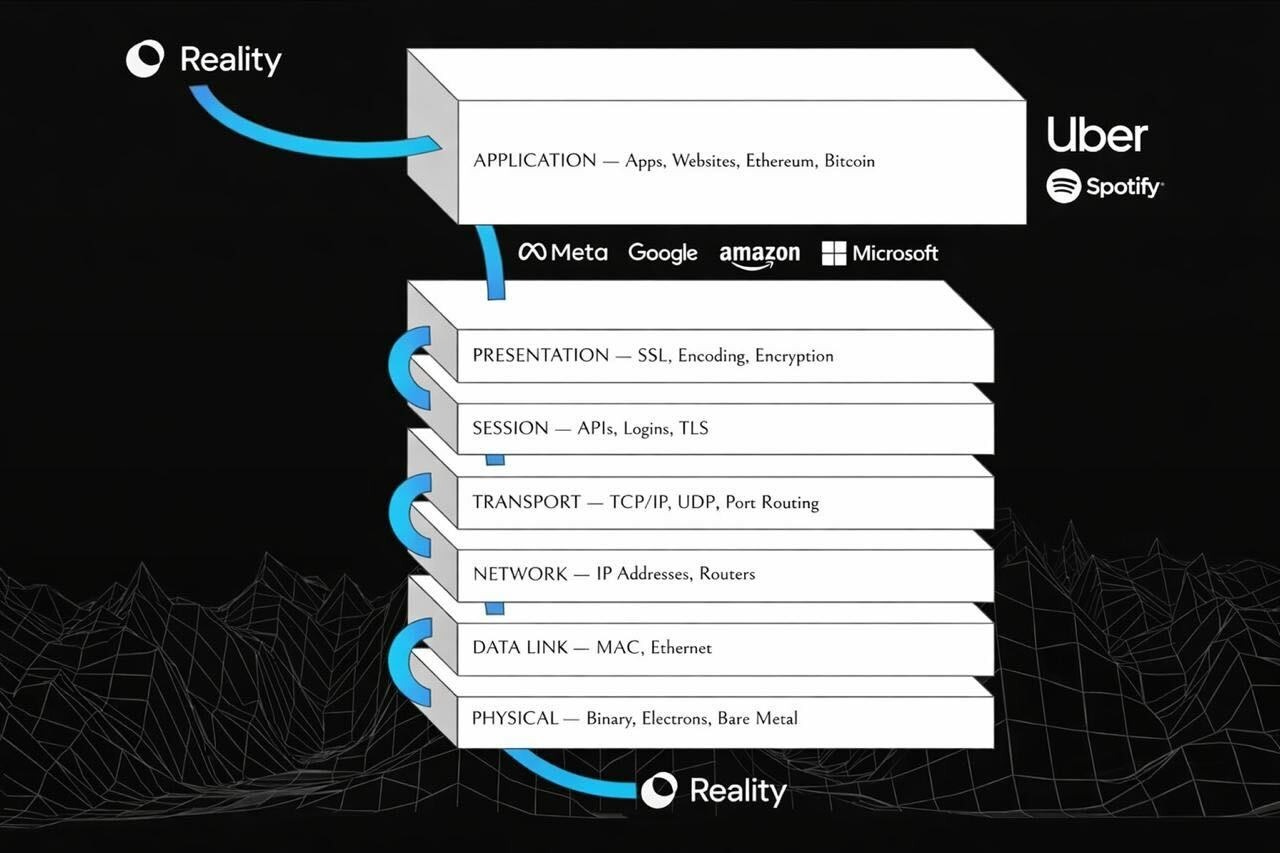
Everything below that (operating systems, servers, hardware) is taken on trust. Reality pushes verification down to where code actually runs, binding truth to execution.
This introduces computational provenance. Cryptographic proof of execution, data, and coordination at the moment they occur.
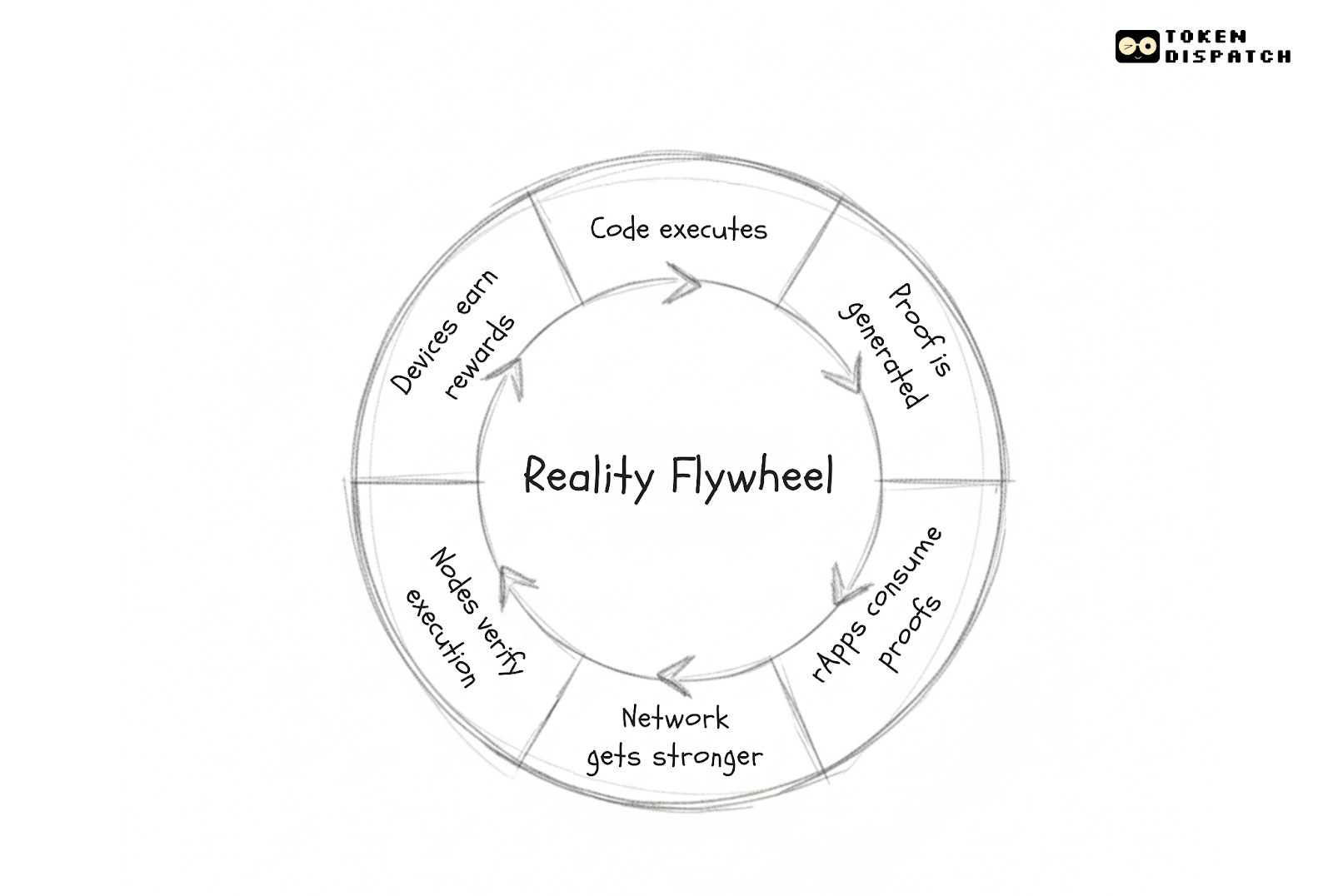
How does it work?
2MEME: Reality’s consensus engine
Traditional consensus systems reward what can be hoarded. Proof-of-Work rewards energy. Proof-of-Stake rewards capital. 2MEME rewards contribution.
It asks who is providing the most useful, original signal to the network right now?
Security is decoupled from the stake and specialised hardware, allowing consumer devices like laptops and phones to participate meaningfully. Nodes earn rewards by staying online, responding quickly, contributing original signal, and increasing the network’s informational entropy.
This is wild, because it solves the Byzantine Generals Problem in a way no other decentralized network has. The experimental results show that 2MEME tolerates over 80% adversarial nodes, compared to Bitcoin’s ~50%. Which means it’s a different security model entirely.
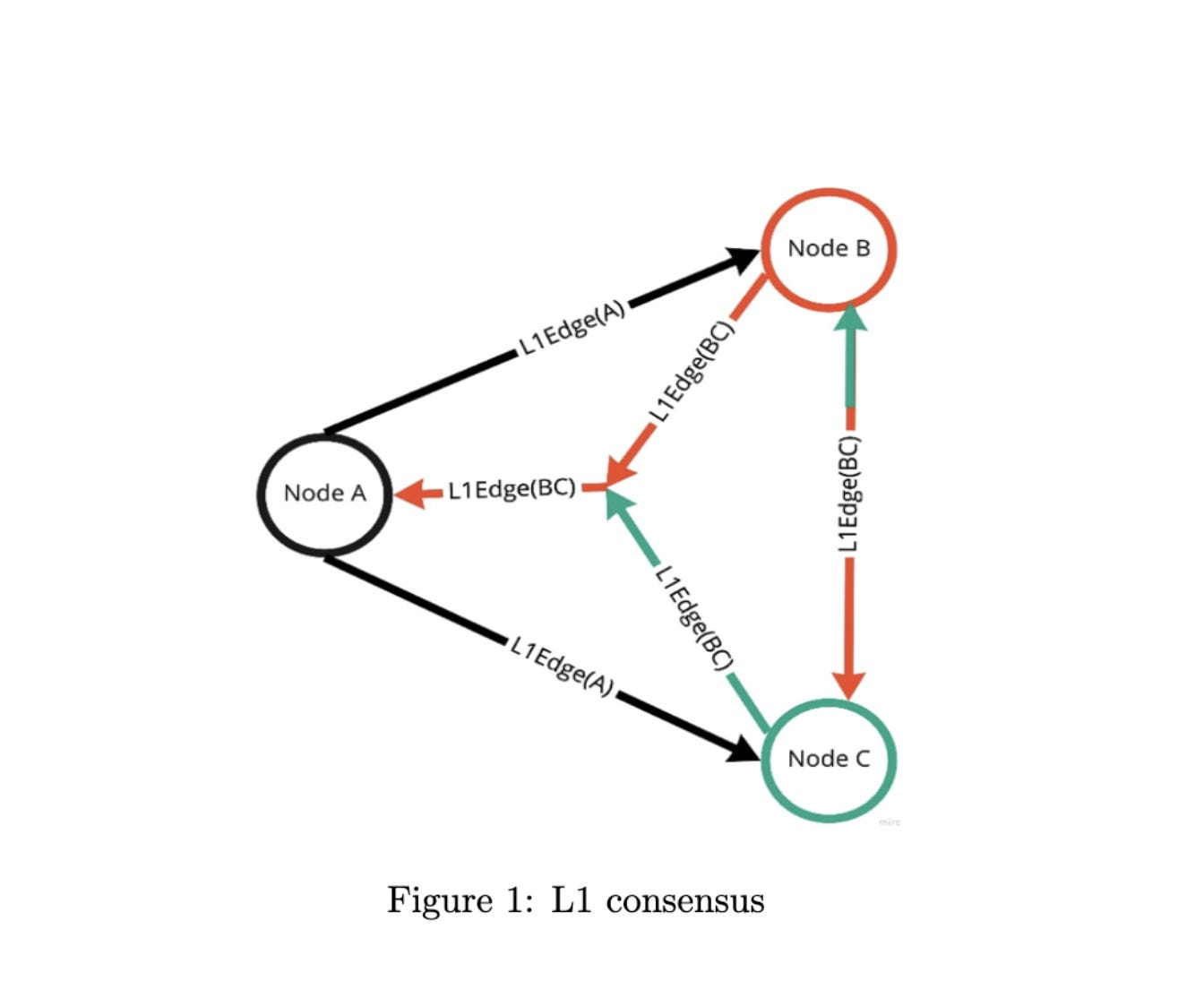
As more nodes join, the network becomes faster and more efficient, the opposite of the chains, where additional participants increase congestion and coordination costs. We have seen that a lot.
What emerges is a global marketplace for verifiable compute, where trust stops scaling with capital and hardware, and starts scaling with contribution.
rApps: A new class of verifiable software
rApps are basically apps that don’t ask you to trust them.
When a rApp runs, it doesn’t just give you an output and expect you to believe it. It provides proof that the code actually ran as it claimed, on the inputs it claimed and under the rules it claimed. Anyone can check that proof on their own. No need to trust the developer, the server, or whoever happened to run the code.
It means you can build apps that don’t require trust at any layer. Not trust in the developer. Not trust in the hosting provider. Not trust in the validators or sequencers. The app proves its own correctness.
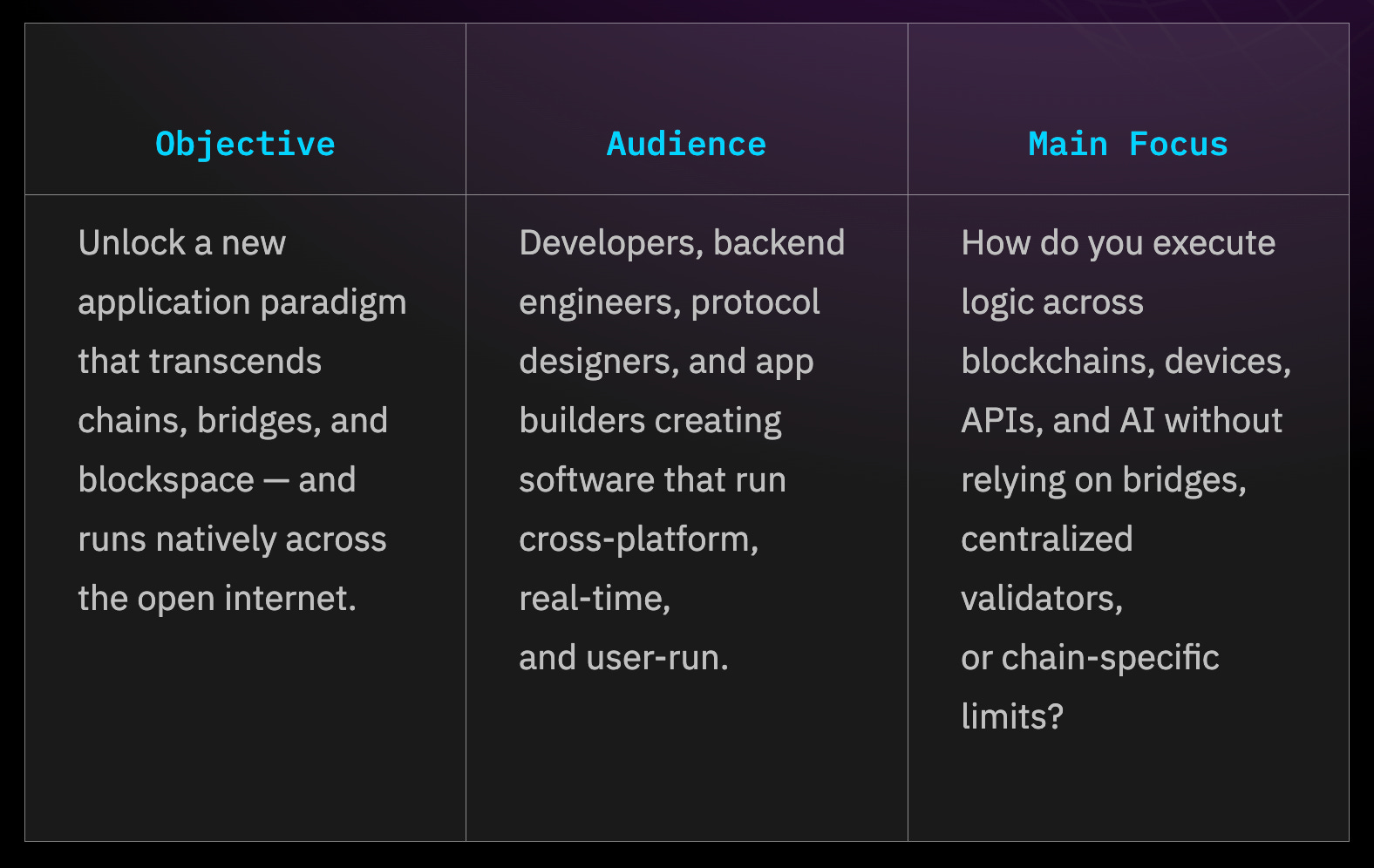
That’s why rApps aren’t really “apps” in the usual sense. They’re more like user-owned infrastructure. Communities, companies, and developers can deploy their own rules of execution, coordination, and economics, without relying on centralised intermediaries. And because the execution is portable, meaning it can run on any device and be verified anywhere, and they scale like the internet but behave like critical infrastructure.
Cyberlete is one of the more grounded examples I’ve seen of what Reality is trying to enable.
It is an anti-cheat system for online games, but without a central server deciding who’s legit and who isn’t.
Instead of trusting an account, a CAPTCHA, or a company backend, Cyberlete looks at how someone actually plays: mouse movement, timing between inputs, the tiny patterns that are hard to fake but easy for a human to produce. Those signals are streamed into a rApp as they happen.
Within a fraction of a second, the system runs its behavioral checks and produces evidence that the analysis occurred. And that the input came from a real person, not a bot or a replayed script. Now that’s something existing blockchain setups just aren’t built to handle at this speed or cost.
Global DEX: Native swaps without bridges
Most DEXs don’t trade assets directly. They route trades through liquidity pools, wrapped tokens, and AMMs, fragmenting liquidity while calling it innovation.
These mechanisms exist to patch architectural limits. Liquidity pools substitute for real markets. Wrapped assets substitute for native ones. The result is a DeFi landscape split across chains, pools, and abstractions that never resolve into a single market.
Reality collapses this entirely.
Instead of liquidity pools or exchange custody, Reality introduces a global, verifiable order book where assets can be exchanged directly across systems. BTC, ETH, SOL — native swaps. No bridges or wrapping or intermediaries.
When markets are native to the network, capital stops being held hostage. New projects can access liquidity without permission, and users can trade without surrendering custody.
Why does this matter? 3 Reasons
Reason 1: Existing blockchains can’t handle verifiable AI
AI inference is where trust quietly breaks today. Models run on centralised servers, produce outputs users cannot verify, and act on the world without accountability.
rApps change this by making inference itself a verifiable computation. This unlocks AI agents whose decisions can be independently confirmed, backends without centralized servers where correctness comes from proof rather than authority, and governance systems that are tamper-resistant without administrators. As AI agents scale, unverifiable computation becomes a systemic risk. Reality is the only network designed to handle this.
Reason 2: Crypto is missing a verification coordination layer
All chains have compute, but none coordinate truth across systems. There’s a need to fill this gap by serving as a deterministic verification fabric that links all chains, agents, and applications.
It’s the missing API of trust for the entire industry.
Ethereum sits on top of the internet. Reality integrates through all layers of computation and coordination. Is it competing with L1? Not really. I would say it’s the substrate they all rely on.
Reason 3: Decentralisation has been captured by capital
Bitcoin and Ethereum both reward what can be hoarded. Energy in PoW. Capital in PoS. This creates validator cartels, concentrated power, and excludes ordinary participants. 2MEME rewards signal, not capital. A laptop can be security-relevant if it contributes useful information. This is decentralisation that scales.
How do you participate?
Reality turns your laptop or phone into a node that earns rewards by contributing compute, staying online, and providing signal to the network.
Here’s how it works:
Download the Reality Portal app (available now)
Your device becomes a node in the compute mesh
You earn rewards by executing rApps, verifying computations, and contributing to consensus
The more useful signal you provide, the more you earn
There’s no staking requirement, validator minimum, or specialised hardware. Just a contribution.
Here’s who should pay attention:
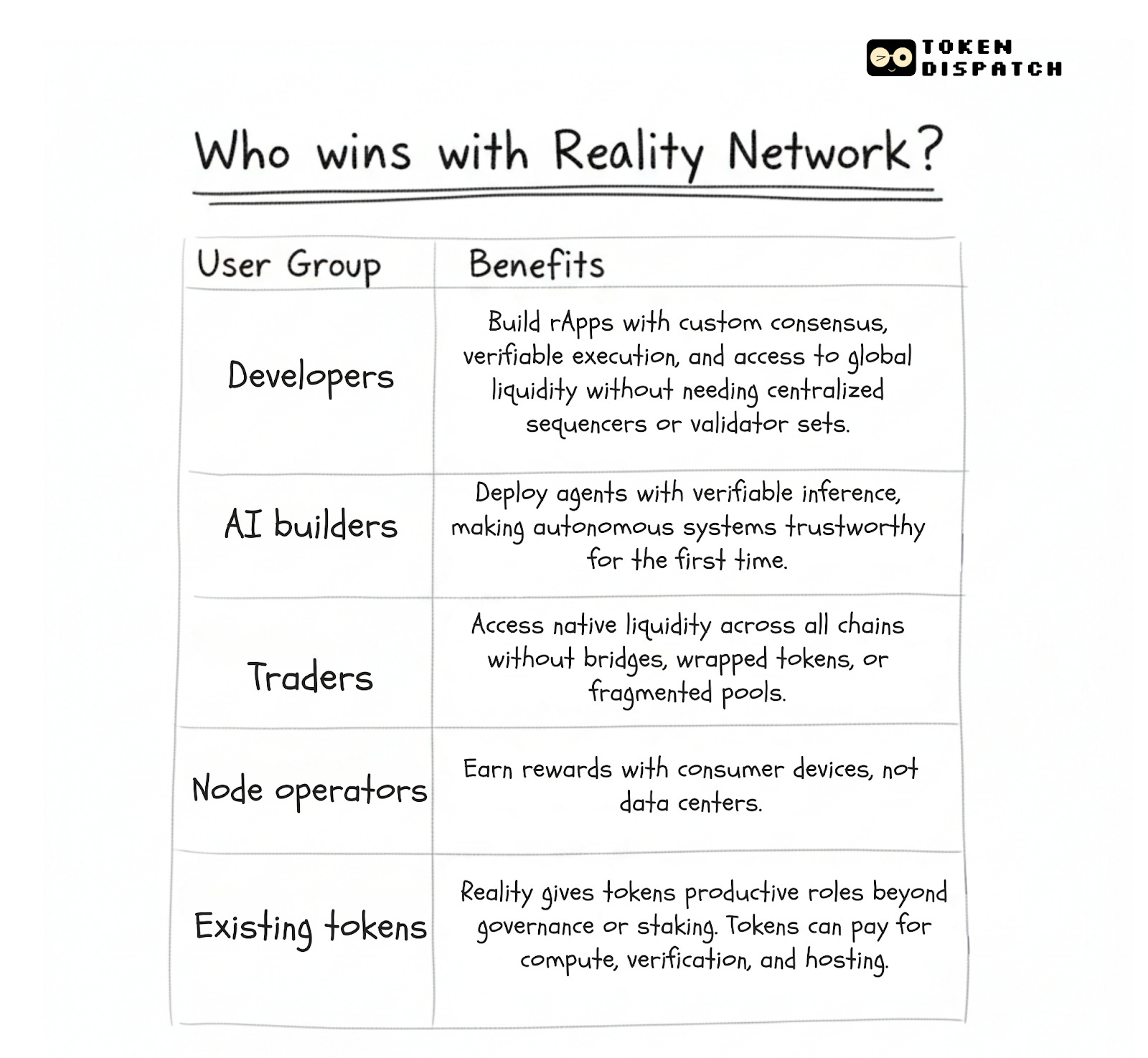
Here’s what I think is actually happening.
We built elaborate systems to agree on who owns what, and we called that decentralisation. But ownership is downstream of execution. And execution, which is the actual running of code that determines what happens, was never decentralised at all.
Reality is the first system I’ve seen that actually removes the intermediary at the layer where it matters most, which is computation itself.
This is a different substrate. When you can prove that code ran correctly without trusting whoever ran it, the entire architecture of the internet changes. AI agents become accountable. Markets become permissionless. Software becomes verifiable by default.
Vitalik is right that the L2 vision is broken. But the answer isn’t to patch Ethereum with higher gas limits and native rollup precompiles. The answer is to stop thinking about blockchains as the end state and start thinking about them as one application layer on top of a verification fabric that doesn’t exist yet.
Reality is that fabric.
And if it works the way it claims to, everything we’ve been building for the past decade becomes a prototype for what comes next.

Token Dispatch is a daily crypto newsletter handpicked and crafted with love by human bots. If you want to reach out to 200,000+ subscriber community of the Token Dispatch, you can explore the partnership opportunities with us 🙌
📩 Fill out this form to submit your details and book a meeting with us directly.
Disclaimer: This newsletter contains analysis and opinions of the author. Content is for informational purposes only, not financial advice. Trading crypto involves substantial risk - your capital is at risk. Do your own research.