


Hello,
Robinhood launched a blockchain in July to let people trade tokenised stocks on-chain, and the first wave of real traction on the chain came from memecoin traders. That might sound like a product-positioning failure, but surprisingly, it became the best go-to-market strategy ever for on-chain wrapped assets.
The memecoins were paired with the stock tokens in shared liquidity pools, and enough degen demand poured in that over half the supply of a real healthcare company’s stock got locked up as collateral for a cat memecoin. Memecoin speculation became the liquidity engine for a real equity.
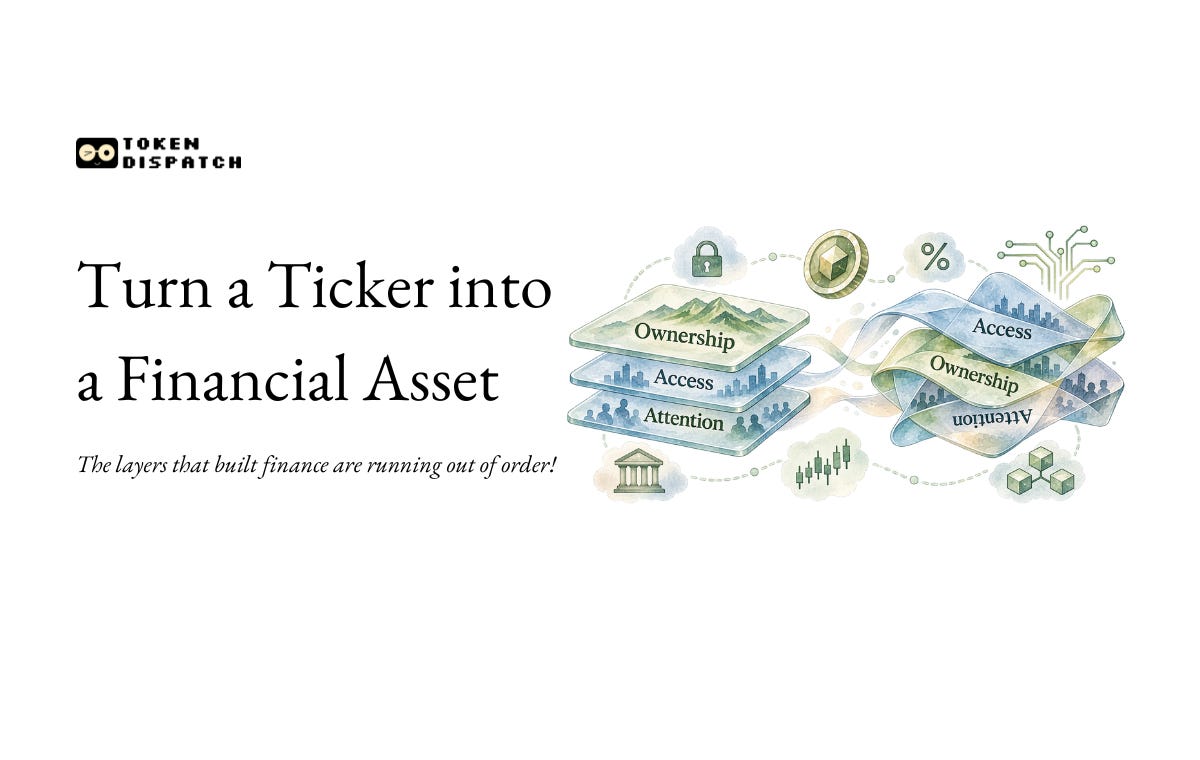
Every asset that matures into a financial product follows a very similar path. People pay attention to it, then someone builds a way to access it, and then the financial system figures out how to own and structure it. Gold drew attention for five thousand years before the GLD ETF wrapped it in an access layer in 2004. Bitcoin ETFs are doing it for crypto now. On-chain, these layers are compressing and sometimes arriving out of order, reshaping what the end product looks like!

StablesReward: Your AI Agent Spends, You Earn
AI agents can surf the web, read reviews, and book hotels for you. All these tasks cost money. But what if these tasks could earn you back something?
StablesReward does just that. Once you connect your agent to an MCP endpoint, it gives your agent a menu of paid tools. Every call your agent pays for earns you miles or stocks. And this is in addition to the rewards you earn anyway on your own spending across 800+ merchants.

Every purchase pays you back. The best part is that you can choose how you’d like to be rewarded. Transfer miles to airlines and hotels, or let your stocks build a portfolio from the spend you were making anyway.
Launching soon. Free to join.
The Financial Layers and the Trust Problem
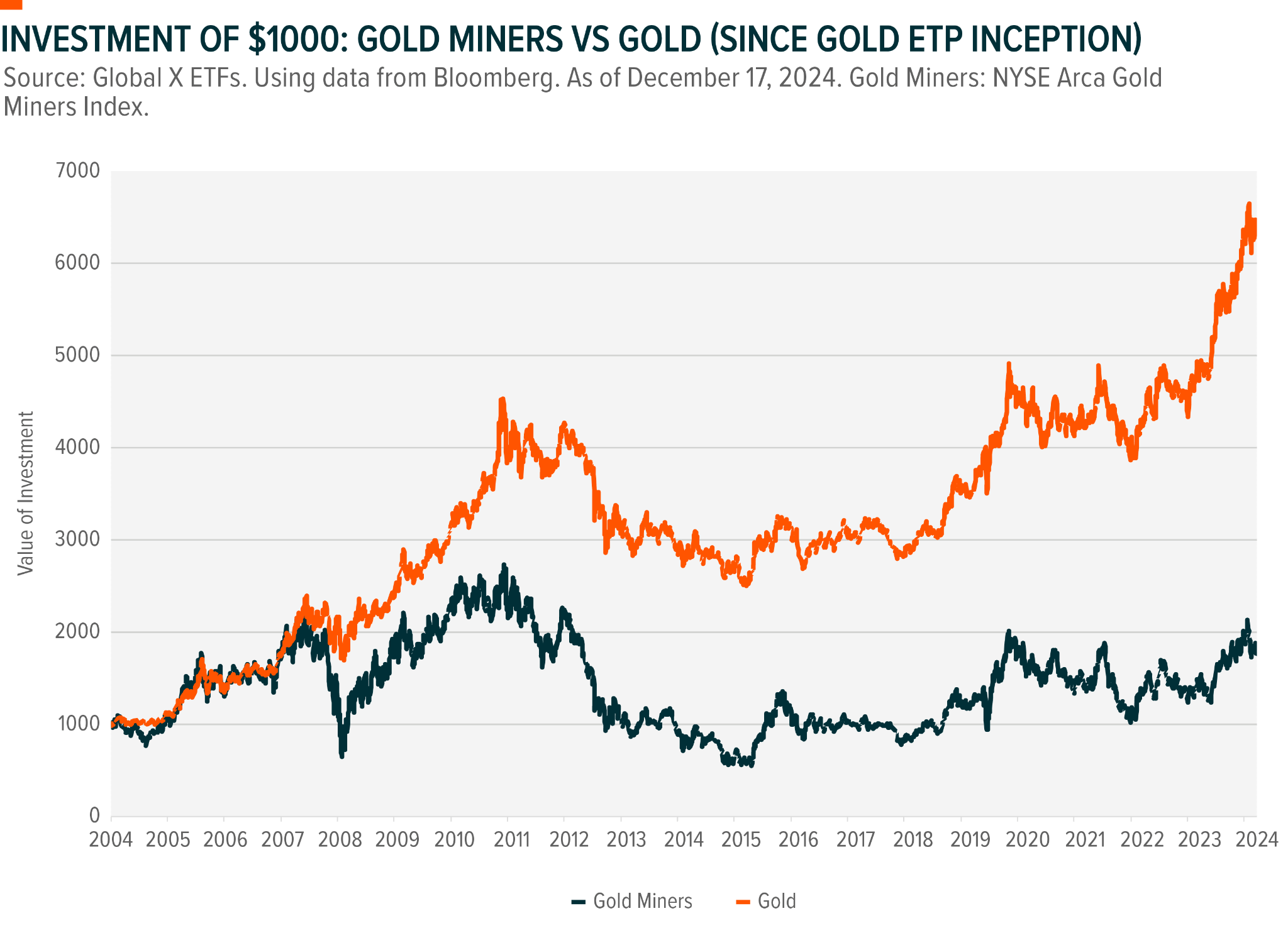
If you look at every major institution building tokenisation infrastructure today, they are all doing what State Street did in 2004 when it gave gold a ticker symbol. State Street launched GLD, the first US-traded gold ETF, which let anyone with a brokerage account buy gold exposure without dealing with vaults, insurance, or physical bars.
BlackRock, JPMorgan, Nasdaq, and Franklin Templeton are positioning themselves as the translator between an asset class and the capital that wants exposure to it, because the translator permanently captures the flow. State Street has collected fees on GLD for over 20 years.
The entire modern history of Wall Street is a history of owning these translation points, from JP Morgan brokering the bridge between European capital and American railroads, to the investment banks of the 1980s owning the bridge between mortgage borrowers and bond investors. Whoever encodes an asset into the language that institutional money already trusts gets to charge tax on every dollar that crosses it, for as long as the encoding remains the standard. Which is why the race to tokenise is really a race to become the next encoding monopoly.
The encoding itself is no longer the hard part. On-chain, anyone can tokenise anything. The monopoly has moved one layer up, from who can encode the asset to who can make the encoding trustworthy enough for institutional money to touch it. That is what Securitise does for BlackRock, what the KYC gate does for BUIDL, and what no memecoin has ever needed.
The GLD ETF is the simplest example of how that encoding works and what it costs, because gold already had the strongest possible attention layer, five thousand years of universal consensus that it was the hardest money on the planet, and yet if you ran a pension fund in 2003, your options for getting exposure were only as sophisticated as renting a safe deposit box with physical bars.
What GLD did in November 2004 was build the access layer by performing a trust translation. It took gold’s five-thousand-year reputation and re-encoded it into something a brokerage account could hold by listing gold on the NYSE, establishing a clearing relationship with DTCC, and reclassifying it from “operationally impossible” to “one click in your brokerage account,” and moving a billion dollars in three trading days.
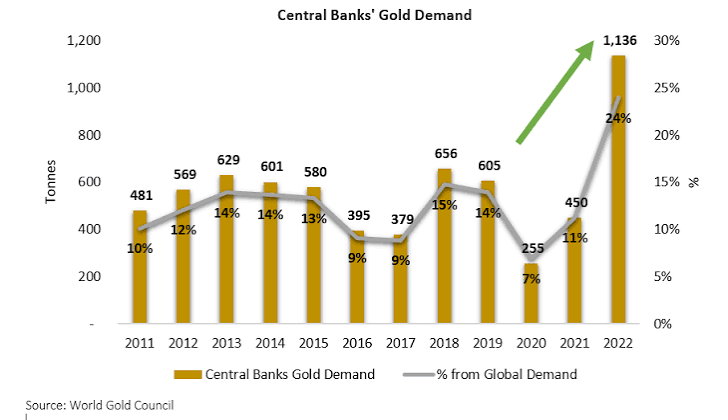
Central banks that had been net sellers of gold for decades now reversed course, and seven years later, GLD briefly became the largest ETF on Earth, holding 723 metric tons of physical gold. But every trust translation is lossy, and the losses compound as you build higher.
Converting gold into a ticker meant surrendering the property that made it valuable for years: you could hold it, and no counterparty, government, or intermediary could touch it. GLD made gold investable by embedding it inside the very financial system it was supposed to be insurance against, and then the ownership layer built on top of that, with banks using GLD shares as collateral, other financial products referencing its price, and lending desks borrowing against it, each adding another counterparty between the investor and the actual metal.
A pension fund holding a structured note linked to GLD was not really holding gold in any meaningful sense, it was holding a chain of promises that tracked gold’s price.
Notice that the translator always decides which properties of the original asset survive, and the properties that always get cut are the ones that would make the wrapper unnecessary. If you could hold gold directly in your brokerage account as easily as holding GLD, State Street’s fee stream would evaporate, so the translation has to be lossy, because a lossless one would eliminate the translator entirely.
This is why different layers exist in sequence in traditional finance, and each translation creates dependencies, and each dependency must prove itself trustworthy before the next layer builds on top. For example, once GLD became collateral across thousands of portfolios, the next sequentially important thing was the custodial and legal wrapper rather than the gold itself, because if the wrapper failed, the gold would still sit in the vault while the financial system built on top of it would collapse.
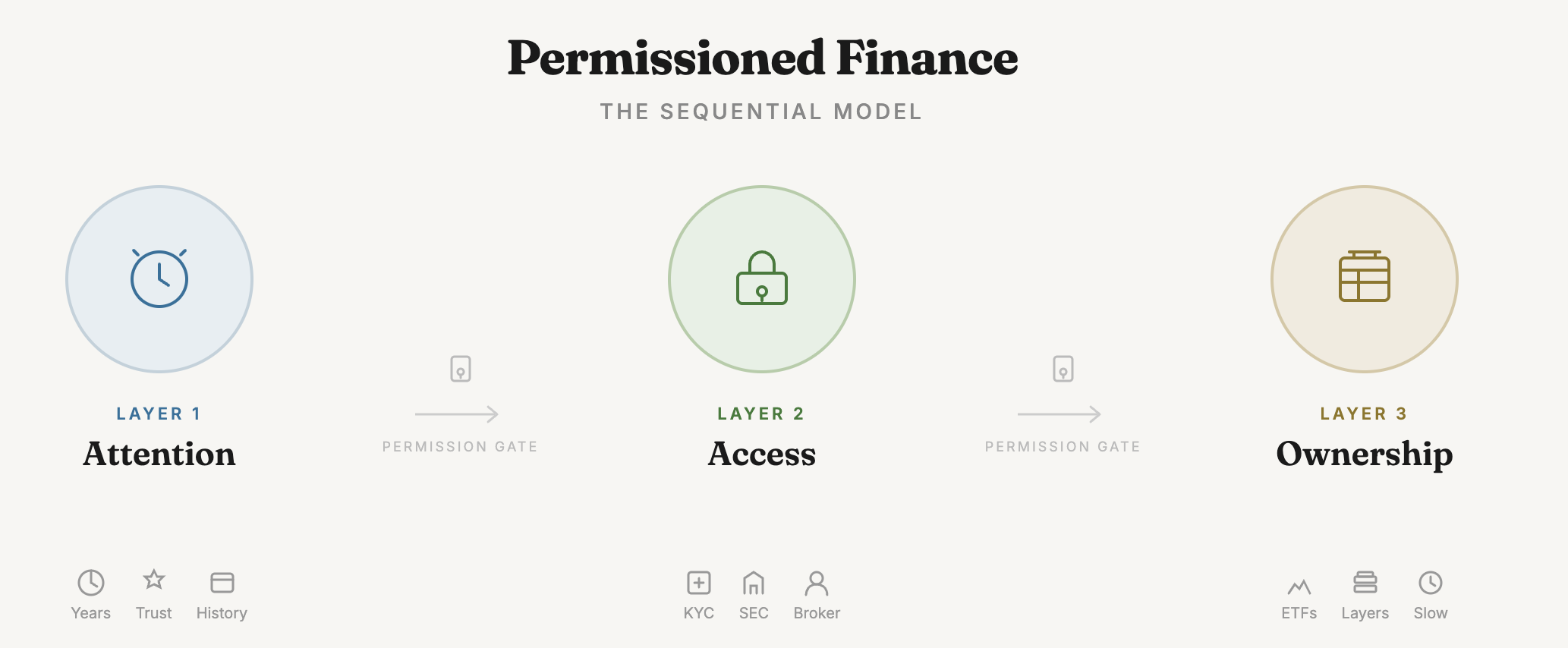
The sequential process also protects incumbents like State Street and BlackRock, because if banks and asset managers could build structured products that referenced gold or Bitcoin directly rather than through an ETF wrapper, the wrapper becomes irrelevant and its fee stream dies. The slow march from attention to access to ownership is presented as prudence, and it partly is, but it also happens to be the optimal strategy for maximising the value captured at each intermediary step.
Bitcoin ETFs compressed this seven-year sequence to about eighteen months, with $57 billion in first-year inflows. Gold survived by being ignored by its attackers, and Bitcoin survived by being attacked, through fifteen years of hostile regulators, exchange collapses, China banning mining and 80% drawdowns that lasted years.
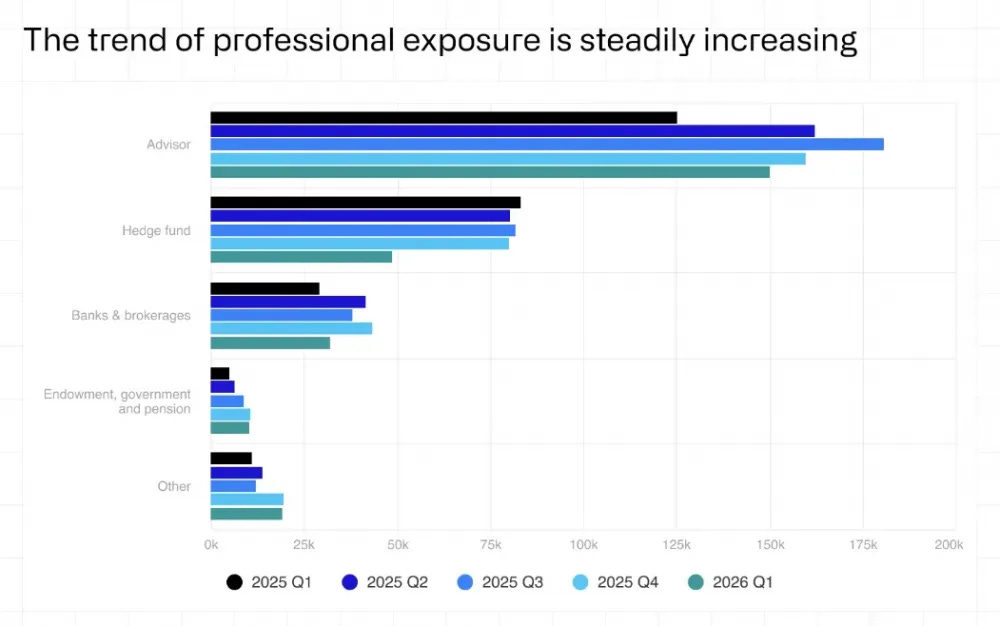
When a compliance committee evaluates whether an asset belongs in an ETF wrapper, they assess downside survivability, and Bitcoin’s record of surviving sustained attacks gave them more conviction faster than gold’s record of never facing one.
But faster does not mean better. Bitcoin’s entire point was that you could hold value without trusting a bank, move it on a weekend, and nobody could freeze your account. The ETF strips all three. You get a ticker and a tax advantage, in return, BlackRock holds your Bitcoin, trades it only during market hours, and can be subpoenaed to freeze your shares. GLD did the same with gold.
The whole system moves slowly because trust takes years to build and seconds to destroy, and every gatekeeper in the chain, from the SEC analyst reviewing an ETF application to the custodian deciding what qualifies as collateral, charges a fee for the time they spend. Some of that caution is genuinely protective, but the slowness also makes them money, because instant, free access would put most of them out of business.
On-chain, none of those gatekeepers exists, and anyone can issue a token, build a liquidity pool, and wrap a position into a composable instrument without asking permission from a single intermediary.
On-chain Is Running the Layers Out of Order
This is where memecoins came in and filled the vacuum. Billions of dollars moved through tokens named after dogs and frogs on infrastructure built for tokenised securities and structured products. In the three-layer model we discussed. Memecoins skipped the middle step entirely. People showed up with attention and capital, and the liquidity infrastructure they created by trading became the access layer for everything that followed.
Robinhood’s RWA share of the chain’s volume rose from 0.39% to 8.58% in three weeks, built entirely on liquidity memecoin traders created. BONKbot, a Telegram trading bot, plugged into the $BONK community on Solana and hit $200 million in daily volume without negotiating a single partnership.
Memecoins have super-extended the velocity of attention and capital by paving a new way to invest in culture. It is the first instrument where you invest in a go-to-market strategy directly rather than a company that has one.
The institutions that showed up were all for defensive reasons. BlackRock listed its BUIDL fund on Uniswap and bought the protocol’s governance tokens to distribute a tokenised Treasury fund to its clients. BUIDL itself is GLD on a blockchain with the same KYC-gated access, and Securitise sits in the middle with about $2.8 billion in AUM across eight chains, deployed on rails that were specifically designed to remove that restricted access.
Even JPMorgan said that tokenised money market funds are a defensive play against stablecoins pulling deposits out of the banking system. The money is already leaving, and the GLD-era encoding monopoly is being rebuilt on-chain because the alternative is losing the fee stream entirely. BlackRock understood long before that permissionless finance would eat its deposits, and instead of fighting the new infrastructure, it rebuilt the old tollbooths on top of it.
And while institutions were recreating the sequential playbook, the permissionless side was building ownership-layer products on assets that had barely finished building their attention layer.
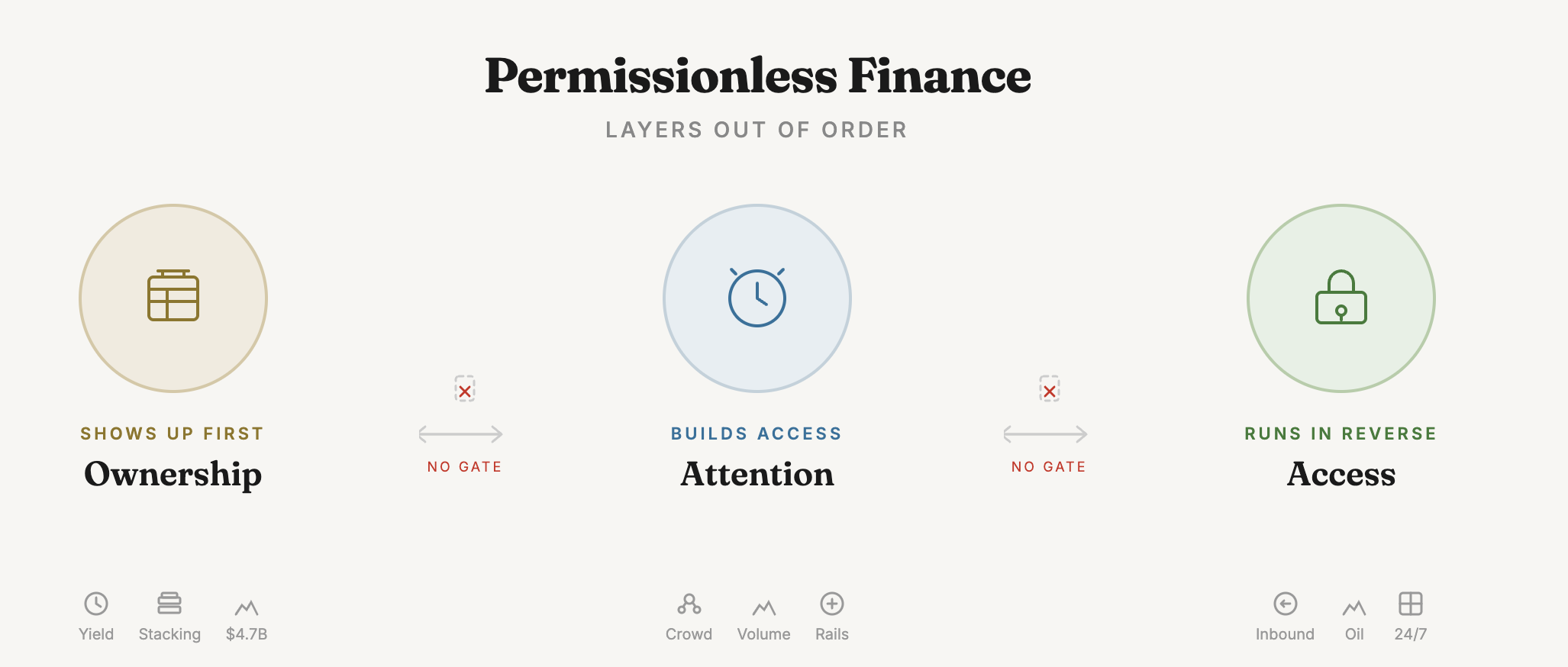
For example, Ethena’s USDe makes money from the very thing that keeps institutions away from crypto: the volatility. A product like this would never survive a single risk committee at any bank. But within two years, Ethena became the foundational collateral for other on-chain protocols, building on it the way banks build on treasuries. Pendle then split Ethena’s yield-bearing token into principal and yield components, each trading separately. Once those principal tokens became collateral on Aave, traders could loop the position five to ten times, turning a 5% return into 33% or more.
In traditional finance, this same recursive loop would have required its own ISDA master agreement, compliance review, and counterparty evaluation. Hyperliquid even showed us that the access layer itself can run in reverse. Traditional finance encodes alternative assets into its institutional language, the way GLD encoded gold. But Hyperliquid encodes traditional assets into crypto’s language. When Iran struck on a Saturday, and oil spiked, the CME was closed. But Hyperliquid priced the shock in real time for the entire market.
Arcus, built by dYdX Labs on Robinhood Chain, collapses all three layers into a single token. A leveraged perpetual futures position packaged as an ERC-20 that is transferable, composable, and works with every other protocol without custom integration. That means you could hold 3x leveraged Bitcoin in your wallet, deposit it as collateral in a lending protocol, borrow against it, and send it to someone else, all without closing the position or asking a broker.
You’ll see traditional finance keep building products that look like BUIDL, because the permission gate is how every institution makes money. Permissionless finance will keep building products where the layers merge, invert, and recurse, because the architecture allows it and nobody has the authority to stop it. Both systems are expanding what a financial product can be, in directions the other cannot follow.
That’s all for today!
Vaidik
Token Dispatch is a daily crypto newsletter handpicked and crafted with love by human bots. If you want to reach out to 165,000 subscriber community of the Token Dispatch, you can explore the partnership opportunities with us 🙌
📩 Fill out this form to submit your details and book a meeting with us directly.
Disclaimer: This newsletter contains analysis and opinions of the author. Content is for informational purposes only, not financial advice. Trading crypto involves substantial risk - your capital is at risk. Do your own research.