


A coin that never leaves a box does not buy dinner.
Humanity noticed this in the 1600s and 1700s. Philosophers John Locke and David Hume were already arguing that prices depend not just on how much metal sits in a country, but on how often it changes hands.
“It is also evident, that the prices do not so much depend on the absolute quantity of commodities and that of money, which are in a nation, as on that of the commodities, which come or may come to market, and of the money which circulates. If the coin be locked up in chests, it is the same thing with regard to prices, as if it were annihilated; if the commodities be hoarded in magazines and granaries, a like effect follows.” - Hume
“That which is not let loose into trade, is all one whilst hoarded up, as if it were not in being.” - Locke
All of this just means that a small stock of coin, spent every week, can support more trade than a large hoard that never moves.
Irving Fisher concluded the whole thing with \(MV = PT\). Which says the same thing, but in a mathematically intimidating way. Printing infinite cash is almost useless unless people actually spend it.
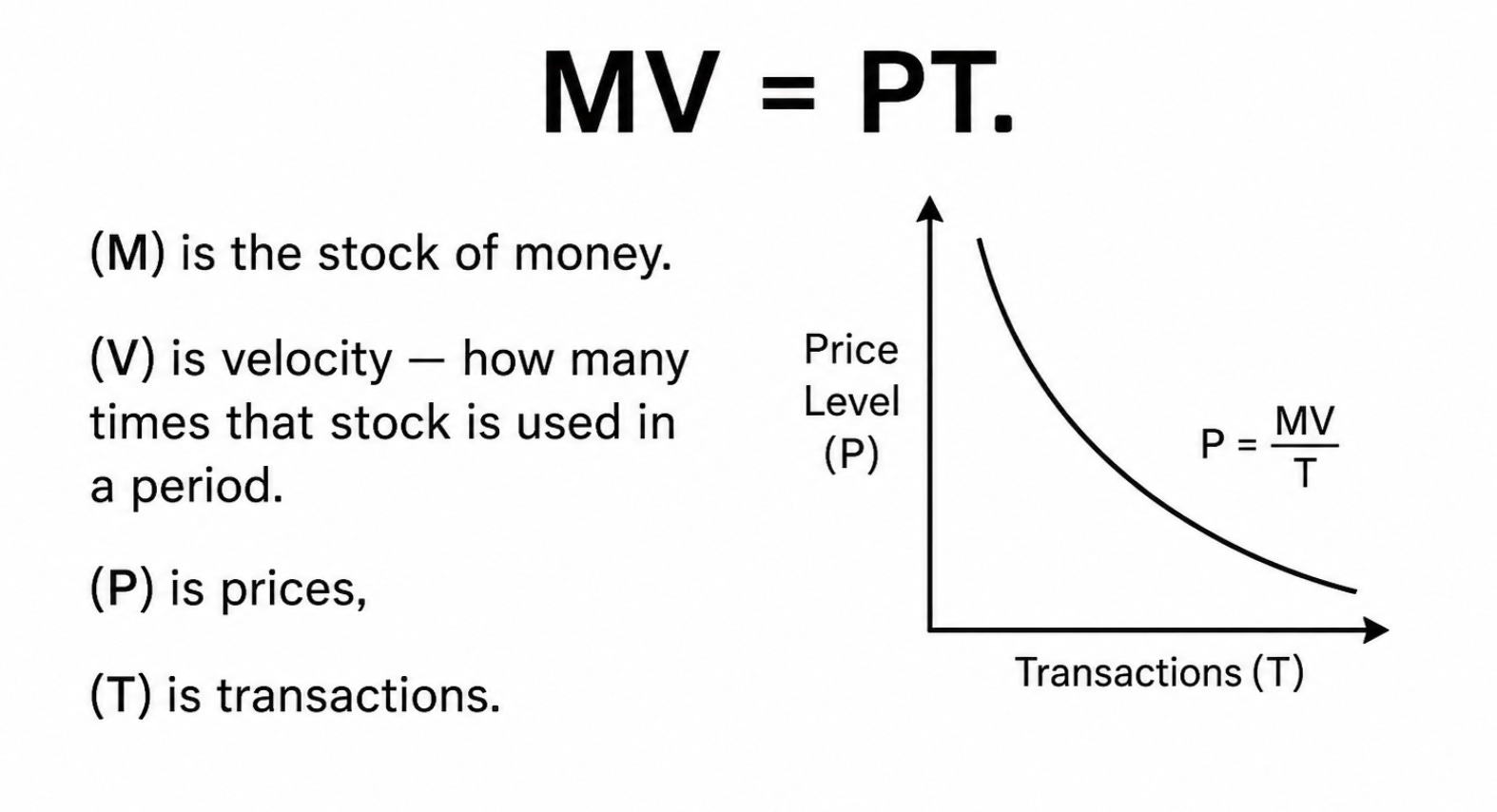
That is why “velocity” jumped from money theory into market nuts and bolts. First, the thing must circulate. Then it must complete the transfer. Then someone must trust it enough to lend against it. If you think that’s 60 seconds wasted on me explaining the fundamentals of economics to you, tokenisation is where I am getting at, as money velocity increasingly gives way to tokenisation.
Today we are looking at whether tokenising pre-IPO names actually makes those tokens move, settle, and get borrowed against, or whether they just sit like coins in a chest.

Private companies stay private longer than they used to. Different trackers disagree on the exact pile of value, but for better perspective before we go ahead:
Hurun’s 2026 Global Unicorn Index put the world at 1,603 unicorns worth about $8 trillion.
PitchBook’s Q1 2026 Global Unicorn Tracker had about 1,680 active unicorns and $8.6 trillion of aggregate valuation.
CB Insights, as cited in Street Research’s 2026 pre-IPO note, had 1,404 private unicorns at about $7.4 trillion in March 2026.
The point is that a large share of company value now lives where there is no continuous price and no easy way to post it as collateral. Traditional secondaries are not public markets, so they are not accessible. They are also not DeFi. DeFi is the stack claiming it can add access, settlement, composability and collateral use that secondaries do not have.
Canton’s Hecto is the closest live attempt at the setup you would actually want to trust because it runs on rails already used for institutional collateral, though that does not automatically create liquidity or price discovery.
Hecto’s live product is the Allocator. You mint HECTO using Canton Coin (CC), lock it into a basket of private companies called “Hectocorns,” and get a score based on your allocation. Rewards are paid out in CC.
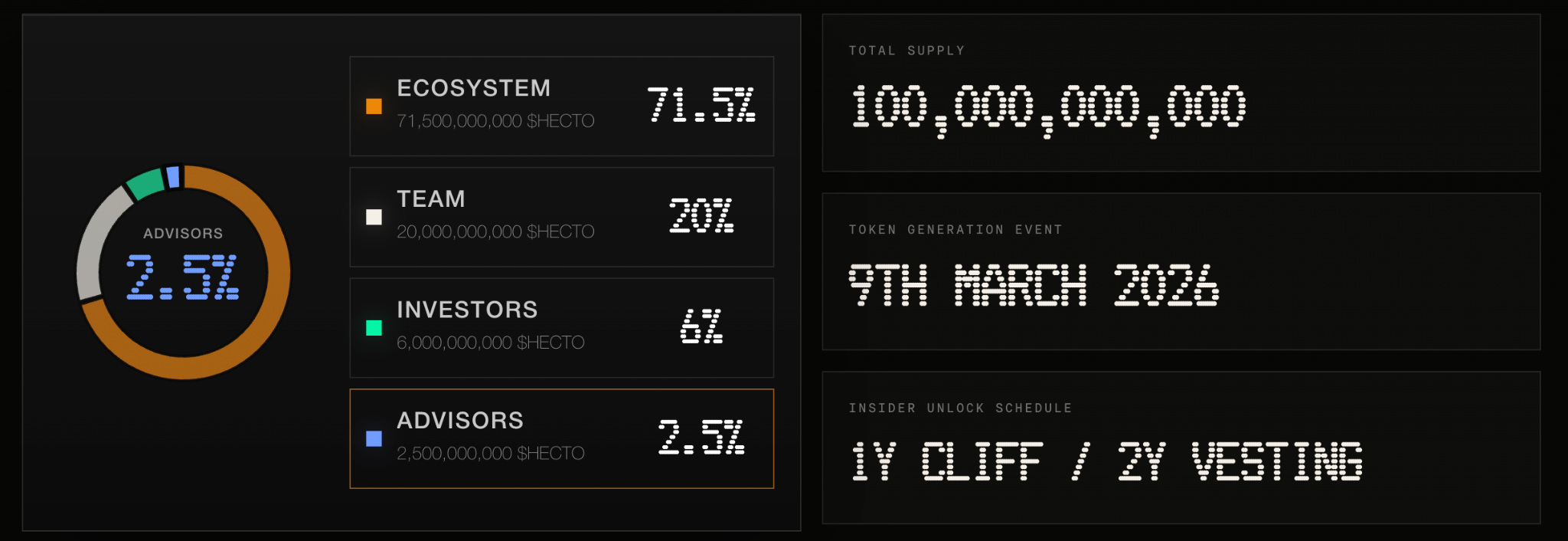
While Hecto launched its token in March 2026 with a 100-billion supply and an insider vesting schedule. Early Allocator stats Hecto posted in March 2026 included figures like 1,690 holders and a few thousand active users in the first days. Full trading capabilities are rolling out in stages, so a deep secondary market has not formed yet.
Hecto has described three products on top of the Allocator:
Predictions V2 - Binary markets on pre-IPO outcomes such as IPO timing and valuation milestones.
PMX - HECTX is a NAV-linked index token for exposure to late-stage private companies; it is not a share or redemption token. It does not make the holder a registered shareholder of the underlying companies.
Vaults - Quote-based access that is more selective for qualified participants. Company-specific, KYC-heavy, and closer to how private markets already work.
The stack provides signal (1), packaged exposure (2), and gated real access (3). Velocity only starts if those layers connect to trade, settlement, and then credit. Fortunately, MV = PT.
A tokenised gold bar or a tokenised building can be useful. Often, it is not. If the token cannot be used in a loan, an index, a structured note, or a repo, you have mostly just paid legal and operational costs to put it on a ledger. Hecto’s Allocator is trying to force activity before the “real” asset even exists on-chain. You allocate every day instead of holding. Emissions are described as a mix of participation, accuracy, and alignment. If you sit still, you earn less.
A forecasting game can create turnover without creating a claim on anything. That is fine as a bootstrap. The moment you should care is when HECTX (or a vault interest) can be transferred, priced against NAV, and accepted by someone else as margin.
When institutions “lend against a token,” they usually mean a repurchase agreement (repo) or a margin call, not a personal loan from a bank. In a repo, one firm posts a security as collateral. The other firm sends cash, or a stablecoin immediately. The first firm agrees to buy the security back later, often the same day. If that handoff takes hours or waits for T+1 settlement, a lot of high-quality paper cannot be used that day. In that case, high-value assets get trapped and become useless for immediate liquidity.
Canton is already being used for that handoff.
The largest piece is DTCC, the U.S. post-trade utility that already custodians most U.S. securities. In December 2025, DTCC and Digital Asset, the firm behind Canton, said they would tokenise a subset of U.S. Treasuries that are held in DTC custody and put those tokens on Canton.
That plan followed an SEC no-action letter dated 11 December 2025. On 15 July 2026, DTCC ran live production trades with a working group of banks and market firms. Those trades included delivery-versus-payment repo, equity settlement, securities lending, and margin posted to a central counterparty. The workflows ran on Canton and on Hyperledger Besu. The commercial launch of the DTC Tokenisation Service is slated for October 2026. DTCC still holds the actual Treasury. The on-chain token is a movable record of that holding. A clearing house can accept the token as margin because title to the bond never left DTC.
Smaller trades made the same point faster, as Virtu Financial and counterparties using Tradeweb posted USDM1 (a Marshall Islands on-chain bond backed 1:1 by short U.S. Treasuries) as repo collateral. The cash leg, the collateral move, and the repurchase settled on Canton in under ten minutes. Other desks have pledged tokenised Treasuries or tokenised money-market paper and taken USDCx or tokenised bank deposits in return, then used that cash the same day. Euroclear and Digital Asset have also run pilots with tokenised gilts and other sovereign debt so collateral can be shifted across borders outside normal market hours instead of waiting until the next open. DTCC-linked commentary keeps citing $300 trillion in high-quality liquid assets worldwide, with only about 10–11% used as collateral at a given time. Digital Asset has estimated a 30–50% balance-sheet efficiency gain if tokenised collateral workflows scale. This proves that Canton can already move paper that markets already trust into repo and margin.
The unsentimental question I have is whether anyone will take HECTX or locked HECTO as collateral the way they take a DTC Treasury twin. Probably not soon. HECTX, as described, is a NAV claim on a vehicle that may still be sitting in cash, may not have full deployment, and is explicitly not equity. Secondary liquidity is thin or not live, depending on the instrument. Velocity only counts if secondary and borrow exist. Right now, Hecto lacks the conditions needed for TAM to expand in a meaningful way.
Hyperliquid’s pre-IPO perps are the obvious other tab. They are a price bet, not a wrapper you can settle or pledge, so they sit outside this piece.
Read: Pricing Anthropic
Republic came at it from the other side
Republic is “an on-chain investment platform” for private markets. In practice, it is a New York marketplace that uses regulatory exemptions (like equity crowdfunding laws) to let regular people invest small amounts of money into startups. Republic heavily integrates blockchain technology and tokenisation. They have tokenised certain private market assets, issued digital securities, and feature a dedicated Web3 arm for investing in tokens and blockchain protocols.
In June 2025, Republic launched rSpaceX. Minimum was $50, cap $5,000, sold globally under Regulation Crowdfunding, minted on Solana. It is an unsecured note from RepublicX. If a qualifying event occurs, the note is meant to pay out using SpaceX’s share price at that time, measured against a $275 reference price.
Republic does not publish how that payout maps to the post-IPO share count, so you cannot turn the note into a clean “how many shares do I own” number. Republic’s plan for trading was to own the venue, so it bought INX, an SEC- and FINRA-regulated platform, and closed the deal in November 2025. Mirror tokens have a 12-month lockup, so rSpaceX’s lockup window ended in June 2026. The FAQ still says that after unlock, Republic intends to let the tokens trade on the Republic Secondary Market.

The documents say that a secondary market may never form, and RepublicX decides whether anything is listed anywhere:
“A secondary market may never develop, Notes are intended to be held until maturity or redemption. Liquidity is not guaranteed if a secondary market develops, it may not provide enough liquidity to allow investors to trade or sell the Notes prior to maturity, and RepublicX retains full discretion whether or not to list any tokens on any qualifying exchange.”
Republic ran the same structure across other names. rOpenAI and rDatabricks closed on 1 January 2026. rAnthropic and rPerplexity closed on 2 March 2026. rTTOK (ByteDance) and rCanva also closed.
That is the most complete version of this product anyone has built because Republic owns the issuer, the wallet, the venue, and the compliance stack in one place.
Owning the exchange was not enough. The reg CF paper has transfer limits. Buyers and sellers need KYC/AML. Eligibility changes by country. That shrinks the other side of the trade before a price appears.
Hecto and Republic hit the same wall from opposite ends.
Republic holders own an IOU from RepublicX that is supposed to pay them later based on how that company’s share price moves.
Hecto has users in the Allocator game and a utility token, but it does not yet have a live, freely trading claim on the private companies themselves (HECTX is still planned, and even that would be a NAV slice of a vehicle, not the stock). Both are still short of a real secondary in a claim that the issuer of the private company would recognise.
The rest of the field is the same problem in other wrappers. Jarsy sells the exposure from $10. In June 2025, it raised a $5 million pre-seed round led by Breyer Capital. Jarsy says each token is matched 1:1 by a share (or the economic rights to a share) held in its Delaware LLCs. That is closer to the stock than Republic’s note, although it still does not put you on the company’s shareholder list.
Robinhood put OpenAI and SpaceX tokens in front of EU users in early July 2025. OpenAI said in public that those tokens are not OpenAI stock, that there was no partnership, and that any transfer of OpenAI equity needs OpenAI’s say-so. They did not give it.
Then, without a blockchain to hide behind, Linqto’s sloppy wrapper caught up with it. It pooled over 13,000 investors into private shares of companies like SpaceX and Ripple, ending in a July 2025 bankruptcy filing. Courts confirmed a restructuring plan in February 2026 for its $500M portfolio, revealing mismanaged LLCs and predatory markups topping 200%, which led to the founder’s arrest in September 2026.
Most real pre-IPO share trades still happen on ordinary marketplaces, such as Forge, EquityZen, Hiive, and Nasdaq Private Market. The buyer gets stock or an SPV unit through brokers and company paperwork. In late 2025, the banks moved on two of those shops. Schwab agreed to buy Forge for $660 million. Morgan Stanley agreed to buy EquityZen. Goldman separately agreed to buy Industry Ventures, which is a secondaries fund.
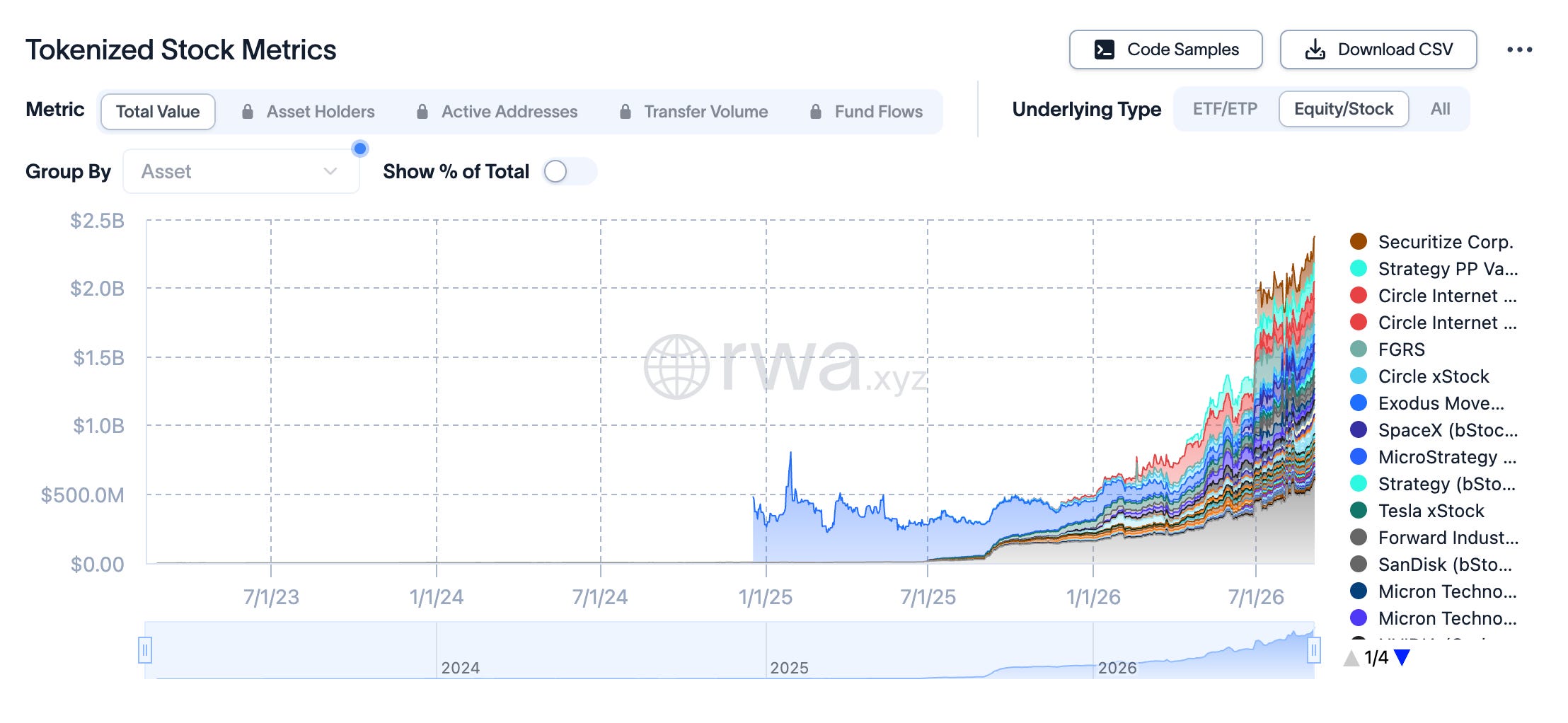
Tokenised public stocks got useful very fast. Ondo’s SPYon, QQQon and TSLAon are collateral on Morpho and Euler. Bybit switched on six xStocks as margin collateral on 31 July 2026. Kamino and Jupiter Lend take them on Solana. Ondo Perps now accepts a tokenised SpaceX, SPCXon, as collateral, which is a strange loop. The company Hecto and Republic both promised you access to is now more useful on-chain as a public stock than it ever was as private paper.
Tokenised equities reached about $2.9 billion, roughly 15% of the tracked RWA market, three times their share at the start of the year. Public stock tokens became collateral in about eight months.
Credit, in this setting, is a lender taking the instrument, discounting its value for risk, and being willing to sell it or reuse it if you do not come back. Repo (repurchase agreement) is the most straightforward, friction-free way to handle credit and collateral in finance. A margin loan is functionally the exact same financial concept, just used in different markets.
A desk will only do it if five things are true.
There is a price they can mark today, apart.
They can take the asset and sell it without calling the company’s board.
They need legal title that survives bankruptcy.
They can reuse the collateral the same day.
The haircut is small enough that the loan still pays.
Those tests came into place because the market had already blown up without them.
After the 1982 Drysdale mess, the legal docs got tighter. Later, U.S. law gave repo counterparties a clean path through bankruptcy so the lender could keep the bonds instead of joining a creditor queue. That safe harbour is why a Treasury can move overnight.
In 2008, when lenders stopped trusting mortgage paper, they raised haircuts and walked away. The lesson was that Collateral requires liquidation.
Bank capital rules still say that. Cash, sovereigns, and listed stock can reduce risk. Private equity generally cannot. Restricted shares and unlisted names fail for a second reason. OpenAI, SpaceX, and most late-stage names put transfer limits, rights of first refusal, and board consent in the documents. All of these mean the lender cannot dump the position tomorrow, so they won’t lend. That’s what OpenAI said in public about Robinhood’s tokens.
We don’t know whether PMX ships or whether Hecto will still be around in two years. But Hecto is inside the Canton Foundation, helping write the rules of the network its competitors will eventually have to use. This could be all about being early to a market that hasn’t opened, and it’s either the whole thesis or the whole risk.
Every door in finance opened because a crowd stood outside it long enough to make it happen, and people stand outside this one every single day. Although:
All that glitters is not collateral.
That’s it for today. Happy weekend! (to those who believe in it.)
Token Dispatch is a daily crypto newsletter handpicked and crafted with love by human bots. If you want to reach out to 170,000+ subscriber community of the Token Dispatch, you can explore the partnership opportunities with us 🙌
📩 Fill out this form to submit your details and book a meeting with us directly.
Disclaimer: This newsletter contains analysis and opinions of the author. Content is for informational purposes only, not financial advice. Trading crypto involves substantial risk - your capital is at risk. Do your own research.