


Hello,
Whatever crypto forum I’ve been in lately, the consensus seems to be that the party is over. They all talk about how prices are down, founders can’t raise, and that the industry has slipped below AI, defence and space.
That is why the essay our colleagues at Decentralised.co — Saurabh Deshpande, Joel John and Siddharth — wrote felt like a breath of fresh air. They argue that adoption has never been higher, highlight the verticals that have found durable revenue despite market downturns, talk about the state of regulation, and more.
The best bets are made when everyone else loses hope. That’s precisely why this one is an important read.
Onto the essay,
Prathik

History is a cruel poet with a passion for rhyming.
In 2002, one of the columns the New York Times published argued that Herman Miller was a beaten-down stock, owing to the post dot-com bubble days. It suggested that when venture dollars flowed back, it made sense to buy the best hardware. And with it, the stock would appreciate in price.
The metaverse, sadly, has no Herman Miller to bid on.
You could, however, bid on the plot next to Snoop Dogg’s in The Sandbox. In 2021, at its peak, its price was $450k. It lists for a little over $1k today. Or a 99.8% drawdown.
We have been writing about crypto for a little over a decade. For the first time in quite a while, we feel the energy shifting. We internalise it by saying different things
Crypto is fintech now
It’s just infrastructure, in the backend
The tokens need revenue! And then the revenue needs to buy the tokens back!
Maybe it was just a bubble?
How can an industry be at the peak of adoption, and also be in a trough of depression when it comes to price?
In 2022, being in crypto may have raised eyebrows because of the fraud in it. In 2026, it would raise alarm out of concern.
Our About page, written a long time ago, clarifies that we write for founders. In pursuit of that mission, this piece is all we could gather about what’s happened to crypto venture as a construct, where it’s headed next, and the parallels in history for the current glut.
Let’s dig in.
Before we start, acknowledgements to all who contributed to the conversations that helped shape the article, and to those who gave feedback. Full list of contributors in the original piece published here.
Seeding Liquidity
By many measures, crypto is having a landmark year. Institutions hold over $175B of crypto through exchange-traded products. On-chain companies earned $11B in fees over the trailing twelve months. The GENIUS Act is about to wipe out a decade of regulatory limbo. Exits have reached a record, with $8.6B of M&A and eleven IPOs.
These are fertile grounds for the “seed” of venture capital to flourish. But speak to any founder raising in these markets, and they’d quickly clarify that liquidity is nowhere to be found. According to Galaxy Research, only eight new venture funds formed last quarter - the fewest since 2020. Quarterly deployment is down to $4B. While the institutions are validating the asset class, VC dollars that create new categories and assets are yet to catch up.
The amount of money allocated towards private market technology investments was a fraction of what it is today. So there used to be a pecking order. In 1980, Sequoia had to sell its stake in Apple for $6M in order to produce a 40x return for their backers. They did not have the liberty of being a permanent hold vehicle back then because the asset class was considered risky. Almost like rich-people memecoins.
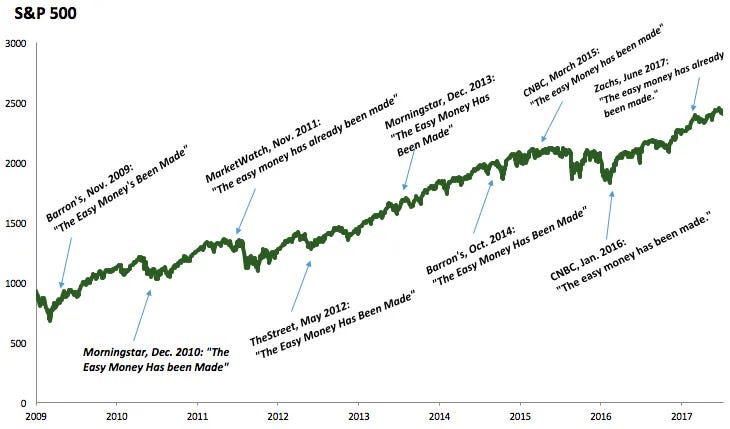
That lack of belief has played out multiple times over the years. In 1987, the NYT suggested that Pizza shops are a possible competitor for tech investment dollars to flow towards.
Can’t Eat Pizza Tokens
Crypto’s coming of age happened at the end of decades of tech evolution - with VCs wondering whether they should invest in pizzas and the asset class itself refusing to die.
The ICO collapsed capital formation and listing into a single event. Selling an idea to the crowd worked as capital formation at first. Ethereum raised $18M this way in 2014 and built all the infrastructure that all EVM chains still rely on. But the crowd eventually got sold just ideas and tokens.
In June of 2017, ICOs raised more than venture capital funding for the industry for the first time. By December, it was established that ICOs would kill venture capital.
More than half of the projects were dead within 120 days of their sale, and academic work on the period puts the share of outright scams near 80%. But we did not have a mechanism of pricing seed-stage companies with no revenue without guardrails in place.
Crypto-VC as a construct emerged in this hubris. Instead of raising directly from a market, teams would raise from a curated subset of capital allocators with a promise of a future token. A SAFE with a token warrant attached became an insulated, sane version of raising. For VCs, it meant public market liquidity for ventures that struggled to prove private market valuations.
A fund that entered at seed and saw the token list at 4x was made whole by its first 25% unlock. This meant that incentives were aligned with the pace of liquidity rather than the value a project might accrue.
Investors realised that they could exit before they had to be right. Early token listings took care of funds, and tokens became the primary product. Instead of being a mechanism to fund continued development, tokens were about paying out the cap table.
Mistakes Were Made
Tokens of all kinds, whether governance or utility, failed for one of the two or both of the following reasons:
The business model was flawed or non-existent
Unlike equity, tokens were not a legal claim on the business
Crypto learned painfully that just because you have a token does not automatically mean you have staying power. With crypto projects, the activity was rarely linked to increased revenue for the business. When X-to-earn emissions ended, the users left with them, because the product had no demand of its own.
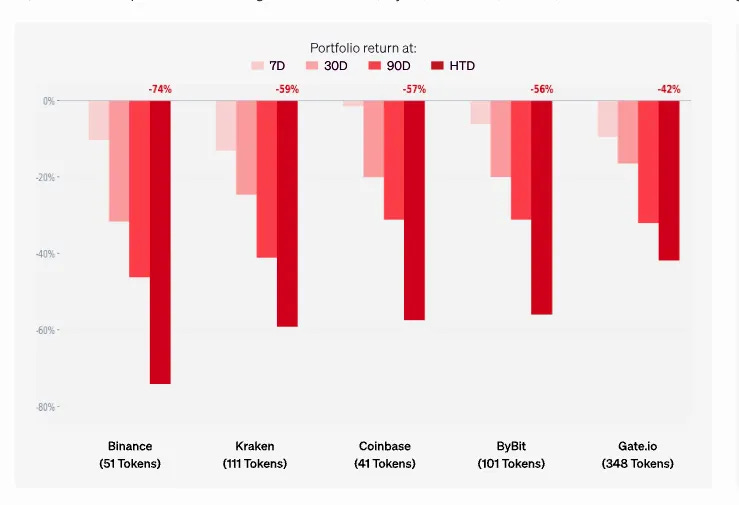
Unlike a token, equity is a legal claim on the business. Shareholders can take the board to court when the board’s actions warrant it. Friend.tech’s protocol earned tens of millions in fees while its token captured none of it, because holders had no claim on those economics. So when a token trades below an equity multiple, the discount is often correct.
Tokens have undergone two shifts in response to this.
Some have begun swapping back to equity when the market has clearly mispriced what a business is worth. Across Protocol is one instance of this.
The breakout winners for 2026 have all tied their revenue back to the token in some form.
Peter from 1kx had a beautiful way of framing this in our conversations.
“Apps didn’t fail because they used token incentives. They failed because they weren’t good businesses. Crypto’s main sin was that there wasn’t enough durable innovation resulting in profitable businesses or protocols with durable product-market fit.” — Peter Pan, Research Partner at 1k(x)
The days of easy liquidity are gone, what is left, then?
Proof Of Work
Three verticals have found durable product-market fit.
Stablecoins
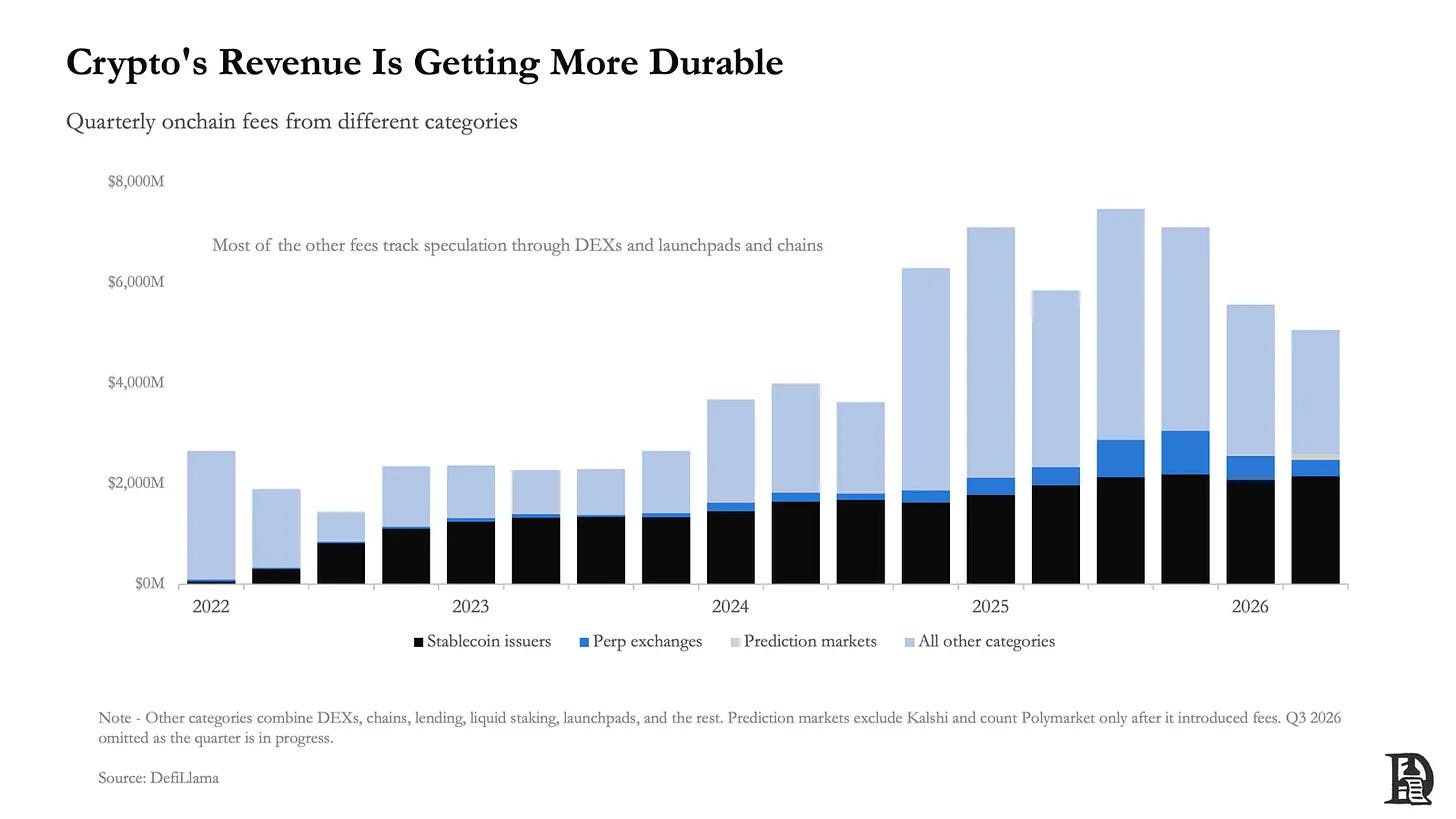
Supply exceeds $300B, annual transfer volume reached $46T, and roughly $9T of that remains after stripping the bots. This vertical belongs to growth equity, corporate acquirers, and bank strategy teams now. The seed window has now moved up a layer, to the companies built on top of the dollars. Bridge went on to get acquired by Stripe within three years.
Prediction markets
ICE committed up to $2B to Polymarket. Robinhood made event contracts its eleventh $100M+ business line. Susquehanna is building a prediction markets business. When the world’s biggest exchange operator, its biggest retail brokerage, and one of its biggest quant firms all arrive within twelve months, price discovery on the vertical itself is complete.
Perp exchanges
Hyperliquid handles roughly 44% of on-chain perp volume and out-earned most public exchanges last year with a team of eleven.
These three categories work the way they do because crypto’s architecture enables things that aren’t possible without it. Dollars settle around the clock without a correspondent bank. Exchanges hold client assets in custody that the client can verify. And the revenue is no longer bought. The largest applications cut token incentives from $2.8B to under $0.1B, and fees still kept growing.
The clearest sign that the categories are real is outsiders trying to build into crypto. The tokens and the businesses have parted ways. A decade of overbuilt infrastructure is finally paying out at the application layer, the same sequence the internet followed when overbuilt fiber made the application era possible.
The next verticals to reach fit will most likely form adjacent to the established ones, because a vertical at scale creates demand at its edges. Stablecoins need credit, brokerage, and treasury products built around the dollars they hold. The job of an early-stage fund deploying in 2026 and 2027 is to back these adjacent verticals before their fit becomes visible in usage and revenue data.
But what makes a vintage in 2026 distinctly different from that of 2020 or 2018? A huge part of that conversation is how regulations and mindsets around the industry have evolved.
Make Crypto Great Again
GENIUS was signed in July 2025. CLARITY cleared the House with both parties aboard, and the FDIC is writing rules for bank-issued stablecoins. Clearer regulations impact crypto ventures in three direct ways.
For a decade, every American crypto term sheet priced in some probability that the government would simply end the company, the way it nearly ended the exchanges in 2023. With US policies shifting in favour, the additional risk premium goes away.
The second impact is on founders. According to Electric Capital, the absence of clear US policy may have caused the share of US crypto developers to decline by roughly half over the past decade, to under 20%. The same adverse selection that shaped the ICO market in 2017 shaped the founder market for a decade, and it has now reversed in the industry’s favour.
The third change is on the cost of doing business. Compliance cost is the last durable moat in fintech. Licensed crypto rails are machines for collapsing compliance cost, which means crypto companies are being handed the same moat.
Capital usually follows Washington with a lag. When the US led with enforcement, capital formation moved offshore and quality deteriorated. Wherever a founder incorporates now, some rulebook applies.
Mixing Revenue
We discussed how the lack of revenue led to the forced listing earlier in this piece. That has now changed.
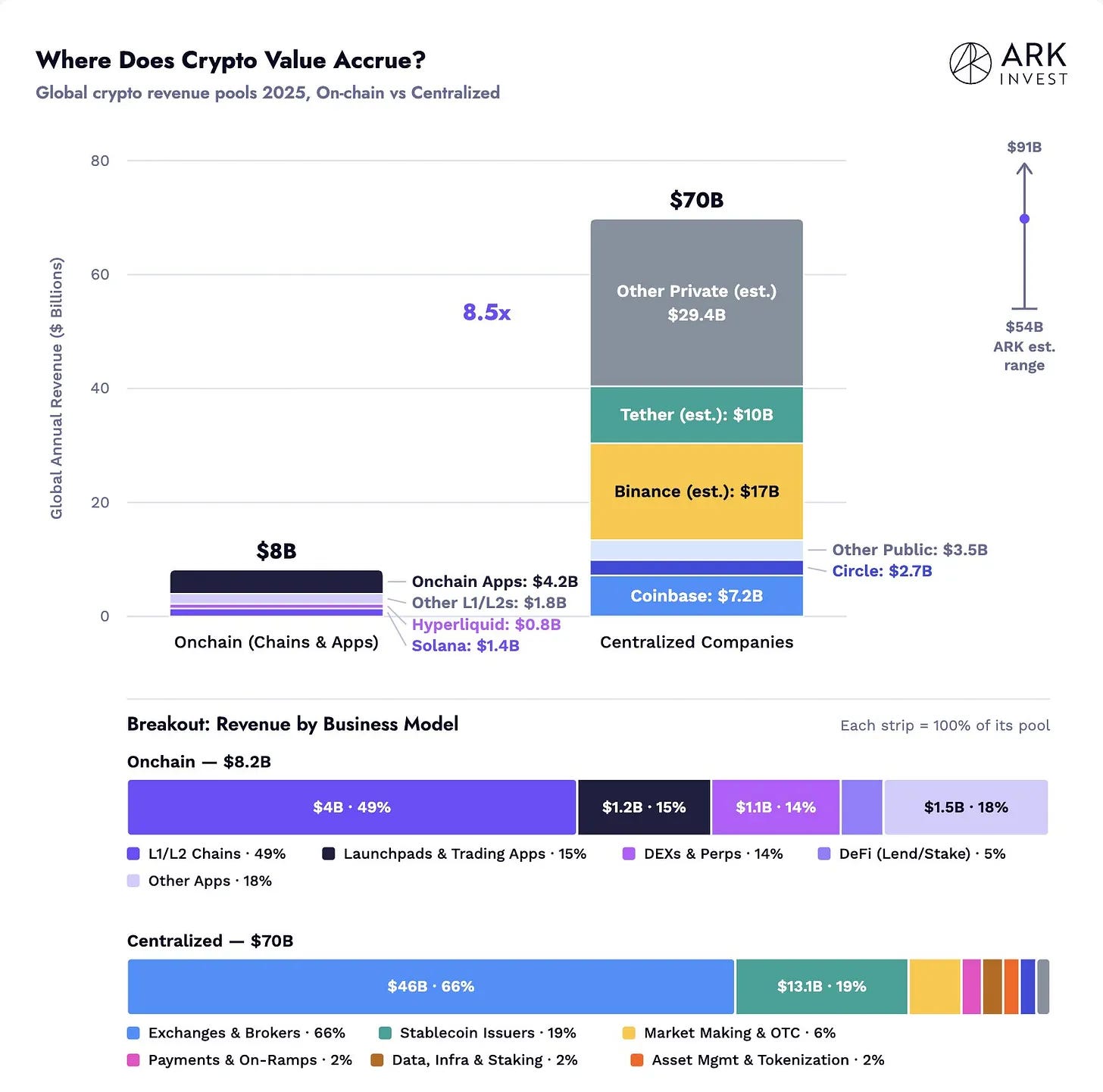
Speculation remains the core of that revenue, and crypto’s first fee-paying product was always going to be its casino. But there are degrees to the speculation. At one end, Axiom’s fees track memecoin volumes and fall with them.
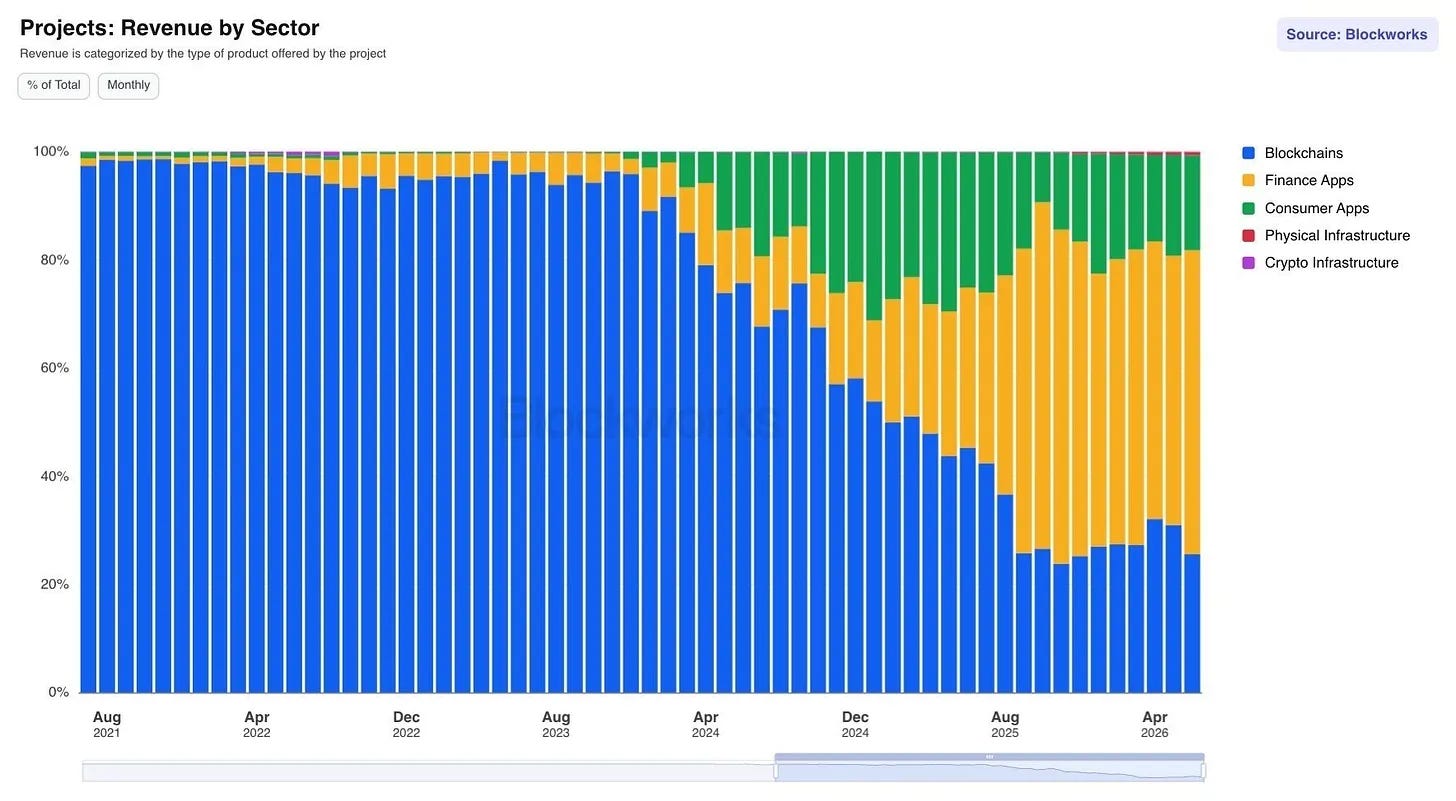
At the other end, Hyperliquid (roughly $843M last year with eleven people) and Aave earn from trading and lending that persist through cycles. Phantom did roughly $325M in 2025 from swap fees on seventeen million monthly users. Ten years of crypto produced one Circle. The last two years produced candidates at every degree of the spectrum.
By late 2025, applications in DeFi and financial services earned 73% of all onchain fees while blockchains earned 12%, yet blockchains held 91% of protocol market capitalisation and the applications roughly 6%. The market is still pricing the infrastructure of the last cycle over the businesses of this one.
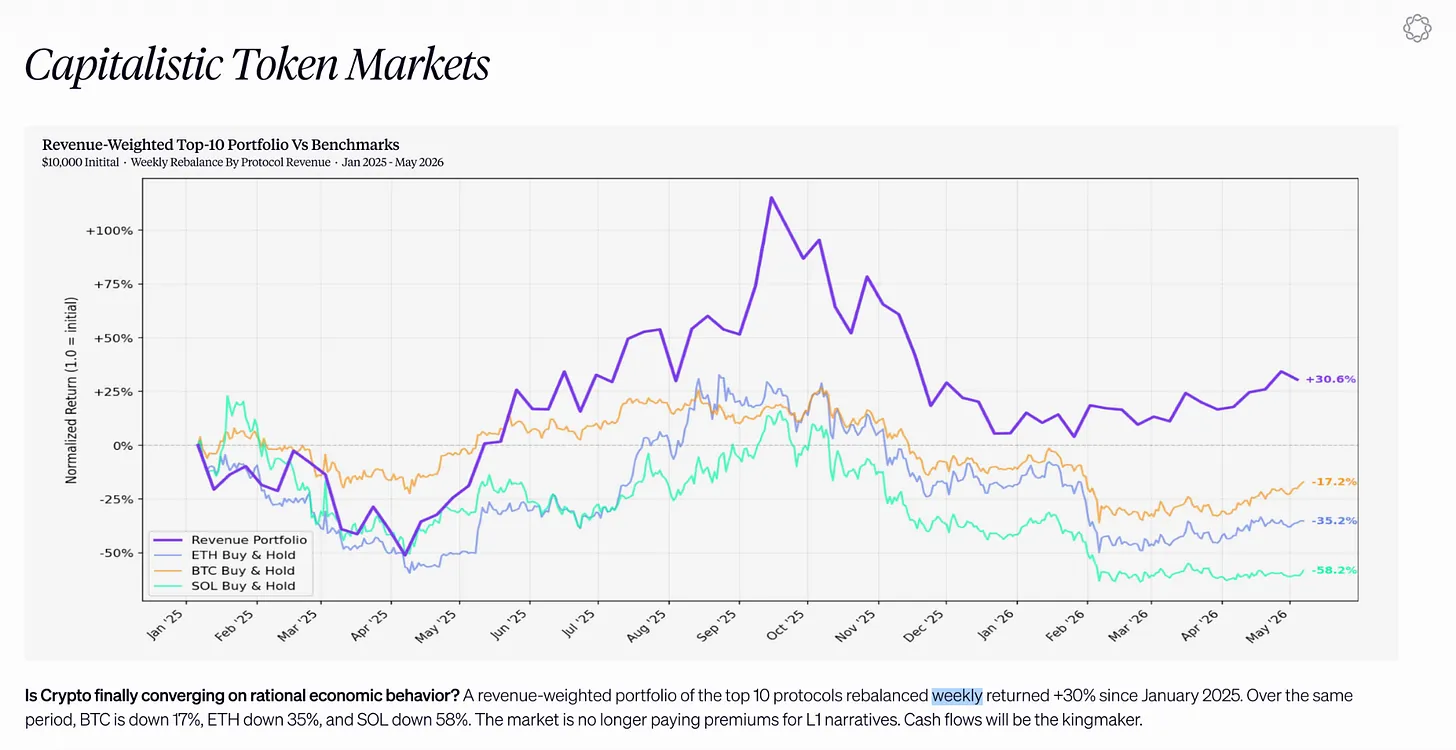
Delphi built a portfolio of the ten largest revenue-generating tokens, weighted by revenue, and tracked it from January 2025 to May 2026. It returned 30.6% while BTC fell 17%, ETH fell 35%, and SOL fell 58%. Tokens with real cash flows beat everything else in the asset class, including the majors. Picking businesses over stories now works in the liquid market, and it works earlier in the private one.
Every asset class that moves on-chain creates a generation of companies around it, and stablecoins have established that template. We think something similar is underway for two more asset classes: Treasuries and equities. Tokenised stocks moved ~$23B last month and are growing ~100% month over month.
The most valuable companies stay private longer, so investors locked inside them sell stakes to one another as they wait. Retail cannot buy these companies at all until they list. Tokenised equities are the venue where that locked supply and that excluded demand eventually meet.
Banks cannot innovate at the speed their customers move, so fintech built neobanks. Neobanks reached the limits of the rails they rented, so builders made crypto neobanks. Now come crypto-native banks with actual charters (Erebor received its national bank charter this year) and FX settlement built on stablecoins. Each generation moved one layer deeper into the stack.
Crypto has stopped being a parallel financial system waiting for permission. It is becoming the plumbing of the existing one, and the venture opportunity of the next cycle is in that merger.
The dollar migration is already far enough along that its users stop noticing blockchain elements. The crypto part turned invisible, and the companies that made it invisible earned the fees. Equities and Treasuries are at the start of the same curve. Stocks on-chain need brokerages, collateralised lending, and market makers. Tokenised Treasuries need custody and distribution. Almost none of those companies exist yet, and companies like that get built at seed.
Taking The Right Exit, After Tokens
Blockspace is now oversupplied and earns little, while fees have shifted to applications. Apps are where the value has been accruing, and they are usually starved of capital.
Experts think in an industry’s constraints; outsiders arrive with a problem and treat the industry as a tool. A decade of overinvestment in blockspace and tooling ended that. And with it, the “shape” of what we considered “crypto founders” has shifted too.
Hyperliquid was built by Jeff Yan, a high-frequency trader from Hudson River Trading who wanted a better derivatives exchange
Circle was built by Jeremy Allaire, who had taken two internet software companies public before he touched a blockchain.
Erebor, the first bank to receive a national crypto charter, was founded by Palmer Luckey, the defence-tech entrepreneur behind Anduril.
Each of them came to crypto with a business that needed rails rather than a belief in search of a use, found the rails ready, and built on them. Operators now look to blockchains as just infrastructure. Like Linux. Or databases.
This is where venture capital as a construct becomes relevant.
For a decade, the token was the only exit, so every company was forced toward a listing whether its business was ready or not. The token remains an exit, and a stronger one now that buybacks and revenue make it a claim on the business.
It is no longer the only one.
M&A set a record at $8.6B. IPOs work again. A crypto company built today can be acquired, go public, or return cash through its token. No earlier point in the industry’s history offered all three.
A longer path to liquidity restores the incentive to build businesses worth holding. The easy route, launch a token and get immediate liquidity, is closed. This is probably the best thing to happen to innovation in crypto. Founders now differentiate on product and adoption rather than on marketing and emissions.
One place we are seeing liquidity is through secondary buy-outs. Brooke Pollack from Hutt Capital used to invest directly into VCs in the past. Currently the fund is looking towards secondaries.
At least three quarters of our capital now is buying out LPs in existing funds…so we are now a secondaries fund, though still making some primary allocations within this strategy
This does not mean tokens as a construct are dead. Some of the best names in crypto are powered by tokens. But it does mean the age of easy money from tokens is behind us.
How Do Investors Adapt?
Deep in the bear market of 2003, Fred Wilson from AVC wrote this note on How Much is Too Much.
There were too many VCs getting funded that weren’t actually VCs. […] If all of that money went only into the hands of experienced VCs, a lot less of it would have been invested, and a lot less of it would have been lost.
Years later, he wrote a potential fix for the situation. It was to go deep where others went wide. There were no more “internet investors”. Just like perhaps today there are no longer “crypto investors”.
Crypto’s broad arc from here on is defined by the same three themes. A requirement to look beyond the insularity of what made the industry, going deeper towards sectoral expertise and expanding hold times from a few years to almost a decade.
The founders have already adapted. The token-as-the-product playbook is finished. As founders change, investors have to change with them. When a company takes five or more years to exit, the investor has to be right about the business, and being right about a business starts with understanding the market in which it operates.
Investors’ edge will likely come from specialising in a vertical. Cambridge Associates found that US venture and growth equity funds across the 2001 to 2010 vintages returned 2.2x gross on invested capital with a 23.2% gross IRR for sector specialists, versus 1.9x and 17.5% for generalists. Crypto venture never had to learn that discipline because the token listing paid for the lack of it.
Capital for growth-stage crypto companies has probably never been as available. What the market is missing is investors willing to write the first cheque with an informed view. Seed managers who have done the work become the layer that finds companies for all of that downstream capital.
If the setup is this favourable, why are only a few funding it?
Several of the largest crypto-native firms have raised non-crypto funds or expanded their mandates beyond the asset class, and roughly half of the troubled mid-sized crypto funds are expected to liquidate or convert by 2028.
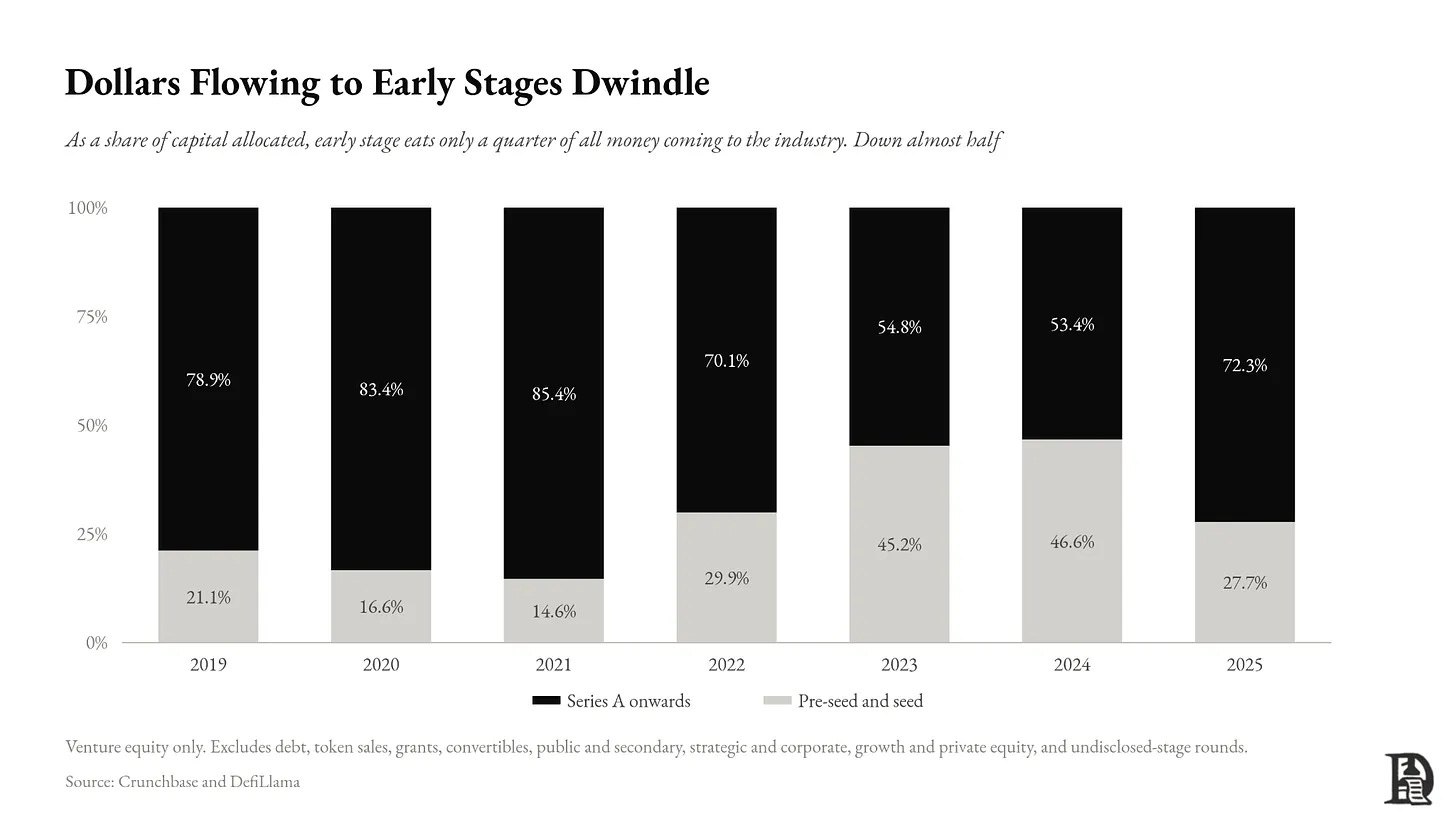
The early stage itself remains open, and its round sizes fit small, specialised funds. Fewer than 20 firms actively write pre-seed and seed cheques. A fund usually deploys over the three years after it closes, so very few investors will actually compete for the seed rounds of 2027 and 2028.
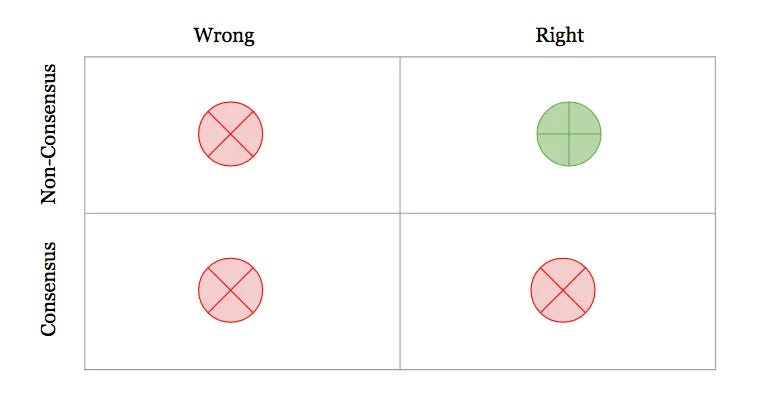
Which leads us back to that ancient question markets have been asking since the time Sequoia invested in Apple - Is venture capital in the sector dead? Yet?
The reality is far from it. The best funds tend to be the ones that double down when it gets scariest. Collaborative Fund defined the economic reason for this in simple terms a decade back.
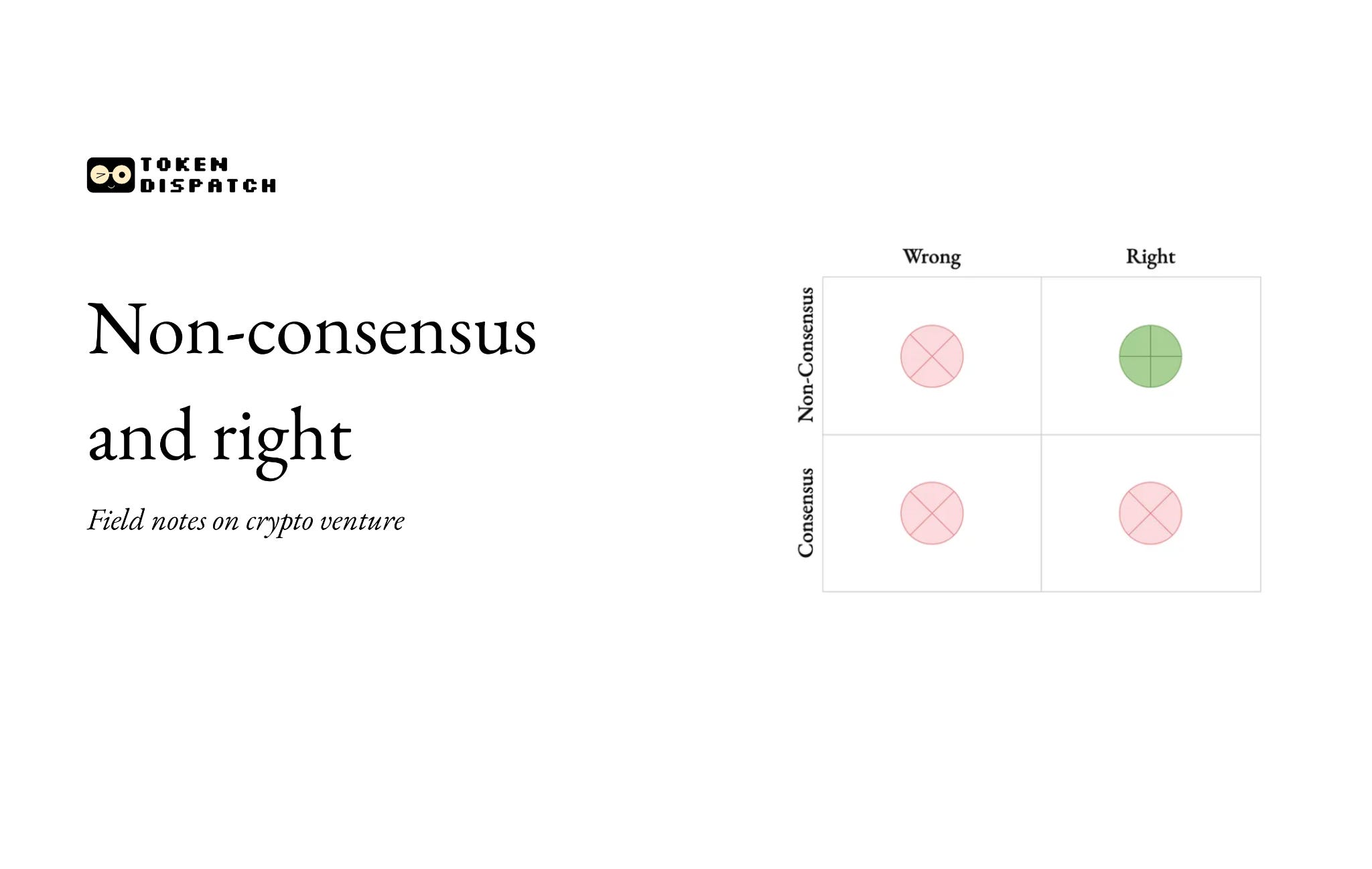
Markets reward being right in non-consensus bets.
Crypto today is a non-consensus bet today.
“The best entry points never feel like consensus. That understanding has anchored our conviction in digital assets from the start, knowing this is a story that plays out over decades, not cycles. Today, capital continues to consolidate and adoption is reaching record levels across use cases with proven PMF. We believe digital assets will redefine financial markets and networks, and we are excited to lean in during the time when others are looking elsewhere.” — Kinjal Shah, General Partner at Blockchain Capital
Patient Capital
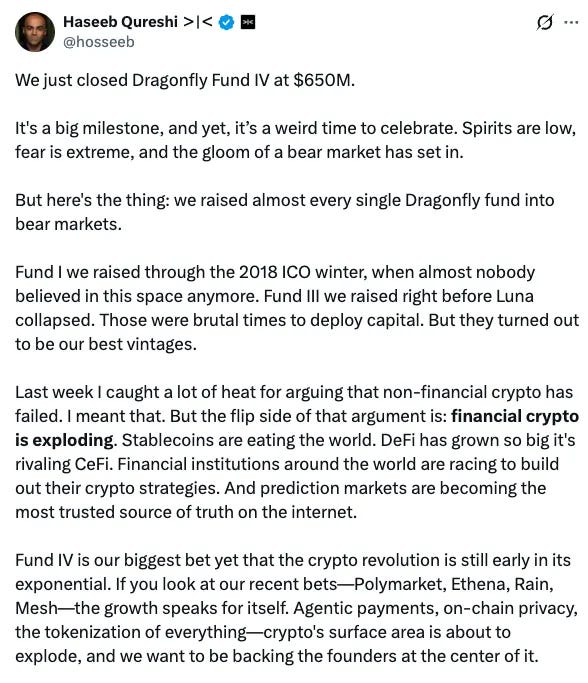
The arc of crypto rhymes with that of the internet. It started out with an ideological pool of users, who gathered without a business model. It then transitioned towards nation-states and governments embracing it, while the initial euphoria of investment dollars and novelty faded out. People often draw parallels with crypto and the dot-com bubble.
But perhaps, we are closer to 2009 than we are to 1999.
The infrastructure is mature, the regulations are clear, the use cases are here, and sentiment is at one of its worst. Deep in the weeds of that crisis, a handful of firms generated some of the best DPIs that the venture asset class has created. History, as we’ve seen repeatedly, is a cruel poet with a passion for rhyming.
Here’s why: The founder pool has thinned to its strongest cohort. As the opportunists left, the average teams left with them, and a small group of exceptional teams remains with very few venture dollars competing for them. LPs no longer need convincing that crypto matters. What they are choosing now is the manager.
When the money does return, it may not even be called crypto investing. Nobody calls themselves an internet investor anymore. Crypto is on the same path through finance. The companies in this piece will increasingly be called brokerages, payment companies, and banks, and the funds that back them will simply be called venture funds.
Finance is absorbing crypto one function at a time. AI collapsed the cost of intelligence. Stablecoins are now collapsing the cost of trust the same way.
Every migrated function needs a generation of products built around it, and small teams build those products on a few cheques. The capital required to start a company is falling as AI writes more of the software, which shifts the scarce inputs to judgment, distribution, and patience, at exactly the moment the field emptied.
What this new age needs is what VCs have always provided when sentiment is low. In 2009, Fred Wilson defined it as Slow Capital. In 2026, Will Mandis calls it Patient capital. In this new age of generative slop and hyper-financialisation, the ability to sit out patiently for the right opportunity and the “taste” to identify what is right is where all of the value in the next crop of venture funds emerging within crypto lies.
Doubling down,
Saurabh Deshpande
P.S.: This piece is an abridged version. The original piece was published here.
P.P.S.: We will be featuring good writing and writers we love from time to time. If you have recommendations, send them our way.
Token Dispatch is a daily crypto newsletter handpicked and crafted with love by human bots. If you want to reach out to 170,000 subscriber community of the Token Dispatch, you can explore the partnership opportunities with us 🙌
📩 Fill out this form to submit your details and book a meeting with us directly.
Disclaimer: This newsletter contains analysis and opinions of the author. Content is for informational purposes only, not financial advice. Trading crypto involves substantial risk - your capital is at risk. Do your own research.
