


A well-dressed stranger rides into a provincial Russian town and starts offering to buy dead people.
That’s the plot of Nikolai Gogol’s Dead Souls, published in 1842, and it made sense because of how Russia counted.
Landowners paid tax on every serf they held, and the census that set the count came around rarely, so a serf who died last spring stayed alive on the books until the next one. Owners were paying tax on corpses. Chichikov, the stranger, offers to take those names off their hands. His plan is to collect enough of them, mortgage them to a bank and walk away with the loan.
Any system that pays per head and can’t see the heads ends up with fake ones.
Being human on the internet was free. So was pretending to be several.
Websites allowed multiple accounts, Twitter tolerated pseudonyms, and crypto let one person create thousands of wallets.
Give every account one vote or every wallet an equal airdrop, and whoever creates the most accounts has an advantage. AI now makes doing this at scale even easier.
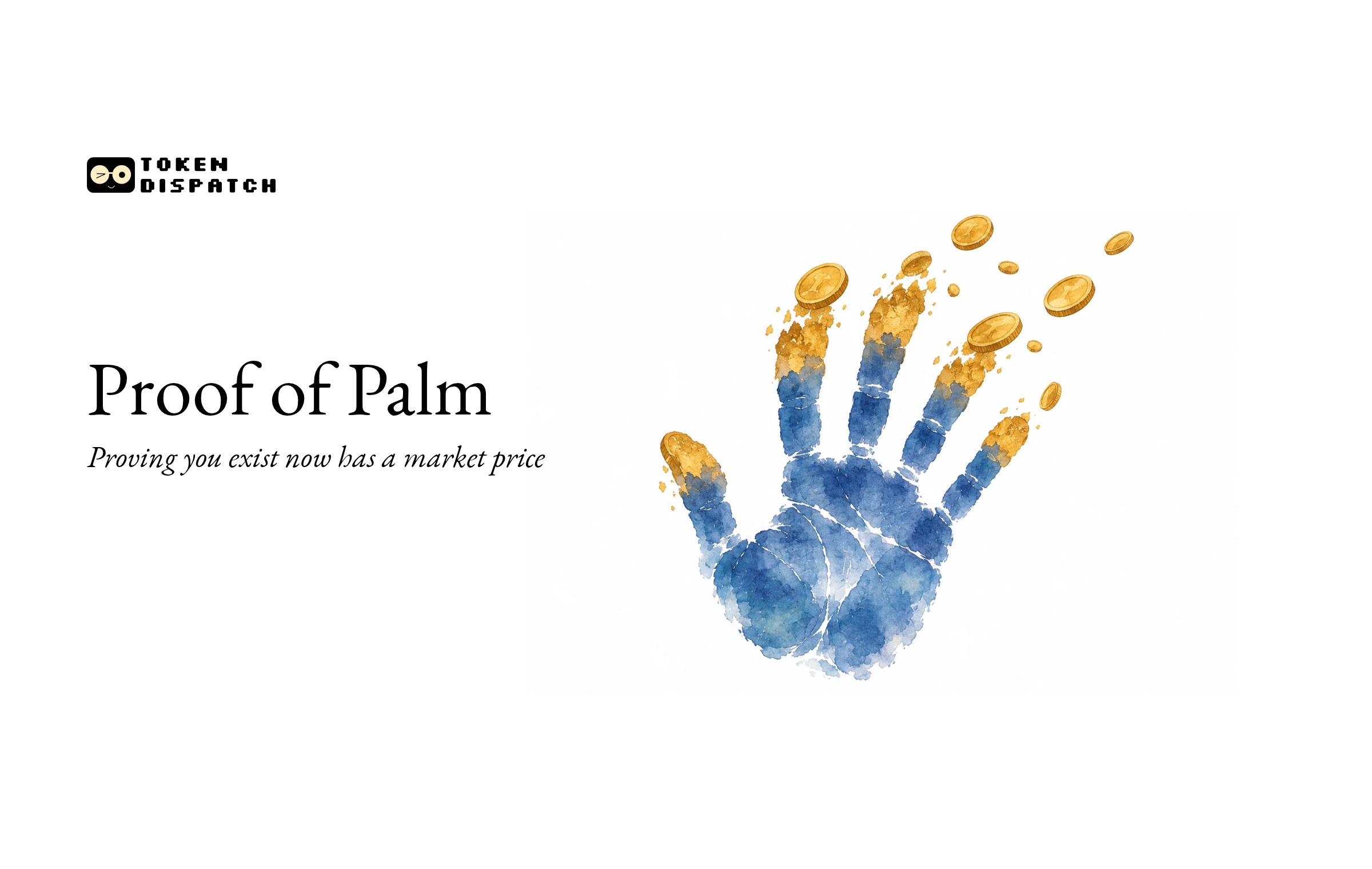
Proof of humanity, then, is more interesting as an economic technology than as an identity technology. It attempts to manufacture something the internet has never naturally possessed, which is a scarce digital object corresponding to one human being.
You’ve heard why the internet needs proof of human, so I’ll skip that. The part I think is more interesting is the price. VeryAI, which now calls itself Very, raised $10 million in March on the idea that your phone can check you’re real by looking at your palm.
So I went looking for what a body goes for.

StablesReward: Your AI Agent Spends, You Earn
AI agents can surf the web, read reviews, and book hotels for you. All these tasks cost money. But what if these tasks could earn you back something?
StablesReward does just that. Once you connect your agent to an MCP endpoint, it gives your agent a menu of paid tools. Every call your agent pays for earns you miles or stocks. And this is in addition to the rewards you earn anyway on your own spending across 800+ merchants.
Every purchase pays you back. The best part is that you can choose how you’d like to be rewarded. Transfer miles to airlines and hotels, or let your stocks build a portfolio from the spend you were making anyway.
Launching soon. Free to join.
The price list
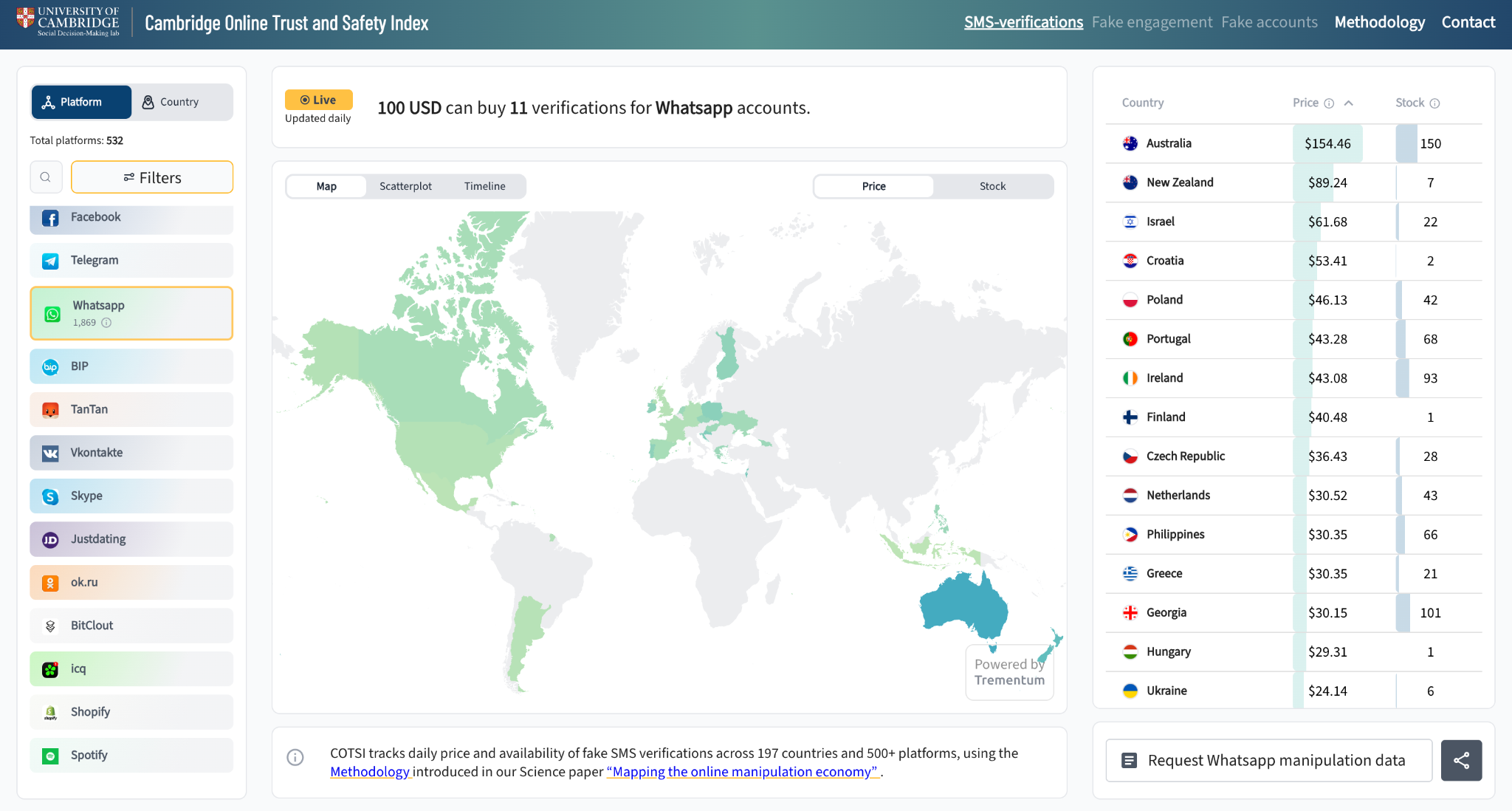
Cambridge researchers track how much it costs to buy an SMS verification code, the text message websites send when someone creates an account, across more than 500 platforms.
And the prices have been changing. On December 19, 2025, getting a verification code for Facebook using a US phone number cost just $0.20. There were 168,350 available for sale. By March 11, the price had jumped to $1.75, with only 115 available. The latest listed price is $3.02.
In other words, fake account creation has become a market of its own. When demand increases, or fewer phone numbers are available, prices rise, just like they do for ordinary products.
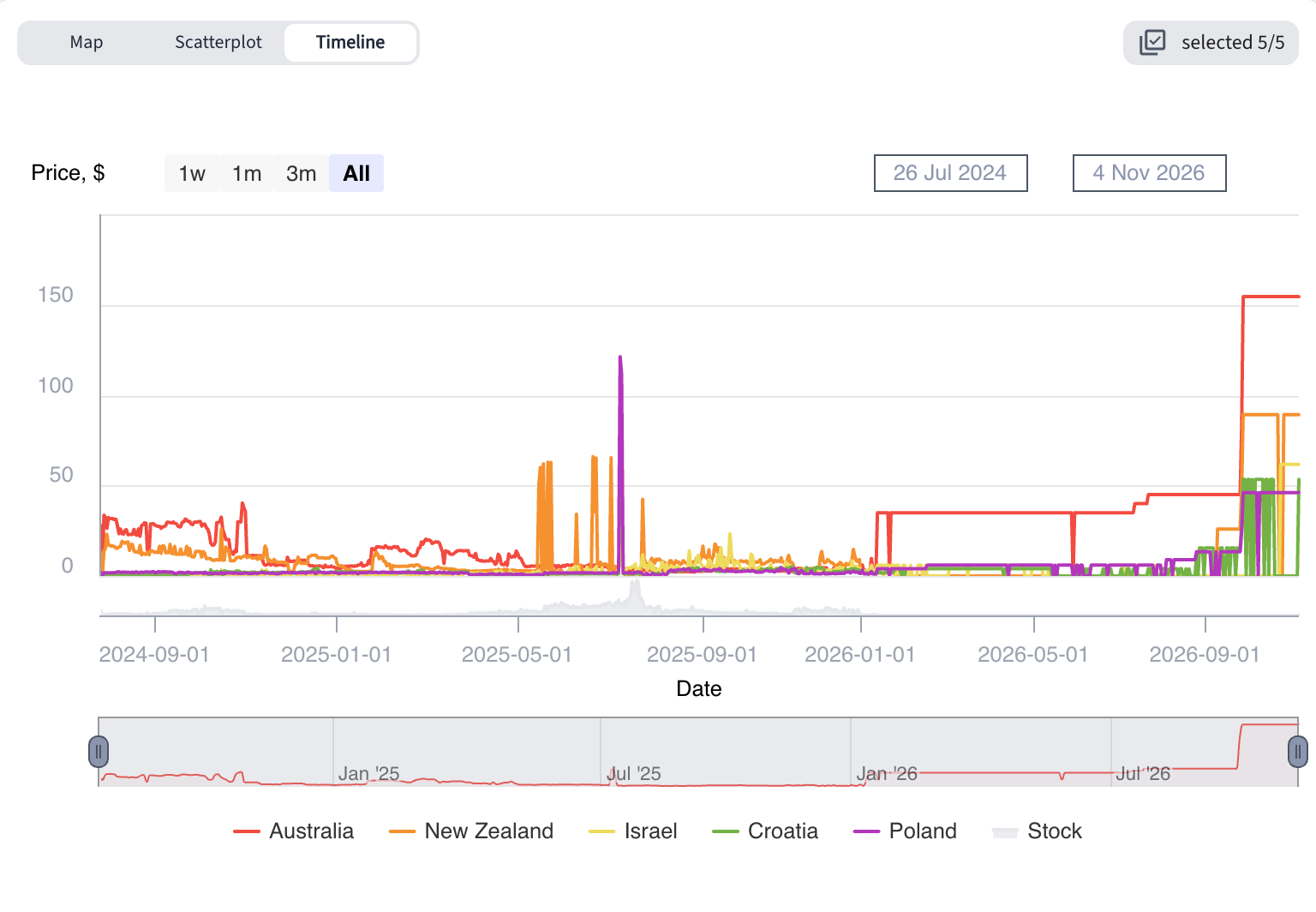
One way to create thousands of fake accounts is to use thousands of SIM cards, each providing a different phone number.
In September 2025, the US Secret Service seized 300 SIM servers and 100,000 SIM cards at sites within 35 miles of the UN General Assembly. Authorities were investigating potential threats to telecommunications and government officials, not ordinary fake-account farming. But the equipment shows how easily phone numbers can be managed on a massive scale. Websites often treat a verified phone number as evidence of a real user. The problem is when one person can control thousands of numbers.
The other toll was our time. Research estimated that people worldwide spent around 819 million hours solving Google’s reCAPTCHA puzzles, the annoying tests that ask us to identify traffic lights,or buses to prove we’re human. Failed too many times, sometimes I wondered if I am a robot.
If people had been paid the US minimum wage for that time, it would have amounted to roughly $6.1 billion in unpaid work.
Robots were learning to pass the same tests. In 2024, another team managed to solve every image puzzle in its tests using AI.
Crypto’s word for all this is Sybil. It comes from a 2002 paper by Microsoft researcher John Douceur. He examined how one person in a computer network could pretend to be numerous participants and gain influence they weren’t supposed to have.
Bitcoin’s answer was to stop counting people.
Satoshi Nakamoto knew that voting by IP address wouldn’t work, because one participant could control numerous addresses. Instead, Bitcoin introduced what its whitepaper called one-CPU-one-vote.
Bitcoin miners compete to find a number that, when put through a cryptographic function, produces a result that meets the network’s requirements. Each attempt is simple, but finding a valid result can take trillions of tries, consuming enormous amounts of computing power and electricity.
Bitcoin adapted that logic to securing a financial network. Proof of stake later made capital, rather than computational work, the scarce resource behind participation in consensus.
You still can’t tell whether ten addresses belong to ten people or one person. This wasn’t particularly important when all the system needed was agreement on financial transactions. It became important when crypto started distributing rewards, governance rights and opportunities to individuals. Essentially it was first electricity, then capital, now bodies. That’s how the cost to participate went.
Two ways to count a body
Very keeps the system in your mobile phone rather than a separate machine. At registration, users scan their palms to create a mathematical representation of their unique features. Later, when they need to verify themselves, Very asks for another scan.


The app asks you to touch a randomly chosen spot on your palm with your thumb while scanning. This helps prove that you’re holding your hand in front of the camera, rather than someone playing a recorded video of it. Very says it can recognise you when you return without sharing your name, ID details or other personal information with the app you’re using.
VeryAI claims a false-acceptance rate of one in ten million for a single palm and an even lower rate when both palms and multiple enrollment scans are used. CEO Zach Meltzer told Axios that crypto exchange MEXC was its largest early customer, using palm verification for withdrawals in place of traditional one-time codes.
World does its job with an Orb.
Orb photographs a user’s face and irises, establishes that the person is human and unique, and creates a World ID that can subsequently be used to prove unique humanity without revealing the underlying identity. World says the original verification data is encrypted and sent to the user’s device while the Orb deletes its copy. Uniqueness checking uses anonymised multi-party computation, while zero-knowledge proofs allow subsequent World ID use without revealing the person’s biometric information.
Read: Worldcoin’s New Trust Economy 🌎
World reports more than 18 million verified people. But an Orb has a problem. The better you control the sensor, the harder it is to distribute the sensor.
This means World builds its own Orb so it can control the cameras, lighting, and scanning technology. This can make verification more reliable. But it also has to manufacture the Orbs, ship them worldwide, and set up at different locations. Very uses the camera already on your smartphone. It has less control over camera quality and lighting, but people can verify themselves from almost anywhere.
World’s technical argument is that specialised biometric hardware provides unusually strong uniqueness and anti-spoofing guarantees.
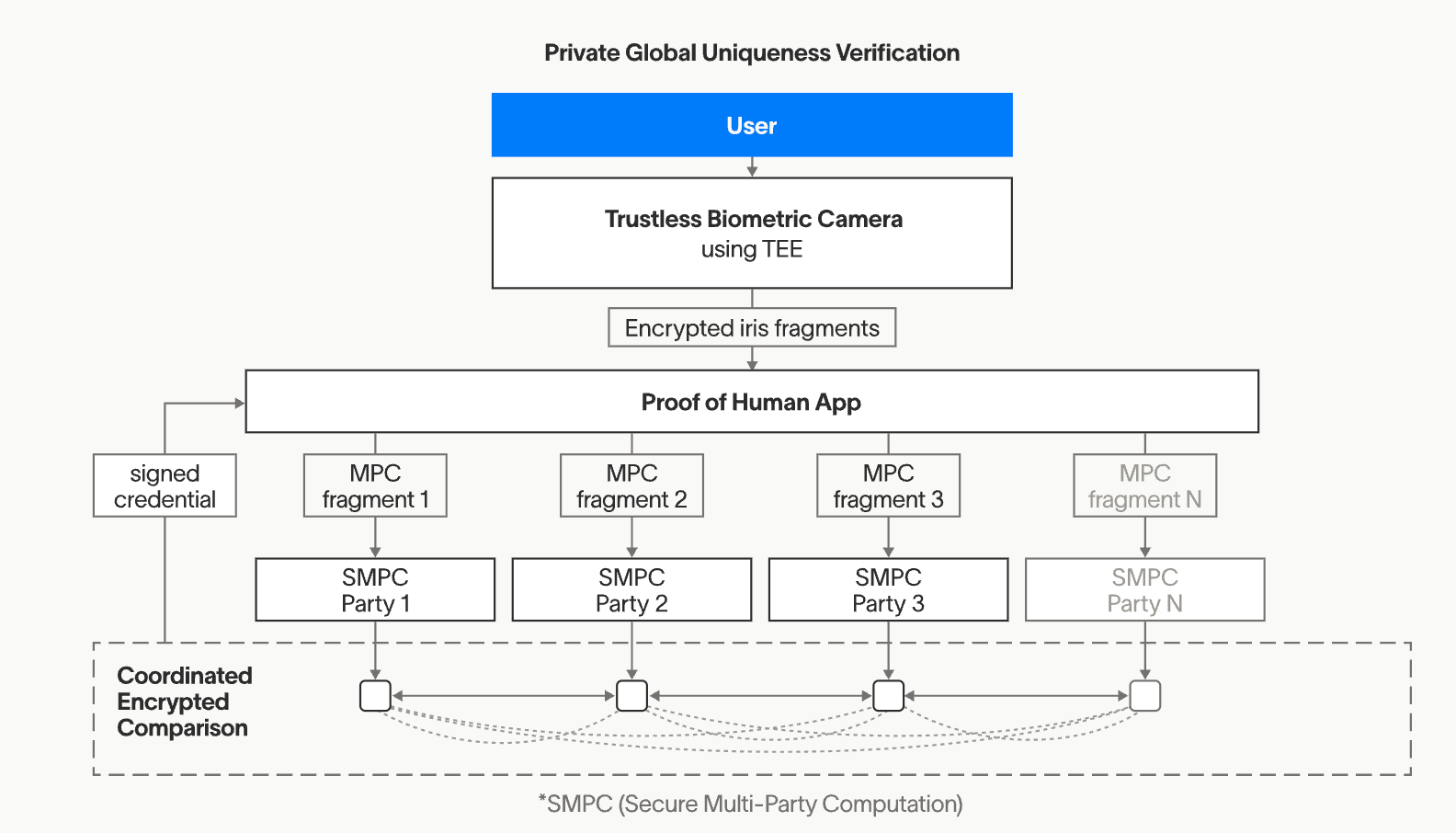
World has made a concession to convenience too. After the initial Orb check, users can perform a quicker face authentication on their phone to confirm they’re the same person.
They also store things differently. World splits your iris code into fragments held by separate organisations, and Very keeps encrypted Palm Models itself, plus low-resolution palm images for up to 90 days.
Very has already put a price on verification. Businesses pay $0.50 to register a user, $0.02 for each subsequent verification, and $0.03 for a separate check that someone is physically present. So an exchange with one million customers would pay $500,000 just to register them. Every additional verification brings Very more revenue.
The bigger opportunity could be getting thousands of applications to accept the human credential. Think of payment networks. A card becomes more useful when more shops accept it. Similarly, when people can use it across exchanges, social platforms and other applications without registering again, then the human credential becomes more valuable. The company whose verification is accepted in the most places could have the bigger advantage.
And there’s another catch. Once a verified identity becomes valuable, people may start selling access to it.
But what a body goes for? Bodies are scarce, and they’re also cheap. This is what I’d worry about if I were building on them.
In 2023, Kenyans could get about $49 in tokens for an iris scan, and more than 350,000 had reportedly signed up when the government stepped in. Again in 2023, credentials were reportedly being bought for as little as $30. In April this year, ZachXBT posted screenshots of verified accounts going for as little as $0.50, with WLD about 98% below its peak. This is less than the average WhatsApp account on the Cambridge list.
Now compare the security. To attack Bitcoin you buy electricity, and to attack a staking chain you buy capital, and both are priced on world markets. To manipulate a proof-of-humanity allocation, one possible strategy is to recruit real people willing to participate.
And the price of recruiting a person isn’t uniform around the world.
The World Bank estimates that 811 million people live on less than $3 a day, measured using its purchasing-power-adjusted poverty line. So, $10 or $20 incentive may mean very different things to people in different economic circumstances.
If an airdrop is worth $50, someone could offer participants a fraction of the reward to register and claim it on their behalf.
World even considers using the country where someone registered as part of its verification system. Knowing where a credential was issued could help applications limit this kind of activity.
Very’s answer is the re-check, since a buyer needs the seller’s hand at every transaction. So even if someone buys your verified account, they still need your help to use it. Instead of paying you once, they could pay you a small amount every time your palm scan is required.
Software can pay that wage. In OpenAI’s 2023 testing, GPT-4, with researchers steering it, got a TaskRabbit worker to solve a CAPTCHA by claiming a vision impairment. In February, a site called RentAHuman launched so AI agents could hire people for errands and pay in stablecoins. I haven’t seen anyone sell palm scans this way, and the pieces are all there.
People have been leaving handprints for at least 67,800 years, as ancient cave art in Indonesia shows. Governments started using them to identify people much later.
In 1858, British administrator William Herschel asked a contractor in Bengal to put his handprint on a contract, hoping to stop him from denying his signature. Fingerprints eventually became a tool of colonial administration.
By 1906, authorities in South Africa’s Transvaal were forcing Indian residents to register their fingerprints and carry identity certificates. Thousands protested, helping launch Gandhi’s satyagraha movement.
But Gandhi wasn’t against fingerprinting itself. As historian Keith Breckenridge explains, his objection was to making it compulsory and using it to discriminate against Indians.
The voluntary vs compulsory identity checks could become relevant again. Very lets people request deletion of their biometric data. World has introduced technical protections intended to limit who can see a person’s original biometric information.
But, suppose a dating application starts offering verified-human badges. At first, the feature is optional. Then users begin avoiding unverified profiles. Similarly what if an exchange requires biometric verification for certain withdrawals.
You can argue saying this is the far future. But if enough of them adopt the same requirement, declining to enrol could become expensive.
A single universal identity provider creates a risk that several competing systems might reduce. If one company incorrectly marks you as a duplicate, can you appeal? can you use another method? If you no longer trust it, can you move elsewhere?
I think palm versus iris is the smaller fight. A two-cent check at the moment money moves is a good trade. I’d take that over uploading my passport to another application that doesn’t actually need to know my name.. What I don’t want is one credential from one issuer for everything.
When a password or wallet goes bad, you can replace it. But in this case, you still only get two hands. As the legend Vitalik once said -
“If you can only have one identity, you do not have pseudonymity, and you can be coerced into revealing it.”
Token Dispatch is a daily crypto newsletter handpicked and crafted with love by human bots. If you want to reach out to 165,000 subscriber community of the Token Dispatch, you can explore the partnership opportunities with us 🙌
📩 Fill out this form to submit your details and book a meeting with us directly.
Disclaimer: This newsletter contains analysis and opinions of the author. Content is for informational purposes only, not financial advice. Trading crypto involves substantial risk - your capital is at risk. Do your own research.