


Software used to come in boxes, which is one of those things that sounds slightly prehistoric now, even though it really wasn’t that long ago. Floppy discs and CDs of 2000s.
The way we buy software these days is ridiculous, and back then it used to be a one-time physical purchase. Buyers paid for a CD, entered a serial key, and owned that specific version permanently, with total control over whether or not to pay for future upgrades.

As software moved to the internet, the industry transitioned from one-time purchases to recurring subscriptions. Which were objectively better for them and, for a while, probably better for us too. You no longer had to worry about installing updates or buying the new version, and the company could keep maintaining the product instead of making most of its money every few years when we upgraded.
Salesforce proved from day one that selling cloud-based access as a recurring monthly service was highly profitable and scalable. Adobe also eventually moved Creative Suite into Creative Cloud. Eventually, everyone else got the blueprint and confidence to do the same, making subscriptions the inescapable standard today.
But later on, the subscription slowly became the default way to sell software, even when the thing being sold does not really need to be used like a subscription, like a quick file converter or an occasional image generator.
Say I want to know what a PlayStation 5 costs on Amazon right now. I need that information once. I don’t particularly want an ecommerce data product in my life. If I want to generate three images for an article this month, I may not want an expensive image-generation plan either. The same applies to a private-market database I need for one company, an on-chain query I need for one chart, or a video model, which is one of the most expensive tokens.
Modern software is increasingly broken down into APIs that execute single, split-second tasks. You ask for one specific output, and the interaction is immediately over.
But the purchasing model remains stubbornly stuck in the past. Providers still force you to buy tiny, discrete API calls using the heavy, traditional SaaS model. Buying from ten different tools means too much of an administrative nightmare.
Monid is a company built around the idea that this is unnecessary. Now that humans are not the only users of software, and especially because not the only crowd paying for software, we can’t skip this one. So I had it tested with my Hermes agent.
Monid currently lists more than 1,700 tools across over 55 providers. Users manage a single balance on Monid rather than creating multiple vendor accounts. You can browse tools, check prices, and review schemas for free, paying only when you actually execute an API call.
I could have gone directly to every company providing those services. In some cases, that would even have been cheaper. Which is why I think Monid is interesting.
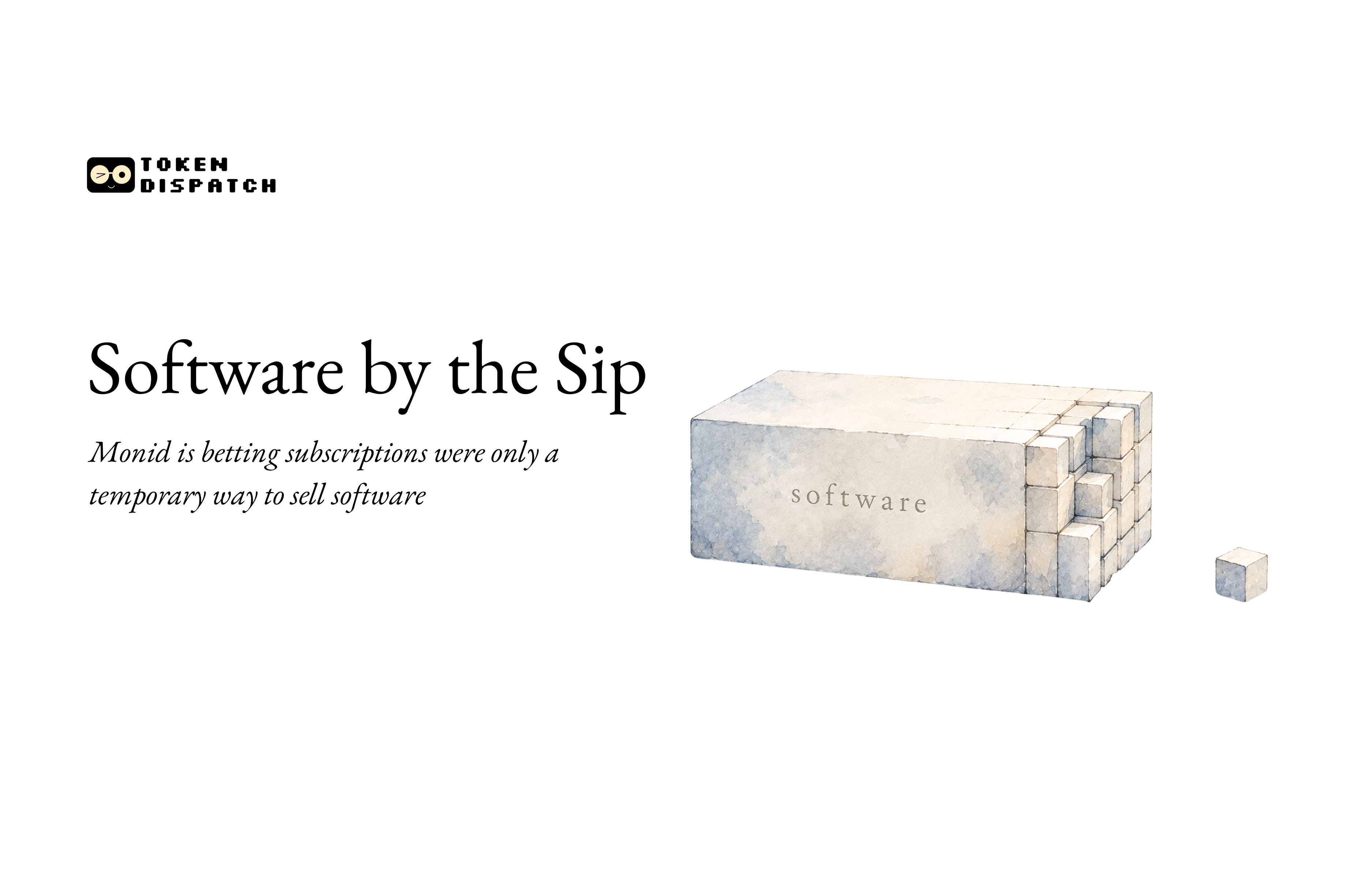
The bet is that software is becoming modular enough that eventually we may stop buying some of it as products at all. We will buy the specific capability when we need it, use it once, and leave. SaaS bundled the interface, the software and the commercial relationship together. Those three things can now be pulled apart.

PRED: Trade Sports at the Best Odds
Anyone who has watched a game with money on it knows the feeling.
A momentum shift in the fortieth minute, a red card, an injury or a goal against the run of play, and the game turns while you sit there holding a position you took before kickoff.
On most prediction platforms, that is all you can do. Hold and pray.
PRED, on the other hand, turns every fixture into a live market. You buy ‘Yes’ or ‘No’ and the price moves as the match does, so if the game turns, you can cash out and take whatever your position is worth at that moment.
Our odds are 10 to 14 per cent better than the rest of the market. Across the season, that gap adds up.
Markets on PRED settle instantly once the result is in, and you’re never stuck holding a position waiting on someone else to agree on what happened. You can cash out any time.
Built for how fast sport actually moves.
You can get carried away very quickly when sizing this market, so I am not going to tell you that Monid is attacking the entire trillion-dollar software industry. Salesforce is not going to become a four-cent API call because of the new billing model.
A better place to start is with how much software companies already buy and then barely use.
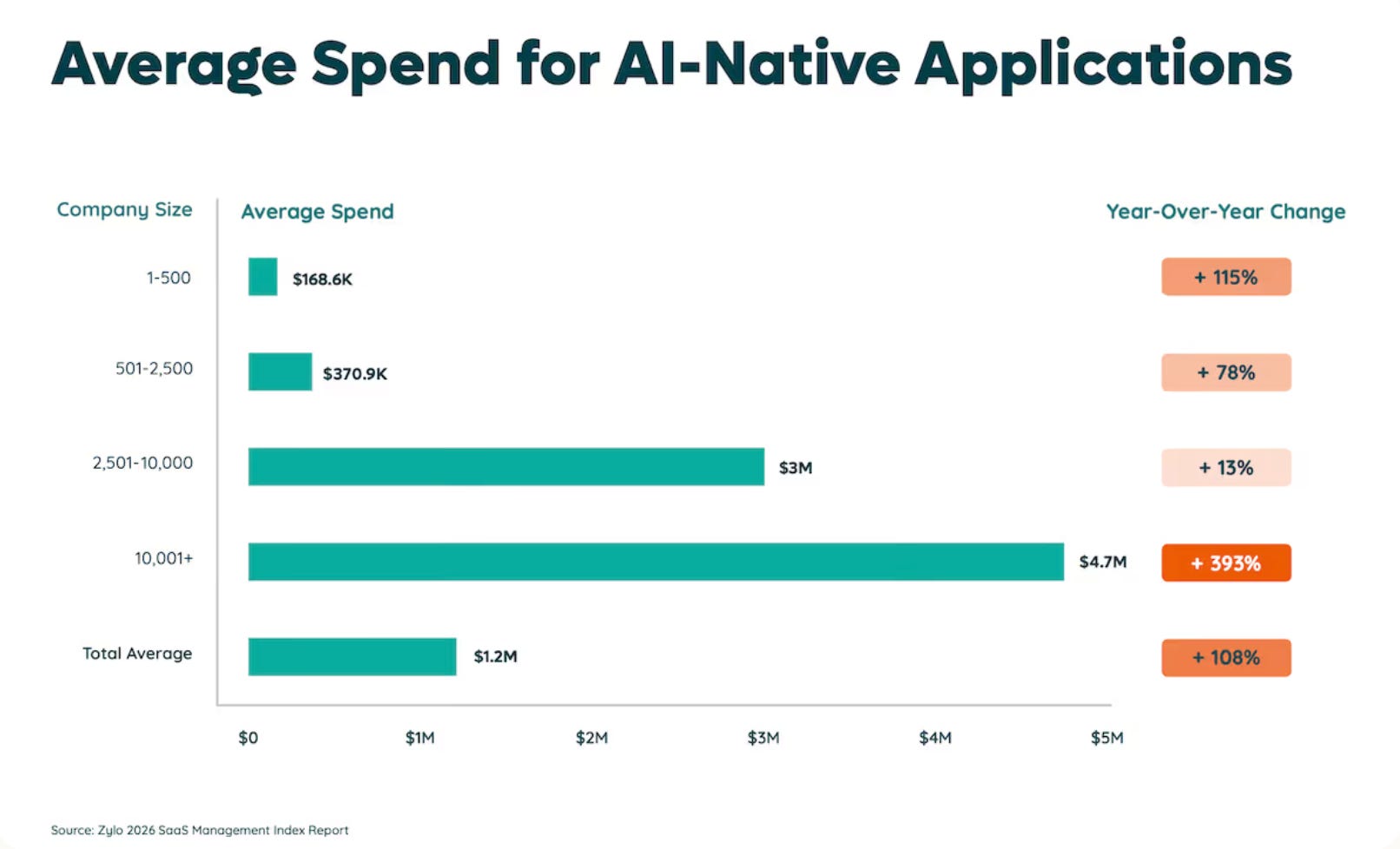
Zylo’s 2026 SaaS Management Index is based on more than 40 million licences and $75 billion of SaaS and cloud spend. The companies in its dataset hold an average of 305 applications and spend $55.7 million a year on SaaS. It says an average of 36% of licences sit unused. AI software is making the problem messier rather than fixing it. Expense-based SaaS spending grew 267% year on year, with employees increasingly buying AI products outside the normal procurement process.
Some of that waste is bad management. A company forgot to cancel a seat after an employee left. Someone bought fifty licences, and only thirty people showed up.
But some of it comes from the shape of the product itself.
You buy access for a month even though your demand appears for a few minutes or just a day. This becomes much more noticeable with AI products because the useful thing is often already priced internally as consumption. Models charge for tokens, which are individual units of work.
The technology research and advisory firm Gartner thinks this eventually creates a fairly uncomfortable problem for SaaS companies. In July, it was estimated that up to $234 billion of enterprise application spending would be exposed to what it calls “agentic arbitrage” by 2030, equal to roughly 20% of enterprise SaaS spending. Its argument is that once work can happen across systems without a human spending their day inside every product interface, software vendors can no longer assume that more work automatically means more seats.
Again, I wouldn’t call $234 billion Monid’s TAM, but Monid is targeting a slice of it.
The actual market is the fraction of software that has three characteristics. The job can be expressed as a discrete request, the output can be returned programmatically, and usage is irregular enough that keeping a permanent commercial relationship with the provider is unnecessary.
Search, data enrichment, scraping, image and video generation all of that fits the case. And it is a large part of market data, verification APIs and browser sessions included.
A collaborative design tool used by many designers probably does not. As for now, this gives Monid a much more believable market than “kill every subscription.” Because tools like Figma or Canva rely on entire teams working inside the interface together for hours every day. In that scenario, paying a predictable monthly fee per designer makes total sense.
The infrastructure for this already exists at a surprisingly large scale.
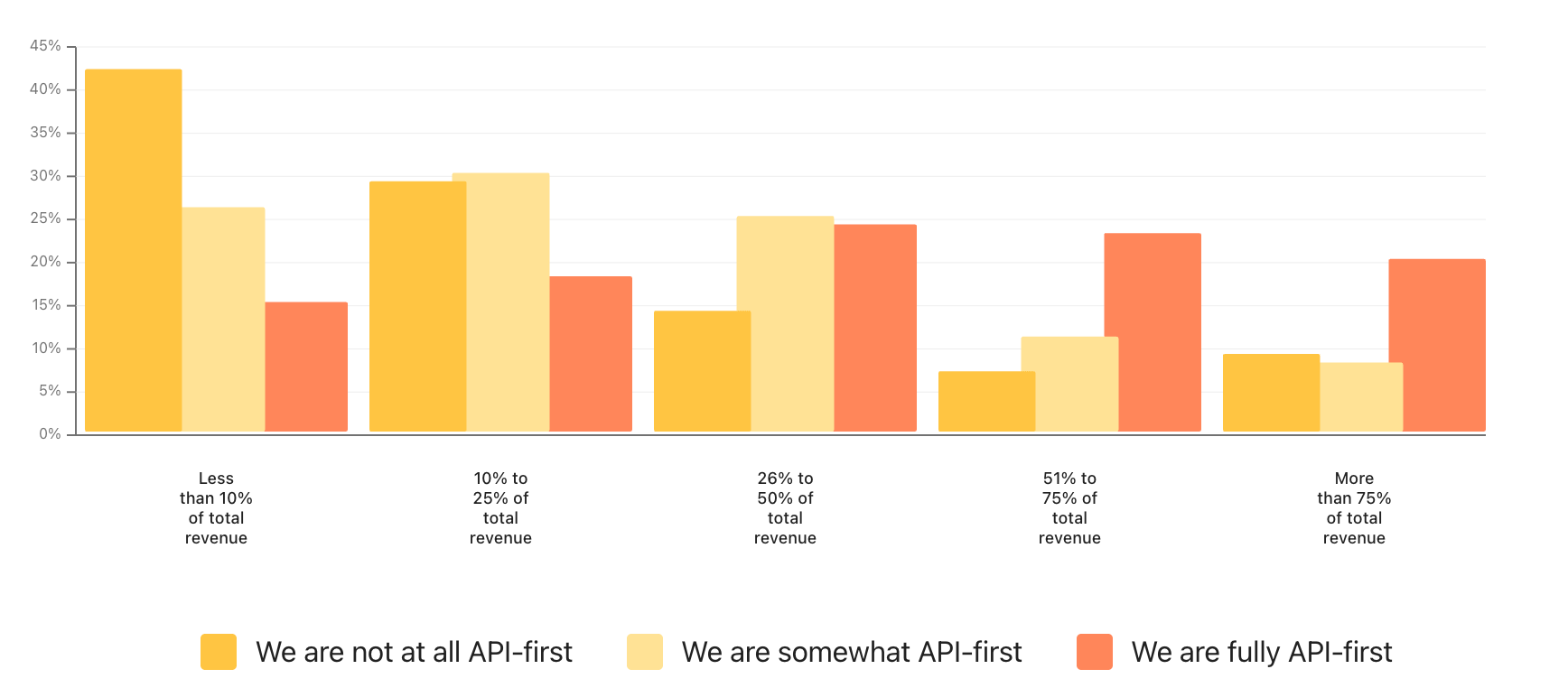
Postman surveyed more than 5,700 developers and technical leaders for its 2025 State of the API report. 82% of organisations had adopted some level of API-first development, while 65% said their API programmes already generated revenue. For many businesses, APIs are the product.
But there is a mismatch in the same report that I find more useful. Only 24% of developers said they actively design APIs with AI agents or machine consumers in mind, while 60% still design primarily for humans. Postman also found that 55% struggle with inconsistent documentation, and 34% have difficulty even finding APIs that already exist inside their organisations.
MuleSoft’s 2025 Connectivity Benchmark found that developers still spend 39% of their time building custom integrations, while 95% of IT leaders struggle to connect AI systems to existing software.
APIs made software callable, but again, not easy to buy.
Monid is trying to standardise that layer. You search its catalogue, inspect the schema and price, then run the endpoint from the same balance. Discovery and inspection are free, so several options can be compared before anything is purchased. Price becomes part of the interface itself, something checked before execution rather than negotiated separately.
API marketplaces are not new. RapidAPI built a single marketplace where developers could search for third-party APIs, read the docs, test them, subscribe, get one API key and manage usage from one dashboard. By 2022, it had more than four million developers and raised $150 million at a $1 billion valuation.
Then the company ran into trouble and cut deeply in 2023 after expanding across too many areas. RapidAPI just ended up proving that people wanted one place to find and access APIs. A human developer can find an API in a marketplace and then integrate it directly. Once that integration exists, the marketplace has done the useful part of the job and given the customer less reason to remain in the middle. If the same API gets called ten million times, the engineering team will eventually ask why it is still paying somebody between itself and the provider.
Monid faces the same risk, but where its model differs is that it is not really trying to make discovery a one-time event. The system is designed around a world where the appropriate provider can change from one piece of work to another, and where keeping many small tools available is more valuable than deeply integrating one of them.
That only works if software demand stays fragmented. Fortunately for Monid, software is very good at becoming fragmented.
OpenRouter proved how to profit from this exact chaos in the AI space.
AI models were a good market for aggregation because there are hundreds of them, prices move, latency changes. OpenRouter put it all in one interface.
In May, it raised $113 million. By August, it said more than ten million developers and companies were using the platform and daily volume had crossed ten trillion tokens. Then Stripe bought it in a deal Reuters reported at a little over $8 billion.
Read: Stripe Bought Demand
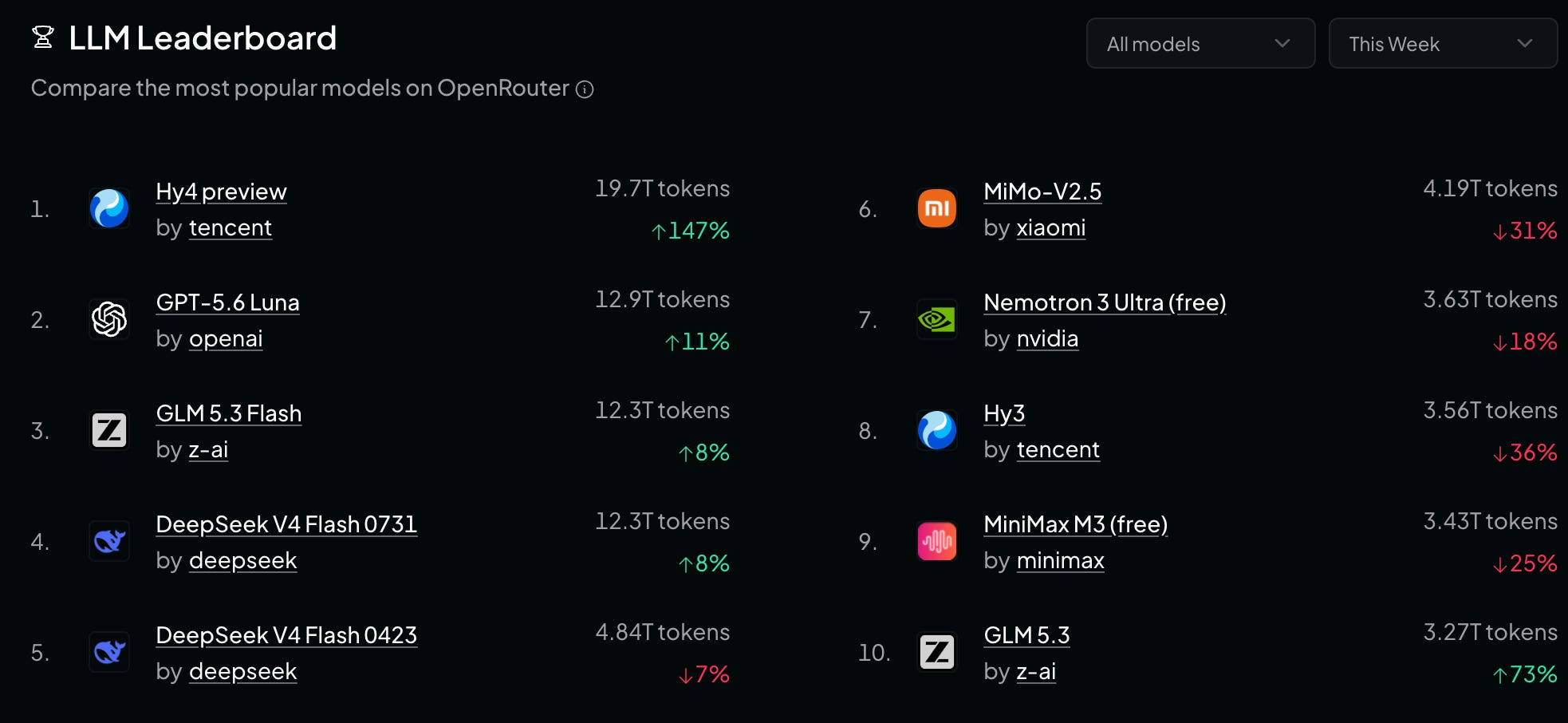
Monid describes itself as the OpenRouter for tools, and it plans to show that the middle layer can become valuable on its own.
But tools are messier than models. An Amazon scraper, a funding database and a video generator have different prices, inputs and output formats. If Monid can make all of that feel like one market, that is the real opportunity.
Monid is not alone in this market. Pipedream, Composio and Arcade already connect thousands of tools, but they mostly solve integration and authentication. It means those companies help different apps talk to each other, but they usually don’t pay for the software on your behalf. You still need your own Slack, Salesforce, Gmail, or other account. They connect what you already subscribe to. Monid is trying to let you buy the capability itself.
Monid wants the capability itself to be purchasable through one shared balance.
Agent402 is closer to that model, using pay-per-call tools over x402 and MPP, but with crypto much more visible in the product.
Read: Who Checks the Agents?
In Monid, you can fund a normal prepaid balance and never care what x402 is, or use USDC per run if you do. That is probably the right abstraction. Most people buying ecommerce data do not wish for more payment protocols to be involved.
Put these companies together and a new software category starts becoming visible. I would call it a wholesale market for software capabilities.
If Monid is just reselling access to tools from other companies, the obvious question is why pay Monid at all instead of going straight to MiniMax, Alibaba, Tripo, etc?
I tested that where I could.
MiniMax image generation through Monid was $0.0035 per image when we ran it, the same as MiniMax’s own direct API price. WAN 3.0 video at 720p cost $0.10 per second on Monid, which matched Alibaba’s official list price. Alibaba was running a temporary 30% promotion at the time, however, which made the direct route $0.07 per second. So if you knew you were going to make hundreds of WAN videos that month, going directly to Alibaba was the obvious choice.
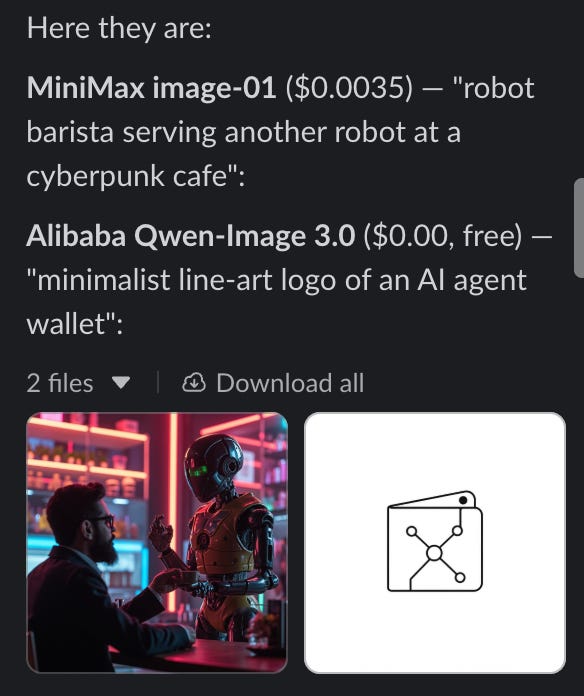
The 3D generation test went further in that direction. Monid charged $0.80, while going directly to the underlying provider, Tripo, looked closer to half that price. So Monid is not automatically cheaper.
Sometimes you are paying for convenience.
Amazon does not need every item to be cheaper than buying it from the manufacturer. The middleman survives because avoiding ten individual relationships has value. At high usage, a subscription can be cheaper. Stripe describes the benefit as aligning charges with actual usage, not guaranteed savings.
Consumption pricing makes more sense when the alternative is paying for capacity you rarely use. Monid says it shares revenue with API providers, but it does not publicly disclose a standard provider split yet, so we cannot yet estimate its marketplace margins.
Still, there is early volume. Co-founder Shengkun Ye said at the beginning of September that Monid had crossed 4 million transactions and raised a $2.1 million pre-seed round from 1984 Ventures, Llama Ventures, Untapped Capital and Founders, Inc. For now, that is enough to start learning something about which bits of software people actually buy when software is sold this way(individual outputs or data pulls).
I managed to break a few things while testing Monid. Reddit search was bad. An Amazon scraper failed twice because the provider was down. Another ecommerce tool returned a 404. The 3D tool showed us an old parameter that the live API no longer accepted.
Then we switched Amazon providers, and it worked. The second tool returned a live PS5 listing with the price, stock, seller, delivery and ratings.
The value is being able to find another option when one stops working. Over time, Monid could know which provider is reliable, which one is cheaper, which one keeps returning empty results, and which one has started failing today. Then it can route users towards the better option instead of making them figure that out themselves.
If we assume that the advantage is having API number 1,700, RapidAPI had a long catalogue too, someone else can add 1,701 tomorrow. But knowing which API is worth using is a clear advantage. In our test, most of Monid’s crypto tools could read data but not take action. I could analyse wallets and transactions, but we could not find tools to deploy contracts, mint NFTs or list assets. But the pitch didn’t promise that either.
So Monid cannot turn every kind of software into a simple call yet. Some products need accounts, permissions and long-running workflows.
Companies already spend huge amounts on SaaS, and a lot of those licences go unused. APIs have also broken many products into smaller pieces, but buying those pieces is still awkward. You often have to create an account and commit to a plan before you know how much you will actually use.
Usage pricing flips that around. You need something, you pay for that use, and then you stop paying.
This can be worse for vendors who like predictable monthly subscriptions. But it can also bring in customers who would never have paid for the full plan in the first place.
The last twenty years were spent turning software from boxes into subscriptions, and then subscriptions into APIs. Each of these changes also changed what the smallest purchasable unit was.
While testing all of this, I made a 3D robot watering a flower. There are plenty of tools that can do 3D generation now, so this is not evidence of anything particularly profound. I just think he turned out quite nice, and I am disproportionately proud of him, so I am sharing him anyway.

That’s it for today.
Will come back soon with more on Monid. Stay tuned!
Token Dispatch is a daily crypto newsletter handpicked and crafted with love by human bots. If you want to reach out to 170,000+ subscriber community of the Token Dispatch, you can explore the partnership opportunities with us 🙌
📩 Fill out this form to submit your details and book a meeting with us directly.
Disclaimer: This newsletter contains analysis and opinions of the author. Content is for informational purposes only, not financial advice. Trading crypto involves substantial risk - your capital is at risk. Do your own research.