


Hello,
There’s a hidden currency risk in today’s global payroll systems. A contractor in India, Argentina or Turkey may earn in dollars from a US company, but their rent, groceries and taxes are still paid in their local currency. The current payroll system assumes that the paycheck should be converted to the local currency immediately. That’s not practical in most cases and costs people money whose currencies fall quickly against the US dollar.
What if the worker could save in US dollars and spend locally? This is what stablecoin-enabled payrolls can offer.
If a designer in Mumbai converts the full paycheck into rupees on day one, they have exited the dollar. If the rupee weakens over the next few months, the designer does not benefit and is instead left holding money in a weaker currency. In fact, the Indian designer lost more than a tenth of their purchasing power over the last year simply because they couldn’t hold the money in USD. Instead, if the designer had been able to hold part of that paycheck in dollars or a dollar-like stablecoin, they could have avoided the loss due to currency devaluation.
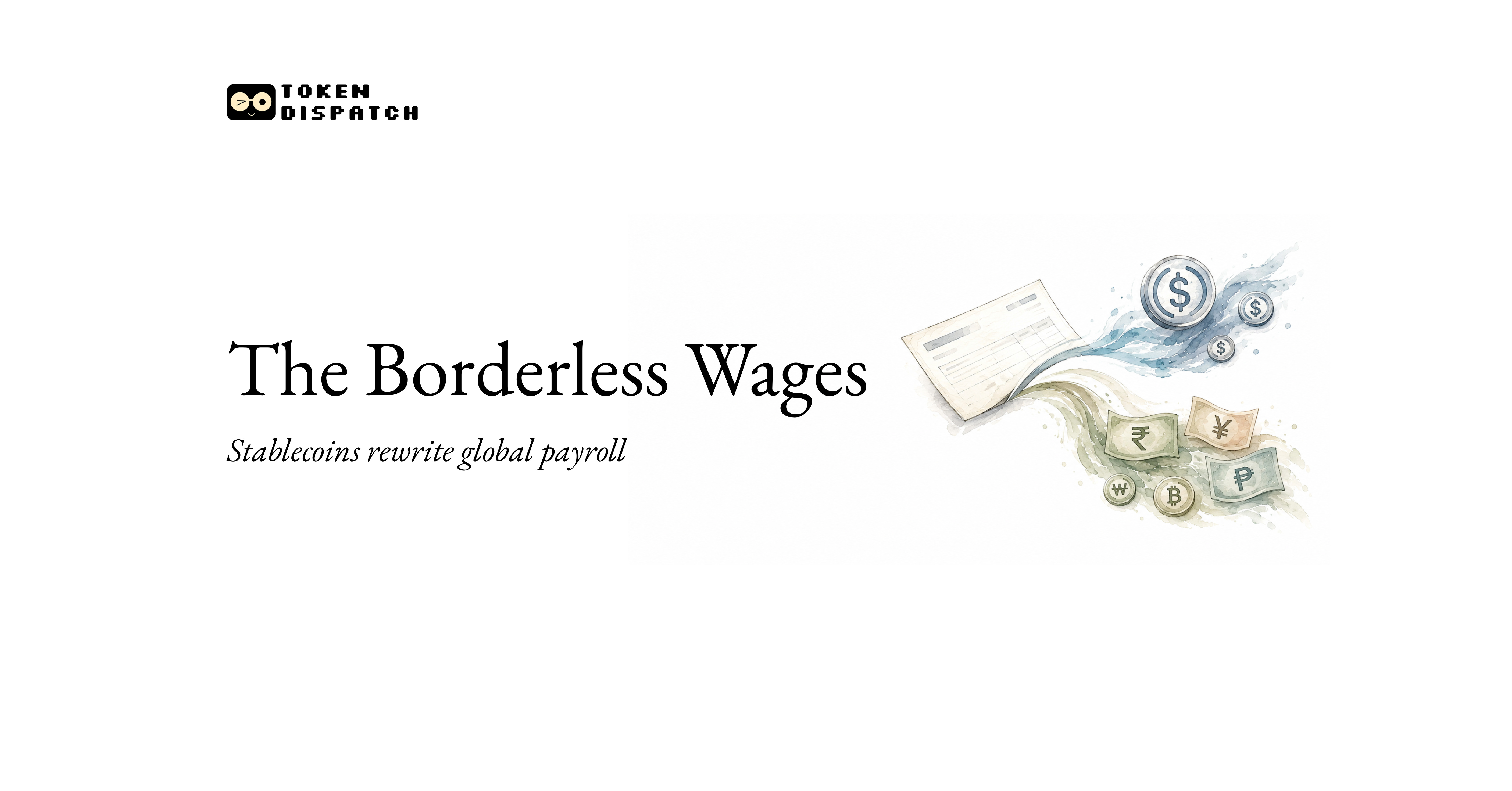
In today’s piece, I will explain why global workers are increasingly choosing to be paid in dollars or stablecoins and what they actually gain from doing it.
On to the story…

The Currency Risk
A worker who lives in one country but works for an employer in another earns in one currency and spends in another. How they handle the conversion decides whether they quietly lose or gain.
If an Indian contractor earns $2,000 a month and spends it all within a few days, there is no currency benefit because nothing remains to be held. But if the contractor saves 25% of that monthly income, that small dollar position over time could lead to a sizable benefit to the worker. How big a benefit are we talking about?
Over the last 12 months, the rupee moved from roughly ₹85.6 per dollar to around ₹94.7 per dollar. That is a depreciation of over 10%.
This is how much an Indian contractor can save across different scenarios
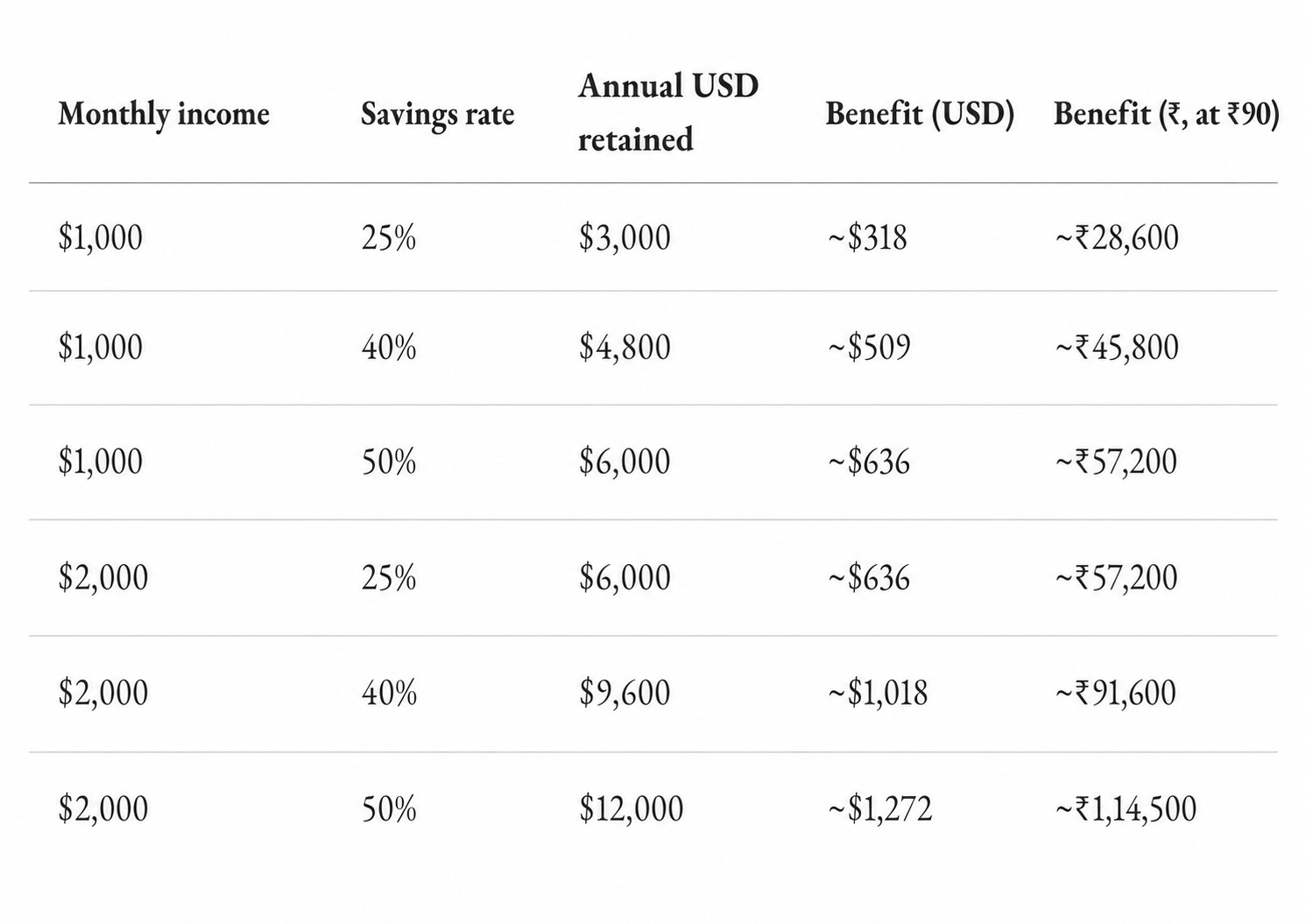
On a monthly savings of 25% on $2,000 of earnings, that could add up to $600 of avoidable loss (10% depreciation avoided on $6,000 of annual savings). Sure, it’s not a life-changing amount. But in a metro Indian city, that avoidable loss could pay a month’s rent for a well-furnished two-bedroom apartment.
If that saved money had been converted into rupees every month, it would have sat in local currency and gradually lost its purchasing power.
The contrast gets starker as the local currency the contractor spends in performs worse against the US dollar. Consider an Argentine worker who was paid in dollars but held the entire money in pesos. The peso lost 25% of its value against the US dollar in the last 12 months.
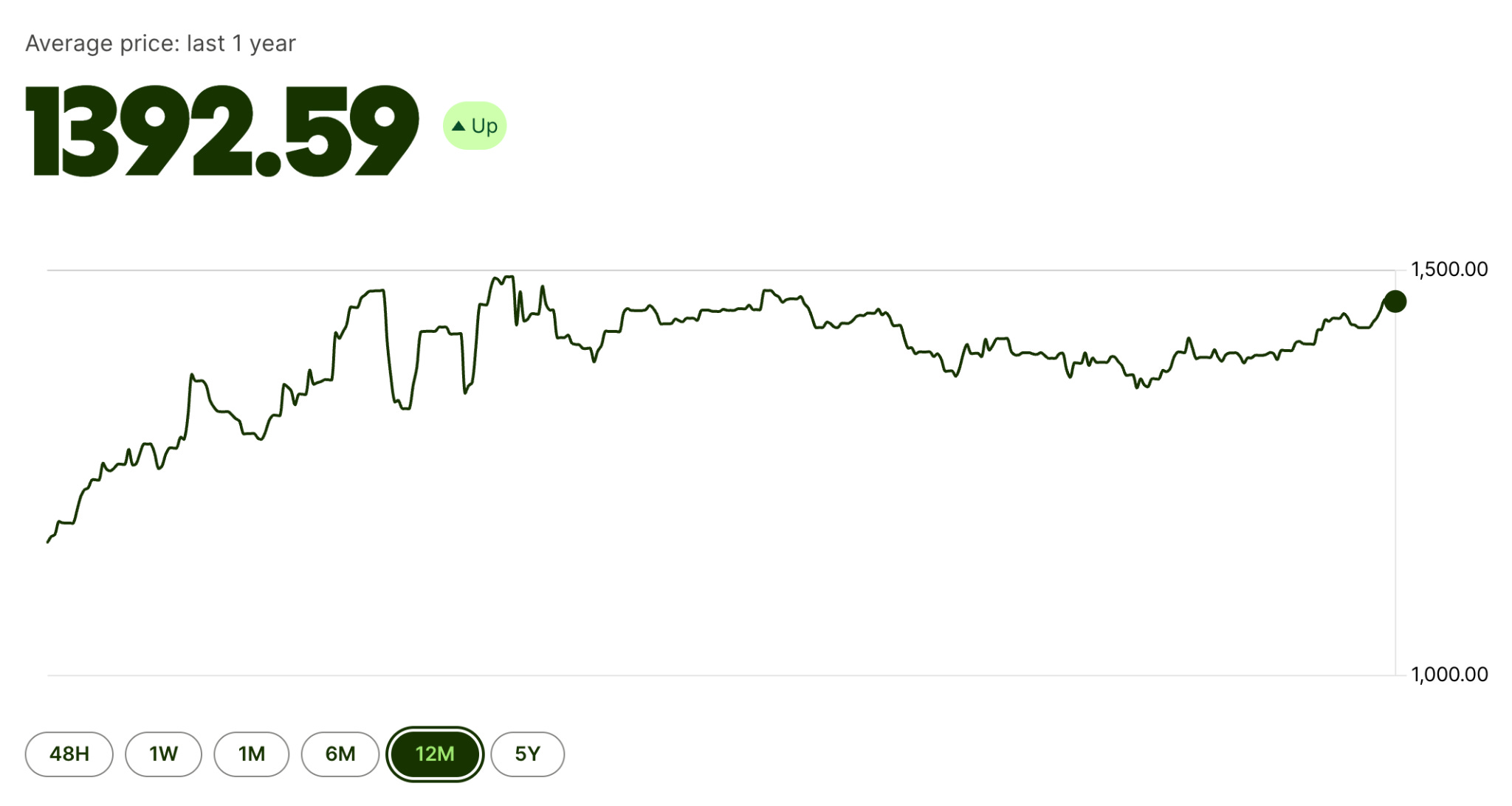
By letting the earnings sit in dollars, the worker could have been a third richer. This is not a random, hypothetical abstraction that I came up with. It’s been the reality for many contract workers in Buenos Aires. About 85% of surveyed Argentinian workers chose to be paid in USD rather than their local currency, Deel’s State of Global Hiring report showed.
But the benefit of getting paid in dollars depends entirely on what the worker does with the money. The dollar advantage only appears when the money sits. The longer it sits, and the more of it that sits, the wider the gap grows.
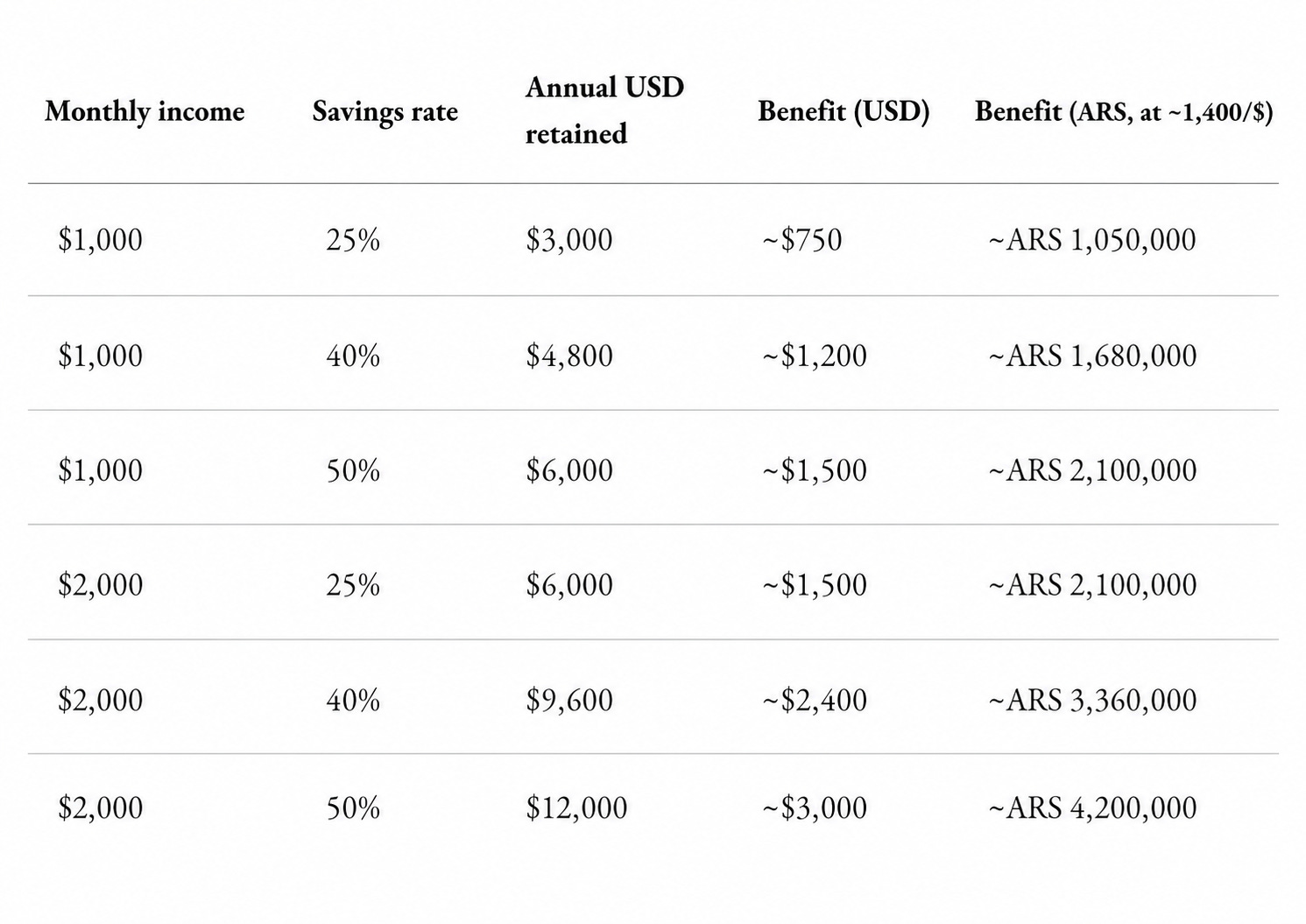
For India, holding dollars could equate to optimising one’s earnings. But for Argentina, it’s more about insuring oneself against the erosion of local currency. The same is true for most struggling economies that face rising inflation and see their currencies devalue against the US dollar.
The Stablecoin Factor
Everything to this point is an argument for dollars. But it isn’t as easy to hold a US dollar in a foreign bank account.
Every bank takes a cut to hand you your own dollars. An inbound international transfer arrives after a flat wire fee, a correspondent bank’s slice, and a conversion spread that most contract workers are unaware of. The global average cost of moving money across a border still sits around ~6.5%. For a contractor billing $2,000 a month, the cross-border fee of moving that money could eat away more than half the currency depreciation cost they could avoid by holding the money in dollars. A stablecoin transfer sidesteps most of it: a couple of dollars in cost, settled in seconds rather than the three-to-five days it takes a wire to clear.
An Indian resident can’t freely keep a balance in dollars. The rules route dollar holdings through specific account types and cap how much you can hold each year; a normal inbound payment is expected to arrive in rupees. The designer who wants to keep three months’ pay in dollars has to comply with these regulations. Struggling economies with devaluing currencies could also restrict their citizens from holding US dollars to avoid hyperinflation and capital flight. Countries like Venezuela, Iran and Afghanistan have all done this in the past.
A set of self-custodial stablecoin accounts has emerged to fill this gap. Platforms like Altitude, built on Squads’ smart-account infrastructure, hold workers’ balances in stablecoins issued by regulated dollar issuers like Circle and Bridge, backed one-to-one by dollar reserves, and store them in a wallet the worker controls with a private key. The platform never assumes custody. The worker holds the dollars on-chain, and no institution stands between them and the decision to keep them in dollars. But self-custody cuts both ways; there is no bank to call if a key is lost, and the balance is not insured the way a bank deposit is.
These accounts let the worker off-ramp just enough to pay rent and utilities, and keep the rest in dollars. It also solves the access problem in places where a dollar account is capped or unavailable. The contract worker doesn’t need the bank’s permission to hold a dollar balance.
This dollar balance does more than just sit there. These accounts integrate the stablecoin balance with yield-generating products like on-chain lending and short-term US Treasuries. This money would have lost value in a local bank account.
That’s not all. These balances can be spent using the card layer built on top of them. Stablecoins move from the worker to the vendor in seconds, regardless of the on-ramp and off-ramp infrastructure each side uses. Multi-currency accounts, an FX engine, payments across 150-plus countries, the savings account, and the debit card all collapse into a single balance that the worker controls.
But I won’t sell this to you like a clean product.
The stablecoin balance is not yet an insured bank deposit. There are emerging versions of tokenised deposits (Read: Defending the Deposit) that could bridge the gap, but they haven’t yet achieved mass adoption. Contract workers still might be unclear about the grey zone in which digital assets and stablecoins operate in their countries. Yet the direction of where this is headed is hard to miss.
The same state of hiring report claimed that contractors in high-inflation markets are increasingly choosing USD or stablecoins over local currencies. In 2025, five of the 10 most common country-currency combinations globally featured USD.
Interestingly, this is not a new behaviour. For most of the last century, everyone wanted to hold the world’s reserve currency. Except that for a majority of that century, doing that was a privilege that didn’t come easy. You needed a foreign account, a broker, a tolerance for paperwork and to part with a bank’s cut. The worker in Istanbul, Buenos Aires, or Mumbai wanted dollars and was told, in various ways, that holding dollars was not for them. Stablecoin payroll inverts that and makes it possible. The dollar now arrives as income, on a rail that doesn’t care where the worker lives, and the act of holding it requires no one’s permission.
You don’t have to look hard to see why this is a big shift
Governments might be tempted to consider this as a leakage and attempt to plug it with their regulatory teeth. But the intent behind what the idea enables is hard to dismiss.
Any infrastructure that moves money cheaply and efficiently is bound to receive its due recognition and validation. The IMF recently told Nigeria not to ban dollar stablecoins, but to manage their risks. It was the same monetary fund that had, for years, maintained a strict stance against stablecoins. This shift in winds shows the mainstream credibility that stablecoins have earned in recent years.
Within the payroll industry, stablecoin infrastructure unbundles the unit of pay, the place it’s stored, the yield it earns, the card it’s spent from, and the border it crosses.
Just what money is supposed to offer: freedom and agility.
That’s it for today. I will be back with the next one.
Until next time, stay curious,
Prathik
Token Dispatch is a daily crypto newsletter handpicked and crafted with love by human bots. If you want to reach out to 170,000+ subscriber community of the Token Dispatch, you can explore the partnership opportunities with us 🙌
📩 Fill out this form to submit your details and book a meeting with us directly.
Disclaimer: This newsletter contains analysis and opinions of the author. Content is for informational purposes only, not financial advice. Trading crypto involves substantial risk - your capital is at risk. Do your own research.