


In January, I wrote that prediction markets are not broken. The problem, I said, was that everyone is lying about what they are.
And lying always has consequences, now or later.
A trader made nearly $1 million since 2024 from dozens of well-timed Polymarket bets that correctly predicted US and Israeli military actions against Iran. The bettor won a staggering 93% of their five-figure wagers about Iran, even though the events they predicted were unannounced military operations. The bets were placed hours before strikes in October 2024, hours before US airstrikes on Iranian nuclear facilities in June 2025, and hours before the joint US-Israeli surprise attack in February that started the current war.
Bubblemaps traced the pattern. The accounts are still anonymous. Some still had open positions when the analysis was published. And it is not even the worst case in the dataset. Israeli prosecutors filed indictments against an IDF reservist and a civilian for allegedly using classified military intelligence to bet on Polymarket. The pair are said to have wagered on the timing of Israel’s strike on Iran during the June 2025 Twelve-Day War. The officer allegedly sent a follow-up message on WhatsApp right before the attack, stating, “It’s starting.”
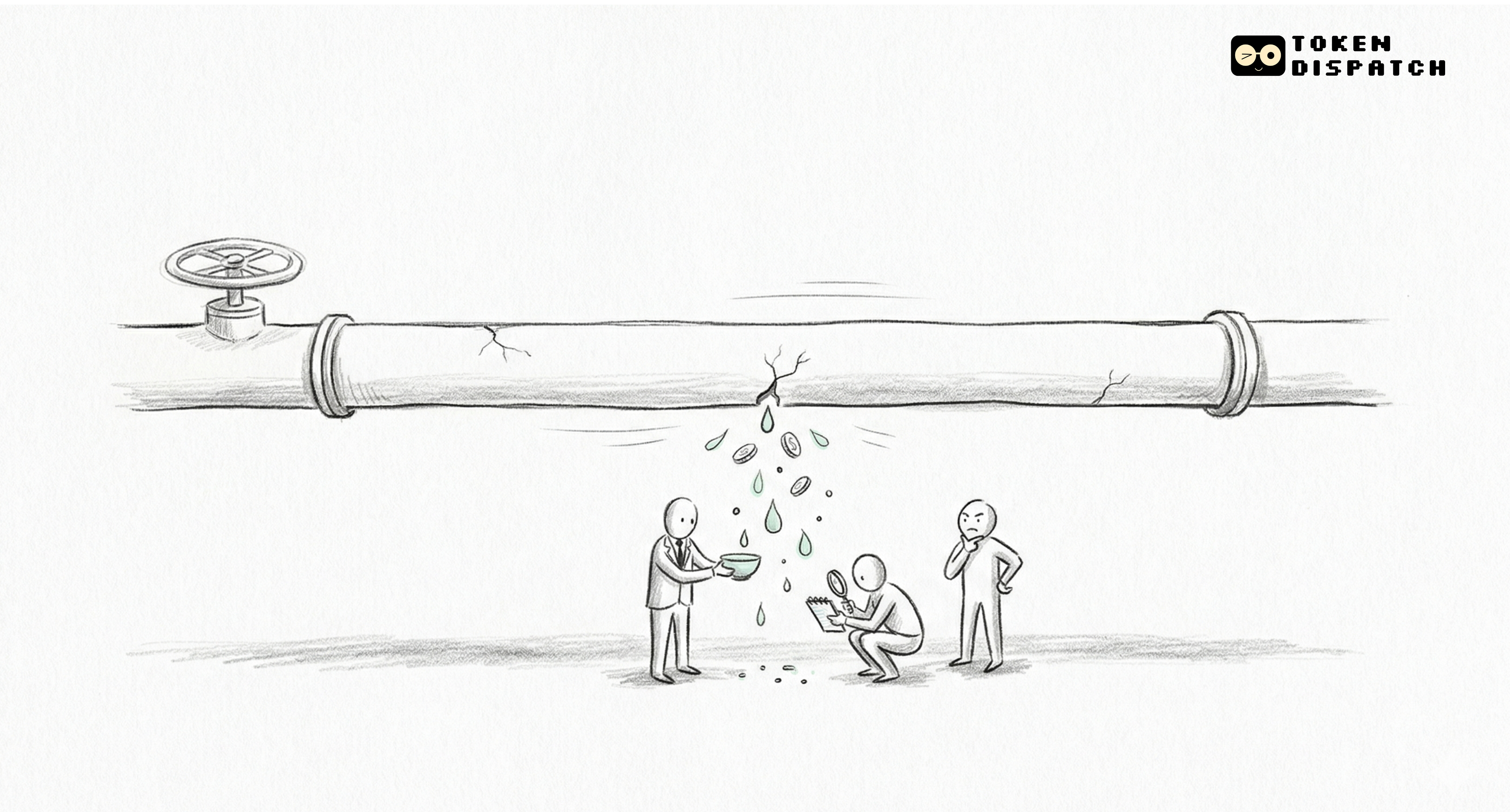
The Maduro trade I wrote about in January was a single account, a single event, a single day. This is a pattern across two years, two countries, and multiple military operations. The argument that prediction markets are a monetisation layer for information asymmetry, is no longer theoretical. Israel arrested people over it.

Velo: Data. News. Trading. All at Once.
I was researching about $TAO last week. My X timeline had 40 posts about it. All of them started appearing much later after the move. I was too late, like always.
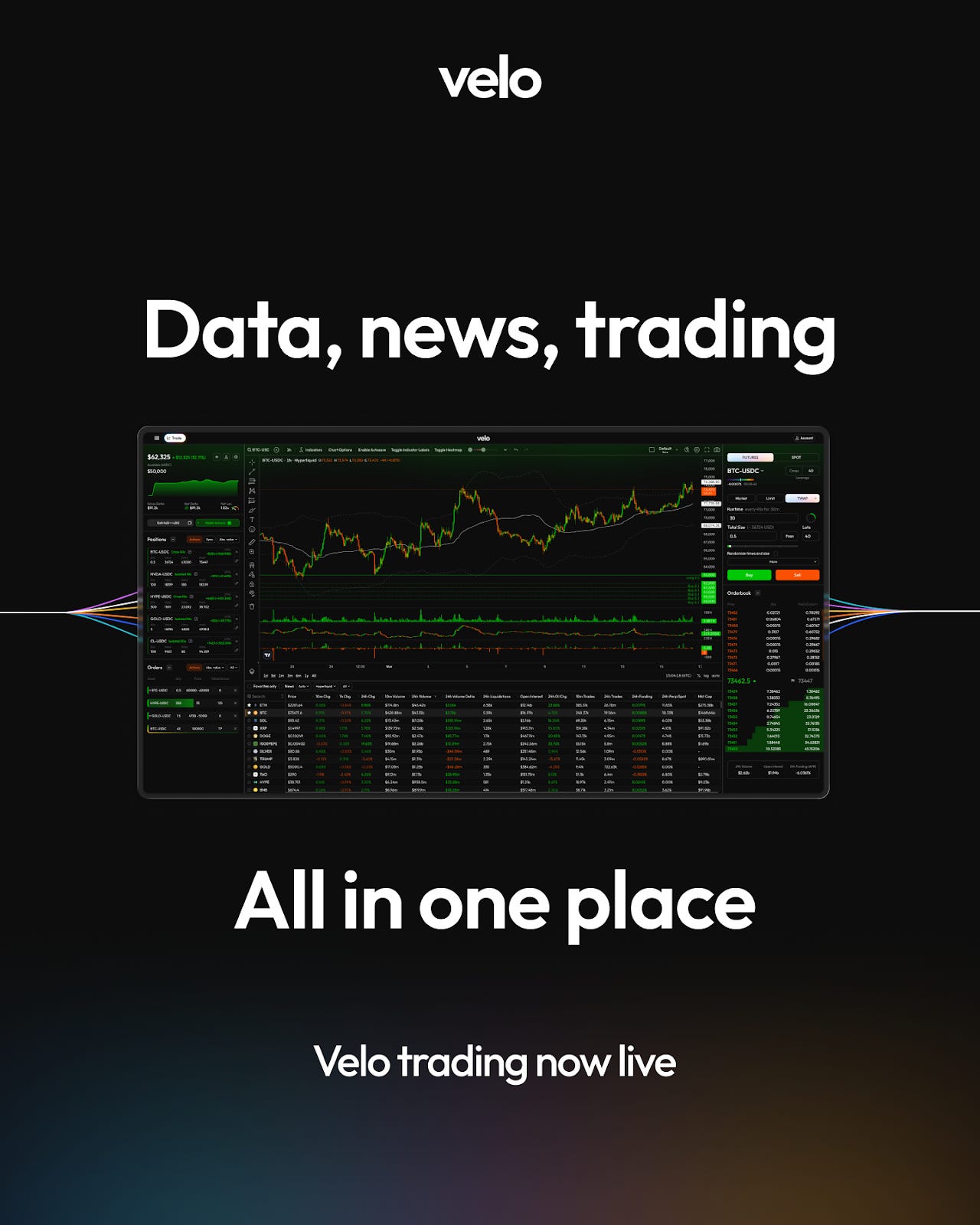
There’s too much noise to filter on X before you can get to signals worth acting up on. Velo is different. It lets you switch between Top Gainers, New Listings, Top Volume, Large Cap, Medium Cap and Small Cap - all with a click. Try it here.
Each click provided a bucket view categorised by returns, an overview of Open Interest and funding rates for various tickers across Binance, OKX, Deribit, Bybit and Hyperliquid.
The charts, data and context, all on one screen. This is all that a trader needs.
Start here 👇🏾
The government that uses it hates it. The US Army published a piece recommending that intelligence analysts use Polymarket and Kalshi data to detect national security threats. The Federal Reserve published a paper saying Kalshi has called every single FOMC rate decision correctly on the day before the meeting, every time, since 2022.
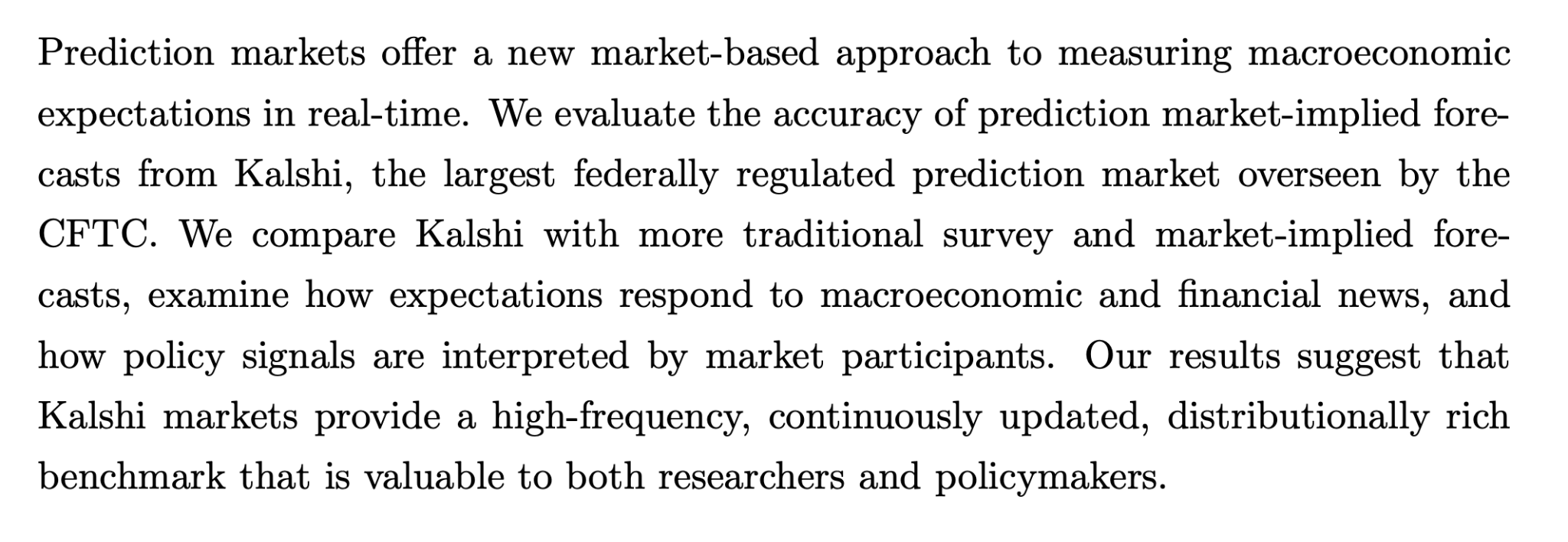
The very product that may be leaking classified military intelligence is also being recommended by the military as a threat detection tool. The platforms that states are prosecuting as illegal gambling are being studied by the Fed as superior forecasting tools.
On one Monday, approximately 15 minutes before President Trump posted about “productive” talks with Iran, stocks and oil futures on CME saw an unusual burst of volume that predicted precisely what happened once Trump made his announcement.
The government is both the victim and the customer. It is the source of the leaks and the consumer of the signal.
Not all of this is the same thing, and that distinction matters. A contract on whether the US strikes Iran is a legitimate financial instrument. Oil companies, airlines, and governments all have real economic exposure to that outcome. The Fed’s FOMC contracts are the same logic. These markets produce useful signals because real money rides on the underlying event for people who are not just gambling. Sports is different. Nobody’s balance sheet depends on who wins the Super Bowl. That market exists because retail volume funds the platform, and the platform calls all of it information infrastructure. The insider trading problem lives specifically in the first category. The casino lobby problem lives in the second. Conflating them is how everyone avoids fixing either.
The people fighting them
There are more than 20 civil lawsuits over Kalshi’s legal status. Arizona filed criminal charges as the first criminal prosecution ever brought against a CFTC-registered prediction market operator, 20 misdemeanor counts, including illegal sports betting and election wagering. Nevada won a temporary restraining order forcing Kalshi to remove sports, entertainment, and election contracts from the state. Washington sued Friday. And the legal map is expanding weekly.
The public framing is consumer protection. Utah’s governor said prediction markets are “destroying families.” Washington’s attorney general said Kalshi targets college students and promotes addiction.
But look at who is actually doing the lobbying. A casino industry group called Gambling Is Not Investing hired former Trump budget director Mick Mulvaney to lobby against prediction markets. DraftKings stock is down 50%. FanDuel’s parent is on its worst performance streak in years. Kalshi is being downloaded four times as much as either.
This isn’t about consumer protection, it’s a market share fight. The Nevada Resort Association told courts that prediction markets are an existential threat to the gaming industry. DraftKings and FanDuel spent years building sports betting operations in states that carved out regulated gambling markets. Kalshi walked in under federal CFTC jurisdiction, bypassed every state licensing requirement, and started eating their customers. The lawsuits are competitive threats wearing consumer protection as a costume.
Kalshi and Polymarket companies spent $14 million on lobbying in 2025. The casino industry has Mick Mulvaney. The prediction market industry has the White House.
Meanwhile, Kalshi was also fighting a different kind of war over what a word means.
Kalshi published a seven-page document trying to define what counts as a word. The rules include gems like “plurals count if the given word is singular, but singulars don’t count if the given word is plural” and mispronunciations count if “minor” but not if “severe”. Nobody defines who decides. Linguists called the rules arbitrary and traders called outcomes that resolve on technicalities “rulescucks.”
Both problems come down to the same thing. Someone has to decide what counts. And when large sums are involved, that decision is never neutral. Settlement requires someone to decide what counts. And when large sums are involved, that decision is always political.
Who gets to say what is gambling
The broader litigation and enforcement fight now spans roughly 20 federal and state actions across at least 14 states. Courts have split sharply on the core federal preemption question: a Tennessee federal court granted Kalshi a preliminary injunction in February 2026, while a Massachusetts state court issued an injunction the same month calling Kalshi’s preemption theory “overly broad.”
Kalshi’s argument is that the CFTC has exclusive federal jurisdiction over derivatives and event contracts. States cannot regulate a federally regulated exchange. CFTC chairman Michael Selig called Arizona’s criminal prosecution “entirely inappropriate” and a jurisdictional dispute. The federal government filed an amicus brief in the Ninth Circuit in February arguing that federal law pre-empts state gambling enforcement.
Now the states’ argument is that gambling regulation has been a state power since before the Constitution. A federal agency labeling something a “futures contract” does not transform it into something other than sports betting. Nevada has regulated gambling for decades, and Arizona has a constitutional ban on election wagering. No federal agency can override those laws through administrative classification.
Legal experts believe this will eventually reach the Supreme Court. Multiple attorneys tracking the cases have called it inevitable. All I see here is the federal government asserting that the administrative state can reclassify gambling as derivatives trading and thereby strip states of a regulatory power they have held for generations. The prediction market company is the proxy in a constitutional fight about federalism.
The $35 million bet that none of this matters
The CEOs of Kalshi and Polymarket are arch-rivals. They are also investing in the same $35 million VC fund focused on prediction markets. 5c(c) Capital, named after the clause in the Commodity Exchange Act that governs event contracts, is being raised by two former Kalshi employees and backed by Marc Andreessen through his Moneta Luna fund, Ribbit Capital’s Micky Malka, and Multicoin Capital’s Kyle Samani.
The fund is investing in market makers, index designers, data infrastructure, and compliance tools. Which means the capital is going into the layer that survives a court ruling, a state ban, or a change in administration.
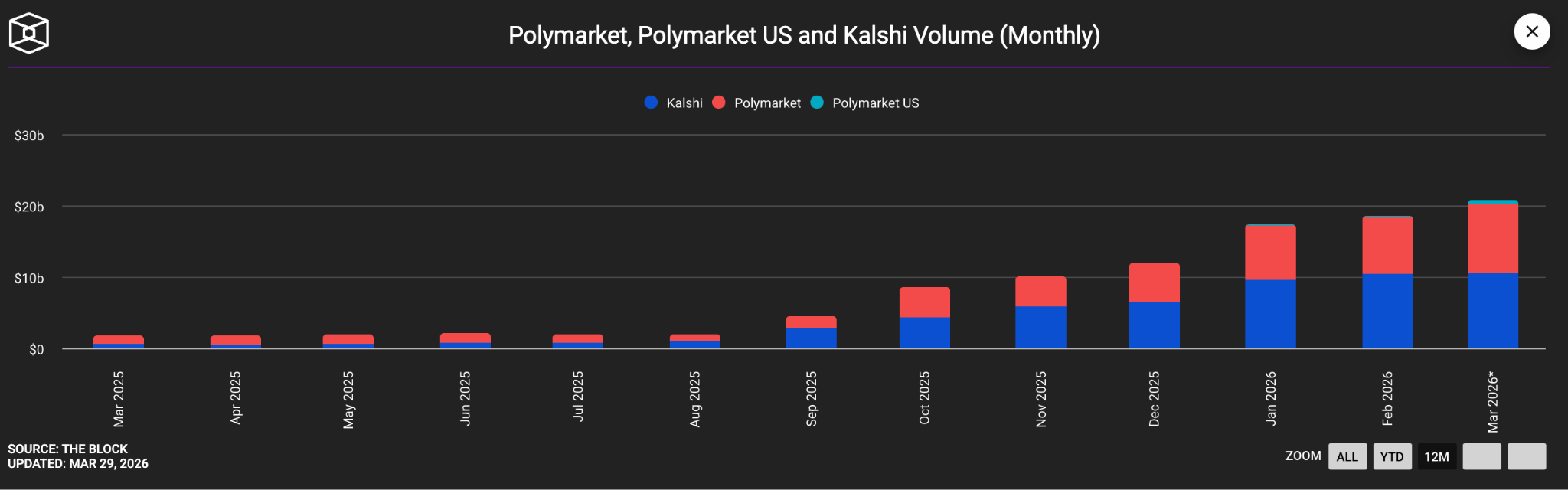
Kalshi reached a valuation of $22 billion in the first quarter of 2026. Polymarket hit $20 billion after securing investment from the Intercontinental Exchange. They have started looking like financial infrastructure companies that have decided, as crypto did in 2015 and 2018 and 2022, that building through the legal uncertainty is better than waiting for it to resolve.
If you are asking me what I see for the future, Prediction markets will not be killed. They will be restricted in some states, grudgingly permitted in others, eventually embedded in financial infrastructure. The insider trading problem will not be solved by self-regulation. It will be solved when someone actually goes to prison in the US.
They are settlement systems that happen to produce accurate data as a byproduct, when insiders are not front-running the outcome. Still not truth machines. The data is useful, but the structure is broken.
The rulebook for what prediction markets are allowed to be is still being written. In courtrooms in Nevada and Arizona and Washington. In a Senate that has six competing bills and no consensus. In a White House whose son advises one of the companies being sued.
I checked and Polymarket doesn’t have a market for that. Probably because nobody wants to know the answer?

Token Dispatch is a daily crypto newsletter handpicked and crafted with love by human bots. If you want to reach out to 200,000+ subscriber community of the Token Dispatch, you can explore the partnership opportunities with us 🙌
📩 Fill out this form to submit your details and book a meeting with us directly.
Disclaimer: This newsletter contains analysis and opinions of the author. Content is for informational purposes only, not financial advice. Trading crypto involves substantial risk - your capital is at risk. Do your own research.