


I have been doing a small experiment the last few Mondays: slowing down with a book instead of chasing whatever the timeline is yelling about.
In the age of shorts and Reels and “explain this in 60 seconds,” spending three weeks on the same book feels slightly illegal, so obviously I wanted to try it.
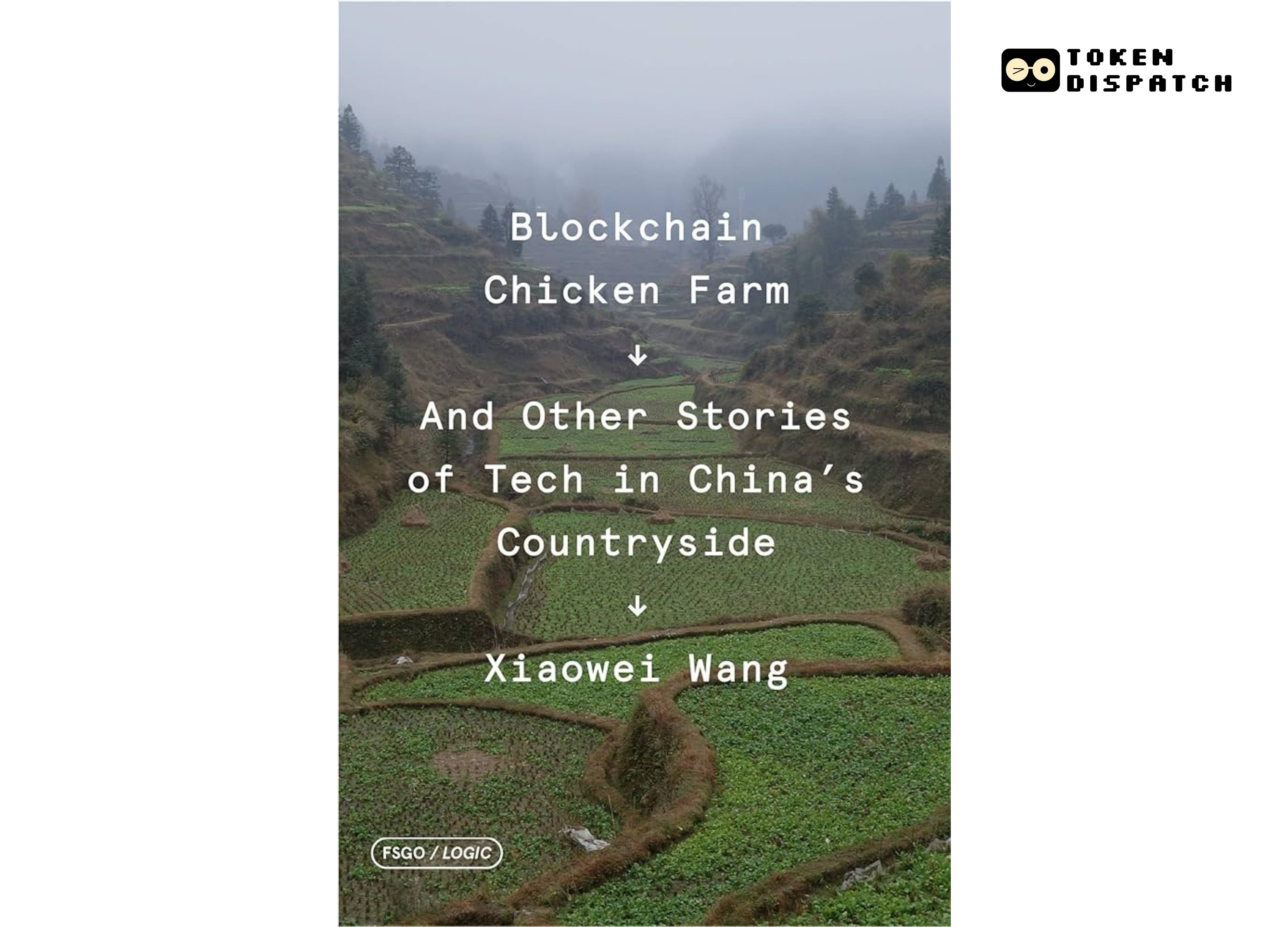
The book is Blockchain Chicken Farm by Xiaowei Wang. I’ve been treating it like a long coffee with you:
Part 1 was Jiang and his ankle-monitor chickens and what happens when “trustless” tech shows up in a poor village.
Part 2 was AI pigs, ET Agricultural Brain and optimisation as a way of life.
This is part 3, where we zoom out from individual animals to the stack around them – platforms, states, rails, and all the fictions people end up living inside.
If you’ve been liking these book readings, reply to this email and tell me. If you think something needs tweaking – too long, too nerdy, not nerdy enough – also tell me. I’m still figuring out what this book corner wants to be, and it helps to know what actually clicks for you.

Back to the farm. By the time I finished the chapters on chickens and pigs, I thought I had a handle on what Blockchain Chicken Farm was doing. Tech meets countryside. Sensors on animals. AI in barns. Crypto as a paranoia infrastructure. That felt like the shape of the book.
Then the rest of it quietly zooms the camera out, and you realise the chickens and pigs were just the tutorial level.
You move from farms into factories, Taobao villages, Halloween supply chains, pearl farms, and data centres. The through-line is not “rural China uses tech now”. It is much sharper.
It is about who gets pulled into whose future and who gets left living inside someone else’s roadmap.
At that point, it stops feeling like a book about China and starts feeling like a book about how all technology lands on people who did not ask for it.
There is a line in the book that feels like the key to everything. Wang is sitting in a rural office under an LED sign that reads “COMPUTER ETERNITY TIME,” with red numbers counting fake progress. They write: Who must agree to live in fictions that someone else wrote?
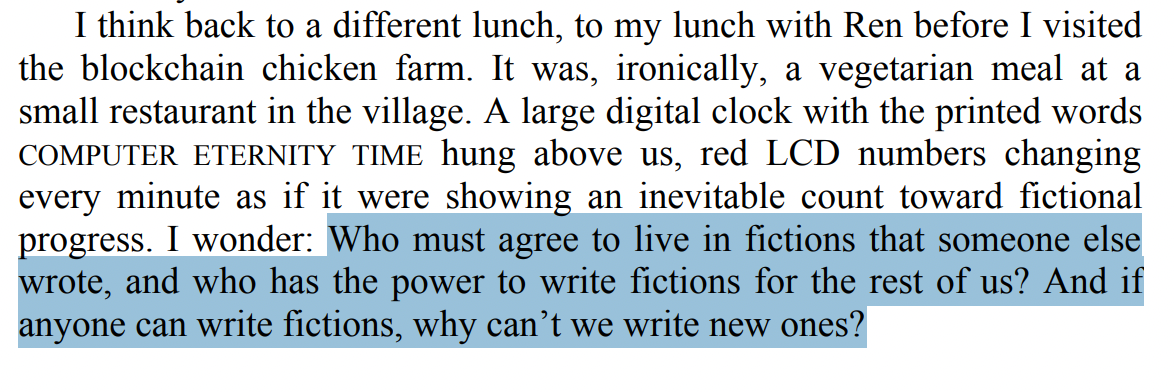
The rest of the book is just that question, pointed at different stacks.
In Guizhou, the fiction is that blockchain will empower poor farmers by “removing middlemen.” In practice, Farmer Jiang’s business hangs on hardware he does not own, software he cannot read, and a Shanghai company that can simply stop ordering chickens. The code, equipment and platform “ultimately remains Lianmo Technology’s.” The blockchain did not kill the middleman. It gave him better UX and a more confusing job title.
In Taobao villages, the fiction is that the internet turns everyone into a global entrepreneur. On the ground you see families stitching Halloween costumes for American kids, assembling LED trinkets, packing fake flowers. Their storefront is a rectangle inside Alibaba’s interface. The “global customer base” looks a lot like a stream of orders with deadlines and ratings attached.
In the AI pig chapter, the fiction is that enough sensors and enough cloud compute will finally make agriculture rational. You get ET Agricultural Brain, dashboards that decide when to feed, when to cool, when to ship. Farmers become extensions of the model, there to carry phones and keep barns inside acceptable ranges.
All of that labour is very real. It is the reason half the things on my desk exist. None of it shows up in the way Western tech tells its own story.
The book keeps taking these neat tech stories and dragging them into real geography until you can see the seams. It never lets you stay in pitch-deck land for more than a paragraph.
That is why it landed so hard for me. I spend a lot of time inside crypto fictions. “Banking the unbanked.” “Real world assets.” “Community owned rails.” Wang is effectively asking: ok, but who exactly is going to live inside those slogans, and on what terms.
We talk about “permissionless access” and “borderless markets”. Reading about these villages, it is hard not to see a different pattern. There is access, yes. There are markets, yes. The permissions sit very firmly with the platform.
Your shop can be “global” as long as you rank well in the search box, accept the right payment methods and obey the latest fraud filters. Miss a policy update or an arbitrary KPI and the borderless market quietly closes its borders to you. The code of the platform becomes a kind of soft law that nobody voted for, but everyone has to follow.
Crypto has its own version of this. We call it permissionless, but listings are still political, RPCs still get rate limited, front-ends still decide which tokens are visible and which ones live behind a contract address you have to paste in manually. The chain might not care who you are. The interfaces absolutely do.
One thread that runs through the later chapters is this idea of “smartness” as a national project. Smart agriculture, smart villages, smart factories. Sensors, data, cloud services. The promise is always the same: If you measure enough things for long enough, you can finally tame volatility.
You see it in the pearl farms that track growth and water conditions through dashboards. You see it in logistics hubs where parcels move like particles in a simulation, nudged by algorithms that optimise routes and warehouse layouts. You see it in local governments that want to prove they are modern by installing the right platforms and calling whatever results “innovation”.
There is a certain comfort in that vision, especially if you are the person presenting the slide deck. The world is messy and unpredictable, but look, here is a dashboard that turns all that mess into clean lines and numbers. Fish, packages, workers, all flow through the same cheerful UI.
What the book keeps forcing you to notice is what gets flattened in the process. Fishermen turn into “supply nodes”. Villagers turn into “labour pools”. A town becomes “a logistics hub with a comparative advantage in X category”.
If you work in crypto or fintech, that flattening will feel familiar. The DeFi version is when people become “flow”, “retail”, “smart money”, “whales”. The exchange version is when jurisdictions become “favourable”, “unfavourable” or “emerging” depending on how easy it is to list products there.
Wang is not writing about Coinbase or Uniswap. They are writing about pallets and parcels. The mechanism is the same. Once you have a system that can only see certain types of value, anything that does not fit that lens looks like inefficiency.
I do not think anyone sits down and decides to erase people on purpose. It is just what happens when you build systems around what is easy to count. Volumes and flows are easy to count. Friction, exhaustion, precarity, having to sew Halloween costumes at 2 a.m. to hit a shipping deadline, those do not show up on the dashboard. So the system learns to optimise for what it can see, and to treat everything else as noise.
In crypto we do a softer version of the same thing. If the metric moves, we call it “adoption”. If the chart looks healthy, we assume the humans underneath are fine. But metrics are agnostic. They will happily go up while burning out the exact people they pretend to empower. That is why this matters. If you only look at the ledger or the analytics screen, you will design more and more clever ways to intensify the thing you already measure, and never notice what had to be flattened to make the graph so smooth.
Something else shifted for me in these chapters. All through the book you meet people who are clearly skilled and thoughtful but are treated by the system as interchangeable.
The pearl farmer who understands tides and currents in a way no dashboard does. The factory worker who has internalised an entire workflow in their hands. The village entrepreneur who navigates relationships with suppliers, local officials, and platforms.
In a lot of Western tech writing, these characters would be “upskilled” or “empowered” or folded into some narrative about entrepreneurship. Wang refuses to smooth them out. They show you people who are sharp and creative yet still structurally constrained by the infrastructure they rely on.
It is not the romantic story of “local knowledge versus big tech”. It is more awkward. Local knowledge and big tech are already entwined. People are genuinely using these systems to build better lives. The same systems also quietly cap what is possible and decide where surplus flows.
That awkwardness is the part that feels most honest. We like clean villains and clean heroes. What we actually have is a global stack where everyone is both benefiting and being used, depending on the direction you look from.
Somewhere around there, the book circles back to blockchain, and by then, it reads very differently.
When I think back to some of the things I wrote last year, it is the same set of questions hiding under different headlines. In El Salvador’s Bitcoin tightrope, a whole country is asked to live inside a Bitcoin story that mostly serves tourism, geopolitics and a handful of balance sheets, while ordinary Salvadorans are still getting paid and paying rent in dollars. A national government pushes a new payments stack from the top down. Three years later, Congress quietly rewrites the Bitcoin Law so that nobody is actually required to accept it anymore, mostly to keep the IMF happy. A 2024 survey by the Central American University found that 92% of Salvadorans did not use Bitcoin for transactions at all, which tells you how much of the economy is still running on plain old US dollars.
On the slide, it is “banking the unbanked”. On the ground, it is a new set of rails most people treat as a one-time bonus and then ignore.
In Nigeria’s crypto calculus, citizens use stablecoins to escape a broken banking system, while the state keeps toggling between bans and regulation to make sure it does not lose control of capital flows. In the Korean model, the government pushes won-denominated stablecoins and domestic rails so that Korean wealth does not ride entirely on US infrastructure.
Each of these is presented as innovation, as progress, as “the future of money”. Underneath, they are all variations of the same question Wang is asking in rural China.
You start instinctively asking:
Who is writing this fiction?
Who has to live inside it?
And who gets to opt out if it does not work for them?
On a slide, blockchain removes intermediaries. In Jiang’s reality, it replaced one chain of middlemen with another, this time with better branding and harder exit options. On a panel, tokenisation unlocks global liquidity for real-world assets. In the book, “global liquidity” looks like villagers racing to fulfil orders with deadlines and price points they did not set.
That does not make the technology useless. It just means that if you are going to stand up and say “this stack empowers people”, you should be prepared to answer a few unromantic questions about exactly which people and under what terms.
Since this is a book note, I should be honest about the gaps too.
One thing Blockchain Chicken Farm mostly shows you is people on the receiving end of infrastructure. Farmers, workers, small entrepreneurs wired into systems they did not design. You see very little of bottom-up experiments where communities use similar tools to change rules in their favour.
Maybe that is another book. But it makes me think of some of the stories we tell in crypto that sit closer to that side: DIY chains for niche communities, mutual-aid experiments with stablecoins, onchain co-ops where creators actually share upside instead of renting space from platforms. Those are messy and far from perfect, but they are at least attempts to write fictions closer to where the impact lands.
If I had to pick one thing that stayed with me after finishing the book, it is this:
We are living through a period where many people experience “technology” not as a choice they made, but as gravity.
For the rural Chinese communities Wang writes about, platforms arrive as policy and infrastructure. Cloud tools arrive as the only way to participate in certain markets. Blockchain arrives as a finished product, bundled with local government goals and corporate strategy.
The situation is not so different for a lot of people in crypto, whether they realise it or not. If you want to trade on-chain, you end up living inside MetaMask or some other wallet. If you want liquidity, you live inside the big centralised exchanges or the few dominant DEXs. If you want airdrops or yield, you play by the rules and rituals set by protocol teams and their investors.
We tell ourselves this is all voluntary. To some extent, it is. But once enough of your economic life routes through these systems, how voluntary does it really feel?
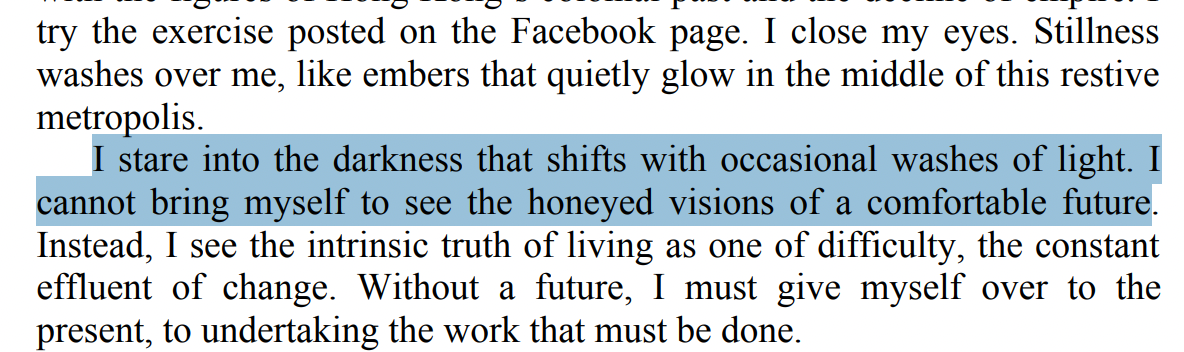
That is the lens through which I am explaining Blockchain Chicken Farm. Less “look, chickens on the blockchain, use case” and more “when we build infrastructure, whose gravity are we reinforcing”
A ledger can track a chicken’s steps, a pig’s growth, and a factory’s output. It can do that better than any paper notebook. It still does not know the value of an orange that a farmer hands you because they trust their own soil more than any QR code.
Maybe the most useful thing this book did for me is that it made “use case” feel like an incomplete question.
The fuller version is: use case for whom, on whose terms, and what gets quietly traded away in the process.
That is where I am going to leave this little read-along.
Tomorrow, we go back to charts and companies and new narratives. But I think Jiang’s chickens and Wang’s villages are going to sit in the back of my head for a while, tapping gently on every slide that says “real-world adoption” and asking me to be a little more specific.

Token Dispatch is a daily crypto newsletter handpicked and crafted with love by human bots. If you want to reach out to 200,000+ subscriber community of the Token Dispatch, you can explore the partnership opportunities with us 🙌
📩 Fill out this form to submit your details and book a meeting with us directly.
Disclaimer: This newsletter contains analysis and opinions of the author. Content is for informational purposes only, not financial advice. Trading crypto involves substantial risk - your capital is at risk. Do your own research.
Been enjoying following your review of this book, you have a refreshing perspective in the crypto world.
"I do not think anyone sits down and decides to erase people on purpose. It is just what happens when you build systems around what is easy to count"
This is basically the premise of Seeing Like a State by James C. Scott which I think you'd like. A lot of what you talked about is reinforced there with historical examples of how setting up top-down, simplified, schematic systems ignores the complex, messy reality and local knowledge of the people they aim to help and arguably makes things worse.