


The final part. Part 1 was Netscape and the browser moment. Part 2 was the gold rush, the sock puppets, and the crash. Today: what got built in the wreckage.
Happy Monday.
Some of us expect innovators to be the loudest in the room. Not always true. They are often tucked away in a library or a garage, obsessing over a problem that nobody else even sees yet. Think of Marc Andreessen in a computer lab, Jeff Bezos in a rented house, or Pierre Omidyar building eBay as a side project.
When the hype dies down and the “nuclear winter” of a market crash hits, all the people looking for a quick buck disappear. It clears out the noise and leaves only the true builders behind, the ones who were going to do the work regardless of whether anyone was watching.
This is the part of the book I have been waiting to write. Not the crash itself, but what survived it.

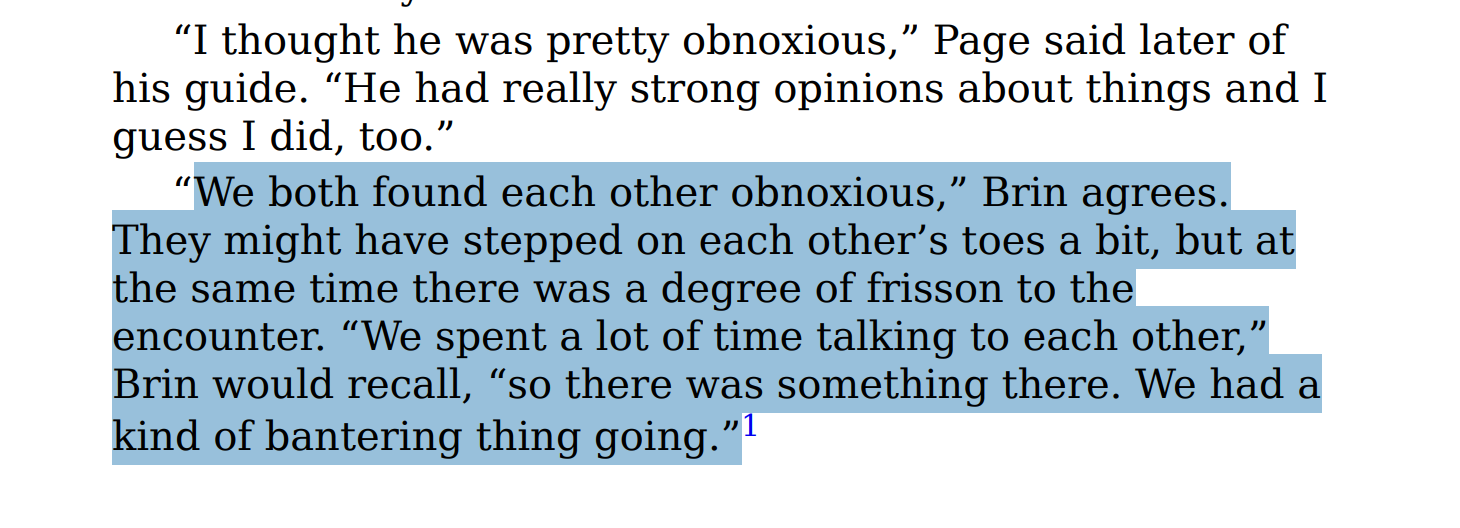
Larry Page and Sergey Brin first met in the summer of 1995. They immediately disliked each other.
“I thought he was pretty obnoxious,” Page said of Brin. “He had really strong opinions about things.” Brin, for his part: “We both found each other obnoxious.”
They ended up sharing an office at Stanford. Room 360 of the William Gates Computer Science Building, named after the same Bill Gates who had just sent the Internet Tidal Wave memo to his entire company. Page and Brin were working two floors up from the man who had spent years missing the internet.
Page’s insight was that the web is built on links. Nobody had ever studied what those links actually meant. A link from one page to another is a vote. The more votes a page gets from credible sources, the more authoritative it is. This is how academic citations work. The most-cited papers are the most important. Page figured the same logic should work on the web. He called the project BackRub. He and Brin turned it into a search engine. They named it Google.
When they tried to sell the technology, nobody wanted it. Excite passed. Yahoo passed. AltaVista was not interested. Page offered it to Excite for $1.6 million and was turned down. The search companies had stopped caring about search. They had become portals, trying to keep users inside their walled gardens. “They did have horoscopes, though,” said Page.
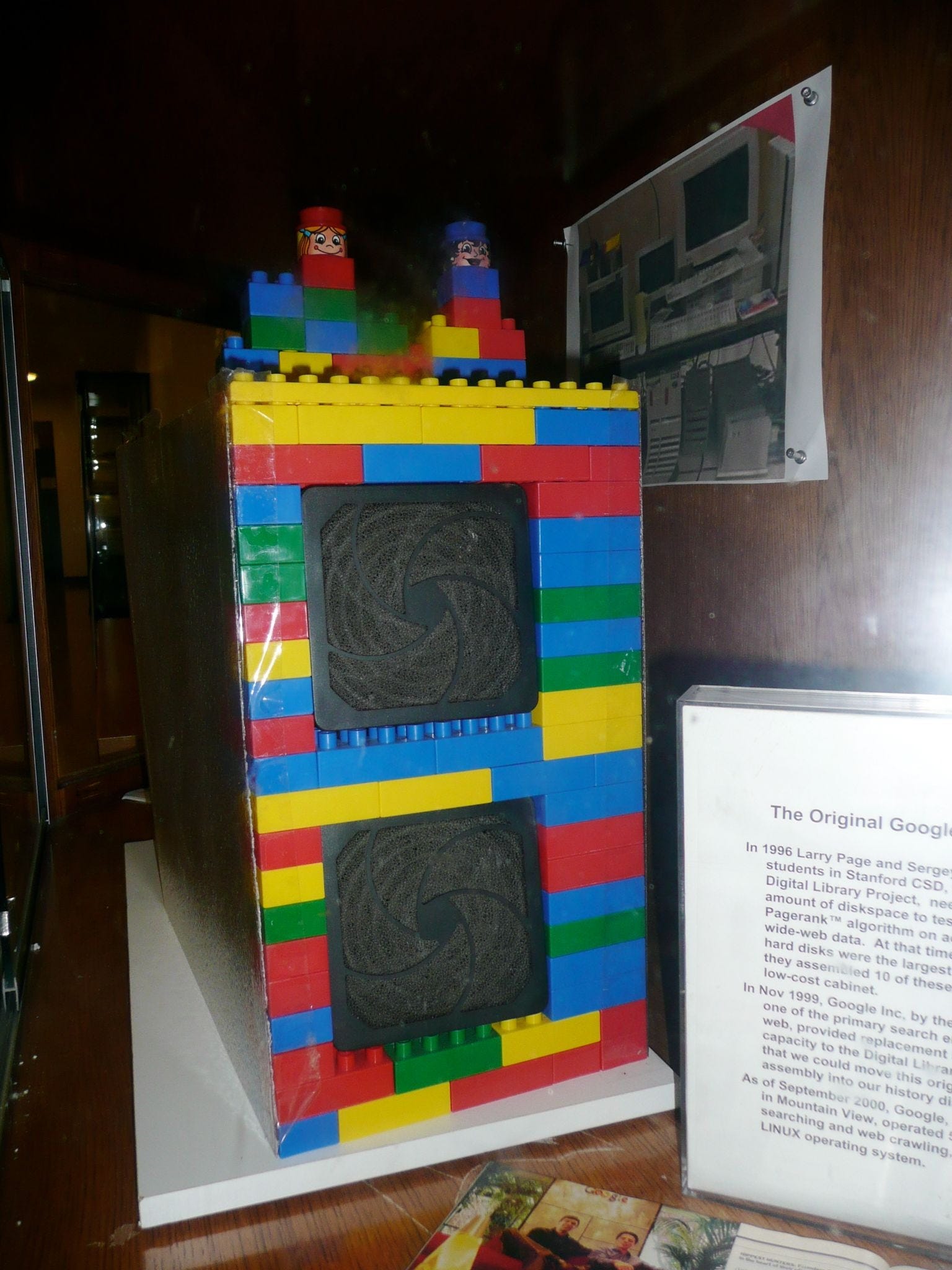
So Page and Brin built the company themselves. A first cheque of $100,000, written on the spot at a colleague’s house, sat in Page’s dorm room for weeks because Google Inc. had not yet been incorporated. They bought hardware off the shelf at a Silicon Valley electronics store and strung it together. They used Linux, not Microsoft. They hired no marketing people. They spent nothing on advertising.
By 1999, Google’s usage was growing 50% a month. Still no revenue or ads in there. It was a product that worked so much better than everything else that people could not stop telling each other about it. The New Yorker called it “the default search engine of the digital in-crowd.” Time Digital said it was “to its competitors as a laser is to a blunt stick.” Quality really is its own distribution. The internet routes around everything except the thing that works.
At the same time Google was getting better in the background, a nineteen-year-old college student named Shawn Fanning was watching his roommates struggle to find and trade MP3 files. The process was a mess—scattered FTP sites, Usenet newsgroups, no central place to search. He started coding a program that would let people search each other's hard drives directly and swap music files peer-to-peer. He named it after his handle in a hacker forum, Napster.
Napster launched in June 1999. By 2001, it had 80 million registered users. The music industry sued it into bankruptcy in 2002.
Napster did win. It just didn’t get to collect the winnings. That’s what McCullough argues, and I think he is right.
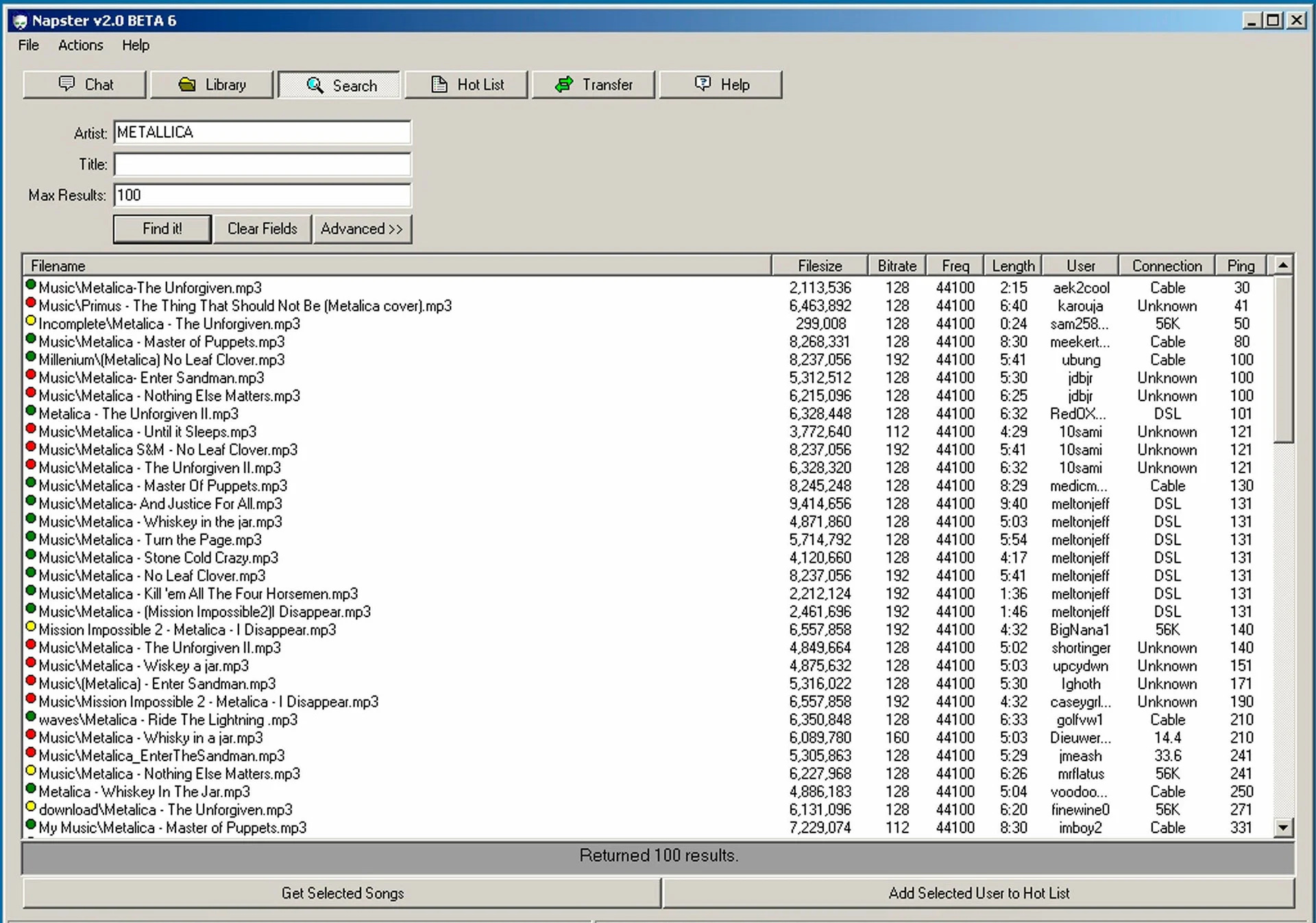
Napster proved that people wanted infinite selection and instant gratification, and once they had it, they were never going back. The record companies won the lawsuit and lost the argument. They killed Napster and got Gnutella, LimeWire, BitTorrent. Each successor was harder to kill, more decentralised, more legally untouchable. The industry spent the next decade suing its own customers and watching revenues collapse from $21 billion to $7 billion.
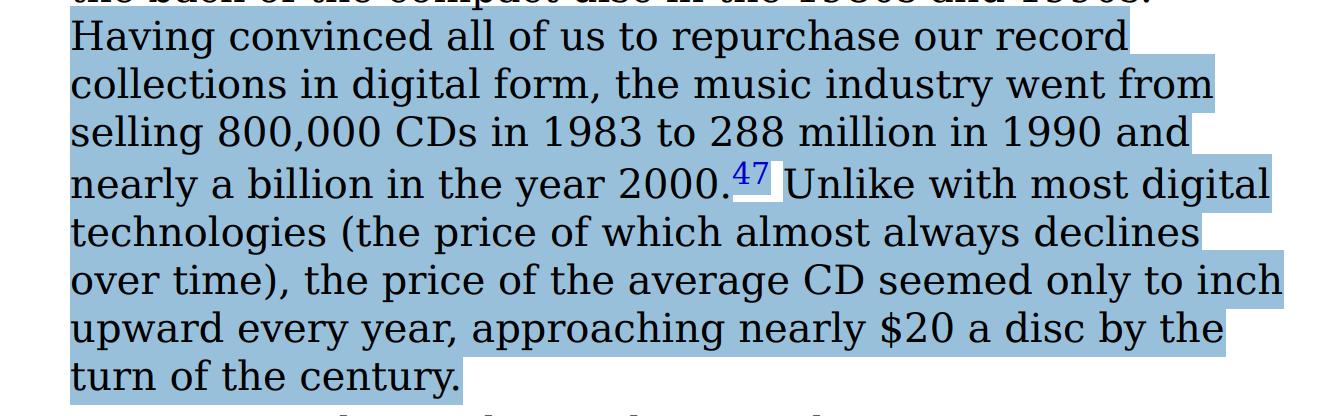
Then Steve Jobs offered them a deal they could barely bring themselves to accept. 99 cents a song, any song, right now, legally. iTunes. He got all five major labels to sign. The store sold a million songs in its first six days. Jobs had built something easier than piracy. It was the first legal digital music marketplace that actually made sense to people.
Now think about crypto. Every protocol that got shut down by a regulator before it could prove itself. Every mixer that got sanctioned. Every DEX that got killed. The music industry thought if they destroyed Napster, the behaviour would stop. It didn’t. People just moved to the next thing and the next thing until someone finally built the legal version. That’s iTunes. Crypto is still waiting for whoever builds that. The thing that makes it easier to use than to avoid.
The nuclear winter ended around 2003.
Users had never left nor had they dipped. The infrastructure built during the bubble, 80 million miles of fibre optic cable laid by telecom companies that subsequently went bankrupt, was sitting there mostly unused. By 2004, the cost of bandwidth had fallen by more than 90%. Starting a web company now costs a fraction of what it did in 1999. The tools were free, the servers were cheap, and the talent was available.
Web 2.0 emerged, and with that, the internet stopped being something you consumed and became something you made. Wikipedia. Blogs. Flickr. Digg, built by one person for $10,000, which, within a year, had more daily traffic than the New York Times. YouTube was started by three former PayPal employees who wondered why you couldn’t upload a video as easily as a photo.
And underneath all of it, Google had figured out how to make money. AdWords. Charge advertisers only when someone clicks. Google’s revenue went from zero to $1.5 billion in three years, then $6 billion, then $21 billion. The internet had found its business model, and it was attention.
The last two chapters of McCullough’s book are about Facebook and the iPhone. Together, they finish the argument he has been making since page one.
Mark Zuckerberg was 11 years old when Netscape Went Public. He grew up on AIM and Napster. By the time he built Thefacebook in his Harvard dorm room in 2004, the domain was registered for $35 and hosting at $85 a month.
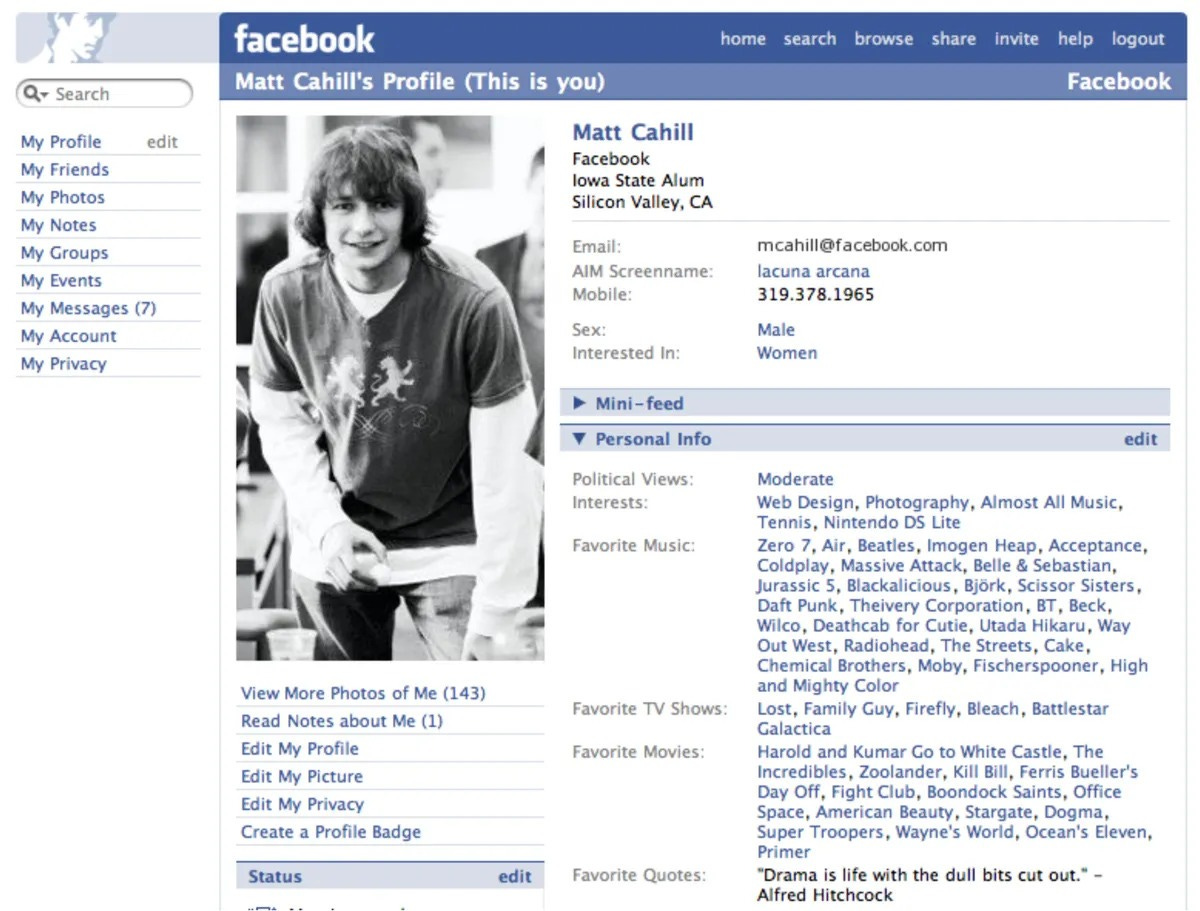
Four days after launch, 650 Harvard students had registered. By the end of the month, three-quarters of the student body were on it every day. Within a year, a million users. Within two, one of the fastest-growing websites in the world.
Zuckerberg understood that the internet had been missing something from the very beginning: identity. AOL chat rooms, Napster, early blogs, you were anonymous. You could be anyone. Thefacebook requires your real name, your real school, and your real social circle. It mapped your offline life onto the internet accurately enough that it became an extension of that life, not an escape from it. That one decision separated it from everything that came before.
In crypto, identity is still unsolved. Wallets are pseudonymous. DeFi is permissionless. The people who understand why that matters will tell you it’s the whole point. But it is also why crypto has not crossed over to the billion people who don’t have a particular reason to distrust banks or governments. The internet didn’t go mainstream until it had a real identity. Crypto will either need to find its version of that, or find a different path to trust.
Then, on January 9, 2007, Steve Jobs walked onto a stage and said he was announcing three things: a widescreen iPod with touch controls, a revolutionary mobile phone, and a breakthrough internet communicator. He paused. “These are not three separate devices. This is one device.”
The audience took a few seconds to understand what he was saying. Then they lost their minds.
The iPhone did for the internet what Netscape did for the web. It took something people were using on desks and put it in their pockets. Portable, personal, always on. Within three years, more people accessed the internet on phones than on computers. The web era was over, and the mobile era had begun.
By the time McCullough closes the book in 2007, you already know where he is going.
The web existed before Netscape. Search existed before Google. Digital music existed before iTunes. Social networks existed before Facebook. The smartphone existed before the iPhone. Technology was never holding things back.
I cover crypto. I have covered it through the euphoria and through the rubble. And the thing I keep coming back to while reading this book is that the people who were on Mosaic in 1993 felt exactly the way the people who found DeFi in 2019 did. Like they had seen something that the rest of the world had not caught up to yet. Most of them were right. They were just early.
Being early is its own kind of loneliness. But in this story, it was always the early people who were right.
That’s all three parts of this book. Next Monday, something completely different. Three weeks of internet history is enough for anyone. See you then.

Token Dispatch is a daily crypto newsletter handpicked and crafted with love by human bots. If you want to reach out to 200,000+ subscriber community of the Token Dispatch, you can explore the partnership opportunities with us 🙌
📩 Fill out this form to submit your details and book a meeting with us directly.
Disclaimer: This newsletter contains analysis and opinions of the author. Content is for informational purposes only, not financial advice. Trading crypto involves substantial risk - your capital is at risk. Do your own research.
Reading Thejaswini's writing in this summary makes one feel like a godlike overseer watching a causal interplay of a movie or play. But at this point we know how it works out...(Spoiler alert, Google wins, and probably deserves to.)
What is less clear or certain to me is whether the analogies he make about Crypto /Internet and the challenges with broad adaptation are correct. But they probably are. So, I guess I shouldn't feel like such a loser just because my Crypto account drawdown is over 60%...yeah...let's go with that as the takehome story. "Save your Confederate money (Crypto) boys, the south shall rise again!"