


There are moments in history that split time into a clean before and after. The day the White House launched a space-themed website to announce that aliens are real was expected to be one of them.
Keep aside the dry bureaucratic nonsense behind that, but still, nobody seems to care enough. That’s how bad the world is right now. When people are stretched thin by rising costs, widening wealth gaps, and institutions they no longer trust, there is simply nothing left in reserve for a revelation, however historic.
There’s no better time than now to “call for a fairer economy.” Tracking the history of platform power and wealth extraction is the best preparation you can get before going back to the grind on Monday.
So I did the obvious thing and read Tim Wu.
If you don’t know him, Wu is the Columbia Law School professor who coined the phrase “net neutrality.” He built his career mapping out the levers of corporate dominance and spent years inside the White House as a tech advisor, taking on monopolists. We are reading his latest text, The Age of Extraction (2025).
Every month, a stack of electronic statements arrives in my inbox. Every month, it makes less sense. We are told by the financial press that the economy is robust and that productivity has reached a materialist nirvana. Yet on the ground, things are different.
Look at how we move value now. We thought stablecoins would liberate us by turning money into an open, borderless protocol. But if you step back and look at it, Money was always a social contract tied to a state. Money was a messy, human construct bound by laws, politics, and at least some public accountability. By turning dollars into private stables, did we liberate money or privatise the concept of trust itself?
Think about what happens when you remove that human messiness. If a state mismanages currency, people can vote, protest, or cause a riot. When a private issuer changes the rules of a ledger, freezes an address, or tweaks the code, there is no public square to complain in. There is only a customer support ticket. Is that enough?
Crypto owns an infrastructure that legacy finance is trying to infiltrate. Wall Street is clawing to co-opt. It is not too late to direct economic gravity toward human value rather than institutional extraction.
Wu traces these very corporate pipelines to show us where that bleeding cash is actually ending up.

The hero concept is wealth extraction.
Extraction refers to the ability to take money from everyone else by becoming an essential and unavoidable host for economic transactions. As you might have already noticed, big tech platforms are not neutral, public-spirited town squares like in the old times.
They are sophisticated tools that suck attention, margins, and data out of the broader economy. Once they become essential to everything, they split society into a two-class system, split between the extractors and the dependent class.
This part reminded me immediately of the brutal app store taxes. Apple and Google have a stranglehold on the mobile application ecosystem. It does not matter how brilliant the developer’s code is, or how much capital they risked to build the app; the operating system hosts sit back and slice off up to 30% of the revenue, because they own the choke point.
If you think this problem will solve itself through more innovation, you are buying into a fairytale.
OpenAI chief Sam Altman tells us that once we get generalised AI, global poverty will just end. Marc Andreessen writes manifestos claiming that there is no material problem that cannot be solved with more technology. Wu calls these declarations statements of faith.
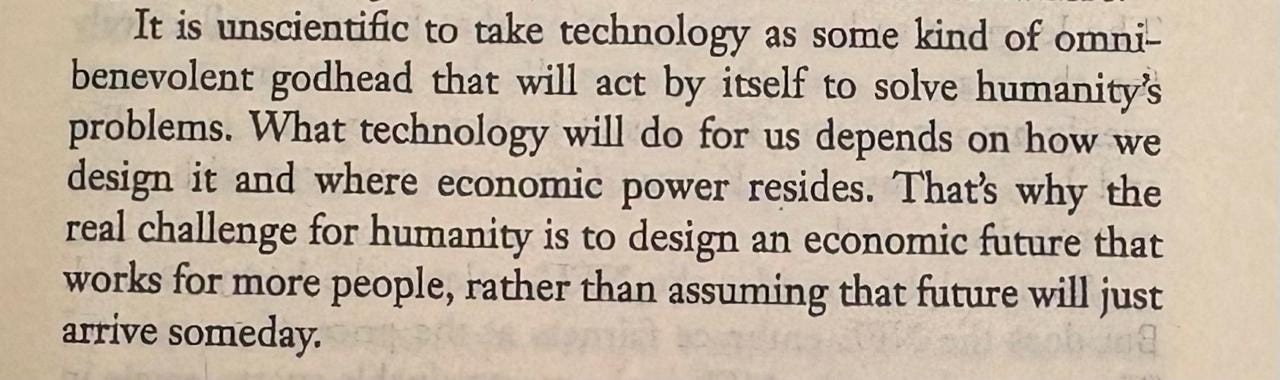
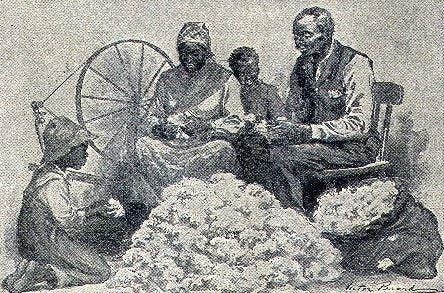
Technology reflects the economic structure of the society that builds it. The agricultural plough spread wealth to property owners everywhere, but the cotton gin took a bad situation and fortified plantation slavery in the American South.
The book anchors this analysis by examining historical marketplaces. Historically, a town square didn’t care if you were selling shoes, vegetables, or hats; it just provided the space and let you do your thing.
Wu lists four hurdles every platform must clear to own the market. First, they have to solve the matching problem by connecting strangers who have something to trade. Second, they have to manufacture trust in an environment where no one knows each other. Third, they need to lower the barrier to entry for small businesses. Finally, they have to promise a future that looks like constant innovation. It is a cynical, effective playbook for control.
After the platform wins, the game shifts to extraction.
The early internet was built on that same promise of a neutral, open highway where anyone could set up shop and grow without someone else hovering over them, waiting to take a cut. We all remember when Google started, preaching “Don’t be evil” and promising they were in it for the long haul. But that is the problem with big corporations. They might start with good intentions, but they eventually have to answer to Wall Street shareholders who only care about quarterly profits. Eventually, the public space we were promised was replaced by a pay-to-play system in which ads, not results, decide who actually gets seen.
Read: How the Internet Happened
Then I started looking into how payment gateways work. They are actually the one piece of infrastructure that could pull crypto out of its current existential crisis.
While Stripe originally presented itself as the “developer-first” champion of the internet, it has increasingly used its role as the industry standard to become a gatekeeper. As they have strengthened their grip on the market, they now push businesses into a closed ecosystem. This includes bundling extra services like “Stripe Radar” for fraud detection and “Stripe Atlas” for company formation.
Payment gateways should serve as a neutral way to transfer money from a customer’s bank to a business’s account. That’s all they should do. But when a payment company grows large enough to dominate the market, it begins to act like a private tax collector. They start adding complicated fees, taking larger cuts for international payments, and imposing confusing penalties. Small businesses can’t just walk away because their customers want to use that specific service. As a result, the payment company gradually siphons off the business owner’s profits, leading to wealth extraction.
At some point, these platforms realise they don’t need to worry about competitors if they just buy them.
In his analysis, Wu describes these corporate buyouts as a planned strategy of “market foreclosure” instead of natural growth. He argues that once a platform reaches a certain size, it stops competing based on its own product and starts viewing the market as something to conquer or absorb. Wu believes this is a defensive tactic aimed at preventing any innovation that could threaten their dominance. From the early marketplaces of antiquity to today’s digital giants, the entity that controls the infrastructure, roads, rails, or software protocols eventually realises it is more profitable to act as a landlord than a merchant.
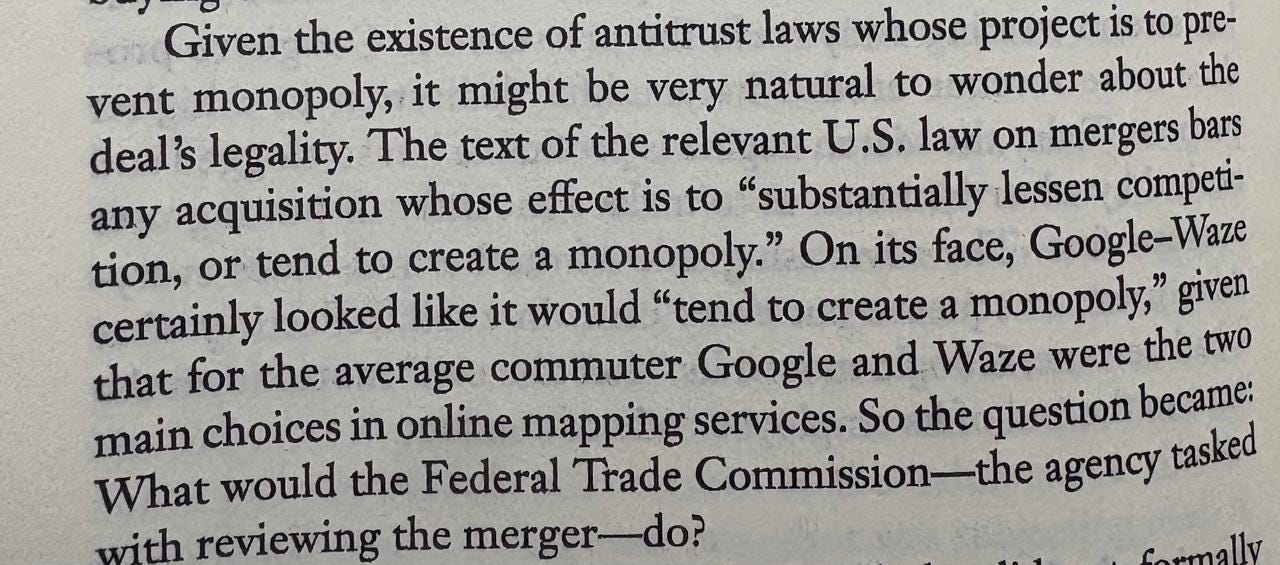
When Microsoft gutted Inflexion AI or Google stripped Character.ai of its founders and top talent, we saw them just buy the fighters before the bell even rang.
The ultimate goal of this strategy is similar to what Amazon did with its Marketplace. They attracted independent sellers with promises of low logistics costs and shared resources, creating a large group of dependent merchants. Once these sellers were cornered by Amazon's control of the customer base, the platform became a money-making machine. They raised their cut to 30%, pushed down organic search results, and added “sponsored listings.” Now, independent sellers must compete against each other in a forced bidding war just to reclaim visibility with their own customers.
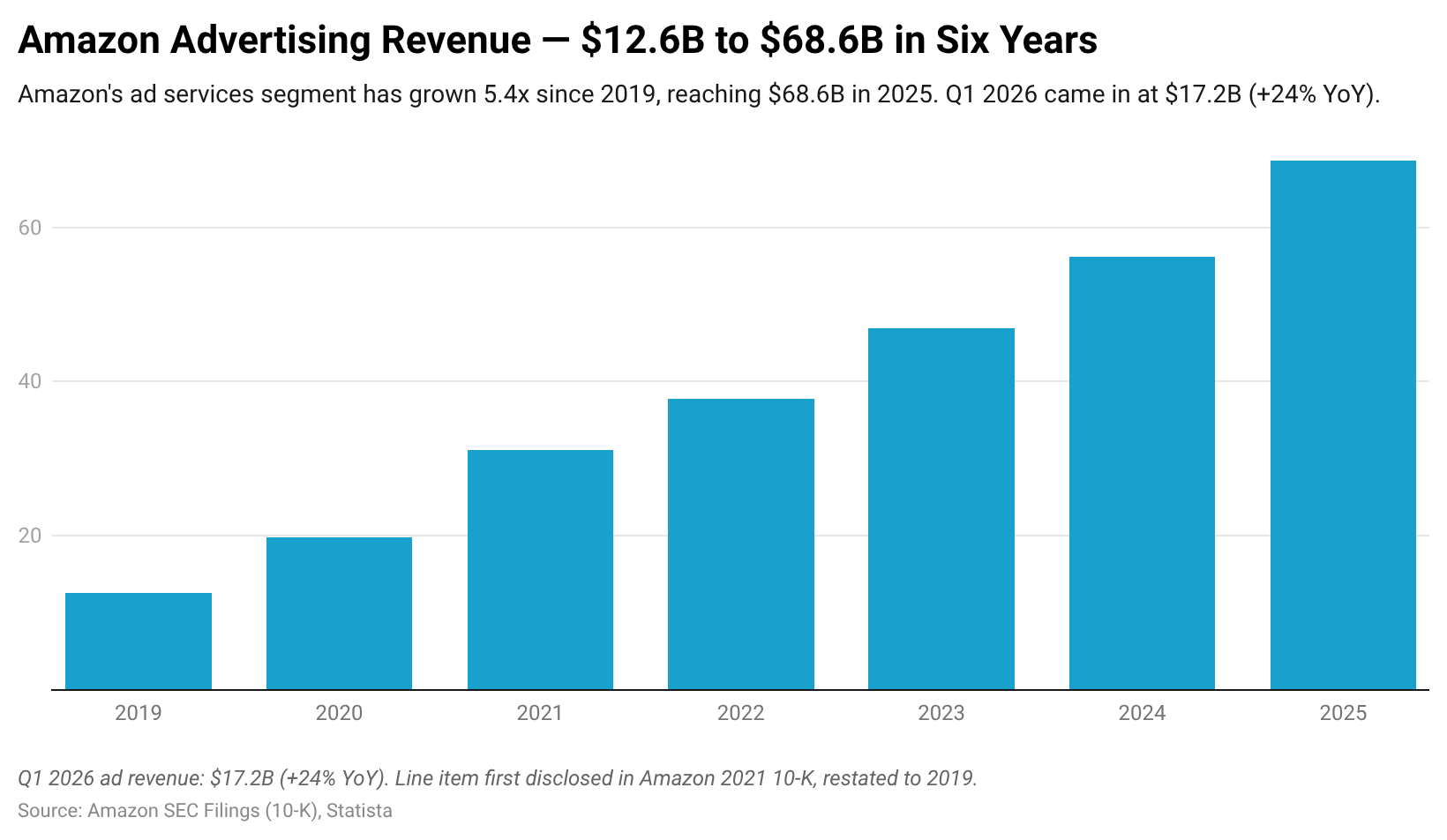
This advertising strategy earned Amazon $$68 billion in 2025 alone. That amount is double the total advertising revenue of the entire newspaper industry combined.
By 2023, Amazon’s fees took over 50 per cent of the average item’s sale price, with some sellers giving up to 70 per cent of their revenue. Independent businesses have found themselves in a tight spot where they cannot afford to stay but can’t leave either, since Amazon controls the customer base. To make things even worse, Amazon regularly monitors its own ecosystem.
Though corporate lawyers said under oath that they do not use individual seller data to compete, former staff admitted that the company regularly reviews the sales, margins, and ad spends of successful independent products to create its own corporate replicas under the Amazon Basics brand.
These changes mean that money is moving away from small business owners and into the pockets of giant companies. A barber in Michigan named Doug Mrdeza found out that when a website takes a little bit of money here and a little bit there, it becomes impossible for a small shop to make any profit. It got so bad that he had to let his workers go and close his shop for good in 2022. It is very hard to have a strong group of small, successful businesses when the website they rely on acts like a tax collector, taking all their money.
This is how new LLMs treat open-source software and creative communities today. The closed-source labs gather billions of lines of open code and human writing. They claim they will use them as training data. Then, they turn that knowledge into a subscription tool that competes with the engineers and writers who originally built the foundation. The host keeps the benefits.
The crypto world knows this trap pretty well. Look at the design of Layer-2 blockchain networks. They attract developers with promises of low transaction costs and open code. Once a decentralised app becomes popular, the platform owner takes control of the centralised sequencer.
This group has full control over the order of transactions. They can carry out “MEV extraction” (Maximal Extractable Value) by reordering, front-running, or blocking user transactions for profit. Sequencers earn money from the difference between the L2 gas fees charged to users and the lower costs paid to send batch data to Ethereum L1. As of mid-2026, despite various efforts to decentralise, every major L2 still largely relies on the centralised server model.
I love Wu’s skill in identifying how these systems operate. I mean, that has been his career, but it’s interesting to see it all laid out so clearly.
We can clearly see the problems in the system as they happen. At the same time, we are noticing the first signs of an alternative structure. It’s impressive to consider the freedom that comes with trial and error. We are also seeing the first glimmers of a ‘counter-architecture’ that refuses this extractive mandate. For example, protocols like Morpho prove that we can build financial rails that don’t need to sit in the middle to skim margins from every interaction.
Read: Morpho Is Becoming the Backend - by Thejaswini M A
I’m here trying to intellectually dismantle the platform landlord, and my bank account is automatically paying rent to five of them at once. I had an Apple TV subscription. I didn’t even know that. But maybe that’s the lesson. We don’t have to be perfect rebels to be conscious ones. We can’t quit the internet; that’s not an option in 2026. What is to be done is to recognise that the ‘convenience’ we pay for is, in fact, free. It costs us our freedom. So, I’ll keep the apps, but I’m staying alert, too. It’s a start, even if the landlord still gets his share for now.
Part 2 is next week, where Wu investigates how this herding model is spreading off the internet into real-world medicine and corporate housing, turning independent professionals back into a labouring class.
Until then... we wait.

Token Dispatch is a daily crypto newsletter handpicked and crafted with love by human bots. If you want to reach out to 200,000+ subscriber community of the Token Dispatch, you can explore the partnership opportunities with us 🙌
📩 Fill out this form to submit your details and book a meeting with us directly.
Disclaimer: This newsletter contains analysis and opinions of the author. Content is for informational purposes only, not financial advice. Trading crypto involves substantial risk - your capital is at risk. Do your own research.