


Parts 1 and 2 covered how platforms get built and how they keep you. Part 3 is where Wu explains why it matters that we haven't fixed it. Let’s read The Age of Extraction by Tim Wu.
Saint-Domingue, in its prime, was the ultimate jewel of the Caribbean.
It’s a small island that by the late 1770s was the wealthiest place in the Western Hemisphere. The “pearl of the Antilles,” they called it.
By 1780, it produced 40% of all the sugar and 60% of all the coffee consumed in Europe. The economy functioned well, if you didn’t examine closely who was doing the work and the conditions they faced.
In August 1791, the enslaved workers rose in revolt. Fourteen years of civil war. Independence in 1804. And then France (France!) demanded reparations from Haiti, not to the formerly enslaved, but to their former owners. Those payments lasted until 1947 and, at times, consumed 80% of Haiti’s national revenue.
The place that was once the wealthiest in the Western Hemisphere is today the poorest.
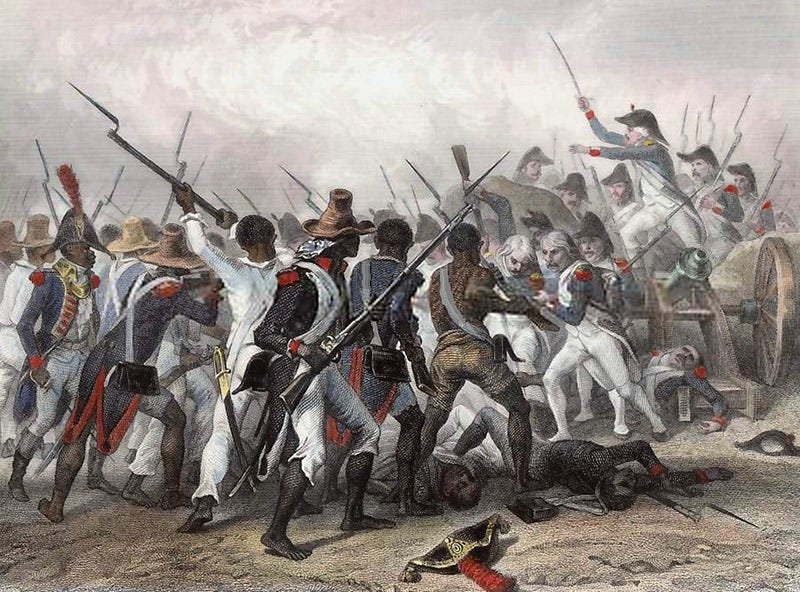
France was the birthplace of the Enlightenment, the French Revolution, and the famous slogan: “Liberty, Equality, Fraternity.” They were supposed to be the global champions of human rights and freedom. Yet, when black slaves embraced that slogan and freed themselves, France responded by financially suffocating them for the next 150 years.
Wu uses this story to make a point that unequal economies are fragile. The more you concentrate wealth, the more brittle the system becomes. And at some point, the brittleness resolves itself through a catastrophe that everybody paid for.

First, giant companies choke out all competition and drain people’s wallets. That financial pressure turns into deep public rage because people feel the game is rigged. That rage is what kills a democracy.
Once the average person realises their vote can’t change their bank account, they throw their hands up and look for a dictator to reset the board. History shows us this exact script, tracking all the way through the industrial monopolies of Weimar Germany.
Reading this book has easily turned me into a history buff. If you have any killer book recommendations along these lines, please drop them in the comments.
For me, that hits right in the gut when I look at our current political circus. You watch these politicians spend an entire year talking a big game on television about making the ultra-wealthy pay their fair share. Then, the very second they take office, the script flips, and they are signing tax breaks for real estate giants and bailing out massive corporate banks. It leaves you sitting there with a higher rent bill, and this cynical realisation that the voting booths are just a distraction while the donor class runs the actual country. We are watching a hostile corporate takeover where oligarchs and big tech executives see massive returns on their political investments while working people are left to bear the cost.
That’s the thing that historically precedes the strongman.
Wu calls this a sequence, which implies it can be interrupted. Well, I don’t buy it. Everything he describes looks exactly like what the system was built to do from day one.
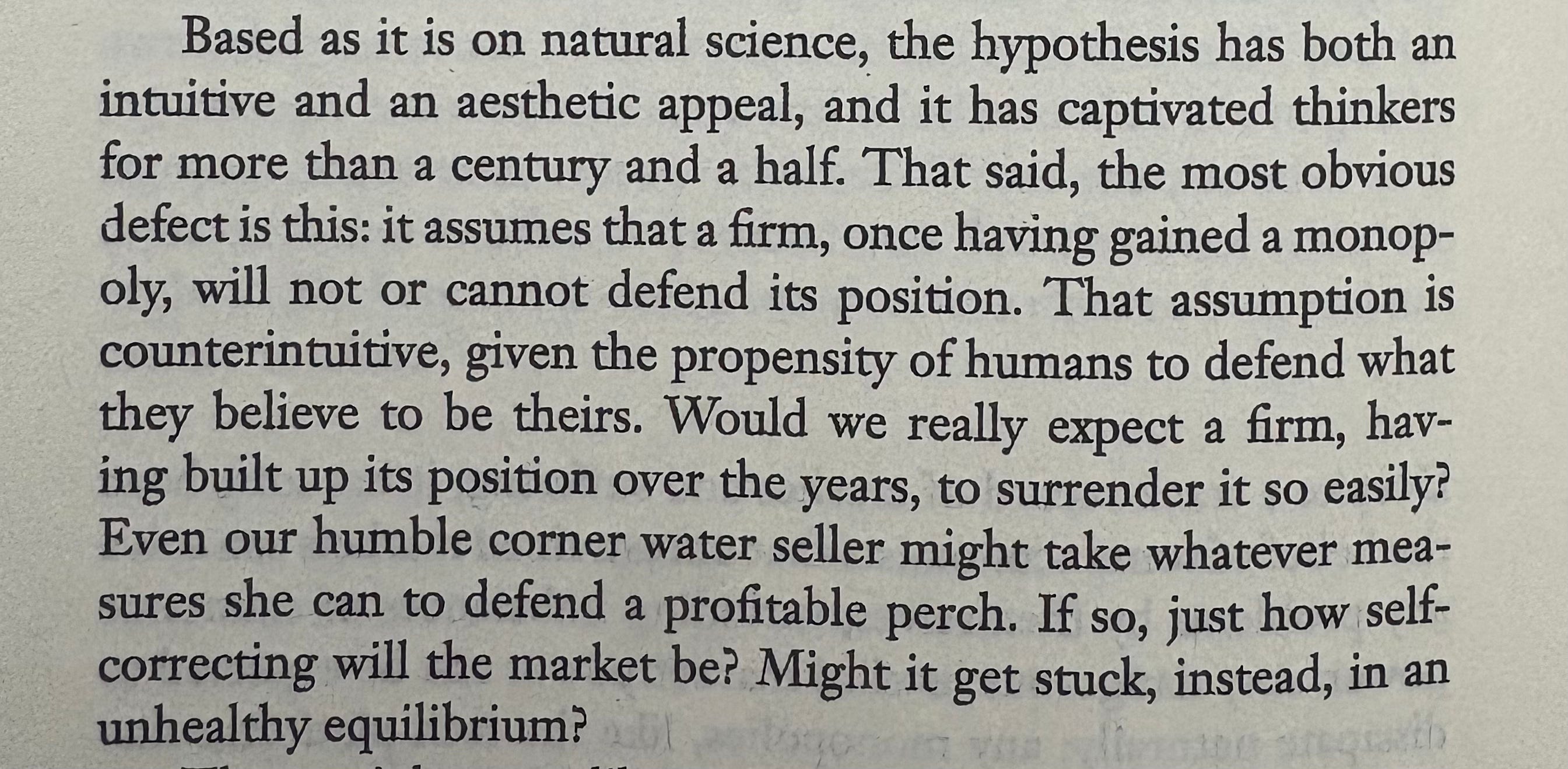
Private equity firms didn’t stumble into owning our hospitals by mistake. This is raw capital doing what it always does when there are no rules to stop it, most times. Wu knows this. But his background as a reform capitalist means he is structurally committed to the belief that the system can be repaired from within. I’m just not sure I share that faith.
The Denmark part is the one I’d make everyone read.
In the 1780s, Denmark was feudal, poor, and run by a small class of lords who owned 98-99% of the arable land. A nineteen-year-old prince regent took power and, with an advisor named Bernstorff who had spent his whole career thinking about land distribution, abolished serfdom and converted peasants into landowners over the following decade. Grain production went up 40%. The peasant class became a political force. The core of what Denmark is today as one of the wealthiest, most equal countries on earth traces back to those ten years.
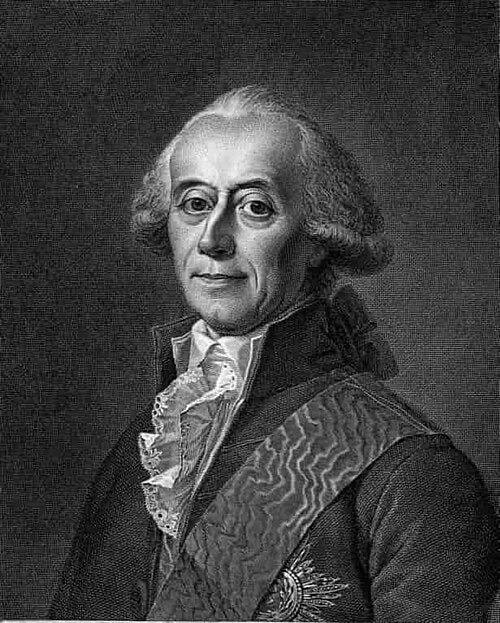
Russia had the exact same opportunity but blew it. Catherine the Great also wanted everyone to think she was a hip, enlightened intellectual. She debated freeing the serfs in her Nakaz, but her circle of wealthy buddies hated it, so she let it die. Instead of fighting for her people, she spent her reign collecting masterpieces and writing to Voltaire while the feudal system grew more toxic. When Russia tried to fix things a hundred years later, the damage was irreversible. The whole system ended up burning to the ground.
The entire Denmark comparison depends on ownership of the productive base. 200 years ago, that meant soil. Today, we think it is digital infrastructure and data pools. The monopolies controlling this matrix decide if we build a fair society or devolve into corporate feudalism.
Crypto was supposed to take economic power out of corporate hands and put it in the hands of regular people.
It didn’t work out that way. Part of the reason it failed is that the initial, radical premise was unrealistic. I used to write some pretty harsh things against corporate centralisation, but I am learning to understand exactly why it happens. We have essentially matured as an industry and prepared ourselves to live with a completely new era and a different promise.
Read: Vertically Integrated Capital Aggregators - by Joel John
BlackRock is running multi-billion-dollar crypto funds while Fidelity dominates the custody market. The institutional giants that the early developers were trying to destroy are now funding the ecosystem. Andy Bromberg, the CEO of Eco, pointed out that Wall Street is on track to own 70% of all Bitcoin. We all know what that means.
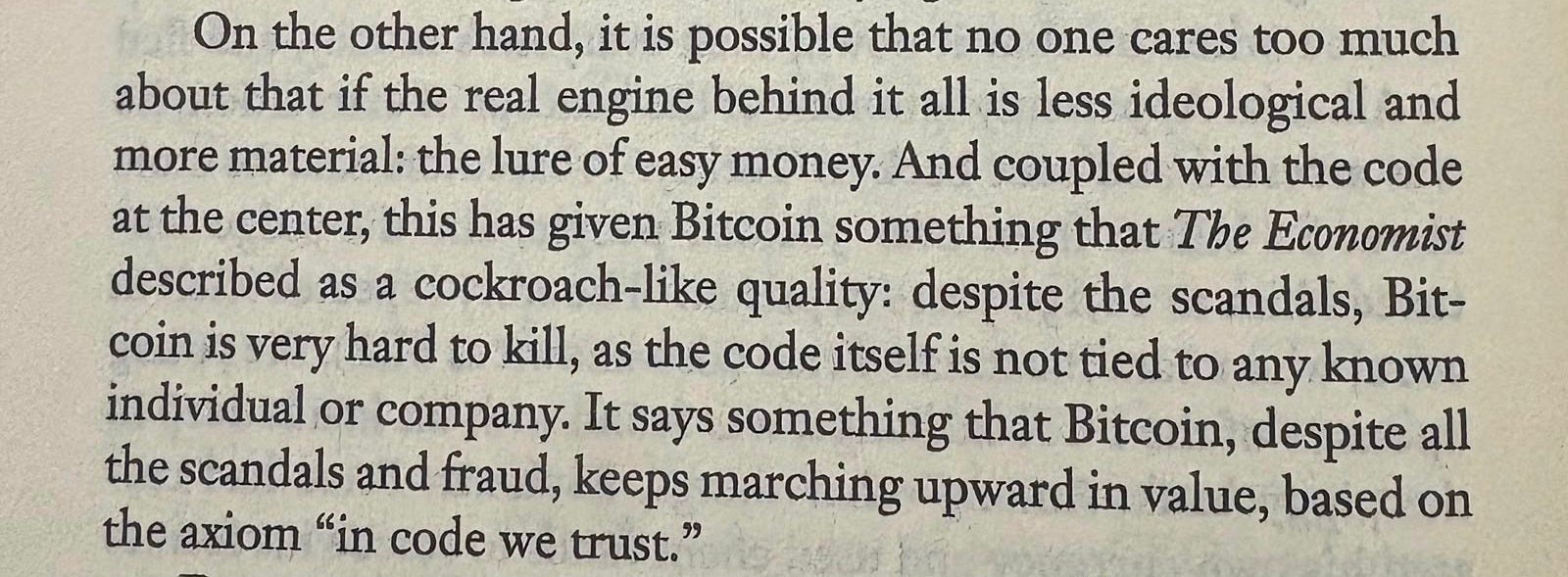
Wu sees that crypto hasn’t solved global wealth inequality, and basically calls it a failure. Fair, it hasn’t moved the needle there. But Bitcoin emerged as a response to the 2008 banking crisis; it aimed to create a trustless infrastructure. The claim of redistribution came later, mainly from those trying to sell tokens. Judging the original technology by its promoters’ promises completely misses the point. The better measure is if the infrastructure being built could outlast the current extractive order, the corporate banking system. Whether the alternative settlement rails and cross-border plumbing retain enough of the original architecture to function differently from what they are replacing. On that, the answer is genuinely open. Wu can’t close it yet.
Think about when they invented the shipping container back in the fifties. It didn’t cure world poverty, and every day, people weren’t out buying containers.
But by standardising how freight moved, it rewired global trade networks and broke the monopoly of traditional port bosses. So, the backend infrastructure is supposed to change the machinery running in the background of the world, not the storefronts.
Wu’s actual solutions feel way too polite for the mess we are in.
He talks about basic fixes like bringing back antitrust lawsuits and forcing tech platforms to act like neutral public utilities. It’s an old concept from the fourteenth century. Back then, if you ran an essential inn, the law said you couldn’t turn people away.
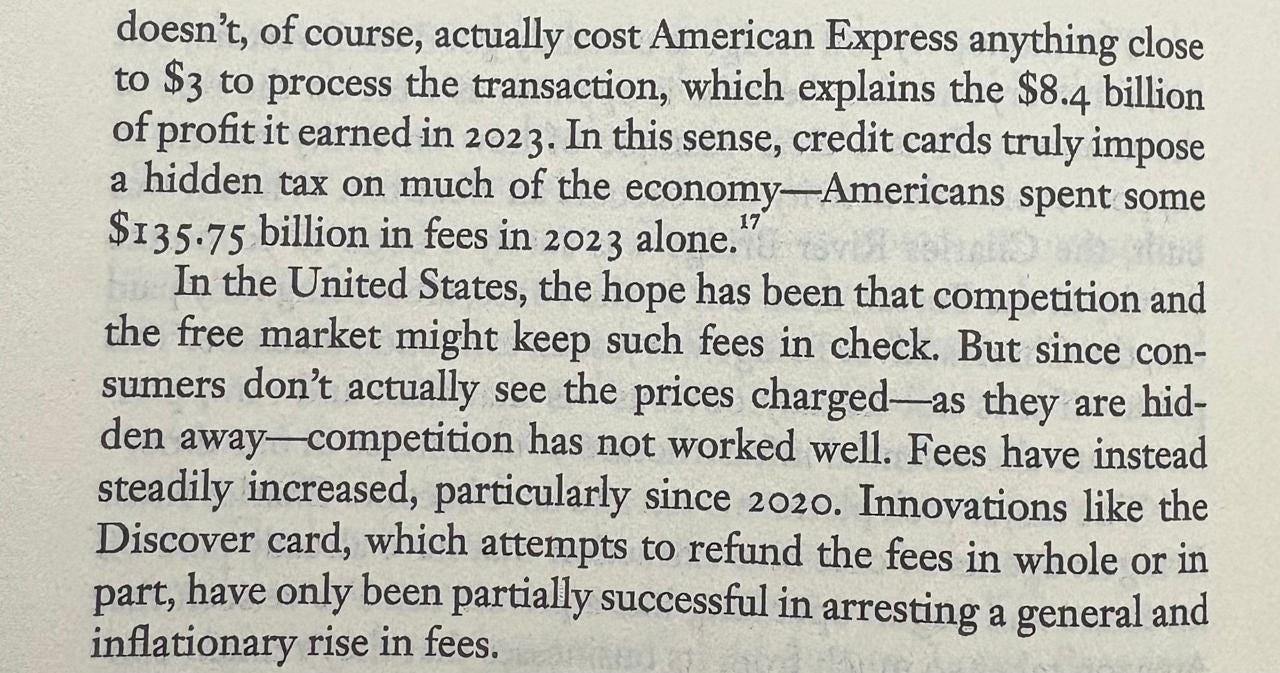
He also suggests capping corporate junk fees. For example, Europe caps credit card swipe fees at 0.3%, while America leaves them uncapped at 3%, which lets banks drain $135.75 billion in hidden fees in 2023 alone. Another fix is to use line-of-business restrictions to prevent monopolies from taking over adjacent markets. That’s how the government blocked AT&T from entering the computing space decades ago, which is the only reason an independent tech industry had room to breathe.
That has maybe worked in the past. All of his fixes require a functioning government that isn’t completely bought and paid for by the exact corporations it’s supposed to regulate = non-existent.
He uses this metaphor about a gardener pruning back overgrown corporate weeds so the rest of the ecosystem can catch some light.
But that assumes the gardener is independent and has the right tools. In reality, the gardener has spent the last 40 years being defunded and captured. Politicians never forgot about antitrust laws. Instead, billionaires spent decades buying politicians and economists who needed to make monopolies look acceptable.
The metaphor falls apart if the weeds have already grown so high that you can’t even find the garden gate anymore.
I picked up this book just looking for something solid to read. Three weeks later, I have his five-step cycle out of my head, running through it again and again, and it explains a lot of things that have crossed my mind lately.
Monopoly triggers extraction. Extraction breeds public resentment. Resentment breaks down institutional guardrails. Finally, institutional failure paves the way for the strongman.
Wu is more patient than I am. He still believes in institutions, in the slow grind of regulatory reform, and in the idea that the gardener will eventually show up. But he knows his history well enough to remember that the Danish miracle actually happened. A brilliant advisor named Bernstorff managed to get a teenage prince to sign a decree. Ten years of focused execution turned a broke feudal estate into one of the most stable, equal societies on earth.
Bernstorff spent his whole life learning the details of land distribution before he got close to the levers of power. And he got lucky with the kid on the throne.
At this point, I’d take a gardener over another billionaire trying to tell me what freedom looks like.

Token Dispatch is a daily crypto newsletter handpicked and crafted with love by human bots. If you want to reach out to 200,000+ subscriber community of the Token Dispatch, you can explore the partnership opportunities with us 🙌
📩 Fill out this form to submit your details and book a meeting with us directly.
Disclaimer: This newsletter contains analysis and opinions of the author. Content is for informational purposes only, not financial advice. Trading crypto involves substantial risk - your capital is at risk. Do your own research.