


Hello,
Welcome to Edition 22 of The Reading List. Prathik is on leave, so I’m the one choosing your weekly reads.
I began the week with How to Be an Explorer of the World by Keri Smith, a beautiful gift from a dear friend. The pages are orange and grey, hand-lettered, with cut-out photos scattered across them like someone’s scrapbook. You can call it a field guide to life and experiences.
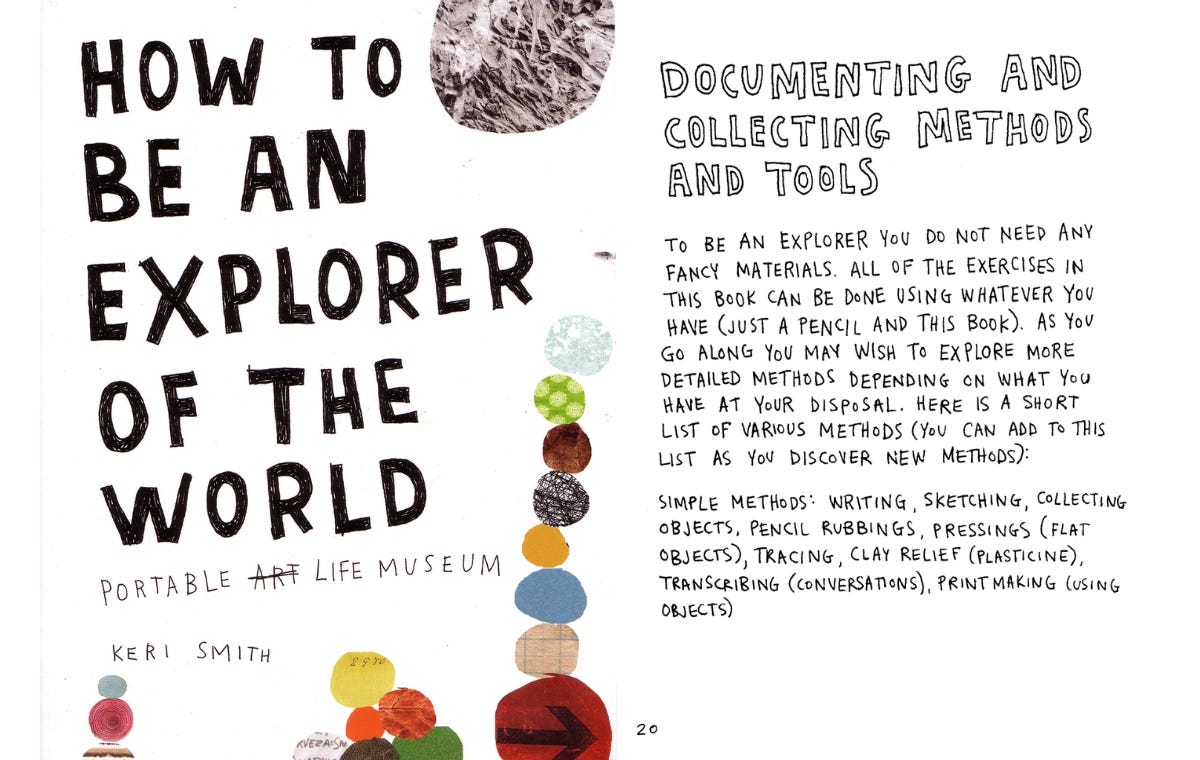
Smith keeps a small bowl of sea glass on her desk. She tips the pieces out and sorts them by size, then shape, then colour. She holds each one up to the light and wonders how many hands touched it before the sea did. Some of that history is gone for good, and she works out the rest by looking for a long time.
A good amount of finance comes down to that kind of patience. This reading list is my own small bowl for the week, pieces I picked up because they caught the light.
On to the article….


StablesReward: Your AI Agent Spends, You Earn
AI agents can surf the web, read reviews, and book hotels for you. All these tasks cost money. But what if these tasks could earn you back something?
StablesReward does just that. Once you connect your agent to an MCP endpoint, it gives your agent a menu of paid tools. Every call your agent pays for earns you miles or stocks. And this is in addition to the rewards you earn anyway on your own spending across 800+ merchants.
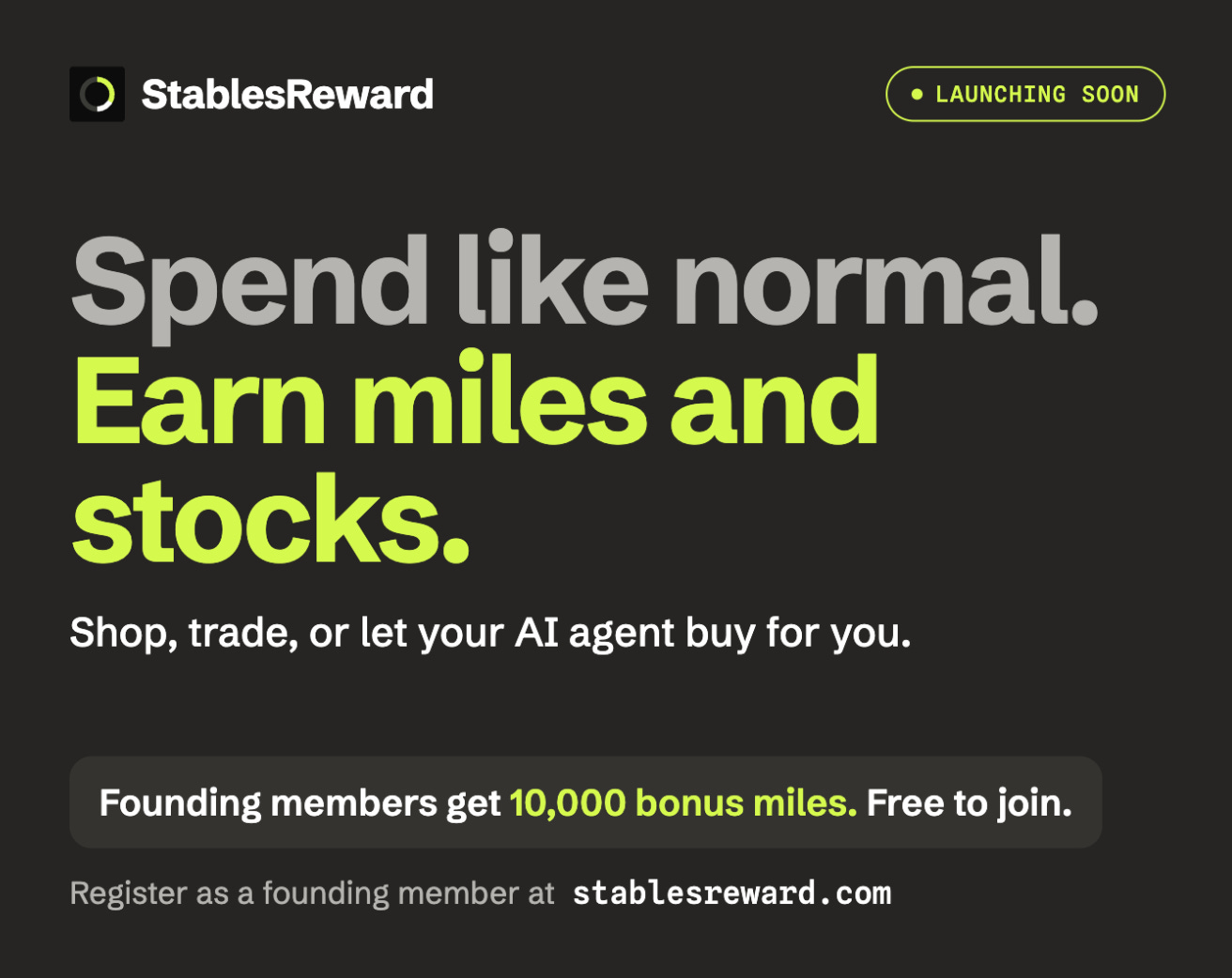
Every purchase pays you back. The best part is that you can choose how you’d like to be rewarded. Transfer miles to airlines and hotels, or let your stocks build a portfolio from the spend you were making anyway.
Launching soon. Free to join.
The Week That Was
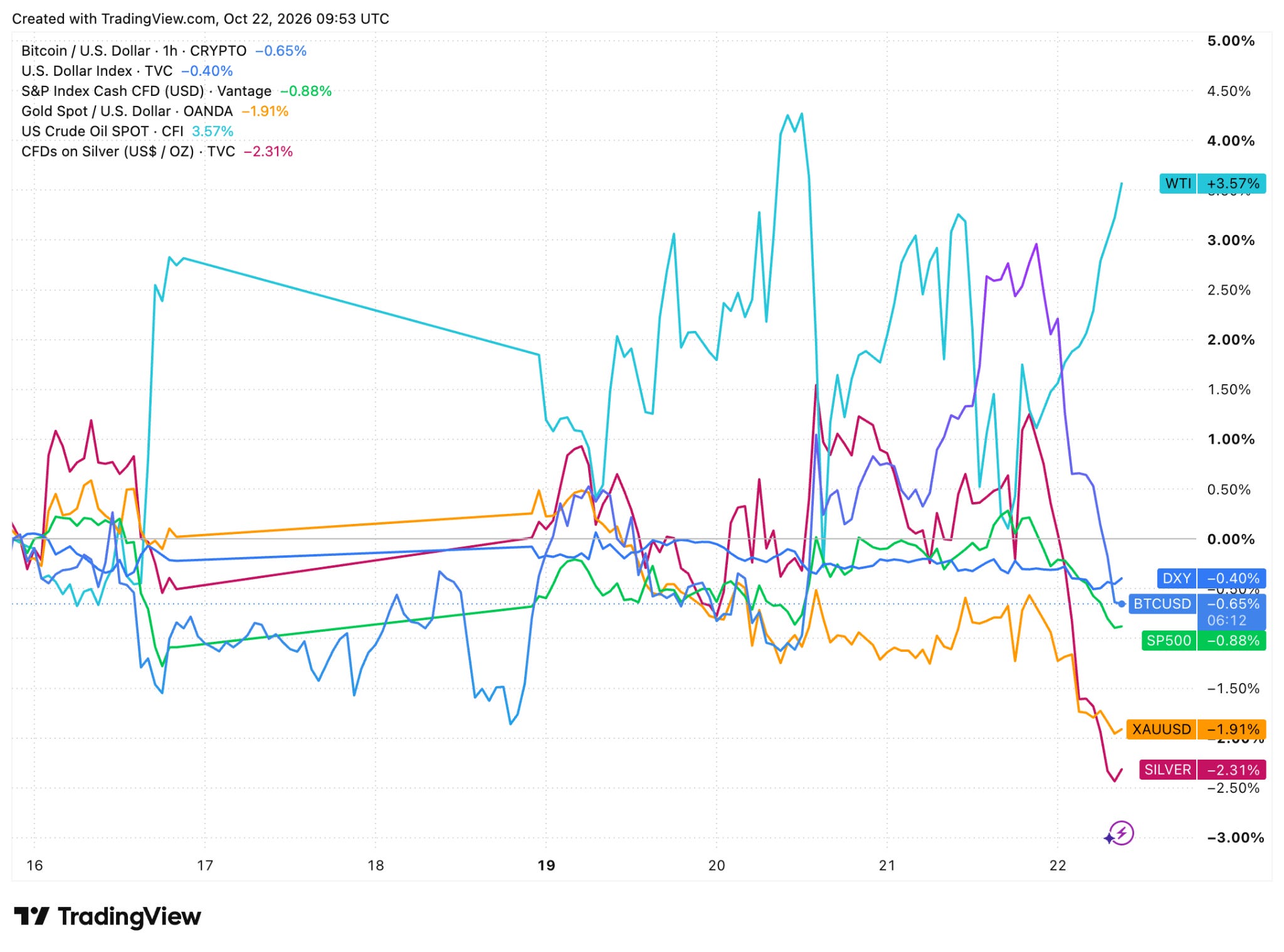
The Nasdaq had its worst week since June last week. It fell 4.5% on fears that AI companies borrowed too much to build data centres. By Wednesday, it had recovered almost half of those losses. The Nasdaq Composite rose 1.1% on Monday, was flat on Tuesday, and rose another 1.1% on Wednesday. The S&P 500 added 0.4% on Monday, 0.3% on Tuesday and 0.6% on Wednesday.
The AI worry found its way to Korea as well. Elice, a Korean data centre company, listed on Tuesday after retail investors oversubscribed its IPO more than 400 times. It closed 32% below the offer price. Kospi fell almost 4%. A day later, the Kospi bounced 3.3% as foreign investors bought back in and Samsung Electronics and SK hynix each rose more than 5%. On Thursday, it gave back almost all of that, falling 3.5%. Feels like all three of these moves came from nerves.
Oil kept climbing as ships kept getting struck by projectiles in and around the Strait of Hormuz. Brent futures crossed $111 a barrel on Tuesday, the highest since May.
Higher fuel costs are now feeding into inflation well beyond the US. UK inflation jumped to 3.5% in September from 3.1%, and motor fuel was the biggest push.
The Fed is in its quiet period before the 27-28 October meeting. It raised rates to 3.75-4% in September. On Kalshi and Polymarket, traders priced in about a 12% chance of a rate hike at next week’s meeting and about 77% for December. The 10-year Treasury yield ended Wednesday at 5.13%, barely changed on the week.
France now pays about 1.55 percentage points more than Germany to borrow for ten years. This is the widest gap since the eurozone debt crisis, as protests spread and investors doubt it can pass next year’s budget. That budget also includes a plan to tax crypto-to-stablecoin swaps at 31.4%, which the National Assembly passed by a single vote on 16 October.
Bitcoin stays between $81,000 and $85,000. US spot bitcoin ETFs took in $526.7 million on Monday, their best day this month. BlackRock’s IBIT took $665.2 million, while $138.5 million left Fidelity’s and Grayscale’s funds. Tuesday was much quieter, at $23.2 million. Wednesday nearly matched Monday at $524.8 million, and this time Fidelity’s fund took in $212.7 million. BlackRock filed for a bitcoin fund that limits how much you can lose and how much you can gain. BlackRock earns either way, nice business.
What We Covered This Week
We started the week with Vaidik’s Data: The New Asset Class. AI labs have nearly run out of public text to train on, so they now buy the Slack threads, emails and work logs that companies have piled up over years. Vaidik argues that this emerging market resembles early commodity trading, where brokers understand prices better than sellers.
Vaidik also wrote A Premier on Conditional Markets, on what comes after prediction markets. He looks at markets that make DAO decisions, which he thinks run into Goodhart’s law, and markets that price an asset if a specific event happens.
This week’s product piece took me into private markets. In Can’t Sell? Borrow, I looked at Techdollar, which lends against vested shares in private companies like Anthropic, OpenAI and Stripe, at 0.80% to 1.5% a month. Most companies now take about 12 years to go public. A loan buys employees time without selling, and it only makes sense if the shares hold their value.
We have more lined up for you in the coming weeks. Until then, here’s what you can read. On to the list…
Regulation & Policy
AI Is Transforming How Economies Develop and Compete: BCG’s 2026 AI Maturity Matrix scores more than 75 economies on how exposed they are to AI and how fast they can put it to use, and moves Japan and South Korea into its top tier this year.
Crypto & Tech
Maybe We Were Wrong About Blockchain: Joe Weisenthal admits he used to laugh at conference speakers who were excited about blockchain but not bitcoin. He has joined the Hyperliquid fan club while also appreciating stablecoins and agentic payments. (Paywall)
Don’t rage against the machines: Byron Gilliam uses the Hindu tradition of Ayudha Puja, which honours the tools people use in their work, to look at how humans should treat artificial intelligence.
The Crabification of Capitalism: Jonah Burian shows fintech apps, such as Robinhood and Coinbase, all evolving into the same bank-plus-brokerage superapp. He sees AI startups heading the same way.
Data quality as a contract: Coinbase’s Xuan He explains why thousands of data checks buried in pipeline code didn’t stop incidents at the exchange, and how the team now gives each check an owner and a consequence. Pairs nicely with Vaidik’s Frozen 2 piece.
Finance & Economy
The Shrugflation Triangle: Kyla Scanlon starts in a Las Vegas casino and builds a loop out of oil, AI borrowing and Treasury yields. A lengthy read, but also a good one.
The Near-Bag Experience: This one goes with what I wrote this week. Kram and Emma examine why employees at successful startups often fail to make substantial money from their equity.
AI & Innovation
Can a Million AI Agents Create Superintelligence?: Ramez Naam questions the assumption that running millions of AI agents simultaneously will produce superintelligence. Some pretty good infographics in there.
Citrini Therapeutics: Citrini Research describes an experiment to see whether AI could help people without extensive biotechnology experience design a potential drug. There’s a winner. (Partly paywalled)
The Beauty of Something Grown: Goodfire researcher Nick Cammarata claimed this month that most neurons inside large models can be read and understood. Author Dean Ball thinks that could be a turning point for knowing how AI works, also suggesting that Cammarata might be wrong.
I Can See Everything: Zvi Mowshowitz reads the same result and calls it progress, but says some people hyped it well beyond what it shows.
Do You Trust Apple?: (For the record, no.) Apple’s HomeView now shipped after years of delays. Ben Thompson says its success now depends on whether people trust a slower, more error-prone Siri enough to mount it in their walls.
AI is ushering in an age of personal media: Benj Edwards fed about 50 old voice memos into Suno and got back hundreds of songs that (by his own admission) nobody else will ever want to hear, his kids included.
Swarm Intelligence: Kevin Kelly says “Instead of a central AI brain, AI is like a gas, composed of zillions of tiny interacting AIs that create an atmosphere.”
Culture & Beyond
The Man Who Taught Us How to Pay Attention: A.O. Scott makes the case for art critic John Berger as an antidote to endless scrolling. Berger believed that looking was an active process shaped by personal experience, history, politics and social relationships. (Paywall)
How intuitions work: Although I read this one to justify my gut feelings, Marc A Moffett suggests that the gut feeling can be as rational as seeing something with your own eyes. Because intuition works much like perception.
How is music possible: Henrik Karlsson explores how arrangements of sounds produce such powerful emotions and alter our perception of reality.
Nora Ephron Anticipated Our Narcissism: Ellie Kemper and I admire Ephron’s willingness to write something simply because it amused her, without worrying whether everyone would understand the joke. Very fun. (Paywall)
Next on my bedside table is Heart Lamp by Banu Mushtaq. If you’ve read it, tell me which story to start with.
That’s all for today!
P.S.: Read, watched or listened to something worth sharing? Send it my way for a future edition.
Token Dispatch is a daily crypto newsletter handpicked and crafted with love by human bots. If you want to reach out to 165,000+ subscriber community of the Token Dispatch, you can explore the partnership opportunities with us 🙌
📩 Fill out this form to submit your details and book a meeting with us directly.
Disclaimer: This newsletter contains analysis and opinions of the author. Content is for informational purposes only, not financial advice. Trading crypto involves substantial risk - your capital is at risk. Do your own research.
Thanks for reading! Subscribe for free to receive new posts and support my work.