


Hello again, back to the book.
We are now in part three of Tracers in the Dark – the “Bitcoin was never really private” book. Part one covered Silk Road and corrupt agents. Part two followed Mt. Gox, BTC-e, AlphaBay, and the transformation of blockchain tracing into a business.
You think we invented uncensorable money. In practice, we bootstrapped a new kind of financial surveillance industry and gave it recurring revenue.
This week, the book becomes much harder to read, because the crimes stop being abstract.
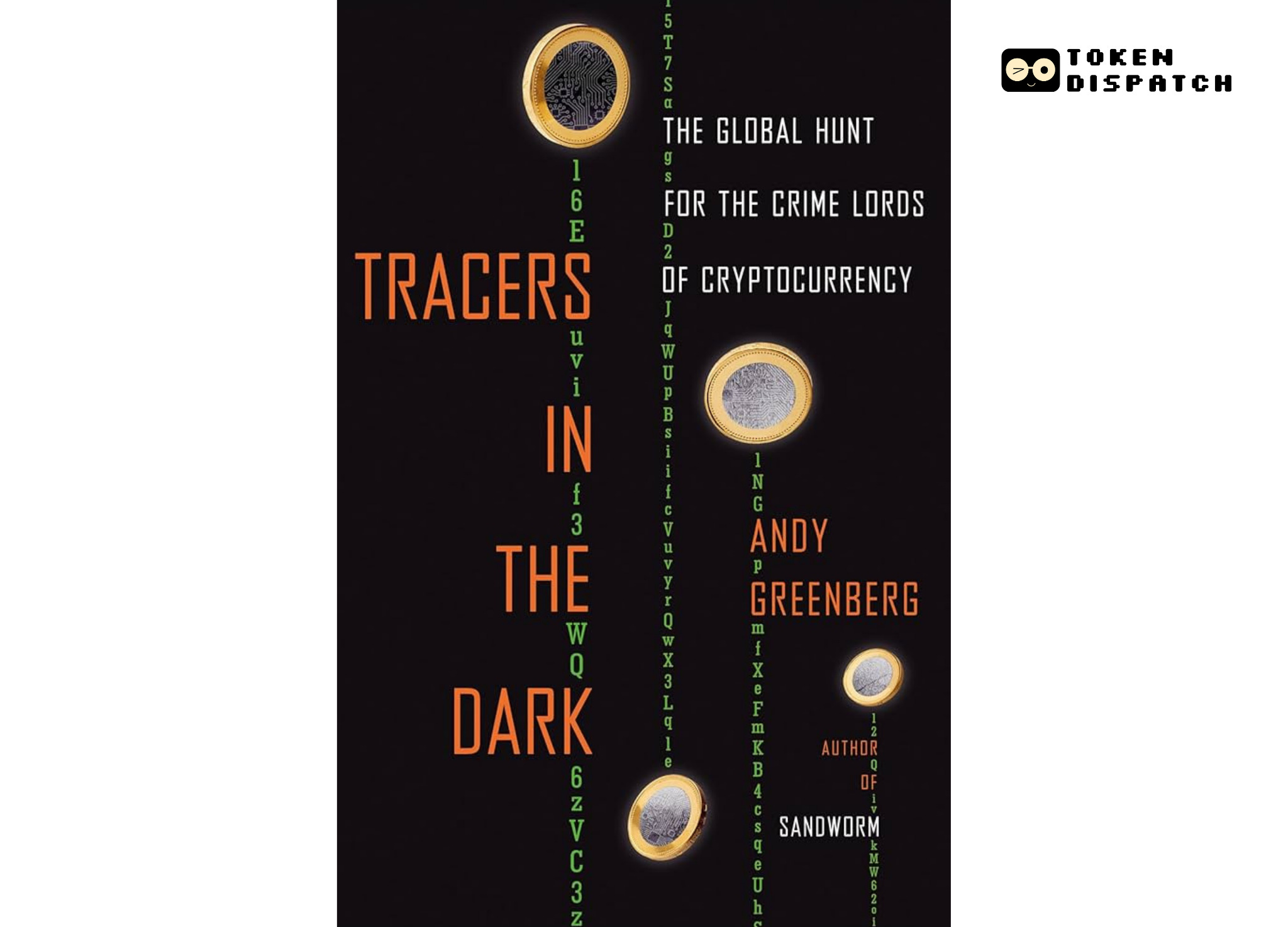
Welcome to Video, which is not a clever market run by ambitious drug dealers. It is a dark website dedicated to child sexual abuse material, funded by Bitcoin. At its peak, it recorded hundreds of thousands of downloads and over a million registered users, with thousands of paying customers across dozens of countries. Investigators estimate that at least twenty-three children who were being actively abused by users of the site were rescued when it was taken down.
That is the backdrop. And it is the chapter where any honest conversation about crypto privacy has to slow down and sit with itself for a moment.

The worst possible use case
Greenberg walks you through this case mostly through the eyes of Chris Janczewski, the IRS agent we met briefly at the start of the book.
He and his colleagues get a tip that there is this site in South Korea, with a name that sounds like a YouTube clone, that is actually a huge hub for child abuse videos. The site takes Bitcoin. It gives every user a unique deposit address. It keeps almost no logs beyond that.

From a tracing perspective, it is weirdly generous.
“Follow the money” becomes a joke we tell ourselves about law enforcement. Of course, they just follow the money, that is what they always did. Here, following the money is the main way to find people who are hurting children.

The investigators do exactly what you would expect. They identify the addresses that belong to the site. They look at which wallets send money in. They ask exchanges who sit behind those KYC records. They work with Korean police, Europol and others, share data from the seized server, and slowly, painfully, start knocking on doors.
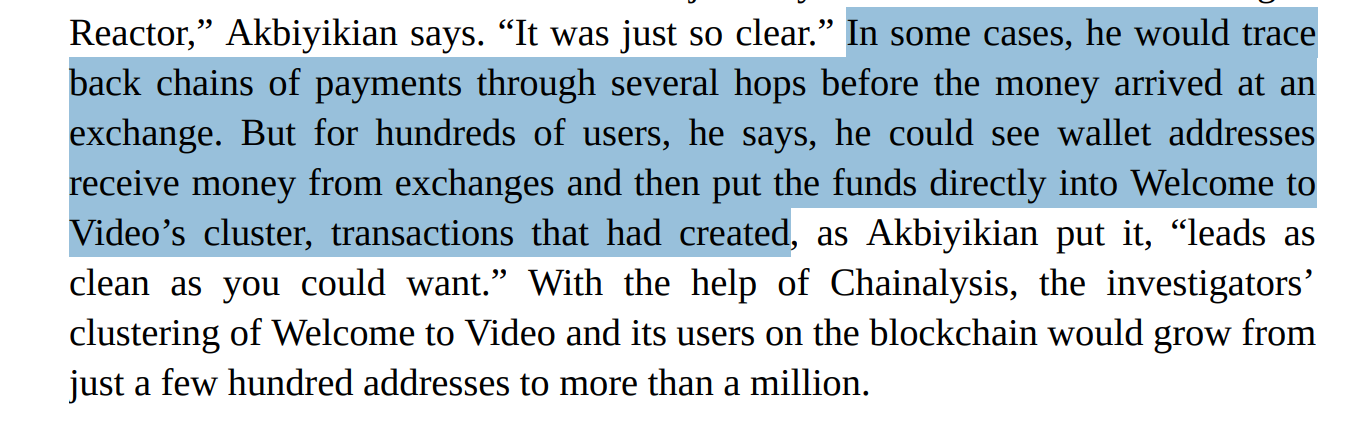
The Department of Justice later announced that three hundred and thirty-seven people were arrested in thirty-eight countries, and at least twenty-three children were rescued from ongoing abuse. That is an unambiguously good outcome. If you run the “should this be possible” thought experiment, it is very hard to argue that the answer is no. Of all the things to spend resources tracing on, this is the top of the list. You want every tool pointed at it. You want every break. You want every exchange to respond quickly. You want the ledger to remember.
In the earlier chapters, the tension is between “privacy” and “drug markets” or “money laundering”. That is already murky enough. When you get to Welcome to Video, the tension is between privacy and kids who are being actively abused.
That is the part of the book where I stopped underlining sentences and simply sat with that discomfort.
When the ledger knows more than anyone
What makes this case so striking in Greenberg’s telling is the way the blockchain changes what is possible for the investigators.
In the old world, you might seize a server, find some logs, maybe some payment records. Here, once authorities obtain the server and the Bitcoin addresses, they also inherit a permanent, time-stamped history of who paid what, when, and from which wallet clusters.
Not just taking down one site, but inheriting years of transaction history.
If you squint, this is exactly the property crypto advocates celebrate in other contexts.
Transparent money.
Immutable records.
A public ledger anyone can audit.
The great irony is that in this chapter, all of that works perfectly. The ledger does exactly what it promises. The crime that claimed Bitcoin was “untraceable” ends up becoming one of the strongest arguments for why traceability matters.
And yet, even here, Greenberg does not turn it into a simple morality play.
The book spends time on how exhausting this case is for the people doing the work. These are not abstract numbers to them. They sit in rooms downloading evidence nobody should have to see, trying to decide who to prioritise. Teachers. Parents. People in positions of trust. They know they cannot reach everyone. They know that even if this site is shut down, another will appear.
There is a quote in one of the write-ups about this case that stuck with me. A prosecutor described it as the first dark web takedown in which the main goal was not just shutting down a site, but rescuing victims at the edges of the network.
The blockchain is part of that. So is good police work. So is luck. So is cooperation between multiple countries. None of it is simple.
After Welcome to Video, the book moves into what it calls a golden age for the IRS computer crimes unit.
Once the techniques are proven, they start applying them everywhere.
New dark web markets like Wall Street Market are traced and dismantled, again partly by following crypto flows into servers and cashouts. Mixer services that advertise themselves as privacy tools turn out to be businesses with very human operators. Helix, Bitcoin Fog, all the familiar names from enforcement press releases, become case studies in how much information is leaking out of supposedly obfuscating tools.
They go after a high profile Twitter hack where scammers take over celebrity accounts and run a fake Bitcoin giveaway, and use the chain to identify and arrest teenagers who thought they were just doing internet crimes.
They trace giant exchange hacks back to North Korean state-sponsored groups, watching billions of dollars move across borders and into mixing systems, trying to keep up with a government that sees crypto theft as part of its foreign currency strategy.
If Part Two of the book is about tracing becoming a business model, Part Three is about tracing becoming a standard operating procedure.
“What is the crypto exposure?” has become a default question in big cases. Investigators assume there will be a trail. Regulators assume there will be analytics vendors who can read it. Exchanges assume they will need to buy some of those tools to be considered responsible.
You can see why people in this world talk about this period as a golden age. So many doors that would have been shut in the pre crypto internet suddenly open. So many cases that would have been impossible suddenly become tractable.
Greenberg does not ignore the flip side.
The same chapter that celebrates big wins also points out that we are now in a world where a small group of private companies and specialised units within governments can look at public blockchains in ways most users do not really understand.

You can feel the scope of that power, even if you think most of the current targets deserve what is coming to them.
There is a small section near the end that talks about how researchers and analysts view newer currencies like Monero and Zcash, which are deliberately designed to resist this kind of analysis. They use privacy-preserving techniques that do not write the same kind of usable diary onto a public ledger in the first place.
Law enforcement does not throw up its hands and go home. They adapt. They look for on and off ramps. They build new heuristics. But you can tell the tone changes. The confidence that the chain will tell all is gone. There are places they cannot see into, at least not with the same ease.
I found that contrast helpful.
On one side, you have this golden age feeling, of dark web markets, abuse sites, and mixers being traced and shut down, of billions recovered from state-sponsored hackers.
On the other side, you have people deliberately building systems that try to shrink that visibility again, sometimes for good reasons, sometimes for bad ones.
This is where the privacy narrative we keep talking about comes back in.
When I started this little book experiment with Blockchain Chicken Farm, I thought I was mostly doing a plain read.
Chickens with ankle bracelets. Rural China. Platforms arriving as gravity. It was a way to think about infrastructure and power before going back to charts and token launches.
Reading Tracers in the Dark in three Monday chunks did something more direct to my brain.
Part One took “Bitcoin is not anonymous” from a sentence everyone repeats to a story I can see in my head.
Part Two took “we accidentally built a surveillance industry” from a critique to a supply chain. You can trace the line from Mt. Gox and BTC e to analytics dashboards on every compliance slide deck today.
Part Three forced me to sit with the fact that sometimes, that surveillance is the only reason certain children are still alive.
I do not think the lesson is “surveillance is good, actually”. I also do not think the lesson is “privacy at all costs”.
If anything, the book made both of those slogans feel lazy.
What I am taking away instead is that public ledgers are not neutral toys. They tilt the world toward a particular kind of memory. Once that memory exists, there will always be people who learn to read it, and many of them will be pointing that skill at things you and I would agree are horrific.
If you want to argue for more privacy on top of that stack, you have to be honest about what you are taking away as well as what you are protecting. If you want to argue for more tracing and more analytics, you have to be honest about where that power can drift once the easy cases are done.
Crypto Twitter is already busy narrating the next cycle.
Privacy as the new trade. Private layers. Zero knowledge of everything. “We tried to be full public, that did not work, now we retreat.”
After Tracers in the Dark, that feels incomplete.
You cannot do the privacy pitch without also acknowledging that we live in a world where a South Korean site funded by Bitcoin led to three hundred and thirty-seven arrests and at least twenty-three children being pulled out of ongoing abuse.
You cannot talk about fully anonymous money without also acknowledging that for a decade, the visible, stupid, traceable version is exactly what allowed a small group of investigators and analysts to claw back some control over dark web markets, state-sponsored hacks, and the worst parts of the internet.
At the same time, you cannot look at the growth of tracing companies, their integration into every exchange and regulator, and not feel at least a little uneasy about how that power might be used once the immediate villains are handled.
That is the tension we are walking into with this new privacy narrative. It is not a clean “for” or “against”. It is a fight over whose memory the money will keep, and who gets to query it.
Every time I see a pitch about “decentralised identity” or “compliant privacy” or “chain analytics”, I suspect this book will be there, tapping on the window, asking me to be a little more specific.
What exactly are we making easy? For whom. And at what cost?
That’s it for this week. See you next week with another book.
Until then... Stay safe!

Token Dispatch is a daily crypto newsletter handpicked and crafted with love by human bots. If you want to reach out to 200,000+ subscriber community of the Token Dispatch, you can explore the partnership opportunities with us 🙌
📩 Fill out this form to submit your details and book a meeting with us directly.
Disclaimer: This newsletter contains analysis and opinions of the author. Content is for informational purposes only, not financial advice. Trading crypto involves substantial risk - your capital is at risk. Do your own research.