


I first read Robert H. Frank’s The Economic Naturalist in the spring of 2020, during the early, disorienting weeks of COVID lockdowns.
Time wasn’t behaving normally, nor were people. Days blurred so much that some of us couldn’t tell if its monday or friday. The news was all case counts, the US elections, and arguments about whether the economy could just be paused. In the West, people watched entire aisles of toilet paper and flour disappear, yet still refused to wear masks.
Markets crashed and then ripped, and the stimulus checks had arrived. I was stuck at home like everyone else, scrolling too much, playing video games, watching Breaking Bad, and sleeping badly.
A friend had mentioned the book years earlier. I ordered it after finishing To Kill a Mockingbird, because I felt another work of fiction would not do justice to, or reach the heights of, what that book had taken me through. So I turned to understanding what was wrong with the economy. I needed something that might explain the world to me.

Frank was a Cornell professor who showed his students how to explain everyday puzzles just by weighing costs against benefits. He used small examples, asking why things like rectangular milk cartons, free peanuts in bars, Braille on drive-up ATMs, and painful high heels make economic sense for the people involved. It was comforting to read, maybe because it was a relief to read something so specific when everything else was overwhelming. The book showed how to look at shortages and weird market behaviour without judging anyone’s character. Consumers react to incentives, and firms react to costs. Understanding that removes a lot of the mystery from the chaos.
I didn’t think about the book for a long time and only just picked it back up. Crypto has obviously been through a lot since then, the hype, the crash, the regulation, Trump and the death of tokens. A lot of things we call innovation are just behavioural incentive design, we learnt that together. The everyday economic puzzles Frank talks about are the same ones we see all the time around here. I’m bringing it up because crypto is at a stage where the design choices are clear, but the cost of getting them wrong is huge as well.

PRED: Trade Sports at the Best Odds
Anyone who has watched a game with money on it knows the feeling.
A momentum shift in the 40th minute, a red card, an injury or a goal against the run of play, and the game turns while you sit there holding a position you took before kickoff.
On most prediction platforms, that is all you can do. Hold and pray.
PRED, on the other hand, turns every fixture into a live market. You buy ‘Yes’ or ‘No’ and the price moves as the match does, so if the game turns, you can cash out and take whatever your position is worth at that moment.
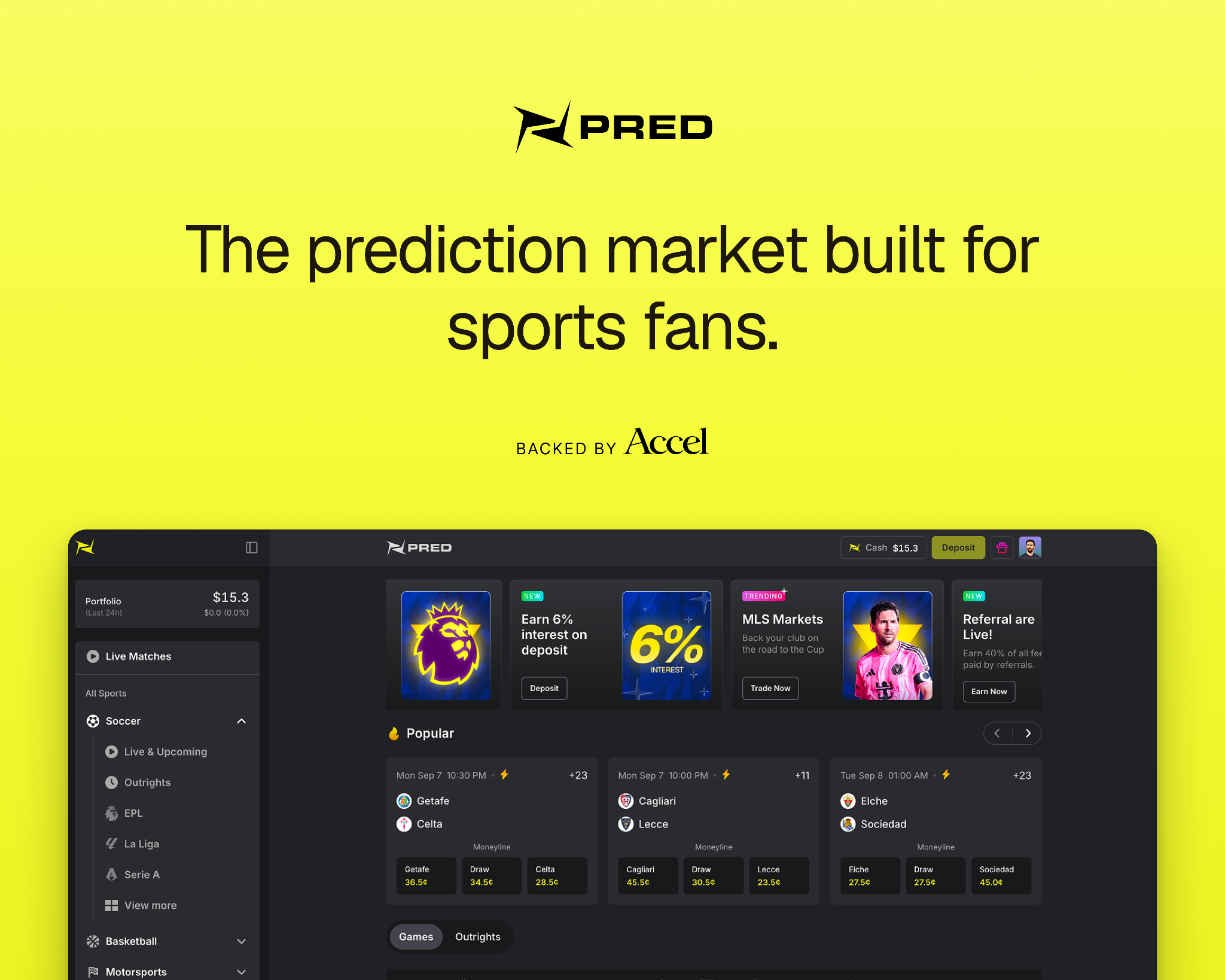
Our odds are 10 to 14 per cent better than the rest of the market. Across the season, that gap adds up.
Markets on PRED settle instantly once the result is in, and you’re never stuck holding a position waiting for someone else to agree on what happened. You can cash out any time.
Built for how fast sport actually moves.
Frank believes traditional economics is taught poorly because it relies on memorising abstract formulas. Instead, he uses everyday behaviours that seem completely irrational at first glance to teach the subject. He decodes these oddities using two basic rules.
1) The cost-benefit principle. People usually think about whether something is worth it. If something seems more rewarding, they are more likely to do it. If it seems harder or more troublesome, they are less likely to do it.
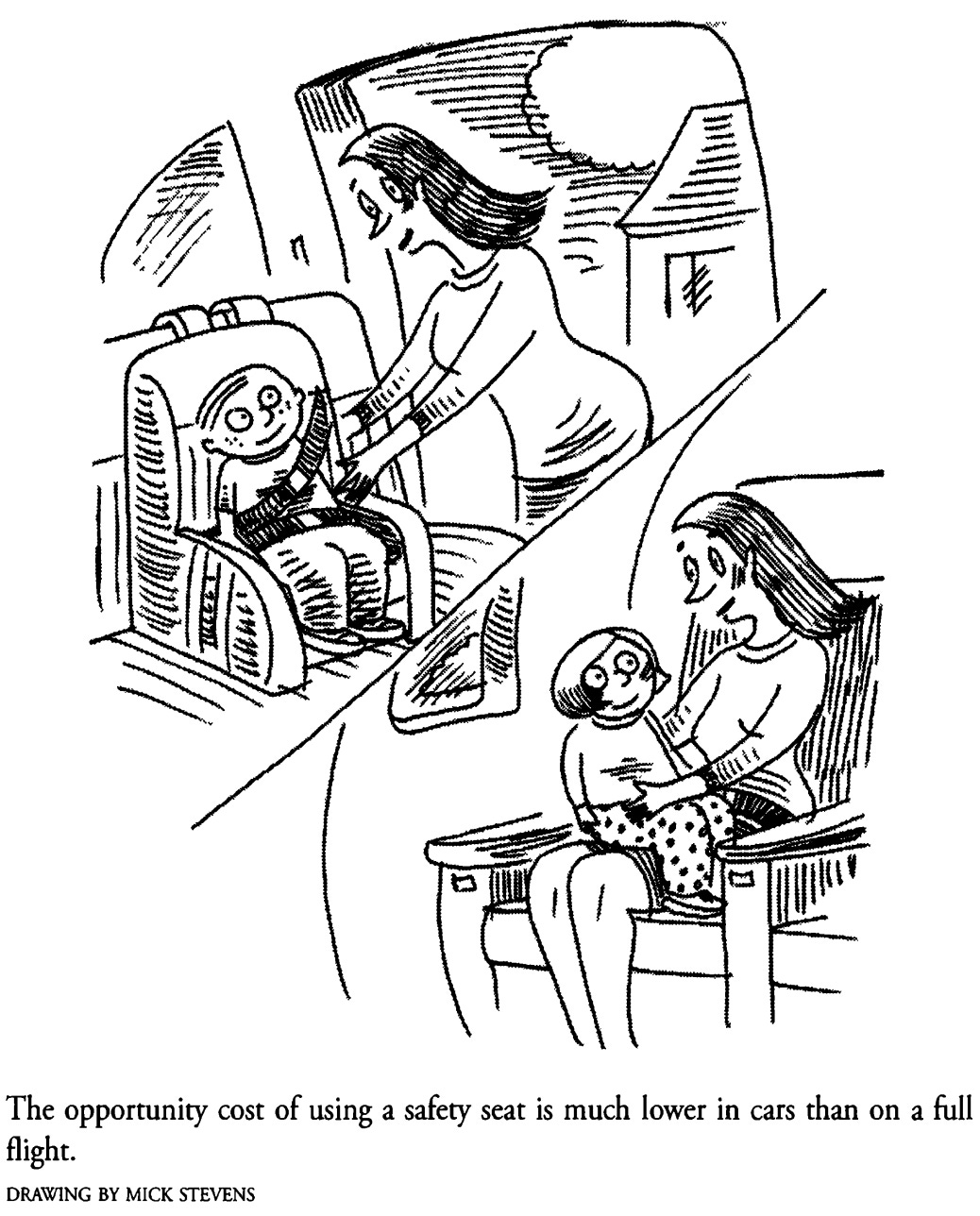
2) Opportunity cost. The true price of a choice is not just the money spent, but the value of the next best thing you sacrificed. The cost of attending a concert isn’t just the ticket price; it’s the sleep you lost or the alternative event you missed.
Choices that seem irrational can actually make economic sense. For instance, milk comes in rectangular cartons even though round ones would be nicer to hold. That looks like bad design, but if you think about it, Fridge space is expensive, rectangles pack tighter, and people usually pour milk instead of drinking from the carton.
The same logic applies to braille on drive-up ATM keypads. Making a separate, flat keypad just for drive-throughs costs extra money. Since drivers don’t care if the dots are there, companies just make one Braille keypad and stick it on every single machine to save cash.
The book still does not tell me why we say “a pair of pants” for one thing with two legs, but never “a pair of shirts,” which have two sleeves. But fine, I guess it’s my personal fight.
Why do auto drivers in Bengaluru insist on asking “where?” when their only two settings are driving away or charging 1 lakh? I could reverse-engineer that one with the patience I built while sitting in traffic here.
Frank’s cost-benefit principle says people ask questions when the expected benefit of the information is greater than the cost of asking. In this case, it’s a low-cost way to quickly learn whether the ride is worth accepting. So even if the driver already expects to refuse some rides, asking “where?” still makes sense because it helps sort good rides from bad ones with very little effort. It is a quick filtering tool, still mean.
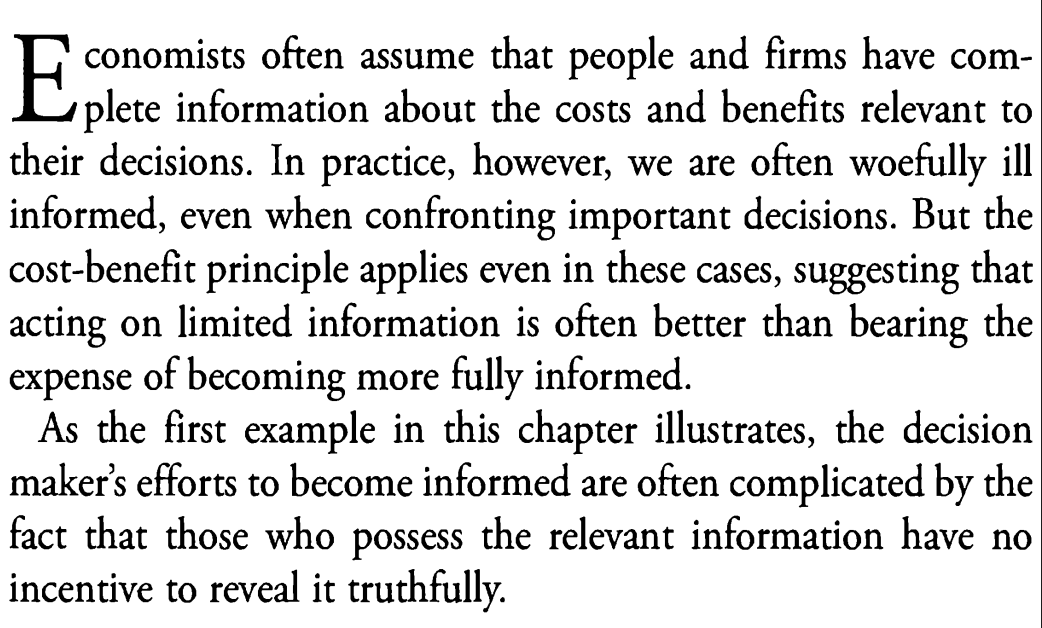
Coming home to crypto here, instead of physical manufacturing costs, a protocol team worries about high gas fees, getting listed on exchanges, and making sure wallets actually support their token. Using a standard token format like ERC-20 can reduce costs. While a developer could technically build a highly complex token with dozens of unique rules, doing so would make it incredibly hard and expensive to launch.
Ondo originally planned to build its own Layer-1 blockchain for tokenised assets. After talking to users, they realised a custom blockchain didn’t solve trade speed and privacy. So, they scrapped the expensive L1, built an off-chain private trading system, and used standard Ethereum for settlement.
Read: Ondo’s Taken a Decision
Robinhood wanted to offer on-chain stocks. Instead of dealing with the legal trouble of issuing actual company shares on a blockchain, they took the cheapest route. They built on standard Ethereum layers and issued simple debt tokens that just track stock prices. Both Ondo and Robinhood sacrificed unique, visionary tech for standard, restricted products because it was cheaper and easier to launch. If a crypto product looks weirdly limited, it’s usually because the founders were avoiding a massive operational or legal headache.
Read: The World Is Flat, and So Is Your Claim
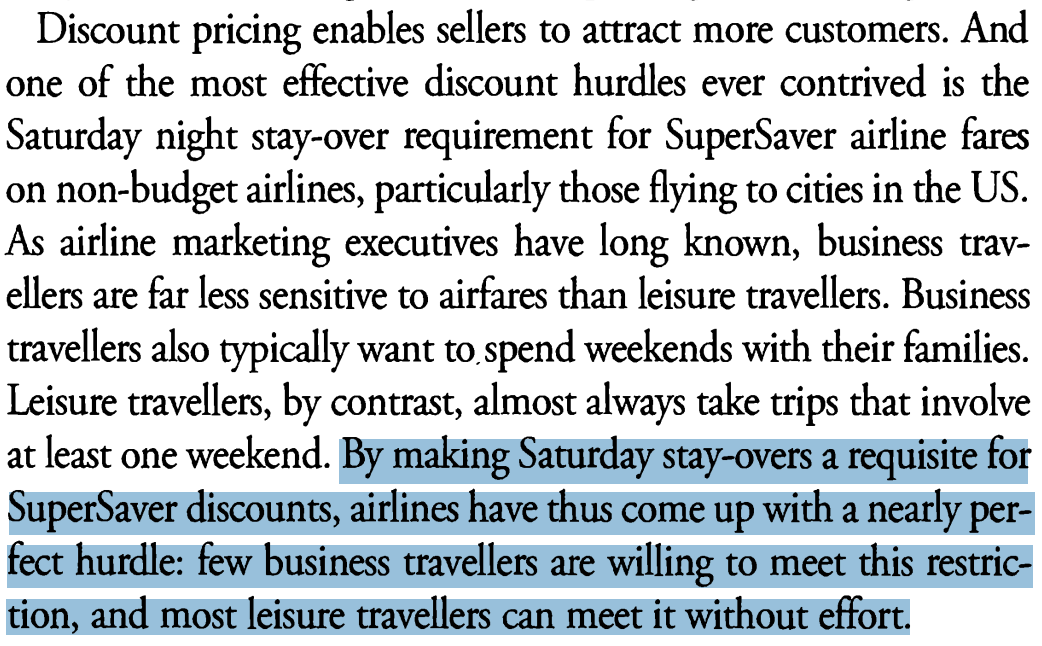
Frank also explains price discrimination, which means charging different people different prices for the same thing because they are willing to pay different amounts. Airlines want to charge business travelers top dollar because they aren’t price-sensitive, but they need to offer cheap tickets to vacationers to fill empty seats. Because airlines cannot read minds, they add rules like Saturday-night stays, advance purchase requirements, and nonrefundable fares. These rules are costly enough to separate customers, but not so costly that they hurt the market.
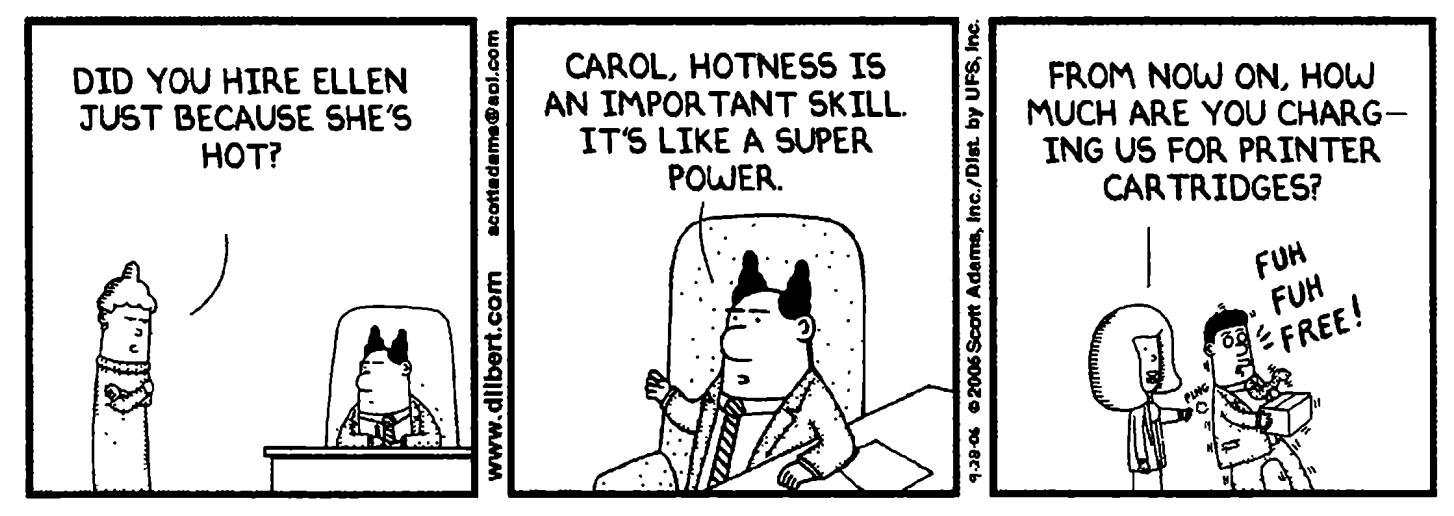
Crypto projects use lockups and tiered sales the same way. By making early buyers wait to sell, teams filter out quick flippers and identify who is actually willing to pay for access. It is a hurdle, a pricing filter to separate investors.
Why does everyone keep playing games they know are broken? This is something that always made me feel weird about the people in finance. Like, we all know what happened with Solana memecoins. Robinhood built a chain for tokenised stocks, and memecoiners are treating it like Pump.fun.


I wouldn’t be writing about a 2007 economics book in a crypto newsletter if it weren’t for Frank’s chapter on the “positional arms race.” It made sense to me, given the creeping absurdity I see every day, where rational people collectively engineer massive, stupid outcomes, even in life or on-chain.
Crypto keeps score in public, which forces people to behave in a particular way. Because financial success is entirely public, the actual utility of the technology (what the protocol is built to do) becomes secondary. The ecosystem turns into a player-vs-player (PvP) game. The motivation shifts from funding useful infrastructure to simply outperforming other traders, chasing the highest APY, and not being the one left behind. If a protocol’s token price drops slightly, the most logical, self-preserving move for you as an individual is to pull your funds out immediately to protect your capital. But, if every single user makes that exact same “rational” decision at the exact same time, it completely drains the liquidity pools and destroys the protocol. One person can do what is best for them. All of them together can still make a mess.
Protocols brag about high TVL and fully diluted valuations to signal success and attract more capital, even though much of it is temporary, rented money. Similarly, users grind dead points programs out of fear of falling behind, creating a competitive race.
Sometimes you need a rule, a standard, or a different thing to measure. With a rule not to dump an unvested team in the first year, players can no longer win by faking a strong chart with a low float.
Then our favourite word “ownership” gets completely dismantled by Frank. He says that true ownership is not a natural given, but rather a functional institution that depends entirely on the practical costs of establishing and enforcing property rights. For example, farmed chickens are easier to treat as property because the rules around them are easier to define and enforce. In the case of wild whales, even if people want to protect them, it is much harder and more expensive to actually enforce those protections.
A claim only becomes true ownership when the boundaries are cheap enough to enforce. In this context, “owning” a wild resource usually means a government or international coalition claiming the authority to protect it.
Because nobody owns the open ocean, whales are essentially free for the taking. Commercial whalers will just keep hunting them to extract value. To stop this, governments try to step in and pass laws saying, “These whales are protected.” Functionally, the government is trying to assert ownership over the whales to save them from being wiped out. But asserting that control means policing millions of miles of international waters and intercepting rogue fishing fleets. That “fence” is astronomically expensive to maintain.
Because governments cannot afford the practical cost of enforcing this control, the “ownership” (the legal protection) fails in practice, and the resource gets overused anyway.
This completely shatters crypto’s favourite illusion that ownership is an automatic, magical feature of the blockchain. As we talked about in the tokenising pre-IPO piece two days ago, holding tokens in a self-custody wallet does not guarantee true ownership. Republic’s rSpaceX are IOUs from RepublicX, not SpaceX stock. Meanwhile, DTCC can put a Treasury token on Canton because the bond never leaves DTC and a repo desk can take it
Ownership is an institution, and institutions require real, ongoing costs to maintain liquidity, legal recognition, and trust.
Without further ado, I want to leave you with the opportunity cost and let you do the rest of the book yourself.
Frank reminds us that the cost of a choice is the next best thing you did not do. If you keep the safe job, you do not start your own project. The thing you never build is what you pay.
Crypto projects love to pretend things are free, like zero-cost point farms. But nothing is free. We always pay for it with what we give up. And this one is bigger than us. Karl Marx’s Economic & Philosophic Manuscripts of 1844 say:
“The less you eat, drink, buy books, go to the theatre or to balls, or to the pub, and the less you think, love, theorise, sing, paint, fence, etc., the more you will be able to save, and the greater will become your treasure... The less you are, the less you express your life, the more you have, the greater is your alienated life...”
When things go sideways in crypto or finance, people usually default to two lazy excuses. Either “it’s all completely random chaos” or “everyone in this industry is just an idiot.”
Frank’s book, which came out in 2007, a year before Bitcoin, helps you look past those lazy statements.
Rather than acting foolishly as we assumed, people are responding rationally to a specific set of costs and benefits. If a system is broken, whining about human greed or stupidity (like I have done sometimes in my previous pieces) is useless. If you want a better outcome, you have to change the underlying incentives that caused it in the first place.
Token Dispatch is a daily crypto newsletter handpicked and crafted with love by human bots. If you want to reach out to 170,000+ subscriber community of the Token Dispatch, you can explore the partnership opportunities with us 🙌
📩 Fill out this form to submit your details and book a meeting with us directly.
Disclaimer: This newsletter contains analysis and opinions of the author. Content is for informational purposes only, not financial advice. Trading crypto involves substantial risk - your capital is at risk. Do your own research.