


Hello,
Welcome to Edition 19 of The Reading List. Starting today, we’re making this a weekly (not fortnightly) Saturday affair. Oh yes! I am excited, but also nervous about doubling the frequency.
I’ll keep sharing my favourite reads across crypto, finance, technology, culture, and beyond, alongside what I’m watching and reading. Now that I will have a leaner list than what I used to have until now, perhaps I will give you a deeper synopsis of each of the pieces I recommend.
Let’s get going…


Frontrun: Early Bird Holds the Edge
Most people hear about a promising startup the day it announces its funding. By then, the investors who backed it have known about it for months. How did they get there first?
Hours of digging, who started the company, what they’ve built before, how to reach them, and understanding what to write to them so that you can join them early in their journey.
Frontrun does this digging for you. When top investors start following a young company on X, Frontrun flags it, finds the founder, and writes your opening message. You can read the draft, tweak it, and hit send without leaving the platform.
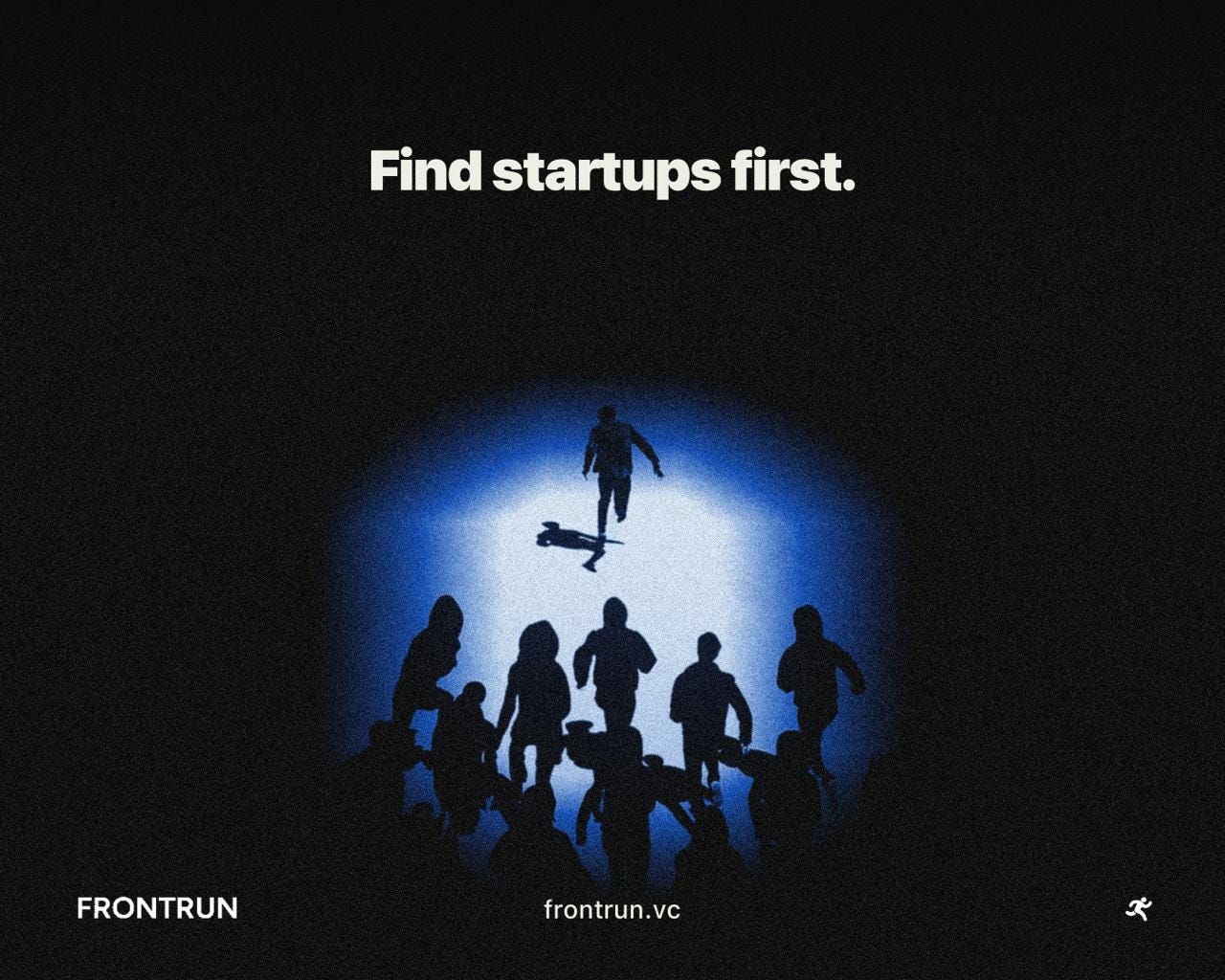
Frontrun gives you a ready brief on every company it flags.
You can also automate a daily morning report with the list of startups to track based on what your favourite accounts are following. Served hot, along with your breakfast.
The Week That Was
Markets spent the week reconsidering how urgently the Fed needs to raise rates again. Long-term borrowing costs, however, offered little relief.
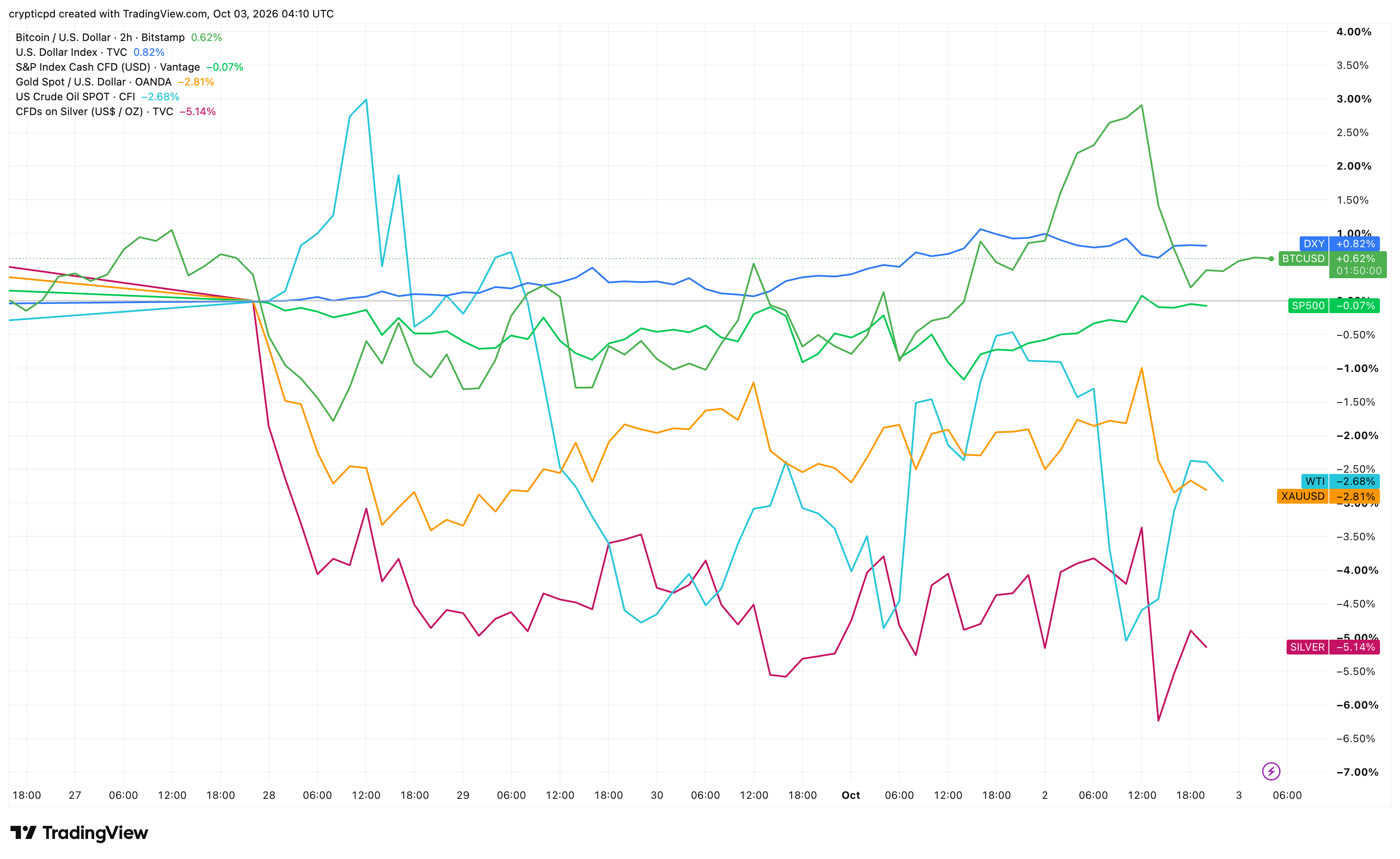
Our cross-asset snapshot didn’t present a happy picture. The dollar gained 0.82%, gold fell 2.81%, silver lost 5.14% and US crude declined further. Bitcoin managed a 0.60% gain after giving back most of Friday’s advance. The S&P 500 CFD was almost unchanged.
Wednesday’s inflation report for August helped temper expectations for another hike. The PCE price index rose 0.3% in August, below the 0.4% economists expected, while core prices increased 0.2%. But annual headline inflation was still 3.4%, core inflation was 3%, and inflation-adjusted consumer spending rose 0.6% over the month. The economy had given the Fed room to wait, without settling its inflation problem.
Friday’s jobs report strengthened that case: employers added 29,000 jobs in September, against expectations of 90,000, and unemployment edged up to 4.2%. By Friday, market-implied odds of an October hike had fallen to about 23%, from 64% a week earlier. US stocks rallied that day, although the S&P 500 still finished the week lower.
The complication was in bonds. The US 10-year Treasury yield reached 5.34% on Thursday, its highest since 2002. Elevated yields and a stronger dollar weighed on precious metals, while the rupee closed Thursday at its weakest in two months. Expectations for the next Fed meeting were softening, but financing conditions remained demanding.
For crypto, my reading is that the week reduced one immediate threat: another imminent rate rise. Bitcoin’s modest gain despite the stronger dollar was resilient, but hardly enough evidence to declare independence from the wider financial backdrop.
What We Covered This Week
At The Token Dispatch, we examined who gets paid as technology changes how we trade, shop and work.
I explored the relationship between speculation and tokenised equities in Meme Coins Are Now Selling Stocks: pairing memecoins with stock tokens creates demand for the latter, while exposing the limits of their available supply. In Turning Rival Aggregators into Toll Payers, I followed the money further. In this piece, I explain how rival trading order aggregators can compete for customers while Robinhood collects from the chain on which their trades settle.
Thejaswini examined the contest over the shopping journey in AI Goes Shopping. Rye helps agents complete purchases across online stores, but the system recommending products still decides which merchants get seen. She also posed the question Can Research Become a Marketplace?. Vaidik, meanwhile, looked behind the promise of autonomy in The $12 Million Robot, examining the remote human labour that keeps robots working and the economics that can make retaining those workers attractive.
We have got more lined up for you in the coming weeks. Until then, we’ve got some recommendations that will keep you in good company.
On to this week’s reading list.
Regulation & Policy
The Clarity Act Collapses: Molly White examines the failed push to advance crypto’s flagship market-structure bill and regulators’ efforts to accommodate the industry anyway. Her sceptical roundup also follows crypto’s political spending, courtroom battles and conflicts of interest.
Opening Schools Without Much Scrutiny: ProPublica journalists establish private schools to test oversight. Their experiment exposes how little scrutiny prospective operators can face.
Crypto & Tech
Not All LPs Are Equal: This working paper separates active and passive liquidity-provider returns across Uniswap pools. It finds that aggregate pool performance can flatter the experience of passive participants, especially where others actively reposition their liquidity.
State of Tokenization: September 2026: Pantera examines where trading and participation are developing across 671 tokenised assets. Its central distinction is between putting assets on-chain and building liquid markets around them, with transferability playing a major role.
The Fastest Growing Market in Tech Isn’t AI: Tomasz Tunguz makes the bullish case for tokenisation, connecting on-chain trading, round-the-clock price discovery and institutional adoption. He also highlights the opportunity for blockchain data providers, including his firm’s portfolio company Allium.
Crypto Capture of Foreign Aid: Crémieux highlights research linking World Bank aid disbursements with spikes in Bitcoin activity. The underlying working paper estimates possible aid leakage into crypto, using transaction, exchange and web-traffic data to investigate the pattern.
Finance & Economy
Opening Private Markets to the Public: Matt Levine approaches private-market access through the fees investors pay. His opening contrasts cheap retail index funds with expensive institutional strategies, asking how much of the difference buys better management.
Is an Agentic Bank Run Coming?: Apollo’s Torsten Slok asks what happens when AI automatically moves household cash towards higher-paying accounts. Depositors could earn more, while banks lose the cheap, relatively sticky funding on which their lending depends.
The Agent Economy: Who’s Most at Risk?: UncoverAlpha examines which aggregators depend on human attention, comparison and purchasing friction, and which control harder-to-replace services. It weighs the threat to existing margins against the possibility that easier purchases expand demand.
Less for More: Scott Galloway examines why employer-sponsored US healthcare keeps getting more expensive while workers shoulder more of the bill. He argues for expanding medical supply, tackling consolidation and widening Medicare access.
AI & Innovation
AI Solves a ‘Holy Grail’ Problem from Probability Theory: Scientific American reports on an AI-generated proof tackling a long-standing problem in percolation theory. The piece also captures mathematicians’ mixed reactions to a breakthrough whose crucial step came from a machine.
Predicting the Winner of Personal Agents: Hunter Rice argues that personal agents must understand a user’s background and relationships before they can reliably interpret individual requests. His focus is the onboarding problem: demonstrating value before users have invested time teaching the agent about themselves.
Reason Is More Than a Tool: Philosopher Sasha Mudd challenges the idea that intelligence amounts to optimising for a given objective. Drawing on Kant, she argues that human reason also examines which purposes deserve our commitment.
Culture & Beyond
Reading the Great Books in the Age of AI: Devin Stauffer argues that demanding books become more valuable as technology makes quick answers easier. Reading them cultivates sustained attention and independent judgement, while keeping difficult questions about living well open.
How to Actually Get Attention: Mark distinguishes going viral from getting people to pay attention. Drawing on examples ranging from nostalgic marketing to provocative launches and essays, he outlines six approaches to making content register with an audience.
Intimacy on Easy Mode: Matt Klein examines AI’s arrival in dating, emotional support and intimacy. He asks what we lose when endlessly accommodating systems remove the disagreement, uncertainty and effort through which human relationships develop.
My AI Agent Is Making Me Lamer: Priyanka Desai finds that agents have organised her life without making it more interesting. A personal reflection on how the time saved can disappear into further optimisation, while curiosity and digital exploration shrink.
How Your Nervous System Constructs—and Limits—Your Reality: Laney uses an unusual clinical case to explore how perception, identity and past experience interact. The essay extends into self-help; its broader claims about changing one’s reality warrant more caution than the neuroscience framing suggests.
How to Be Yourself When You Have No Self: Alexander Douglas draws on Zhuangzi to question the search for a fixed, authentic identity. He explores how loosening our attachment to who we think we are can leave us more open to change.
Green Tree Ants and Their Imposters: This short film follows insects and spiders that imitate green tree ants in appearance, behaviour and even smell. Some borrow the ants’ fearsome reputation for protection; others use the disguise to prey on them. (Video.)
That’s all for this week. I’ll be back next Saturday.
Until then, happy reading!
Prathik
P.S.: Read, watched or listened to something worth sharing? Send it my way for a future edition.
Token Dispatch is a daily crypto newsletter handpicked and crafted with love by human bots. If you want to reach out to 165,000+ subscriber community of the Token Dispatch, you can explore the partnership opportunities with us 🙌
📩 Fill out this form to submit your details and book a meeting with us directly.
Disclaimer: This newsletter contains analysis and opinions of the author. Content is for informational purposes only, not financial advice. Trading crypto involves substantial risk - your capital is at risk. Do your own research.
Thanks for reading! Subscribe for free to receive new posts and support my work.