


Hello,
Welcome to Edition 15 of The Reading List — your fortnightly antidote to the noise. Every two weeks, I share my favourite reads across crypto, finance, technology, culture, and beyond. I also share what I’m watching and reading.

What I’m Watching and Reading
I just started When Genius Failed: The Rise and Fall of Long-Term Capital Management by Roger Lowenstein. Resuming my reading last week after a long break has convinced me of something few would relate with: you can absolutely fall in love with non-fiction finance books despite the numbers, for something few people expect them to do. The best of these books talk about human psychology and how we think and behave around money. The first 40-odd pages explain it perfectly.
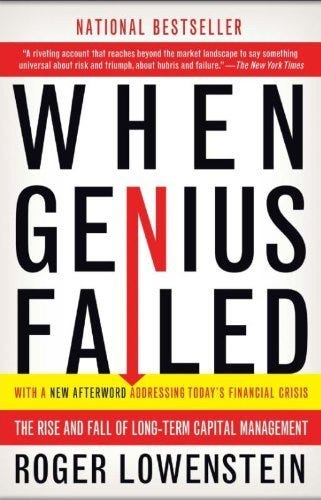
Lowenstein opens with John Meriwether, the shy hedge fund executive who built the legendary Arbitrage Group at Salomon Brothers by importing academic quants onto a trading floor that ran on instinct and trust. There was one thing that impressed me the most about the initial chapters of this book. It’s how the author shows the culture that reflected the devotion the traders had for Meriwether. The book superbly articulates the intellectual arrogance and the certainty that risk could be deconstructed and tamed. You sense what will follow early, but the process of reading the prose that culminates into the inevitable detonation of what was building up underneath is what makes for an excellent read.
I’ll likely finish this one in the next week, so I’ll hold the rest of my review for the next edition of reading list.
Got any recommendations for nice watches or reads? Write to me?

The Fortnight That Was
July CPI rose just 0.1% month-on-month, bringing the annual rate down to 3.4%, with core at 2.5%. Both these were a touch below June and in line with forecasts.
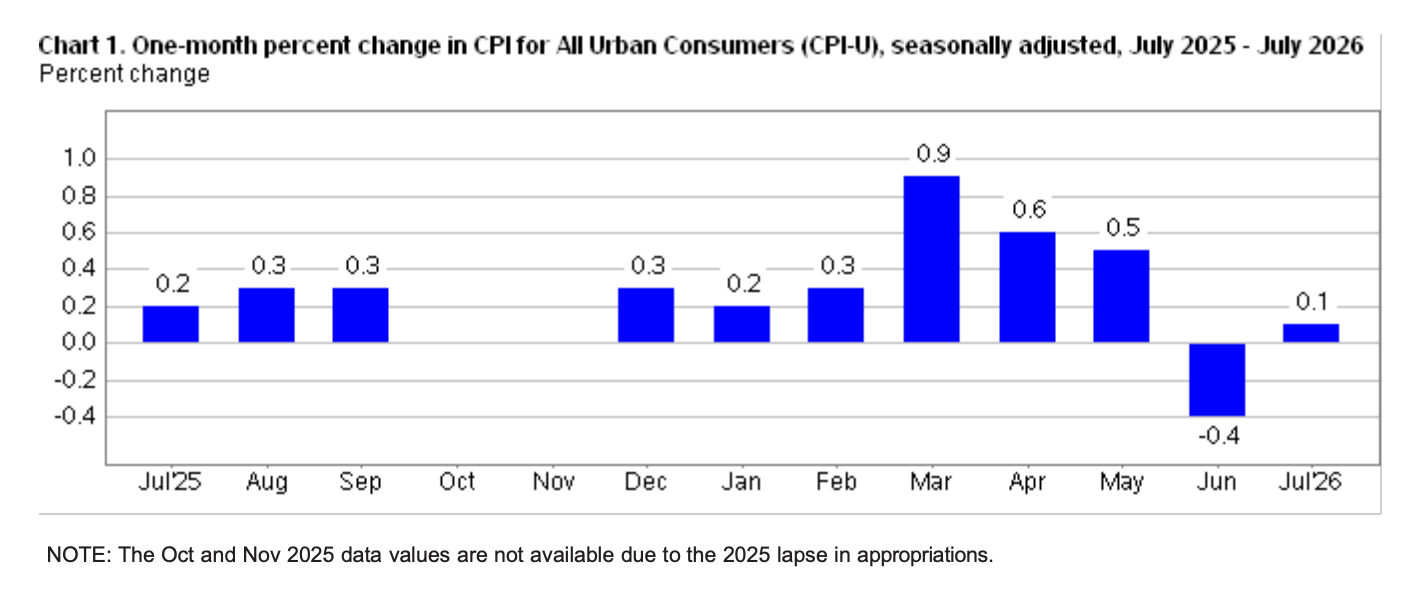
Producer prices were even tamer as PPI was flat for the month against expectations of a 0.2% rise, and core came in soft too.
Markets read it as a sign to stop worrying about a rate hike, which didn’t seem entirely impractical last month. Hopes for a rate cut in September went back up.
The S&P 500 closed at a fresh record above 7,800 for the first time ever, carried by heavyweight tech and favourable quarterly earnings.
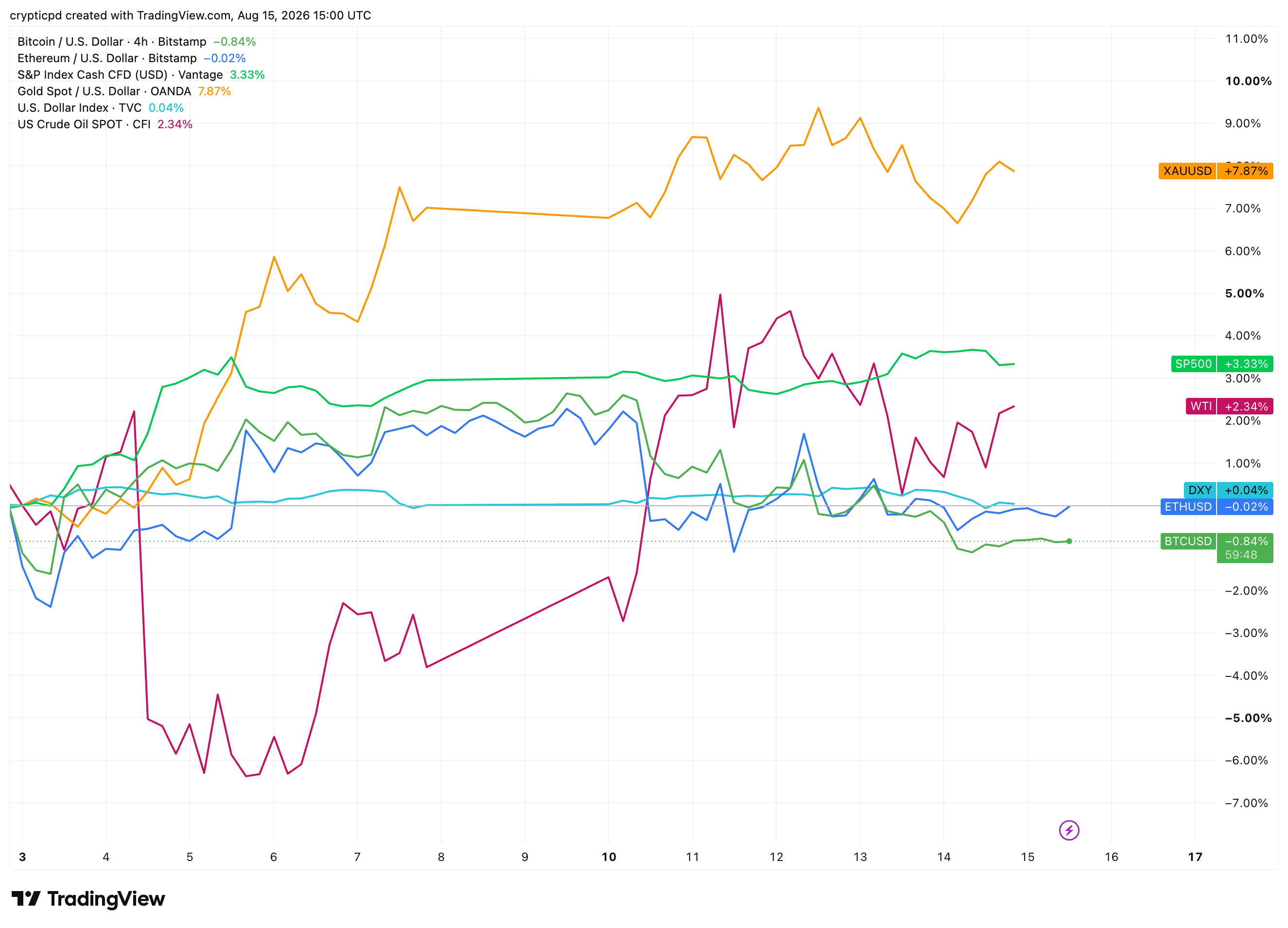
Gold climbed 7.87% in the last two weeks, with precious metals advancing across the board as traders digested a softer jobs report and looked ahead to the inflation data.
Silver has now surged more than 150% over the past year, propelled by rate-cut anticipation.
Even amid all this market chaos, bitcoin continued to move sideway with minimal volatility.
We, at The Token Dispatch continued to focus on the thesis of crypto fast becoming the underlying rails for the broader financial market.
What We Wrote at Token Dispatch
Most of our stories last week focused on who captures the value in the newly emerging world of Web 2.5. where traditional finance and crypto converge.
I closed the week with Distribution Trumps Asset Class, where I explore how crypto and Wall Street have started funding each other’s revenue. BlackRock’s spot bitcoin ETF became its most profitable fund, while Robinhood’s new chain became Uniswap’s single largest fee contributor within weeks. Hyperliquid now earns most of its revenue from oil and equity perps that have nothing to do with crypto. The ideological war between crypto and traditional finance means nothing beyond the fact that distribution was and still is the biggest moat any business can have. Earlier this week in Rewiring Commerce for Agents, I traced how Cloudflare, Google, Stripe and Visa are tearing apart every layer of online buying and rebuilding it for machines, where advertising dies and the real value moves to whoever can vouch for an agent’s identity.
Vaidik explained with Paying to Disrupt Visa, how the pitch of “cutting out the card network” is not as sensible as it sounds. He proves this by showing how every stablecoin card is still a debit product leaning on the Durbin Amendment and sponsor-bank workarounds, and cannot function by sidestepping Visa. In Dead Chains Walking, he followed Aave’s exit from six blockchains and showed how a chain dies once its credit market leaves. He makes a great parallel to global banks abandoning small-country corridors after 2008.
In the week before the last, Thejaswini wrote Ondo’s Taken a Decision, where she explains why Ondo scrapped its blockchain entirely and chose to keep Ethereum exclusively for settlement.
Crypto & Tech
Netting is all you need: Simon Taylor explains why “instant” isn’t always better in payments. Taylor does this by explaining how banks’ netting and liquidity-saving mechanisms make slow rails cheap, and why 17 US banks chose tokenised deposits over stablecoins to port their moat on-chain.
The Future of Vaults: Tempest argues on-chain vaults are the next crypto primitive to cross into TradFi after stablecoins and perps, with Coinbase, Kraken, Robinhood and Uniswap routing users into them. They explain where the vaults are expected to go from here.
From porters to protocols: Byron Gilliam traces clearing houses from 19th-century bank porters lugging gold across Manhattan to CHIPS, and asks whether a blockchain protocol like Cycles can open the clearing-house club to everyone beyond banks and financial institutions.
Technology finds its own uses: A nice take on how the internet may be remembered as the training data for AI, and how bitcoin’s mining infrastructure and talent are becoming the shovels for the AI build-out.
Finance & Economy
Jane Street suffers $15bn hit after meltdown at Situational Awareness: The secretive trading giant was wrongfooted by July’s AI-stock rout, a rare setback even as it cleared $40 billion in net trading revenue, with the sell-off also torching Leopold Aschenbrenner’s leveraged AI fund. (behind paywall)
The jobless boom has arrived: The WSJ’s framing of 2026’s defining paradox: record profits and a soaring S&P alongside stalled hiring, flat wages, and AI letting firms do more with fewer people. (behind paywall)
Supermarket economics: A revealing interview with a grocery-union economist on how scanner tech, e-commerce, and the Kroger-Albertsons merger reshaped who captures value in the trillion-dollar business of feeding America.
On edge and max extracting: polar uses a friend’s collapsing TikTok sponsorship income and the power-law distribution of poker hands to make a sharp point about how market edges decay, and why knowing the type of edge you hold matters as much as having one.
AI & Innovation
NVIDIA speedrunning the creation of a synthetic hyperscaler: Clark Tang argues that as AI inverted data-centre economics, Nvidia is being forced to assemble its own hyperscaler because incumbents were too slow and too eager to commoditise its margins.
Base Power & the Future of Electricity: a16z’s Profiles of the Future on how collapsing solar and battery costs made electricity generation cheap, even as the cost of delivering it surged, leaving America’s 20th-century grid a poor fit for the AI-power era.
AI designed a virus, and scientists brought it to life: Stanford and Arc Institute researchers used genome language models to design the first fully AI-generated viral genomes, producing 16 working bacteriophages that killed antibiotic-resistant E. coli. The piece also reignites the biosecurity debate. (behind paywall)
An AI for Africa would be built on Hunhu/Ubuntu ethics: Fainos Mangena argues that Western-built AI smuggles in individualism and autonomy, riding roughshod over the communal “I am because we are” ethics that animate much of African moral life.
Culture & Beyond
Velocity is the new authority: Om Malik’s argument that the organising principle of information has shifted from authority to sheer speed, where what travels fastest wins and thoughtful work simply doesn’t move.
When is stereotyping a handy tool, and when is it a sin? A prize-winning philosophy essay on why generalising is a cognitive necessity we’d be lost without, and where exactly the line falls between a useful shortcut and a moral failure.
What do you want?: Calvin Rosser on the central, unglamorous task of adulthood: figuring out what you actually want, why “safety” is an illusion, and why no one else can hand you the answer.
That’s all for this fortnight. Catch you in the next edition.
Until then, happy reading!
Prathik
P.S.: Want to recommend interesting literature? Write to me, and I shall include them in the next edition 👇🏾
Token Dispatch is a daily crypto newsletter handpicked and crafted with love by human bots. If you want to reach out to 170,000+ subscriber community of the Token Dispatch, you can explore the partnership opportunities with us 🙌
📩 Fill out this form to submit your details and book a meeting with us directly.
Disclaimer: This newsletter contains analysis and opinions of the author. Content is for informational purposes only, not financial advice. Trading crypto involves substantial risk - your capital is at risk. Do your own research.
Thanks for reading! Subscribe for free to receive new posts and support my work.