


Hello,
Welcome to Edition 18 of The Reading List — your fortnightly antidote to the noise. Every two weeks, I share my favourite reads across crypto, finance, technology, culture, and beyond. I also share what I’m watching and reading.


Frontrun: Early Bird Holds the Edge
Most people hear about a promising startup the day it announces its funding. By then, the investors who backed it have known about it for months. How did they get there first?
Hours of digging, who started the company, what they’ve built before, how to reach them, and understanding what to write to them so that you can join them early in their journey.
Frontrun does this digging for you. When top investors start following a young company on X, Frontrun flags it, finds the founder, and writes your opening message. You can read the draft, tweak it, and hit send without leaving the platform.
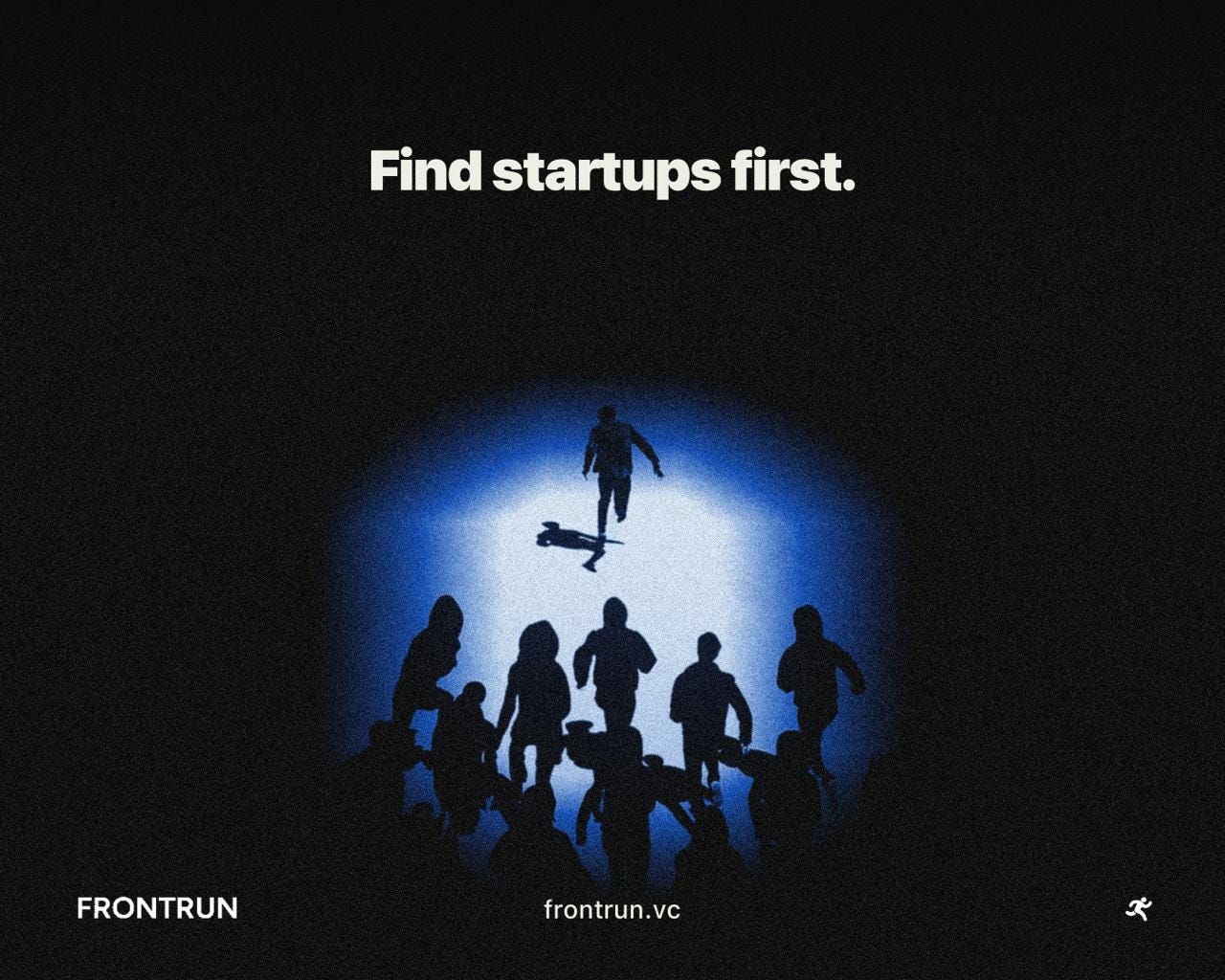
Frontrun gives you a ready brief on every company it flags.
You can also automate a daily morning report with the list of startups to track based on what your favourite accounts are following. Served hot, along with your breakfast.
The Fortnight That Was
Bitcoin led this fortnight’s returns, gaining about 9% against the S&P 500’s ~1.15%. The cryptocurrency also crossed the $86,000-mark for the first time since January 29. The dollar strengthened about 2%, while gold fell 1.24% and silver finished almost flat. Oil reversed some of its earlier gains, with US crude down 6.51% over the period.
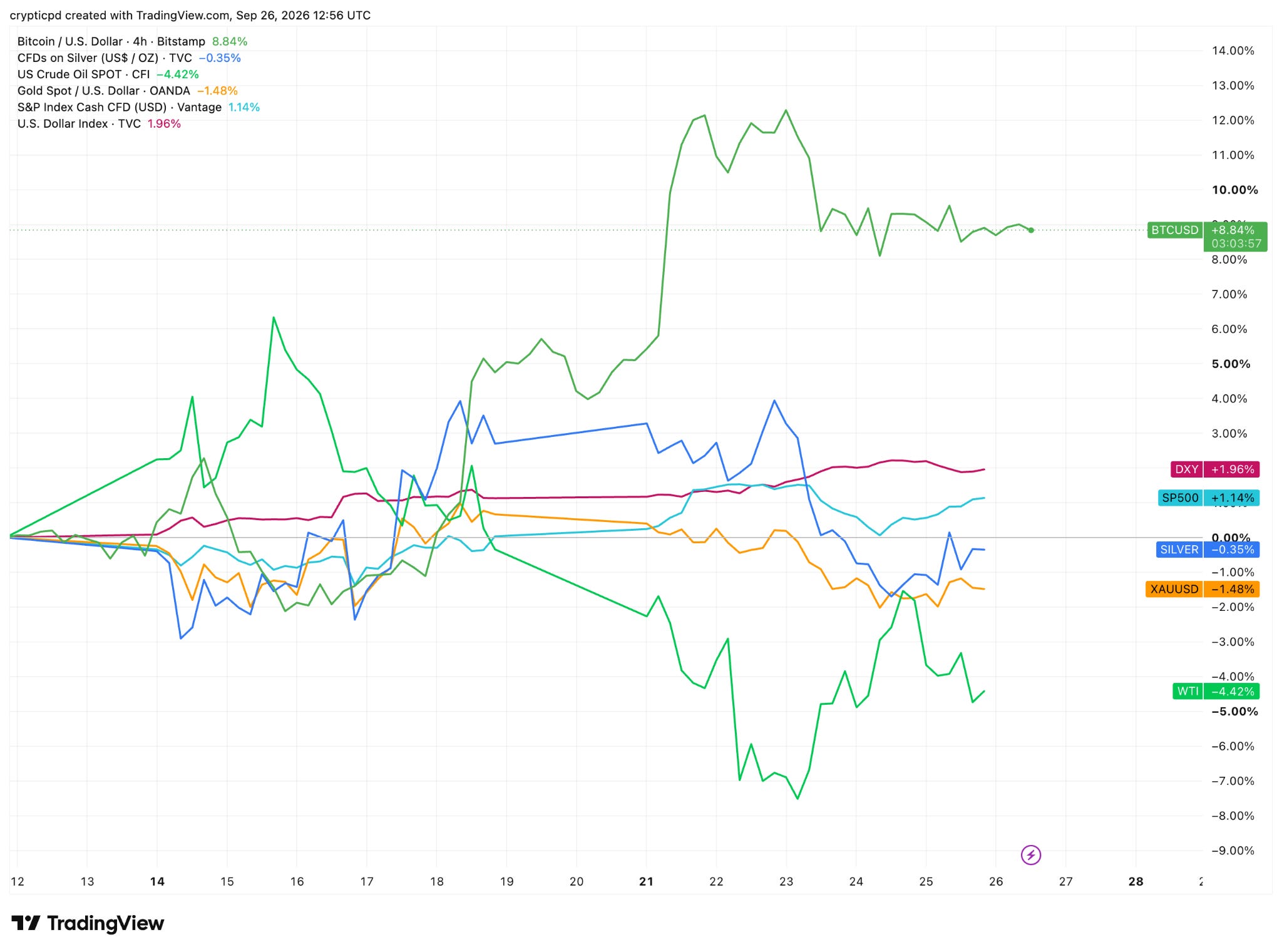
The rate hike markets had been anticipating arrived. On September 16, the Fed raised its benchmark range by 25 basis points to 3.75–4%, pointing to resilient spending, robust investment, and inflation that remained too high. Bitcoin’s rally also coincided with tighter policy and a stronger dollar.
Oil moved with the prospects for diplomacy. Hopes of renewed US–Iran negotiations and reopening the Strait of Hormuz pushed prices lower earlier this week. But those hopes met another exchange of threats at the UN, sending crude sharply higher by the middle of the week. The fortnight ended with cheaper oil, but little certainty that the relief would last.
What We Covered Last Fortnight
At The Token Dispatch, our coverage was along two threads: buying technology in smaller, more useful units, and giving on-chain assets more of the functions we expect from finance.
I explored the first in A Spot Market for Compute, testing Orbio’s market for AI inference credits. Buying compute without adding another subscription was convenient. Thejaswini extended the theme in Wholesale Market for Software Capabilities, examining how Monid lets customers buy individual tasks across providers and whether the marketplace selecting the tools could capture the customer relationship.
I then explored a protocol that makes automated trading possible for retail traders with Renting the Quant Desk. TrueNorth combines research, portfolio context, and execution in one place. This helps retail investors make better-informed decisions while owning the screen through which those decisions become trades.
Vaidik explored a less conventional path to adopt equity stocks in Robinhood’s Wealth Effect: memecoins paired against tokenised stocks, turning speculative demand into demand for equity tokens. I followed with A Share with a Say, on the infrastructure connecting tokenised holdings to shareholder votes and why ownership rights matter beyond price exposure.
Regulation & Policy
Open the Frontier: Jack Dorsey argues for open AI and independent scrutiny, warning that safety rules designed around today’s leading labs could entrench their power.
AI-Written Speeches Are Taking Over Politics: The Economist writes on politicians outsourcing more of their speechwriting to AI, and voters’ discomfort with machines helping their representatives speak for them. (paywall)
An AI Safety Standards Body: The Information reports that Anthropic, OpenAI and Google privately discussed establishing a shared AI safety standards body. (paywall)
Crypto & Tech
Why Crypto Businesses All Look the Same Now: Four Pillars on exchanges, wallets and brokerages converging around the same products as the range of commercially viable onchain businesses narrows.
Backpack: The Tokenization Engine of Internet Capital Markets: Frictionless’s investment case for Backpack, built around redeemable shares, unified collateral and the opportunity to distribute US equities globally.
NET-work in Progress: Our colleagues at DCo examine NetNet’s attempt to support a rebasing currency with external revenue, and how much dependence on speculative demand remains.
Beyond Tokenisation: Making RWAs Useful Onchain: Castle Labs uses Mantle to argue that tokenised assets need deep liquidity, collateral uses and connections to DeFi before asset counts mean much.
Finance & Economy
Bitwise’s Institutional Crypto Adoption Report: Bitwise interviews 15 institutions about what they own, how much they allocate and what would make them sell, offering a closer look behind the adoption headlines.
Kalshi Levers the Predictions: Matt Levine writes on bringing leverage to prediction markets, and what changes when traders no longer fund their entire potential loss upfront.
Beginners Guide to the Bull Cycle of 2026: 0xJeff’s personal trading lessons on liquid tokens, due diligence, position management and knowing when to leave a winning trade.
The Next Insurance Giants: Chris Ahn sees an opening for new insurers where AI changes operating costs, stablecoins expand distribution and scientific progress changes the risks being insured.
Investing for the Compute Bottleneck: Grayscale argues that scarce power and operational computing capacity could capture value regardless of which AI models or applications prevail.
Should Global Markets Have One Physical Center?: Logan Jastremski questions why global order flow must race towards one physical location, exploring the possibilities and trade-offs of distributed market infrastructure.
Play Your CARDS Right: Kunal Doshi’s bullish Collector Crypt thesis, centred on whether Ripmart’s live-shopping model can bring in collectors beyond crypto’s existing speculative audience.
AI & Innovation
Natural General Intelligence: Ryan Orbuch makes the case for a model trained on direct observations of Earth, helping us understand its interconnected systems and the consequences of intervening in them.
The Case for Global Benefit from AI: DeepMind researchers argue that everyone has a moral claim to AI’s benefits, drawing on rights, reciprocity, fairness and the cost of wasted human potential.
What If AGI Is Already Here, and It’s Made of… Children?: Pascio’s speculative case that general intelligence could emerge from interacting agents, challenging the expectation that it must arrive inside one powerful model.
Community Software: Ben Roy asks whether cheap AI-built apps will make software a matter of community and shared identity, with different groups assembling tools around their own values.
Moats & the Barbell-ification of Software: Mike Vernal argues that cheaper development could favour giant integrated platforms and small niche businesses, leaving mid-sized software companies exposed.
The Copycat Trap: Crypto’s Lessons for AI: Jonah compares the rush to fund AI labs with crypto’s alternative-chain boom, asking whether investors are paying premium prices for tomorrow’s commodities.
Robotics Tipping Point: Citrini examines progress in robotic hardware, intelligence and commercial use, arguing that adoption may arrive through accumulated advances rather than one defining breakthrough. (paywall)
As We May Think: Vannevar Bush’s 1945 essay on extending human memory and connecting knowledge, written long before the tools that made those questions part of everyday life.
Culture & Beyond
Long Nostalgia: Niko on Pokémon cards and vintage collectibles as pieces of personal identity, exploring the emotional demand beneath their financial appeal.
A New Media Playbook: Tulip King explains the Threadguy Stream’s business: build around one personality, treat clipping as a core skill and distribute each broadcast far beyond its live audience.
AI Art Is Theft: Wordgrammer argues that ignoring artists’ grievances helped harden opposition to AI, and that dismissing mathematicians’ concerns risks repeating the mistake.
The World Is Changing: AI for Creativity: Jeffrey Katzenberg makes the case for AI expanding access to animation while human storytelling determines whether the work connects with an audience.
Programmable Gravity: Ben Roy on algorithms shaping our ambitions, tastes and identities, and why users need more control over what their feeds pull them towards.
Where a Land Ethic Blooms: Craig Maier finds environmental responsibility in everyday farming decisions, where knowledge of soil grows alongside relationships with family, neighbours and place.
That’s all for this fortnight. Catch you in the next edition.
Until then, happy reading!
Prathik
P.S.: Want to recommend interesting literature? Write to me, and I shall include them in the next edition 👇🏾
Token Dispatch is a daily crypto newsletter handpicked and crafted with love by human bots. If you want to reach out to 165,000+ subscriber community of the Token Dispatch, you can explore the partnership opportunities with us 🙌
📩 Fill out this form to submit your details and book a meeting with us directly.
Disclaimer: This newsletter contains analysis and opinions of the author. Content is for informational purposes only, not financial advice. Trading crypto involves substantial risk - your capital is at risk. Do your own research.
Thanks for reading! Subscribe for free to receive new posts and support my work.